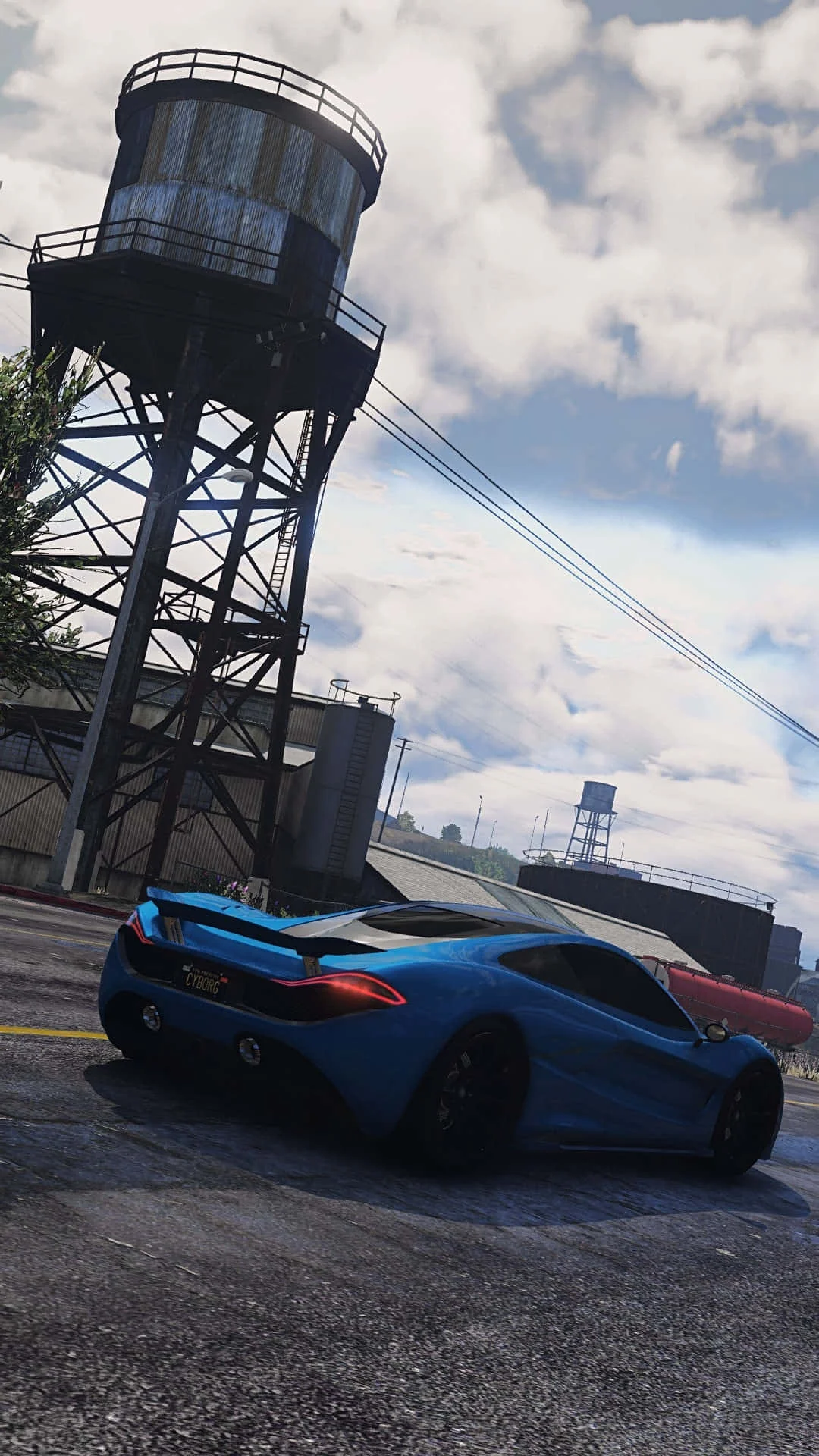
Fivem
This combination provides smooth gameplay with an average of 93 FPS, suitable for most gaming scenarios.
Average FPS: resolution vs quality settings
| Ultra | High | Medium | Low | |
|---|---|---|---|---|
| 4K Ultra HD | 31 | 43 | 57 | 68 |
| 1440p QHD | 62 | 80 | 98 | 127 |
| 1080p Full HD | 89 | 121 | 150 | 190 |
Cell color: green is 120+ FPS, teal is 60+, amber is 30+, red is below 30.
Fivem with AMD Ryzen 7 5800X + NVIDIA GeForce RTX 4060, In-Depth Analysis
The AMD Ryzen 7 5800X paired with the NVIDIA GeForce RTX 4060 delivers a combination that sits in the 56th percentile of all tested hardware pairings in Fivem, with a combo rank of 1002 out of 1792. This places it in the upper-middle tier of the database, indicating a capable but not top-tier setup for this specific multiplayer title. The rank reflects a balance between the CPU's strong multi-threaded performance and the GPU's mid-range positioning, resulting in a system that handles the game’s demands adequately but leaves headroom for more powerful configurations.
The processor itself is a strong contributor to this ranking, with an average benchmark score of 27606 and a percentile ranking of 84 against all CPUs. Its nearest rivals include the AMD Ryzen 7 5800 (scoring 27535, a 0.3% delta), the AMD Ryzen 5 8500GE (27708, -0.4%), the Intel Core i7-13700H (27716, -0.4%), and the Intel Core i5-12600KF (27827, -0.8%). The 5800X essentially trades blows with these chips, with deltas under 1% in either direction, showing that in synthetic tests, the CPU is firmly in a competitive bracket. Its 8 cores and 16 threads, based on the Zen 3 architecture, provide a solid foundation for Fivem’s server-side and simulation workloads.
GPU Role
The NVIDIA GeForce RTX 4060 serves as the graphical engine for this combo, and its specifications directly influence the measured frame rates. The GPU comes with 8 GB of GDDR6 memory on a 128-bit bus, providing a bandwidth of 272.0 GB/s. This memory configuration is a key factor at higher resolutions, where the frame buffer can become a limiting element. The card’s boost clock is rated at 2460 MHz, with a base clock of 1830 MHz, and it houses 3072 shading units, 96 texture mapping units, and 48 render output units. These specs place the GPU at the 66th percentile against all GPUs, with an average benchmark score of 23181.
In the context of Fivem, the data shows that the GPU’s role shifts depending on the graphics preset. At 1080p with Low settings, the average FPS reaches 190.2, suggesting the CPU is capable of feeding frames at a high rate. However, the GPU’s performance ceiling is revealed when moving to Ultra settings at the same resolution, where the average drops to 89.4 FPS. This indicates that while the RTX 4060 is not the bottleneck at lower presets, it becomes a significant factor as graphical complexity increases. The GPU’s nearest rivals include the AMD Radeon RX 6600M (23321, -0.6% delta), the NVIDIA GeForce GTX 780 Ti (23338, -0.7%), the Intel Arc B580 (23021, 0.7%), and the AMD Radeon 760M (22999, 0.8%), showing it performs in a similar band to these cards.
Resolution Scaling
The measured FPS data reveals a clear pattern of performance degradation as resolution increases from 1080p to 4K, which highlights the changing balance between CPU and GPU load. At 1080p with High settings, the combo achieves 120.5 FPS, but this drops to 80 FPS at 1440p and further to 42.7 FPS at 4K. This represents a 33.6% reduction from 1080p to 1440p, and a 46.6% reduction from 1440p to 4K. The scaling is not linear, with the 4K resolution imposing a significantly heavier burden on the GPU.
This pattern suggests that at 1080p, the system is often CPU-bound, as the RTX 4060 can render frames faster than the Ryzen 7 5800X can process the game logic. As resolution increases, the GPU’s workload grows, and the bottleneck shifts toward the graphics card. The Low preset shows this most starkly: at 1080p, the average FPS is 190.2, but at 4K it falls to 68.3. The fact that 4K Low still achieves a playable frame rate indicates the GPU has enough headroom for lower graphical loads, but the drop from 190.2 to 68.3 FPS (a 64.1% reduction) demonstrates the resolution’s impact on rendering output.
Measured FPS Breakdown
The benchmark results provide a full matrix of average FPS across three resolutions and four settings presets. At 1920x1080, the Low preset yields 190.2 FPS, Medium produces 149.5 FPS, High delivers 120.5 FPS, and Ultra drops to 89.4 FPS. Moving to 2560x1440, the numbers are 127.1 FPS on Low, 97.9 FPS on Medium, 80 FPS on High, and 62.1 FPS on Ultra. Finally, at 3840x2160, the averages are 68.3 FPS on Low, 56.6 FPS on Medium, 42.7 FPS on High, and 31.2 FPS on Ultra.
These numbers show a consistent pattern: for each settings tier, the frame rate drops by roughly 30-35% when moving from 1080p to 1440p, and another 35-45% when moving from 1440p to 4K. For instance, the High preset loses 40.5 FPS from 1080p to 1440p, then loses another 37.3 FPS from 1440p to 4K. The Ultra preset is particularly demanding, with 4K resulting in a sub-60 FPS experience at 31.2 FPS, making it unsuitable for smooth gameplay at that resolution. The Low preset at 4K remains playable at 68.3 FPS, but the gap between Low and Ultra at 4K is a substantial 37.1 FPS, underscoring the GPU’s limitations under heavy load.
Settings Recommendations
Based on the measured FPS rows, the optimal settings for this combo depend on the target resolution and desired frame rate. For 1080p gaming, the High preset at 120.5 FPS offers an excellent balance, providing a smooth experience well above the 60 FPS threshold. The Ultra preset at 89.4 FPS is also viable for users who prefer maximum visual fidelity, as it remains comfortably playable. The Medium and Low presets exceed 149 FPS, which is beneficial for competitive play but may sacrifice visual quality unnecessarily.
At 1440p, the High preset at 80 FPS is the recommended choice, as it maintains a smooth frame rate while offering good graphical detail. The Medium preset at 97.9 FPS is another strong option for those prioritizing performance over eye candy. The Ultra preset at 62.1 FPS is borderline, dipping close to 60 FPS, and may cause stutter on less capable displays. For 4K, the Low preset at 68.3 FPS is the only setting that provides a consistent experience above 60 FPS, though it requires significant visual compromises. The Medium preset at 56.6 FPS is playable but below the ideal threshold, while High and Ultra at 42.7 FPS and 31.2 FPS respectively are not recommended for active gameplay.
FAQ
Q: How does this combo rank in Fivem compared to other tested configurations?
A: The AMD Ryzen 7 5800X and RTX 4060 combo ranks 1002 out of 1792 tested combos, placing it in the 56th percentile. This indicates a solid mid-range performance level for the game.
Q: What is the best resolution for maintaining over 60 FPS with this setup?
A: At both 1080p and 1440p, all four settings presets achieve an average FPS above 60. For 4K, only the Low preset (68.3 FPS) and Medium preset (56.6 FPS) come close to or exceed 60 FPS, with the latter falling just short.
Q: How does the RTX 4060 compare to its nearest rivals in synthetic benchmarks?
A: The RTX 4060 has an average benchmark score of 23181, with the AMD Radeon RX 6600M scoring 23321 (a 0.6% delta), the NVIDIA GeForce GTX 780 Ti at 23338 (0.7% delta), and the Intel Arc B580 at 23021 (a 0.7% delta in favor of the RTX 4060).
Q: Is the CPU or GPU the limiting factor at 1080p with Low settings?
A: At 1080p Low, the average FPS is 190.2, which is very high. Given the RTX 4060’s mid-range positioning, this suggests the CPU is the primary limiter at this preset, as the GPU has the headroom to render frames faster than the processor can supply them.
Q: What is the frame rate drop from 1080p to 4K on the High preset?
A: The High preset sees an average of 120.5 FPS at 1080p, which drops to 80 FPS at 1440p, and further to 42.7 FPS at 4K. This represents a 64.6% total reduction from 1080p to 4K.
Q: Does the Ryzen 7 5800X outperform the Intel Core i7-13700H in average benchmark scores?
A: The Ryzen 7 5800X has an average benchmark score of 27606, while the Intel Core i7-13700H scores 27716, resulting in a 0.4% delta in favor of the Intel chip. The difference is minimal, making them effectively equivalent in synthetic performance.
Hardware Specifications
AMD Ryzen 7 5800X
NVIDIA GeForce RTX 4060
FPS Benchmarks by Resolution & Settings
Performance data for AMD Ryzen 7 5800X + NVIDIA GeForce RTX 4060 in Fivem
| Resolution | Settings | Avg FPS |
|---|---|---|
| 3840x2160 | Low | 68.3 |
| 3840x2160 | Medium | 56.6 |
| 3840x2160 | High | 42.7 |
| 3840x2160 | Ultra | 31.2 |
| 2560x1440 | Low | 127.1 |
| 2560x1440 | Medium | 97.9 |
| 2560x1440 | High | 80.0 |
| 2560x1440 | Ultra | 62.1 |
| 1920x1080 | Low | 190.2 |
| 1920x1080 | Medium | 149.5 |
| 1920x1080 | High | 120.5 |
| 1920x1080 | Ultra | 89.4 |
Fivem with Ryzen 7 5800X + Other GPUs
See how Fivem performs with the same CPU but different graphics cards.
Fivem with RTX 4060 + Other CPUs
See how Fivem performs with the same GPU but different processors.
Other Games with Ryzen 7 5800X + RTX 4060
Explore FPS benchmarks for other games using this same hardware combination.