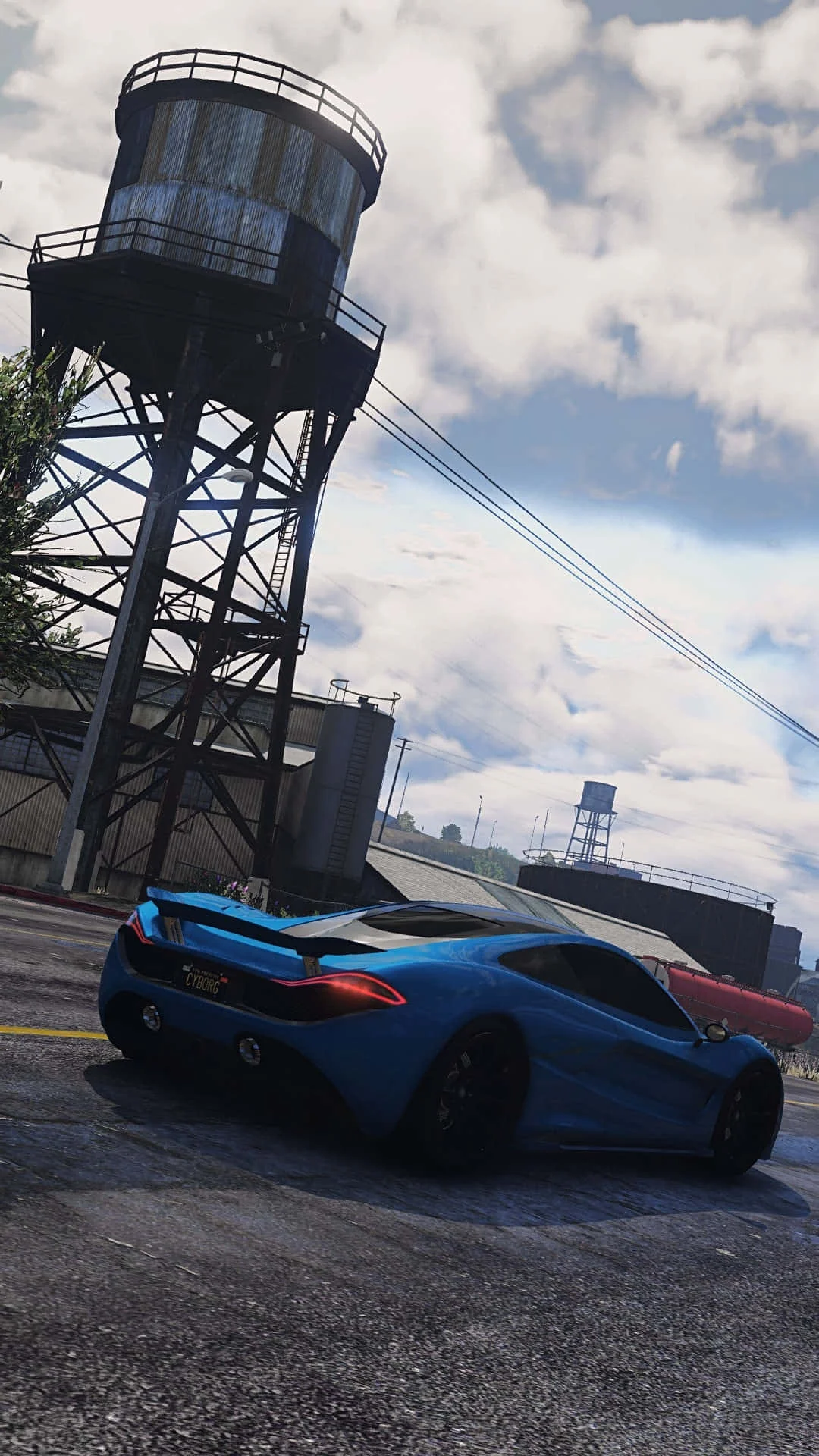
Fivem
This combination delivers exceptional performance with an average of 120 FPS, perfect for high refresh rate gaming and competitive play.
Average FPS: resolution vs quality settings
| Ultra | High | Medium | Low | |
|---|---|---|---|---|
| 4K Ultra HD | 47 | 60 | 75 | 95 |
| 1440p QHD | 84 | 108 | 135 | 171 |
| 1080p Full HD | 128 | 164 | 181 | 197 |
Cell color: green is 120+ FPS, teal is 60+, amber is 30+, red is below 30.
Fivem with AMD Ryzen 5 2600 + NVIDIA GeForce RTX 4070, In-Depth Analysis
# AMD Ryzen 5 2600 + NVIDIA GeForce RTX 4070 in Fivem: Benchmark Analysis
This combination pairs a 6-core Zen+ processor from 2018 with a current-generation Ada Lovelace GPU, producing a system that ranks in the 30th percentile of all tested combos for Fivem. The data shows a clear pattern: the RTX 4070 carries the load at higher resolutions, while the Ryzen 5 2600 becomes the primary constraint at 1080p, especially with lower graphics presets.
FAQ
Q: What is the combo's overall ranking in Fivem?
A: This CPU-GPU pair ranks 1127 out of 3707 tested combinations, placing it in the top third of all systems tested for this game.
Q: How does the Ryzen 5 2600 compare to its nearest rivals in synthetic benchmarks?
A: The CPU scores an average benchmark of 21484, which is 0.2% ahead of the Intel Core Ultra 5 228V, 0.5% ahead of the Intel Core i9-11900H, and 1.2% ahead of the AMD EPYC 9454. The Intel Xeon D-1746TER sits 0.7% ahead of the Ryzen 5 2600.
Q: What is the RTX 4070's percentile ranking among all GPUs?
A: The GPU sits at the 81st percentile versus all GPUs, with an average benchmark score of 37648. Its nearest rival, the NVIDIA Tesla P4, scores 37628 (0.1% behind), while the AMD Radeon RX Vega 56 is 0.4% behind at 37507.
Q: What frame rates can this combo achieve at 1440p with High settings?
A: At 2560x1440 with High settings, the measured average FPS is 108, which is suitable for smooth multiplayer gameplay on most displays.
Q: What is the best measured performance at 4K?
A: At 3840x2160, the peak average FPS is 95 with Low settings. Medium settings drop to 75 average FPS, High settings yield 60 average FPS, and Ultra settings fall to 47 average FPS.
Q: How large is the performance gap between Low and Ultra at 1080p?
A: At 1920x1080, Low settings produce 197 average FPS, while Ultra settings produce 128 average FPS—a difference of 69 FPS, or roughly 35% lower performance at the highest preset.
How This Combo Ranks
The combo rank of 1127 out of 3707 tested combinations indicates that this pairing sits comfortably in the upper-middle portion of the database. This ranking reflects a system that can deliver playable frame rates across all tested resolutions and settings, though it is not among the top-tier configurations.
The ranking context is important: the Ryzen 5 2600's 75th percentile score among all CPUs (average benchmark 21484) is respectable for a processor from the 2000 series, but it lags behind more modern CPUs in single-thread performance. The RTX 4070, by contrast, sits at the 81st percentile among all GPUs, making it the stronger component in this pairing.
The data suggests that this combo's ranking is more constrained by the CPU than the GPU. At lower resolutions and settings, the gap between this combo and higher-ranked systems widens, as the Ryzen 5 2600's 6 cores and 12 threads become the limiting factor. At 4K Ultra, however, the RTX 4070's capabilities shine through, and the combo's position improves relative to systems with weaker GPUs.
CPU Role
The AMD Ryzen 5 2600 features 6 cores and 12 threads, with a base clock of 3.40 GHz and a boost clock of 3.90 GHz. This Zen+ architecture processor, built on GlobalFoundries' 12 nm process with 4,800 million transistors, communicates with the RTX 4070 through a PCIe Gen 3 interface with 16 lanes.
In Fivem, which is a multiplayer modification for Grand Theft Auto V, the CPU handles game logic, physics, and the simulation of other players' actions. The Ryzen 5 2600's multi-threaded performance, evidenced by a Cinebench R15 multi-core score of 1248 and a Passmark multithread score of 13160, provides adequate headroom for these tasks. However, the single-thread performance—a Cinebench R15 single-core score of 157.3 and a Passmark single-thread score of 2239—becomes more critical at lower resolutions where the GPU can render frames faster than the CPU can feed it.
The data reveals this bottleneck clearly: at 1080p Low, the combo achieves 197 average FPS, but at 1080p High, the average drops to 164 FPS. The difference between Low and High at 1080p (33 FPS) is smaller than the difference between Low and High at 4K (35 FPS at 4K versus 33 FPS at 1080p), suggesting that the CPU's ability to handle increased draw calls at higher settings is a limiting factor.
The CPU's 16 MB of shared L3 cache and dual-channel DDR4 memory support with 46.9 GB/s bandwidth provide adequate data throughput for this game's open-world environment, but the Zen architecture's lower instructions-per-clock compared to newer designs means the processor must rely on its boost clock of 3.90 GHz to keep up with the GPU.
Measured FPS Breakdown
The measured FPS data covers four resolutions (1920x1080, 2560x1440, 3840x2160) and four settings presets (Low, Medium, High, Ultra), with average FPS reported for all twelve combinations.
At 1920x1080, the lowest resolution tested, the combo delivers its highest frame rates: 197 average FPS at Low, 181 at Medium (with a minimum of 154 and maximum of 208), 164 at High, and 128 at Ultra. The spread from Low to Ultra is 69 FPS, indicating that settings have a substantial impact on performance at this resolution.
At 2560x1440, the average FPS drops across all presets: 171 at Low, 135 at Medium (minimum 115, maximum 156), 108 at High, and 84 at Ultra. The difference between Low and Ultra here is 87 FPS, showing that the GPU becomes more influential at this resolution, but the CPU still contributes to the scaling.
At 3840x2160, the highest resolution tested, the frame rates compress significantly: 95 at Low, 75 at Medium (minimum 64, maximum 86), 60 at High, and 47 at Ultra. The difference between Low and Ultra is 48 FPS, and the maximum frame rate at any setting is 95 FPS, indicating that 4K gaming with this combo is possible but requires settings adjustments to maintain high refresh rates.
The Medium preset at each resolution provides the most complete data with min and max FPS values. At 1080p Medium, the minimum of 154 FPS and maximum of 208 FPS show a 54 FPS range, suggesting frame time variability. At 1440p Medium, the range is 41 FPS (115 to 156), and at 4K Medium, the range narrows to 22 FPS (64 to 86), indicating that the GPU becomes more consistent at higher resolutions.
GPU Role
The NVIDIA GeForce RTX 4070 is built on the AD104 chip using TSMC's 5 nm process, with 35,800 million transistors and a die size of 294 mm². It features 12 GB of GDDR6X memory on a 192-bit bus, providing 504.2 GB/s of bandwidth. The GPU's base clock is 1920 MHz with a boost clock of 2475 MHz, and memory runs at 1313 MHz (21 Gbps effective).
The RTX 4070's 5888 shading units, 184 texture mapping units, and 64 raster output pipelines deliver a pixel rate of 158.4 GPixel/s and a texture rate of 455.4 GTexel/s. The FP32 performance of 29.15 TFLOPS places it among the upper tier of consumer GPUs, and its 46 ray tracing cores and 184 tensor cores provide additional capabilities for games that utilize these features.
The GPU's average benchmark score of 37648 places it at the 81st percentile, with nearest rivals including the NVIDIA Tesla P4 (37628, 0.1% behind) and AMD Radeon RX Vega 56 (37507, 0.4% behind). The RTX 4080 Mobile scores 38135, which is 1.3% ahead of the RTX 4070 desktop.
In Fivem, the RTX 4070's role is primarily rendering the game world, including draw distance, textures, and effects. The data shows that the GPU's performance scales predictably with resolution: at 4K Ultra, the combo manages 47 average FPS, which is playable but not ideal for competitive multiplayer. The GPU's 12 GB of VRAM and high bandwidth help maintain texture quality at all resolutions, and the memory clock of 1313 MHz ensures sufficient bandwidth for the game's streaming assets.
The GPU's 200 W TDP and dual-slot design make it suitable for most desktop systems, and its PCIe 4.0 x16 interface provides adequate bandwidth for the data transfer between CPU and GPU, though the Ryzen 5 2600's PCIe Gen 3 interface may slightly limit peak throughput.
Settings Recommendations
Based on the measured FPS data, the optimal settings preset depends on the target resolution and desired frame rate.
For 1080p gaming, the High preset at 164 average FPS is the best balance of visual quality and performance. The Ultra preset drops to 128 average FPS, which is still playable but may not justify the visual improvements for a multiplayer game. The Low preset at 197 average FPS offers the highest frame rates, but the visual compromise is significant. The Medium preset at 181 average FPS with a minimum of 154 FPS provides a stable experience for high-refresh-rate displays.
At 1440p, the High preset at 108 average FPS is recommended for most players. This provides smooth gameplay on 144 Hz monitors, though not at maximum refresh rates. The Medium preset at 135 average FPS is a better choice for competitive play, while the Ultra preset at 84 average FPS is acceptable for those prioritizing visual fidelity. The Low preset at 171 average FPS is available for maximum frame rates, though the visual quality at this preset may be noticeably reduced.
At 4K, the Medium preset at 75 average FPS is the recommended choice, as it maintains a playable frame rate while preserving some visual quality. The High preset at 60 average FPS is borderline for smooth gameplay, and the Ultra preset at 47 average FPS is not recommended for multiplayer due to potential input lag. The Low preset at 95 average FPS offers the best performance at this resolution, but the visual downgrade is substantial.
Resolution Scaling
The FPS scaling from 1080p to 4K reveals important information about which component limits performance at each resolution.
At Low settings, the average FPS drops from 197 at 1080p to 171 at 1440p (a 13% decrease) and further to 95 at 4K (a 52% decrease from 1080p). This steep drop at 4K indicates that the GPU is the primary limiting factor at low settings, as the CPU has enough headroom to feed the GPU at lower resolutions but the GPU's rendering workload becomes overwhelming at 4K.
At High settings, the average FPS drops from 164 at 1080p to 108 at 1440p (a 34% decrease) and to 60 at 4K (a 63% decrease from 1080p). The larger percentage drop at High settings compared to Low settings suggests that the GPU's workload increases disproportionately with both resolution and visual quality.
The Medium preset provides the most complete data with min and max FPS values. At 1080p, the average is 181 FPS with a range of 54 FPS (154 to 208). At 1440p, the average drops to 135 FPS with a range of 41 FPS (115 to 156). At 4K, the average falls to 75 FPS with a range of 22 FPS (64 to 86). The narrowing range at higher resolutions indicates that the GPU becomes more consistent in its frame delivery as it approaches its performance limits, while at lower resolutions, the CPU's variability contributes to frame time spikes.
The scaling pattern—where FPS drops by roughly 13-34% from 1080p to 1440p and then by an additional 39-52% from 1440p to 4K—shows that the combo is CPU-limited at 1080p and GPU-limited at 4K. At 1080p, the Ryzen 5 2600's single-thread performance caps the frame rate, as evidenced by the relatively small difference between Low and High settings (33 FPS). At 4K, the RTX 4070's rendering workload dominates, and the difference between Low and Ultra (48 FPS) reflects the GPU's scaling with visual quality.
For players targeting 144 Hz at 1080p, the Medium preset (181 average FPS) is sufficient, but the Low preset (197 average FPS) provides more headroom for frame drops. At 1440p, the Medium preset (135 average FPS) is close to 144 Hz but may not sustain it consistently, while the High preset (108 average FPS) is better suited for 100 Hz displays. At 4K, the High preset's 60 average FPS is exactly at the 60 Hz threshold, making it a marginal choice, while the Medium preset's 75 average FPS offers more comfortable headroom.
Hardware Specifications
AMD Ryzen 5 2600
NVIDIA GeForce RTX 4070
FPS Benchmarks by Resolution & Settings
Performance data for AMD Ryzen 5 2600 + NVIDIA GeForce RTX 4070 in Fivem
| Resolution | Settings | Avg FPS |
|---|---|---|
| 3840x2160 | Low | 95.0 |
| 3840x2160 | Medium | 75.0 |
| 3840x2160 | High | 60.0 |
| 3840x2160 | Ultra | 47.0 |
| 2560x1440 | Low | 171.0 |
| 2560x1440 | Medium | 135.0 |
| 2560x1440 | High | 108.0 |
| 2560x1440 | Ultra | 84.0 |
| 1920x1080 | Low | 197.0 |
| 1920x1080 | Medium | 181.0 |
| 1920x1080 | High | 164.0 |
| 1920x1080 | Ultra | 128.0 |
Fivem with Ryzen 5 2600 + Other GPUs
See how Fivem performs with the same CPU but different graphics cards.
Fivem with RTX 4070 + Other CPUs
See how Fivem performs with the same GPU but different processors.
Other Games with Ryzen 5 2600 + RTX 4070
Explore FPS benchmarks for other games using this same hardware combination.