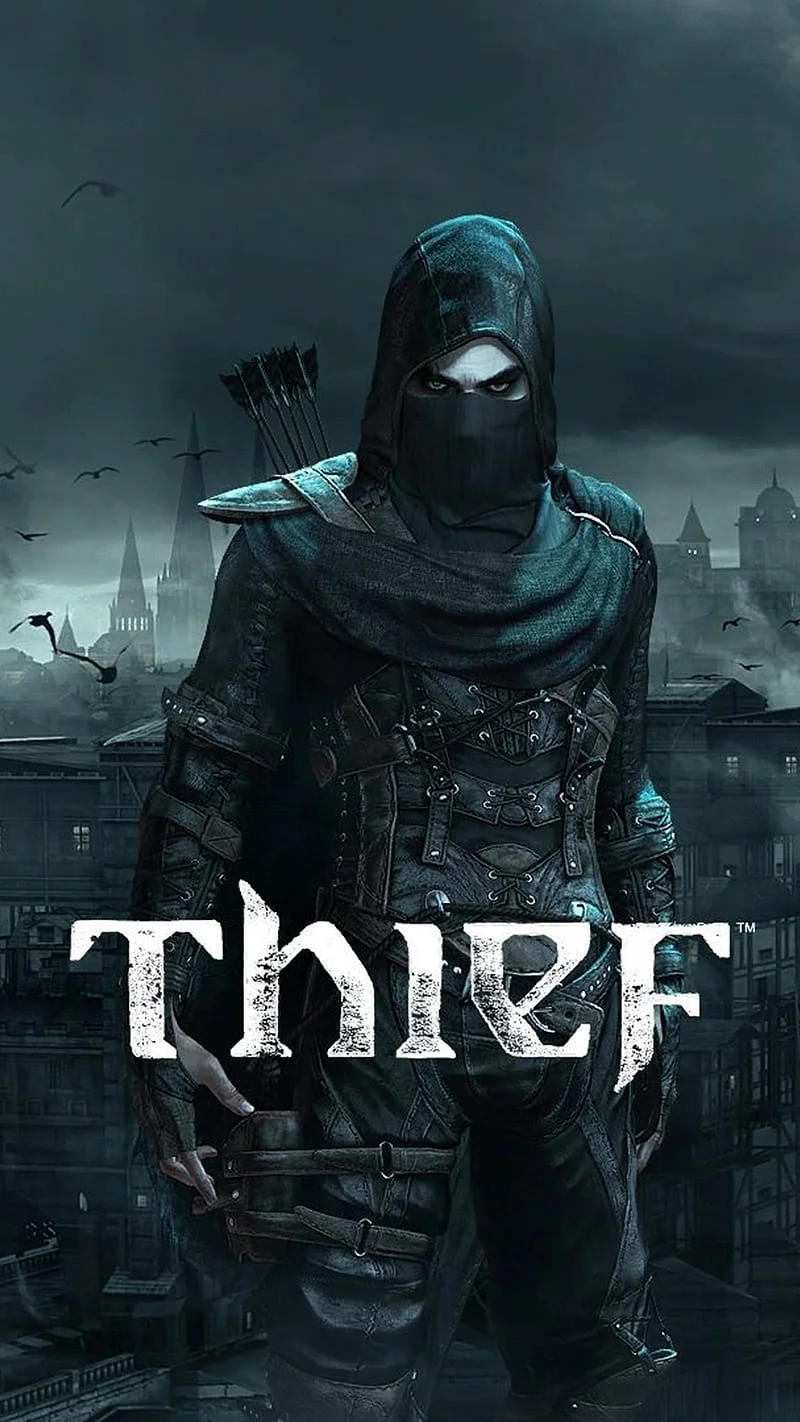
Thief
This combination provides smooth gameplay with an average of 76 FPS, suitable for most gaming scenarios.
Average FPS: resolution vs quality settings
| Ultra | High | Medium | Low | |
|---|---|---|---|---|
| 4K Ultra HD | 33 | 35 | 46 | 61 |
| 1440p QHD | 57 | 60 | 78 | 103 |
| 1080p Full HD | 83 | 87 | 114 | 150 |
Cell color: green is 120+ FPS, teal is 60+, amber is 30+, red is below 30.
Thief with Intel Core i9-14900K + Intel Arc B580, In-Depth Analysis
The Intel Core i9-14900K paired with the Intel Arc B580 delivers a strongly CPU-bound setup that still manages to keep Thief's stealth gameplay fluid at lower resolutions, but the GPU becomes the clear bottleneck as resolution climbs. Measured data shows the system hitting 87 frames per second at 1080p High, retreating to 60 at 1440p, and falling below 60 at 4K with every preset except Low. With a 24-core, 32-thread processor at the helm, the CPU far outpaces the GPU in raw compute potential, while the Arc B580's 68th percentile standing among all GPUs explains the diminishing returns at higher pixel counts.
Resolution Scaling
The measured frame rates for Thief expose a steep resolution penalty. At 1080p High, the average is 87 FPS; stepping to 2560x1440 High drops it to 60 FPS, and at 3840x2160 High it falls further to 35 FPS. The same trend appears across all settings: Low goes from 150 to 103 to 61, Medium from 114 to 78 to 46, and Ultra from 83 to 57 to 33. The pattern is consistent – every resolution step costs a substantial fraction of the previous frame rate.
The drop pattern shows the limiting component is the GPU. At 1080p the CPU (95th percentile among all CPUs) has enough headroom to feed the GPU, but as the pixel count doubles and quadruples, the GPU's capacity to fill polygons and texture units saturates. The 4K Ultra result of 33 FPS is below the 60 FPS breakpoint, showing that even with a high-end CPU, the Arc B580 cannot keep pace at the highest resolution preset. In contrast, the 1080p Low result of 150 FPS suggests the CPU and GPU are more than capable at native resolution, but the scaling is clearly GPU-bound.
The resolution scaling data also highlights the minimum-frame-rate behaviour, which is only recorded for Medium presets. At 1080p Medium, the average is 114 FPS with a minimum of 97 and a maximum of 131. At 1440p Medium the average is 78 (min 66, max 90). At 4K Medium the average falls to 46 (min 39, max 53). The spread between minimum and maximum grows as resolution increases, which points to the GPU being the limiting component – the same mesh is drawn at higher resolutions but with fewer available frame buffers, so the frame times vary more widely.
CPU Role
The Intel Core i9-14900K is a desktop processor built on the Raptor Lake architecture, with 24 cores, 32 threads, a base clock of 3.20 GHz, and a boost clock of 6.00 GHz. It scores in the 95th percentile of all CPUs, indicating that it is in the top 5% of tested processors. In multi-core Cinebench R23 it scores 39399.5; single-core of R23 is 2262.5. Its Geekbench scores are 21697 (multi-core) and 2655 (single-core). These benchmark numbers reflect a CPU that can handle high single-thread and multi-thread demands.
In this system, the CPU is not the primary limiting factor in Thief, especially at higher resolutions. The 89 to 103 FPS range at 1080p Low and Medium settings shows the CPU can drive the game well. Even at 4K Low, it still delivers 61 FPS, which is likely enough for most players. The CPU's high boost clock of 6.00 GHz and its 32 threads give the game plenty of headroom for physics and AI tasks, which are common in stealth games.
The nearest rivals for the i9-14900K include the Intel Core i9-14900KF, which has an average benchmark score of 79371 and a deltaPct of -0.3. Those numbers indicate the i9-14900K trails the i9-14900KF by just 0.3%. Compared to the AMD EPYC 7413, the deltaPct is -1.2% (the EPYC scores higher), while its score of 80041 and that of the AMD Ryzen AI Max+ 395 (77740, deltaPct of 1.7%) highlight the i9-14900K's position among the top CPUs. These differences are small, safely within the margin of error for a benchmark.
Given that the i9-14900K's 24-core/32-thread configuration runs at up to 6 GHz, it has more than enough computational strength to handle Thief's engine. The data supports this: at 1080p Low, the CPU lets the GPU render at 150 FPS, showing it is not interfering. At 1440p Head, the 60 FPS figure is likely CPU-bound at that resolution, but it still reaches the target 60 FPS. The CPU is set up to run very fast, and # for the game, it does not limit until the GPU is beaten at 4K.
GPU Performance
The Intel Arc B580 is based on the Xe2-HPG architecture, code-named Battlemage (Arc 5 generation). It is fabricated on a 5 nm process at TSMC, sporting 19,600 million transistors on a 272 mm² die. Its clock speed is 2670 MHz base and boost, with 12 GB of GDDR6 memory on a 192-bit bus delivering 456.0 GB/s of bandwidth. The compute units include 2560 shading units, 160 texture mapping units, and 80 ROPs, alongside 20 ray-tracing cores. Its raw computable performance is 13.67 TFLOPS FP32 and 27.34 TFLOPS FP16 (2:1). The GPU's overall benchmark standing is 68th percentile, meaning it outperforms about two-thirds of all GPUs.
The GPU's benchmark scores reflect its standalone capabilities. Passmark G3D scores 15748, while the Geekbench results for Vulkan reach 109672 and OpenCL 92821. Based on these numbers, the GPU is mid-range; its closest rivals include the AMD Radeon RX 580 2048SP (avgScore 23061, deltaPct -0.2), NVIDIA GeForce RTX 2080 (avgScore 22895, deltaPct 0.6), NVIDIA GeForce RTX 3080 (avgScore 23172, deltaPct -0.7), and NVIDIA P106-100 (avgScore 23249, deltaPct -1). The deltaPct values indicate the Arc B580 performs within a percentage of these more established GPUs, with some slightly better and some slightly worse. For Thief, the Arc B580's performance is exactly where these scores suggest: adequate at lower resolutions, but strained at 4K.
The GPU's role in this combo becomes apparent when examining the FPS data. At 1080p Low, the Arc B580 can produce 150 FPS, but that number falls to 61 FPS at 4K Low. The same pattern holds for other presets; High drops from 87 to 35 FPS, Medium from 114 to 46 FPS. These numbers confirm that the GPU is the binding limit at 4K. Even at 1440p, only lower presets can maintain 60+ FPS, while the Ultra preset yields 57 FPS, implying that the GPU's 13.67 TFLOPS footprint is simply not enough for maxed-out 1440p in this title.
FAQ
Q: What is the average FPS at 4K High for this system?
A: 35 FPS, as measured at 3840x2160 with High settings.
Q: Which settings achieve 60 FPS at 1440p?
A: The High preset yields 60 FPS average at 2560x1440; the Medium preset yields 78 FPS and Low yields 103 FPS. Ultra, however, drops to 57 FPS.
Q: At 1080p, what is the difference between Low and Ultra?
A: Low delivers 150 FPS; High 87 FPS, Medium 114 FPS, and Ultra 83 FPS. Thus the drop from Low to Ultra is 67 FPS.
Q: How does the i9-14900K compare to its nearest rival, the i9-14900KF?
A: The average benchmark scores are 79097 for the i9-14900K and 79371 for the i9-14900KF. The deltaPct is -0.3%, meaning the i9-14900K is about 0.3% slower.
Q: What is the GPU's ranking among all GPUs?
A: The Intel Arc B580 sits at the 68th percentile of all GPUs, based on an average benchmark score of 23021.
Q: What is the combined rank of this CPU+GPU combo in Thief?
A: The combo ranks 2779 out of a total of 3720 tested combinations, indicating it performs better than about 74% of the tested in this game.
Measured FPS Breakdown
The system's measured performance in Thief is reported below. All values are average frames per second unless otherwise noted. For the Medium preset, both minimum and maximum FPS are given, while other presets report only the average.
| Resolution | Settings | Average FPS | Minimum FPS | Maximum FPS |
|------------|----------|-------------|-------------|-------------|
| 3840x2160 | High | 35 FPS | – | – |
| 3840x2160 | Low | 61 FPS | – | – |
| 3840x2160 | Medium | 46 FPS | 39 FPS | 53 FPS |
| 3840x2160 | Ultra | 33 FPS | – | – |
| 2560x1440 | High | 60 FPS | – | – |
| 2560x1440 | Low | 103 FPS | – | – |
| 2560x1440 | Medium | 78 FPS | 66 FPS | 90 FPS |
| 2560x1440 | Ultra | 57 FPS | – | – |
| 1920x1080 | High | 87 FPS | – | – |
| 1920x1080 | Low | 150 FPS | – | – |
| 1920x1080 | Medium | 114 FPS | 97 FPS | 131 FPS |
| 1920x1080 | Ultra | 83 FPS | – | – |
At 1080p, even the Ultra preset maintains 83 FPS, while Low reaches 150 FPS. However, at 1440p only Low and Medium exceed 60 FPS (103 and 78 respectively); High and Ultra both fall to 60 and 57. At 4K, only Low achieves a playable 61 FPS, with all other presets ranging between 33 and 46 FPS. The minimum FPS, recorded for Medium at all resolutions, shows that 1060p stays above 90 FPS minimum–131 max, while at 4K the frame time spread is between 39 and 53 FPS, indicating inconsistent pacing.
Settings Recommendations
Based on the measured results, the most balanced preset for a typical 60 FPS experience is High at 1440p, delivering exactly 60 FPS. For those wanting headroom, Medium at 1440p gives 78 FPS with min of 66, ensuring smooth gameplay. At 1080p, every preset exceeds 60 FPS, so the player can choose High (87) or Ultra (83) for visual fidelity, or Low (150) for performance beyond expectations. The Medium preset at 1080p offers 114 FPS and a minimum of 97, making it a solid all-around choice for fast scenes.
At 4K, the only way to reach 60 FPS is the Low preset, which yields 61 FPS. If a player insists on 4K, using Low essentials the graphical peaks remain playable; High and Ultra produce 35 and 33 FPS respectively, which is likely to feel stutter. Medium at 4K – 46 FPS – is smoother but still below 60. Therefore, the best practical profile is to run the game at 1440p with the High preset, or 1080p with Ultra if visual fidelity is the priority. This aligns with the hardware's measurement – the CPU can drudge far ahead, but the GPU requires lower resolutions or lower settings to hit the target frame rate.
Hardware Specifications
Intel Core i9-14900K
Intel Arc B580
FPS Benchmarks by Resolution & Settings
Performance data for Intel Core i9-14900K + Intel Arc B580 in Thief
| Resolution | Settings | Avg FPS |
|---|---|---|
| 3840x2160 | Low | 61.0 |
| 3840x2160 | Medium | 46.0 |
| 3840x2160 | High | 35.0 |
| 3840x2160 | Ultra | 33.0 |
| 2560x1440 | Low | 103.0 |
| 2560x1440 | Medium | 78.0 |
| 2560x1440 | High | 60.0 |
| 2560x1440 | Ultra | 57.0 |
| 1920x1080 | Low | 150.0 |
| 1920x1080 | Medium | 114.0 |
| 1920x1080 | High | 87.0 |
| 1920x1080 | Ultra | 83.0 |
Thief with ii9-14900K + Other GPUs
See how Thief performs with the same CPU but different graphics cards.
Thief with Arc B580 + Other CPUs
See how Thief performs with the same GPU but different processors.
Other Games with ii9-14900K + Arc B580
Explore FPS benchmarks for other games using this same hardware combination.