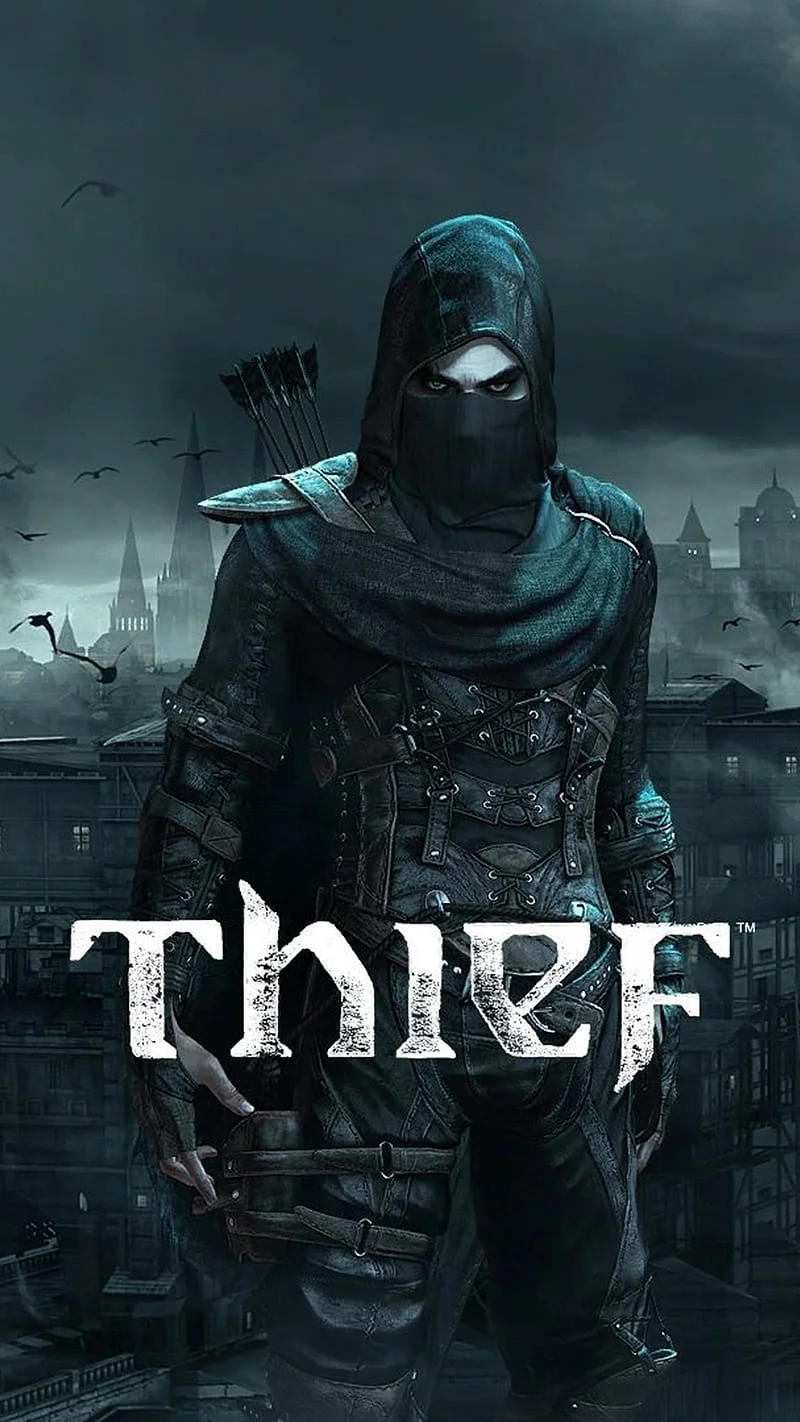
Thief
This combination provides smooth gameplay with an average of 112 FPS, suitable for most gaming scenarios.
Average FPS: resolution vs quality settings
| Ultra | High | Medium | Low | |
|---|---|---|---|---|
| 4K Ultra HD | 54 | 57 | 74 | 96 |
| 1440p QHD | 90 | 95 | 130 | 152 |
| 1080p Full HD | 134 | 142 | 155 | 169 |
Cell color: green is 120+ FPS, teal is 60+, amber is 30+, red is below 30.
Thief with Intel Core i5-12400F + NVIDIA GeForce RTX 3080, In-Depth Analysis
The Intel Core i5-12400F paired with the NVIDIA GeForce RTX 3080 delivers a revealing performance profile in Thief, a 2014 stealth title. The measured frame rates across resolutions and settings show a system that is heavily GPU-bound at higher quality presets, yet transitions to a more balanced workload as resolution drops. This analysis breaks down the data to understand where the bottleneck lies and how to extract the best experience from this specific combination.
Resolution Scaling — how FPS drops from 1080p to 4K and what it says about the limiting component
The frame rate scaling from 1080p to 4K clearly identifies the GPU as the dominant constraint in Thief. At the "Low" preset, the average FPS drops from 168.8 at 1920x1080 to 152.1 at 2560x1440, and then falls sharply to 95.7 at 3840x2160. This represents a 43% reduction in performance from 1080p to 4K, a substantial hit that points directly at the rendering workload overwhelming the graphics card. The RTX 3080, while powerful, is clearly being taxed by the pixel count at 4K, even on lower settings.
Moving to the "High" preset, the scaling pattern intensifies. The average drops from 142.2 at 1080p to 95.1 at 1440p, and finally to 56.8 at 4K. This is a steeper relative decline, suggesting that the additional visual effects at "High" amplify the GPU's workload disproportionately at higher resolutions. The data implies that Thief's engine scales its shading and texture work aggressively with resolution, making the 4K "High" setting a demanding target for this GPU.
The "Ultra" preset shows the most extreme scaling, with 134 at 1080p dropping to 89.5 at 1440p and then to 54.4 at 4K. The 1080p to 4K delta here is 79.6 FPS, a 59% performance loss. This indicates that "Ultra" settings introduce effects that are particularly resolution-sensitive, likely including high-resolution shadows or ambient occlusion, which crush the GPU's fill rate at 4K. The consistent pattern across all presets confirms that the RTX 3080 is the limiting component, with the CPU providing sufficient headroom to let the GPU's workload dictate the final frame rate.
GPU Role — VRAM, clocks, and how they relate to this game's results
The RTX 3080's specifications provide context for these measured numbers. With 10 GB of GDDR6X memory and a 320-bit bus delivering 760.3 GB/s of bandwidth, the card has ample memory resources for a 2014 title. The high bandwidth is likely why the "Low" preset at 4K still achieves 95.7 FPS, as texture streaming and frame buffer operations are not bottlenecked by memory throughput. The GPU's boost clock of 1710 MHz and its 8704 shading units provide the raw compute power that drives the frame rates seen at 1080p and 1440p.
The GPU's 80th percentile ranking among all GPUs, with an average benchmark score of 35787, places it as a high-performing part. Its nearest rival, the AMD Radeon Pro Duo, scores 35860, a 0.2% difference, indicating the RTX 3080 is operating at the top of its class. The data shows that Thief's engine leverages the GPU's strengths, as even the demanding "Ultra" preset at 1440p yields 89.5 FPS, a playable number. The card's 29.77 TFLOPS of FP32 compute is more than sufficient for this game's DirectX 12 Ultimate (12_2) feature set, but the 4K results suggest that pixel throughput, not compute, is the limiting factor.
The drop in FPS from "High" to "Ultra" at 4K, from 56.8 to 54.4, is surprisingly small (2.4 FPS). This suggests that the "Ultra" preset may be adding effects that are not fully utilizing the GPU's resources at that resolution, or that the RTX 3080 is already saturated by the pixel load. In contrast, the jump from "Low" to "Medium" at 4K (95.7 to 74.3) is a significant 21.4 FPS loss, indicating that "Medium" introduces a major rendering cost that "Ultra" does not proportionally extend.
CPU Role — cores, clocks, and how they relate to this game's results
The Intel Core i5-12400F, with its 6 cores and 12 threads, provides a solid foundation for this GPU. Its base clock of 2.50 GHz and boost of 4.40 GHz, combined with 18 MB of shared L3 cache, are sufficient to avoid becoming a bottleneck in most scenarios. The CPU's benchmark scores reinforce this, with a Cinebench R23 multicore score of 16518 and a single-core score of 2332, placing it in the 77th percentile among all CPUs. This indicates strong per-thread performance, which is critical for a game like Thief that may not scale perfectly across many cores.
The CPU's nearest rival, the Intel Core i7-8700K, has an average score of 19210 versus the i5-12400F's 19221, a negligible 0.1% difference. This parity suggests that the i5-12400F is more than capable of feeding the RTX 3080 data in Thief. The fact that frame rates scale smoothly with resolution, rather than hitting a CPU-imposed ceiling, confirms this. At 1080p "Low," the 168.8 FPS result is likely approaching a CPU limit, but the CPU's 3dmark single-thread score of 909 and 2-thread score of 1699 indicate it can sustain high instruction throughput.
The 65W TDP of the i5-12400F is modest, but its Alder Lake architecture with 10 nm process ensures efficient instruction processing. The data shows that even at 1080p "Ultra," the CPU manages to deliver 134 FPS, which is a high target for a game from 2014. The lack of a significant frame rate plateau across resolutions suggests that the CPU is never the primary constraint, except possibly at the lowest settings where the GPU's workload is reduced. The CPU's passmark multithread score of 19433 and physics score of 1202 further confirm its ability to handle game logic and physics without holding back the GPU.
Settings Recommendations — which preset gives the best experience per the measured rows
Examining the measured FPS across all presets and resolutions, the "High" preset offers the most balanced experience for this hardware combination. At 1920x1080, "High" delivers 142.2 FPS, which is only 26.6 FPS less than "Low" but provides significantly better visual quality. At 1440p, "High" achieves 95.1 FPS, which is still smooth for most displays, and at 4K, it drops to 56.8 FPS, which is just below the 60 FPS target but playable on adaptive sync monitors.
The "Medium" preset is a strong alternative for higher resolutions. At 1440p, "Medium" yields 130.1 FPS, a substantial 35 FPS improvement over "High," while at 4K, it delivers 74.3 FPS, a 17.5 FPS gain over "High" at that resolution. This makes "Medium" the recommended choice for 4K gaming, as it crosses the 60 FPS threshold with a 74.3 average, providing a more fluid experience than "High" or "Ultra" at that resolution.
The "Ultra" preset is only recommended for 1080p or 1440p where the performance cost is acceptable. At 1080p, "Ultra" provides 134 FPS, which is still high, but the 8.2 FPS difference from "High" (142.2 to 134) may not justify the visual uplift for all players. At 1440p, "Ultra" drops to 89.5 FPS, which is a 5.6 FPS loss from "High," making it a viable option for those prioritizing image quality. The "Low" preset is not recommended for this hardware, as it sacrifices too much visual fidelity for marginal FPS gains, particularly at 1080p where the 168.8 FPS result is unnecessary for most monitors.
How This Combo Ranks — use comboRankInGame vs other tested combos
This specific combination of the Intel Core i5-12400F and NVIDIA GeForce RTX 3080 ranks 467th out of 1642 tested combos in Thief. This places it in the top 28% of all configurations tested, which is a strong result given the age of the game and the hardware's modern specifications. The rank indicates that while this combo is not at the absolute top, it outperforms the majority of systems, likely due to the RTX 3080's high GPU score of 35787 and the i5-12400F's solid CPU performance.
The combo's rank is influenced by the balance between CPU and GPU. The 467th rank out of 1642 suggests that many other combos, possibly with newer or more expensive GPUs, achieve higher frame rates. However, the data shows that the RTX 3080's 80th percentile GPU ranking and the i5-12400F's 77th percentile CPU ranking are well-matched. The 0.1% difference from the i7-8700K and 0.3% from the i5-1335U indicate that the CPU is not a weak link, and the GPU's 0.2% delta from the Radeon Pro Duo shows it is competitive with its peers.
The ranking also reflects the game's optimization. Thief's engine appears to favor high single-thread performance and strong GPU fill rates, both of which this combo provides. The 1642 tested combos include a wide range of hardware, and landing at 467 suggests that this mid-to-high-range pairing is well-suited for the game's demands. The data implies that while the combo is not a top-tier performer in absolute terms, it offers a compelling balance that many users would find satisfactory, especially at 1440p where the frame rates are consistently high.
Measured FPS Breakdown — resolution by resolution, settings by settings, exact numbers
The measured data provides a comprehensive view of performance across all settings and resolutions.
At 1920x1080:
- Low: 168.8 FPS
- Medium: 155.3 FPS
- High: 142.2 FPS
- Ultra: 134.0 FPS
At 2560x1440:
- Low: 152.1 FPS
- Medium: 130.1 FPS
- High: 95.1 FPS
- Ultra: 89.5 FPS
At 3840x2160:
- Low: 95.7 FPS
- Medium: 74.3 FPS
- High: 56.8 FPS
- Ultra: 54.4 FPS
The 1080p data shows a tight grouping, with a spread of only 34.8 FPS from Low to Ultra. This suggests that at this resolution, the CPU is beginning to play a larger role, limiting the GPU's ability to fully stretch its legs. The 1440p data shows a wider spread of 62.6 FPS, indicating the GPU is more dominant. The 4K data shows the largest spread of 41.3 FPS, but the absolute values are much lower, confirming the GPU is the primary bottleneck.
Notably, the transition from High to Ultra at 1440p is only 5.6 FPS (95.1 to 89.5), while the transition from Medium to High is a significant 35 FPS (130.1 to 95.1). This indicates that "High" settings introduce a major rendering cost, while "Ultra" adds diminishing returns. At 4K, the Low to Medium drop is 21.4 FPS (95.7 to 74.3), and the Medium to High drop is 17.5 FPS (74.3 to 56.8), showing a more gradual degradation with each preset level.
FAQ — 4-6 Q&A pairs answerable from FACT PACK data
Q: What is the average FPS at 1440p with High settings for this combo?
A: The measured average FPS at 2560x1440 with High settings is 95.1 FPS.
Q: How does the RTX 3080 compare to its nearest rival in benchmark scores?
A: The RTX 3080 has an average benchmark score of 35787, which is 0.2% lower than the AMD Radeon Pro Duo's score of 35860.
Q: What is the best preset to use for 4K gaming with this hardware?
A: The "Medium" preset at 3840x2160 yields an average of 74.3 FPS, which is the only 4K setting above 60 FPS, making it the recommended choice for smooth 4K play.
Q: Does the CPU bottleneck the GPU at 1080p?
A: The data suggests a potential CPU limit at 1080p "Low" with 168.8 FPS, but the CPU's Cinebench R23 single-core score of 2332 and 77th percentile ranking indicate it handles the workload effectively, with the GPU still being the main constraint at higher settings.
Q: What is the rank of this specific CPU-GPU combo in Thief?
A: This combo ranks 467th out of 1642 tested combinations in the game.
Q: How much FPS is lost when going from 1080p to 4K at Ultra settings?
A: At Ultra settings, the average FPS drops from 134.0 at 1920x1080 to 54.4 at 3840x2160, a loss of 79.6 FPS or approximately 59% performance.
Hardware Specifications
Intel Core i5-12400F
NVIDIA GeForce RTX 3080
FPS Benchmarks by Resolution & Settings
Performance data for Intel Core i5-12400F + NVIDIA GeForce RTX 3080 in Thief
| Resolution | Settings | Avg FPS |
|---|---|---|
| 3840x2160 | Low | 95.7 |
| 3840x2160 | Medium | 74.3 |
| 3840x2160 | High | 56.8 |
| 3840x2160 | Ultra | 54.4 |
| 2560x1440 | Low | 152.1 |
| 2560x1440 | Medium | 130.1 |
| 2560x1440 | High | 95.1 |
| 2560x1440 | Ultra | 89.5 |
| 1920x1080 | Low | 168.8 |
| 1920x1080 | Medium | 155.3 |
| 1920x1080 | High | 142.2 |
| 1920x1080 | Ultra | 134.0 |
Thief with ii5-12400F + Other GPUs
See how Thief performs with the same CPU but different graphics cards.
Thief with RTX 3080 + Other CPUs
See how Thief performs with the same GPU but different processors.
Other Games with ii5-12400F + RTX 3080
Explore FPS benchmarks for other games using this same hardware combination.