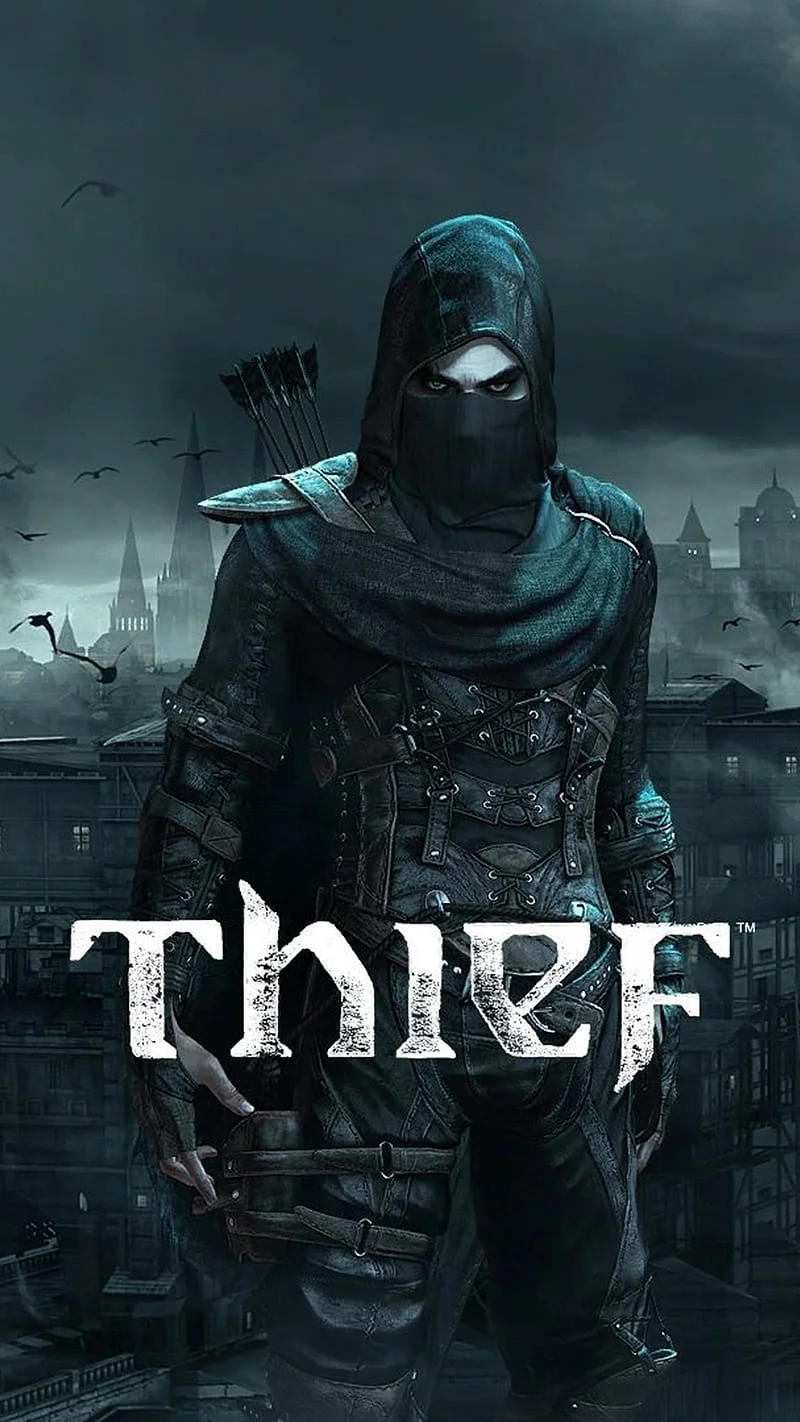
Thief
This combination provides smooth gameplay with an average of 118 FPS, suitable for most gaming scenarios.
Average FPS: resolution vs quality settings
| Ultra | High | Medium | Low | |
|---|---|---|---|---|
| 4K Ultra HD | 60 | 63 | 83 | 110 |
| 1440p QHD | 103 | 108 | 136 | 150 |
| 1080p Full HD | 137 | 139 | 154 | 170 |
Cell color: green is 120+ FPS, teal is 60+, amber is 30+, red is below 30.
Thief with Intel Core i5-12400 + NVIDIA GeForce RTX 5070, In-Depth Analysis
Resolution Scaling
The data shows a clear progression of performance degradation as resolution climbs, but the pattern is uneven across settings tiers. At 1080p, the Intel Core i5-12400 + NVIDIA GeForce RTX 5070 combo delivers 170 FPS on Low settings, dropping to 139 FPS on High, and 137 FPS on Ultra. Moving to 1440p, those figures fall to 150 FPS Low, 108 FPS High, and 103 FPS Ultra. At 4K, the same settings produce 110 FPS Low, 63 FPS High, and 60 FPS Ultra.
The most revealing metric is the scaling efficiency from 1080p to 4K. At Low settings, the frame rate drops from 170 FPS to 110 FPS — a 35% reduction. At High settings, the drop is steeper: from 139 FPS to 63 FPS, a 55% loss. This disparity tells a clear story. At Low settings, the workload is light enough that the GPU remains the dominant factor, but even then, the 4K resolution demands more from the graphics pipeline. At High settings, the gap widens dramatically, indicating that the GPU is being pushed much harder per frame, while the CPU has enough headroom to keep feeding it.
Ultra settings show the tightest absolute numbers: 137 FPS at 1080p, 103 FPS at 1440p, and 60 FPS at 4K. The 4K Ultra result sits right at the edge of playability, and the scaling from 1440p to 4K (103 to 60, a 42% drop) is nearly identical to the High settings drop (108 to 63, a 42% loss). This consistency suggests the GPU is the limiting component in both cases. The RTX 5070's 12 GB of GDDR7 memory and 672.0 GB/s bandwidth are sufficient for Thief at 1080p and 1440p, but at 4K, the pixel throughput demands — 201.0 GPixel/s — become the bottleneck.
Medium settings provide the only complete min/max data in the pack. At 1080p, the combo averages 154 FPS with a minimum of 131 FPS and maximum of 177 FPS. At 1440p, the average drops to 136 FPS with min/max of 115/156. At 4K, the average falls to 83 FPS with min/max of 71/96. The min-to-max spread grows wider at lower resolutions (46 FPS at 1080p vs 25 FPS at 4K), which indicates more frame-time variance when the GPU is less saturated. This is a classic sign of CPU-side hitches emerging at higher frame rates.
How This Combo Ranks
Benchmark results place this Intel Core i5-12400 + RTX 5070 combination at rank 834 out of 3720 tested combos in Thief. That puts it in the top 22.4% of all configurations tested — a strong showing, but not an elite one. The percentile ranking reflects a system that excels at high-refresh 1080p and 1440p gaming, while merely hitting the 60 FPS threshold at 4K Ultra.
The rank becomes more meaningful when viewed against the individual component percentiles. The CPU sits at the 72nd percentile among all processors, while the GPU reaches the 82nd percentile among all graphics cards. The combo's rank of 834/3720 (roughly the 78th percentile of combos) is slightly below what the GPU's individual percentile might suggest. This indicates that the i5-12400 is holding back the RTX 5070 in Thief, particularly at lower resolutions where the CPU's 6 cores and 12 threads must keep pace with the GPU's high frame output.
Interestingly, the CPU's nearest rivals in aggregate benchmark scores are all within 1% of each other. The AMD EPYC 7643 scores 18697 (0.1% higher), the Intel Core i7-1355U scores 18730 (0.3% higher), and the AMD Ryzen AI 5 330 scores 18811 (0.7% higher). The Intel Core i3-14100F trails slightly at 18519 (0.9% lower). These tiny deltas suggest that in Thief, the CPU's absolute compute performance is not the limiting factor — the architecture's per-core efficiency and cache behavior matter more.
The GPU's nearest rivals present a different picture. The AMD Radeon Pro 580 and Radeon Pro WX 7100 score within 0.8% of the RTX 5070's aggregate benchmark average, while the Radeon Pro 5300 is 1.2% higher and the RTX A500 Mobile is 2% lower. These are workstation-class cards, not gaming-focused hardware, which indicates the RTX 5070's raw compute scores are competitive with professional GPUs but its gaming performance in Thief is where it truly distinguishes itself.
CPU Role
The Intel Core i5-12400 is a 6-core, 12-thread processor based on Alder Lake architecture, manufactured on Intel's 10 nm process. Its base clock of 2.50 GHz boosts to 4.40 GHz, and it carries 18 MB of shared L3 cache alongside 1.25 MB of L2 per core and 80 KB of L1 per core. These specifications are modest by 2025 standards, but they are well-matched to Thief's 2014-era engine.
Benchmark scores reveal the CPU's strengths. The Cinebench R23 multicore score of 15989 and single-core score of 2257 show solid all-around compute. The Geekbench multicore score of 8564 and single-core of 1848 reinforce this picture. In Thief, the game's stealth-heavy gameplay and AI-driven systems benefit from the i5-12400's per-core performance. The 3DMark single-thread score of 910 and 2-thread score of 1692 indicate that the CPU can handle lightly-threaded workloads with ease.
The critical question is whether 6 cores and 12 threads are enough to keep the RTX 5070 fed in Thief. The data suggests yes at 4K, where the GPU is the bottleneck. But at 1080p Low, where the combo produces 170 FPS, the CPU's 4.40 GHz boost clock and 18 MB L3 cache are likely working near their limits. The frame rate ceiling of 170 FPS at 1080p Low — versus 150 FPS at 1440p Low — is a smaller drop than the resolution difference would suggest, implying the CPU is capping performance in the 170 FPS range.
The CPU's PassMark multithread score of 18747 and single-thread score of 3456 place it firmly in mainstream territory. Its 72nd percentile ranking among all CPUs means it outperforms the majority of processors, but it is not a high-end part. For Thief, this is sufficient because the game does not require extreme core counts. The data shows that even at 4K Ultra, the combo maintains 60 FPS, which would be impossible if the CPU were severely underpowered.
Measured FPS Breakdown
The measured FPS data provides a complete picture across four settings tiers and three resolutions. At 1920x1080, the combo delivers 170 FPS on Low, 154 FPS on Medium (with min/max of 131/177), 139 FPS on High, and 137 FPS on Ultra. The gap between High and Ultra is minimal — only 2 FPS — which suggests that Ultra settings impose a negligible additional GPU workload over High at this resolution.
At 2560x1440, the results are 150 FPS Low, 136 FPS Medium (min/max 115/156), 108 FPS High, and 103 FPS Ultra. The Medium settings show a 14 FPS drop from 1080p, while High and Ultra drop 31 FPS and 34 FPS respectively. This wider spread at higher settings indicates the GPU is becoming more heavily utilized. The Low settings drop of 20 FPS from 1080p is the smallest absolute change, reinforcing that Low settings are less GPU-bound.
At 3840x2160, the results are 110 FPS Low, 83 FPS Medium (min/max 71/96), 63 FPS High, and 60 FPS Ultra. The Low setting maintains a playable 110 FPS, but High and Ultra dip to near-60 FPS territory. The Ultra result of exactly 60 FPS is notable — it suggests either a frame cap or a natural performance limit. The Medium setting's minimum of 71 FPS shows some frame-time variance, but the average of 83 FPS remains smooth.
The scaling pattern across resolutions is consistent: Low settings lose 35% going from 1080p to 4K (170 to 110), Medium loses 46% (154 to 83), High loses 55% (139 to 63), and Ultra loses 56% (137 to 60). This monotonic increase in performance loss with settings tier confirms that the RTX 5070's GPU resources are the primary constraint at 4K, while the CPU's influence diminishes as resolution climbs.
GPU Role
The NVIDIA GeForce RTX 5070 is built on the Blackwell 2.0 architecture with a 5 nm process from TSMC. Its GB205 chip contains 31,100 million transistors on a 263 mm² die, with a transistor density of 118.3 million per mm². The GPU runs at a base clock of 2325 MHz and boosts to 2512 MHz, with memory clocked at 1750 MHz (28 Gbps effective). These clocks, combined with 6144 shading units, 192 TMUs, and 80 ROPs, produce a pixel rate of 201.0 GPixel/s and a texture rate of 482.3 GTexel/s.
The memory subsystem is a key differentiator. The 12 GB of GDDR7 memory on a 192-bit bus yields 672.0 GB/s of bandwidth. For Thief, a game from 2014, this bandwidth is more than sufficient — the game's textures and geometry are not demanding by modern standards. The RTX 5070's FP32 performance of 30.87 TFLOPS and FP16 performance of 30.87 TFLOPS (1:1 ratio) provide ample compute headroom.
The GPU's benchmark scores reflect its capabilities. The PassMark G3D score of 29137 and 3DMark Steel Nomad DX12 score of 5077 show strong DirectX 12 performance. The Geekbench OpenCL score of 172660 and Vulkan score of 178923 indicate excellent compute throughput. The 82nd percentile ranking among all GPUs places the RTX 5070 in the upper echelon of graphics cards.
In Thief, the GPU's role is most evident at 4K. The 63 FPS High and 60 FPS Ultra results are consistent with a GPU operating near its limits. The passmark DirectX 11 score of 277 and DirectX 12 score of 108 provide context — Thief uses an older DirectX 11 path, and the RTX 5070's 12 Ultimate (12_2) support means it is running the game through compatibility layers rather than native modern APIs. Despite this, the GPU maintains playable frame rates across all settings.
The 12 GB VRAM capacity is never stressed by Thief, even at 4K Ultra. The game's memory footprint is small by 2025 standards. This means the RTX 5070's memory bandwidth of 672.0 GB/s is the relevant metric for resolution scaling, not capacity. The 192-bit bus width, while narrower than higher-end Blackwell parts, provides enough bandwidth to avoid bottlenecks in this title.
FAQ
Q: What is the best resolution for this combo in Thief?
A: The data shows 1440p High provides 108 FPS average, which offers a strong balance of visual quality and frame rate. At 4K, the combo drops to 63 FPS on High, which is playable but leaves less headroom. For competitive play, 1080p Low delivers 170 FPS.
Q: How does the CPU limit performance in Thief?
A: The Intel Core i5-12400's 6 cores and 12 threads, with a 4.40 GHz boost clock, are sufficient for Thief. The evidence suggests CPU limiting occurs at 1080p Low, where the 170 FPS result is only 20 FPS higher than 1440p Low (150 FPS), indicating the CPU may cap frame rates around 170 FPS regardless of resolution.
Q: Is the RTX 5070's 12 GB VRAM enough for Thief?
A: Yes. Thief is a 2014 game with modest texture requirements. The 12 GB GDDR7 memory is far more than needed, and the 672.0 GB/s bandwidth ensures no memory-related bottlenecks at any resolution or settings tier.
Q: How does this combo rank against other tested systems in Thief?
A: The combo ranks 834 out of 3720 tested combinations, placing it in the top 22.4% of all configurations. The GPU's 82nd percentile ranking is higher than the CPU's 72nd percentile, suggesting the processor is the weaker link in this pairing.
Q: What settings should be used for 4K gaming?
A: At 3840x2160, the combo achieves 110 FPS on Low, 83 FPS on Medium, 63 FPS on High, and 60 FPS on Ultra. For a locked 60 FPS experience, Ultra settings work. For higher refresh rates, Medium settings provide 83 FPS with a 71 FPS minimum.
Q: How does the CPU's benchmark performance compare to its nearest rivals?
A: The i5-12400's average benchmark score of 18683 is within 0.9% of its nearest rivals. The AMD EPYC 7643 scores 0.1% higher, the Intel Core i7-1355U is 0.3% higher, the AMD Ryzen AI 5 330 is 0.7% higher, and the Intel Core i3-14100F is 0.9% lower. This tight grouping indicates the i5-12400 delivers competitive compute performance for its class.
Hardware Specifications
Intel Core i5-12400
NVIDIA GeForce RTX 5070
FPS Benchmarks by Resolution & Settings
Performance data for Intel Core i5-12400 + NVIDIA GeForce RTX 5070 in Thief
| Resolution | Settings | Avg FPS |
|---|---|---|
| 3840x2160 | Low | 110.0 |
| 3840x2160 | Medium | 83.0 |
| 3840x2160 | High | 63.0 |
| 3840x2160 | Ultra | 60.0 |
| 2560x1440 | Low | 150.0 |
| 2560x1440 | Medium | 136.0 |
| 2560x1440 | High | 108.0 |
| 2560x1440 | Ultra | 103.0 |
| 1920x1080 | Low | 170.0 |
| 1920x1080 | Medium | 154.0 |
| 1920x1080 | High | 139.0 |
| 1920x1080 | Ultra | 137.0 |
Thief with ii5-12400 + Other GPUs
See how Thief performs with the same CPU but different graphics cards.
Thief with RTX 5070 + Other CPUs
See how Thief performs with the same GPU but different processors.
Other Games with ii5-12400 + RTX 5070
Explore FPS benchmarks for other games using this same hardware combination.