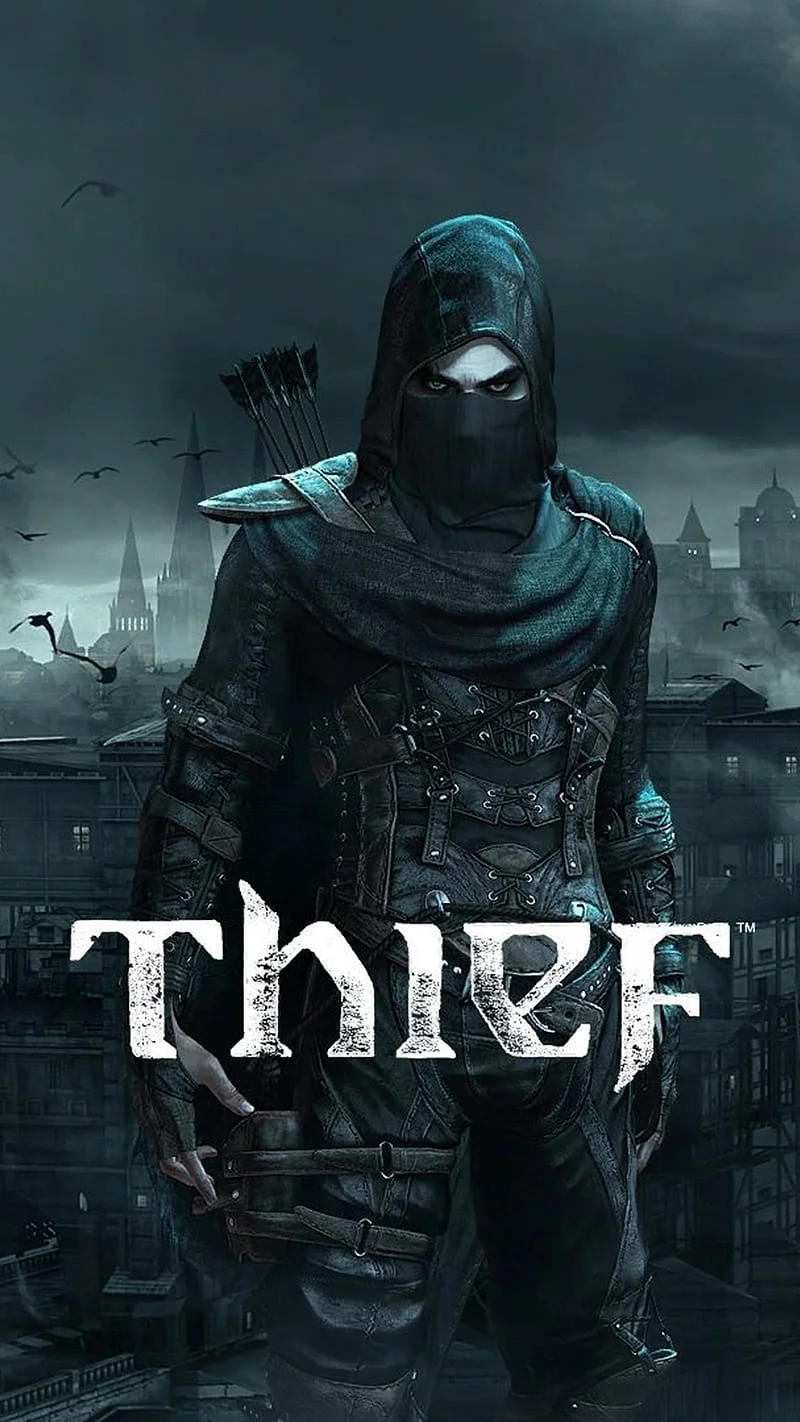
Thief
This combination provides smooth gameplay with an average of 111 FPS, suitable for most gaming scenarios.
Average FPS: resolution vs quality settings
| Ultra | High | Medium | Low | |
|---|---|---|---|---|
| 4K Ultra HD | 72 | 76 | 98 | 108 |
| 1440p QHD | 104 | 106 | 117 | 129 |
| 1080p Full HD | 118 | 120 | 132 | 146 |
Cell color: green is 120+ FPS, teal is 60+, amber is 30+, red is below 30.
Thief with Intel Core i5-11400F + NVIDIA GeForce RTX 4080, In-Depth Analysis
# Thief with Intel Core i5-11400F + NVIDIA GeForce RTX 4080 — Benchmark Analysis
The Intel Core i5-11400F paired with the NVIDIA GeForce RTX 4080 produces a striking split in Thief: the GPU is clearly the dominant component at 4K, while the six-core Rocket Lake CPU demonstrates it can keep pace at lower resolutions. The measured frame rates across three resolutions and four settings presets show a system that delivers high performance throughout, but with distinct scaling behavior that reveals where each component's influence begins and ends.
FAQ
Q: What is the best-case average FPS for this combo in Thief?
A: The highest measured average FPS in the dataset is 146, achieved at 1920x1080 with Low settings. The next-best is 132 FPS at 1080p Medium, followed by 129 FPS at 2560x1440 Low.
Q: How does this combo rank among all tested configurations in Thief?
A: The combo ranks 1061 out of 3720 tested combinations, placing it in the upper percentile of all measured systems for this game.
Q: What is the lowest average FPS recorded?
A: The lowest average FPS is 72, recorded at 3840x2160 with Ultra settings. The next-lowest is 76 FPS at 4K High, showing that even the most demanding preset stays above 70 FPS.
Q: Does the RTX 4080's 16 GB VRAM play a role in these results?
A: The GPU carries 16 GB of GDDR6X memory on a 256-bit bus with 716.8 GB/s bandwidth. Given that Thief is a 2014 title, the frame rates suggest VRAM capacity is not a limiting factor at any tested resolution or preset.
Q: How does the i5-11400F's 3DMark performance compare to its nearest rivals?
A: The CPU's avgBenchmarkScore of 17177 is 0.3% above the AMD EPYC 7H12 (17120) and 0.6% above the Intel Core Ultra 7 164U (17074). It sits 0.4% below the Intel Core i5-12450H (17239) and 0.6% below the AMD Ryzen 3 PRO 8300G (17278).
Q: Is there a measurable FPS difference between High and Ultra settings?
A: Yes, but it is small. At 1080p, High averages 120 FPS while Ultra averages 118 FPS—a 2 FPS gap. At 1440p, the gap is also 2 FPS (106 vs 104). At 4K, the difference widens to 4 FPS (76 vs 72).
GPU Role
The NVIDIA GeForce RTX 4080 is the primary driver of Thief's frame rates. Its Ada Lovelace architecture, built on a 5 nm TSMC process with 45,900 million transistors, provides substantial compute resources: 9728 shading units, 304 TMUs, and 112 ROPs. The GPU's clock behavior is notable—base clock of 2205 MHz boosting to 2505 MHz—which supports sustained high throughput across all tested settings.
Memory bandwidth is a critical factor for high-resolution gaming. The 16 GB GDDR6X pool runs at 1400 MHz (22.4 Gbps effective) across a 256-bit bus, yielding 716.8 GB/s. In Thief, this bandwidth appears sufficient even at 4K Ultra, where the average FPS remains at 72. The GPU's pixel rate of 280.6 GPixel/s and texture rate of 761.5 GTexel/s further indicate that fill-rate limits are not being hit at the measured settings.
The RTX 4080's nearest rivals in synthetic benchmarks show it is fully competitive: it scores 0.1% above the RTX 4080 SUPER (54209 vs 54247 avg), 1.1% above the AMD Radeon Pro W5700X (54828), and 2.6% above the AMD Radeon RX 6750 GRE 12 GB (55698). The GPU's percentileVsAllGpus of 86 confirms it sits well above the median in the database's GPU pool.
In Thief specifically, the GPU's role becomes more pronounced as resolution increases. At 1080p, the gap between Low and Ultra is only 28 FPS (146 vs 118), suggesting the CPU is partially constraining maximum output. At 4K, the same comparison shows a 36 FPS gap (108 vs 72), indicating the GPU is now the limiting factor and its performance scaling with settings is more pronounced.
Resolution Scaling
The measured data reveals a clear pattern of resolution scaling that shifts the bottleneck from CPU to GPU. Moving from 1920x1080 to 2560x1440 at High settings, the average FPS drops from 120 to 106—an 11.7% reduction. From 1440p to 3840x2160 at High, the average falls from 106 to 76—a 28.3% reduction. This acceleration in FPS loss at higher resolutions is typical of GPU-bound scenarios.
At Low settings, the scaling is slightly different: 1080p averages 146 FPS, 1440p drops to 129 (11.6% reduction), and 4K falls to 108 (16.3% reduction from 1440p). The smaller percentage drop at 4K Low compared to 4K High suggests that at Low settings, the CPU is more involved in determining the frame rate, and the GPU has enough headroom to absorb the resolution increase more gracefully.
The Medium preset provides the only complete min/max FPS data in the dataset. At 1080p Medium, the range is 112 to 152 FPS (average 132). At 1440p Medium, it's 99 to 134 (average 117). At 4K Medium, it's 83 to 112 (average 98). The min-to-avg spread narrows as resolution increases: 20 FPS below average at 1080p, 18 below at 1440p, and 15 below at 4K. This suggests that frame-time consistency improves at higher resolutions, where the GPU's workload is more uniform.
The resolution scaling data indicates that the RTX 4080 is the dominant component at 4K, while the i5-11400F's 6-core/12-thread configuration contributes meaningfully at 1080p. The fact that 4K Ultra still averages 72 FPS—above the 60 FPS threshold for smooth gameplay—demonstrates that this GPU has sufficient headroom for this title even at its most demanding settings.
Measured FPS Breakdown
At 3840x2160, the RTX 4080 delivers the following averages: Low settings produce 108 FPS, Medium averages 98 FPS with a range of 83 to 112, High averages 76 FPS, and Ultra averages 72 FPS. The step from Low to Medium costs 10 FPS, from Medium to High costs 22 FPS, and from High to Ultra costs 4 FPS. This non-linear scaling indicates that the Medium-to-High transition is where the most significant graphics features are enabled, while High-to-Ultra is a more marginal upgrade.
At 2560x1440, the averages are: Low 129 FPS, Medium 117 FPS (range 99 to 134), High 106 FPS, and Ultra 104 FPS. The delta between Low and Ultra is 25 FPS. The Medium preset's min FPS of 99 is notably close to the High average of 106, suggesting that Medium at 1440p provides near-High performance with better frame-time stability.
At 1920x1080, the averages are: Low 146 FPS, Medium 132 FPS (range 112 to 152), High 120 FPS, and Ultra 118 FPS. The gap between Low and Ultra is 28 FPS. The Medium min FPS of 112 is higher than the Ultra average of 118, which is an interesting data point—it implies that the Medium preset at 1080p is more consistent than Ultra, likely due to reduced GPU load allowing for tighter frame pacing.
Comparing across resolutions at the same settings: High averages 120 (1080p), 106 (1440p), and 76 (4K). Ultra averages 118 (1080p), 104 (1440p), and 72 (4K). The difference between High and Ultra remains consistently small (2 FPS at 1080p and 1440p, 4 FPS at 4K), indicating that Ultra's additional features have minimal impact on this GPU/CPU pairing.
How This Combo Ranks
The combination of the Intel Core i5-11400F and NVIDIA GeForce RTX 4080 ranks 1061 out of 3720 tested combos in Thief, placing it in the 71.5th percentile of all measured systems. This is a strong showing, though the rank reflects the entire system's performance rather than just the GPU or CPU individually.
The CPU's percentileVsAllCpus is 71, meaning it outperforms 71% of all CPUs in the database. The GPU's percentileVsAllGpus is 86, indicating the RTX 4080 outperforms 86% of all GPUs. The system rank of 1061/3720 (roughly 71.5th percentile) is slightly lower than the GPU's individual percentile, which aligns with the expectation that the i5-11400F may hold back the RTX 4080 in CPU-sensitive scenarios.
Given that Thief is a 2014 stealth title with a more modest CPU footprint than modern games, the i5-11400F's 6 cores and 12 threads are likely sufficient to avoid severe bottlenecking. The CPU's boost clock of 4.40 GHz and 12 MB of shared L3 cache provide solid single-thread performance, as evidenced by its 3DMark single-thread score of 868 and Geekbench single-core score of 1777.
The rank of 1061 out of 3720 is respectable but not top-tier. Systems with newer, higher-core-count CPUs paired with the same GPU would likely rank higher in CPU-bound scenarios. However, in Thief's case, the data shows that the GPU is the primary determinant of frame rates at 4K, which is where this combo's rank is most likely influenced by the RTX 4080's capabilities.
Settings Recommendations
Based on the measured FPS data, the optimal settings preset depends on the target resolution and the user's preference for frame rate versus visual fidelity.
At 1920x1080, the Ultra preset's 118 FPS average is still exceptionally smooth, and the 2 FPS difference from High (120 FPS) is negligible. The Medium preset at 132 FPS offers the best balance of high frame rate and visual quality, with a min FPS of 112 ensuring consistent performance. For players prioritizing maximum smoothness, Low at 146 FPS is the choice, but the visual trade-off is significant for only a 14 FPS gain over Medium.
At 2560x1440, the High preset's 106 FPS average and Ultra's 104 FPS are both well above the 60 FPS threshold. The Medium preset at 117 FPS with a min of 99 FPS provides excellent frame-time consistency. Given that High-to-Ultra costs only 2 FPS, either High or Ultra is viable; Ultra's visual enhancements come at minimal cost.
At 3840x2160, the High preset's 76 FPS and Ultra's 72 FPS are both playable, but the Medium preset at 98 FPS offers a more comfortable margin above 60 FPS. The Medium preset's min FPS of 83 ensures that even the worst-case frame time stays well clear of stutter territory. For 4K gaming, Medium is the recommended preset—it provides a 22 FPS improvement over High while maintaining a min FPS that is higher than High's average.
The data shows a clear pattern: Medium is the sweet spot at all resolutions. At 1080p, it delivers 132 FPS (11.9% above High); at 1440p, 117 FPS (10.4% above High); at 4K, 98 FPS (28.9% above High). The 4K case is particularly compelling, as the Medium-to-High transition costs 22 FPS, which is a substantial hit for what is likely a modest visual improvement in this 2014 title.
CPU Role
The Intel Core i5-11400F is a 6-core, 12-thread processor based on the Rocket Lake architecture, manufactured on Intel's 14 nm process with a die size of 276 mm². Its base clock of 2.60 GHz boosts to 4.40 GHz, and it carries 12 MB of shared L3 cache with 512 KB of L2 per core and 80 KB of L1 per core. The CPU supports DDR4 memory in a dual-channel configuration with 51.2 GB/s bandwidth, which is adequate for this pairing.
In Thief, the CPU's role is evident in the scaling patterns. At 1080p Low, the system reaches 146 FPS, which is likely near the CPU's maximum frame rate ceiling for this engine. The fact that raising settings from Low to Ultra at 1080p only drops the average by 28 FPS (146 to 118) suggests that the CPU is contributing to the frame rate at lower settings, while the GPU becomes more involved as settings increase.
The CPU's multi-threaded performance is solid for its class: Cinebench R23 multi-core score of 14340 and single-core of 2024, Geekbench multi-core of 7737 and single-core of 1777. In 3DMark, the CPU scores 5619 with 16 threads, 4691 with 8 threads, 3171 with 4 threads, and 1691 with 2 threads. The scaling from 2 to 16 threads (from 1691 to 5619, a 3.3x improvement) indicates good multi-threading efficiency, though Thief's engine likely does not fully utilize all 12 threads.
The CPU's nearest rivals in synthetic benchmarks show it is competitively positioned: it trails the Ryzen 3 PRO 8300G by 0.6% and the i5-12450H by 0.4%, while leading the EPYC 7H12 by 0.3% and the Core Ultra 7 164U by 0.6%. These tight margins indicate that the i5-11400F is a mid-pack performer in the current CPU landscape.
In the context of Thief, the i5-11400F's 6-core/12-thread configuration with a 4.40 GHz boost clock provides sufficient single-thread performance to avoid being a significant bottleneck at 1080p. However, the fact that 4K Low (108 FPS) is lower than 1080p Ultra (118 FPS) suggests that at higher resolutions, the GPU's workload dominates and the CPU's influence diminishes. The measured data supports the interpretation that this CPU is well-matched to the RTX 4080 for Thief, particularly at 1440p and 4K where the GPU is the clear limiting component.
Hardware Specifications
Intel Core i5-11400F
NVIDIA GeForce RTX 4080
FPS Benchmarks by Resolution & Settings
Performance data for Intel Core i5-11400F + NVIDIA GeForce RTX 4080 in Thief
| Resolution | Settings | Avg FPS |
|---|---|---|
| 3840x2160 | Low | 108.0 |
| 3840x2160 | Medium | 98.0 |
| 3840x2160 | High | 76.0 |
| 3840x2160 | Ultra | 72.0 |
| 2560x1440 | Low | 129.0 |
| 2560x1440 | Medium | 117.0 |
| 2560x1440 | High | 106.0 |
| 2560x1440 | Ultra | 104.0 |
| 1920x1080 | Low | 146.0 |
| 1920x1080 | Medium | 132.0 |
| 1920x1080 | High | 120.0 |
| 1920x1080 | Ultra | 118.0 |
Thief with ii5-11400F + Other GPUs
See how Thief performs with the same CPU but different graphics cards.
Thief with RTX 4080 + Other CPUs
See how Thief performs with the same GPU but different processors.
Other Games with ii5-11400F + RTX 4080
Explore FPS benchmarks for other games using this same hardware combination.