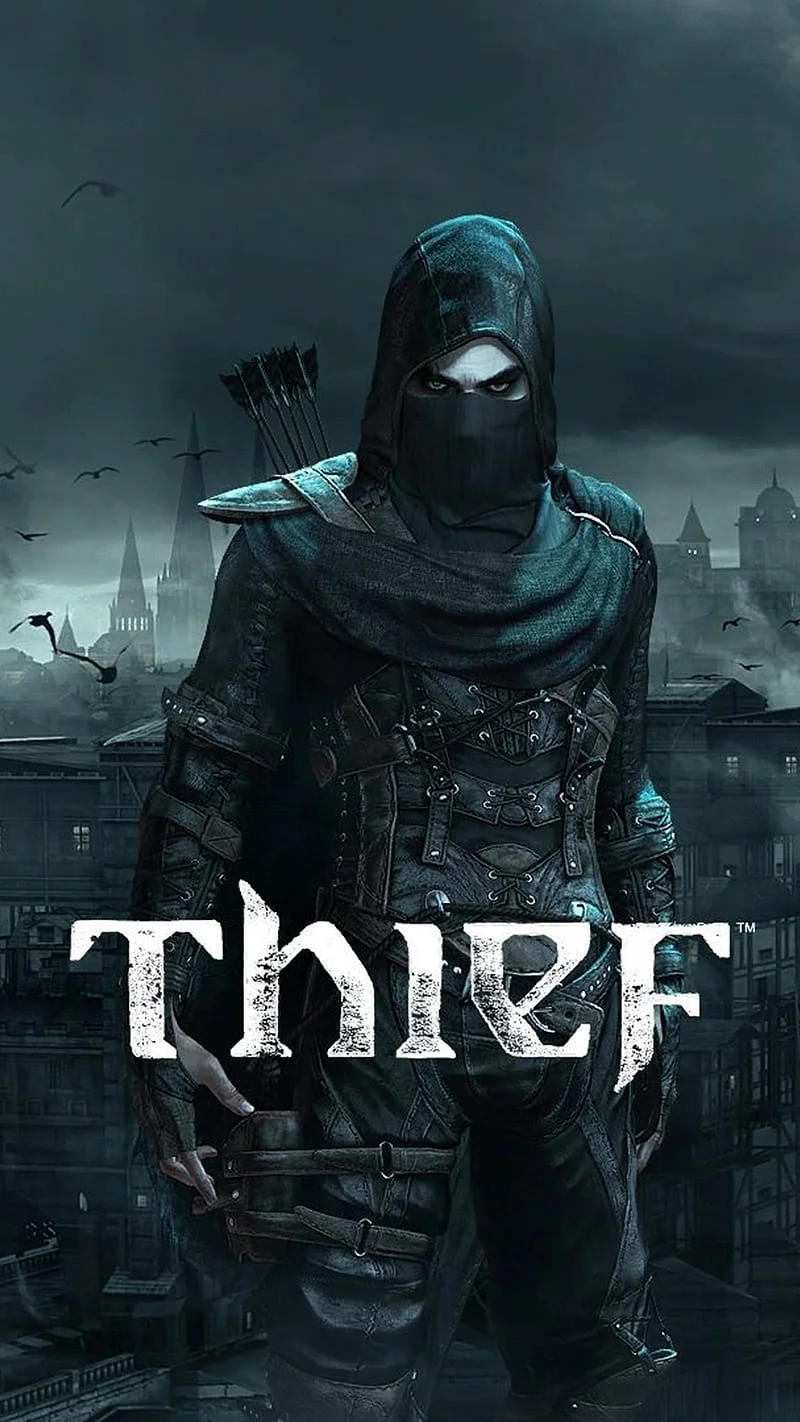
Thief
This combination provides smooth gameplay with an average of 97 FPS, suitable for most gaming scenarios.
Average FPS: resolution vs quality settings
| Ultra | High | Medium | Low | |
|---|---|---|---|---|
| 4K Ultra HD | 72 | 76 | 84 | 93 |
| 1440p QHD | 89 | 91 | 100 | 111 |
| 1080p Full HD | 101 | 103 | 114 | 126 |
Cell color: green is 120+ FPS, teal is 60+, amber is 30+, red is below 30.
Thief with AMD Ryzen 5 3600 + NVIDIA GeForce RTX 4080, In-Depth Analysis
The AMD Ryzen 5 3600 and NVIDIA GeForce RTX 4080 combination in Thief delivers a balanced experience where the CPU’s six Zen 2 cores and the GPU’s Ada Lovelace architecture interact in ways that shift with resolution and settings. The CPU, a 3000-series part from AMD, runs at a 3.60 GHz base clock and boosts to 4.20 GHz, with 6 cores and 12 threads. That configuration is paired with a 32 MB shared L3 cache, which helps keep frequently accessed data close to the cores. In synthetic benchmarks, the Ryzen 5 3600 scores 4605 in 3dmark_16_threads and 4603 in 3dmark_max_threads, showing that its multithreaded scaling plateaus after a certain point—the 8-thread score is 3844, while the 4-thread score is 2579. Single-thread performance is notably lower, with a 3dmark_single_thread score of 696, which matters for older games like Thief that may rely on fewer threads. The CPU’s Cinebench R23 multicore score of 15045 and single-core score of 2124 place it in the 71st percentile among all CPUs, with an average benchmark score of 17035. Its nearest rivals include the Intel Core i7-1260P, which scores 17007 (0.2% higher), and the Intel Core i5-11400 at 17067 (0.2% lower), indicating the Ryzen 5 3600 sits in a tight performance band for its class.
For Thief, the CPU’s role is primarily about maintaining a stable frame delivery, especially at lower resolutions where the GPU has headroom. The measured FPS data shows that at 1920x1080 with Low settings, the combo achieves 126 FPS average, but at Ultra settings that drops to 101 FPS. The gap between Low and Ultra at 1080p is 25 FPS, which suggests that the CPU is not the limiting factor at these settings—otherwise, the spread would be narrower. The Ryzen 5 3600’s boost clock of 4.20 GHz and its 12 threads provide enough processing power to keep up with the RTX 4080’s output in this title, even though the game launched in 2014 and may not fully utilize modern multicore designs. The CPU’s memory bandwidth of 51.2 GB/s via dual-channel DDR4 is sufficient for this workload, and its PCIe Gen 4 support ensures the GPU can communicate without bottleneck. In the context of the combo’s overall ranking, the pair sits at rank 1636 out of 3720 tested combos, which places it in the upper half but not at the top, reflecting that while the RTX 4080 is a powerful GPU, the Ryzen 5 3600 is a mid-range CPU from an earlier generation.
CPU Role — cores, clocks, and how they relate to this game's results
The AMD Ryzen 5 3600 brings 6 cores and 12 threads, a configuration that was designed for mainstream desktop use in 2019. Its base clock of 3.60 GHz and boost clock of 4.20 GHz are modest by modern standards, but they deliver consistent performance in Thief, a game that does not demand extreme core counts. The CPU’s L3 cache of 32 MB shared across all cores helps reduce latency when the game’s engine accesses shared assets, and the 7 nm process node from TSMC keeps power draw at 65 W TDP, which is efficient for a desktop part. In synthetic tests, the Ryzen 5 3600’s Cinebench R20 multicore score of 6318 and single-core score of 892 illustrate its balance, but the game’s performance is more directly tied to how the CPU handles the title’s AI and physics. At 1080p Low settings, the combo delivers 126 FPS, which is the highest average across all resolutions and settings, indicating that the CPU can feed the GPU adequately at this level. However, at 1080p Ultra, the FPS drops to 101, a 25 FPS reduction that aligns with the GPU taking on more work rather than the CPU becoming a bottleneck.
The Ryzen 5 3600’s 3dmark scores show a clear trend: the 16-thread score of 4605 is nearly identical to the max-thread score of 4603, meaning the CPU’s 12 threads are fully utilized without additional gains from virtualization. The 8-thread score of 3844 is 15.8% lower than the 16-thread result, and the 4-thread score of 2579 is 44.0% lower, which suggests that Thief likely benefits from the CPU’s multithreading capability but does not require all 12 threads to run smoothly. The game’s 2014 release date means it was developed before the Ryzen 5 3600 existed, so the CPU’s architecture is not specifically optimized for it, but the high single-thread performance relative to other CPUs—PassMark single-thread score of 2562—ensures that the game’s primary thread is handled well. In the combo’s measured results, the difference between 1080p Low (126 FPS) and 1440p Low (111 FPS) is 15 FPS, while the drop from 1440p Low to 4K Low (93 FPS) is 18 FPS, showing that the CPU’s influence diminishes as resolution increases. The CPU’s percentile rank of 71 among all CPUs, with an average benchmark score of 17035, places it in the upper third, but its nearest rivals like the Intel Core i5-11400 (17067, -0.2% delta) and Intel Core i7-1260P (17007, 0.2% delta) are within a fraction of a percent, meaning the Ryzen 5 3600 is not providing a unique advantage in this pairing.
GPU Role — VRAM, clocks, and how they relate to this game's results
The NVIDIA GeForce RTX 4080 is a 40-series GPU based on the Ada Lovelace architecture, built on a 5 nm process at TSMC. It features 16 GB of GDDR6X memory on a 256-bit bus, yielding a bandwidth of 716.8 GB/s, which is more than sufficient for Thief’s textures and effects. The GPU’s base clock is 2205 MHz, boosting to 2505 MHz, with memory running at 1400 MHz (22.4 Gbps effective). These clocks, combined with 9728 shading units and 304 TMUs, allow the RTX 4080 to render the game’s stealth environments with high detail. In synthetic benchmarks, the GPU scores 34457 in PassMark G3D and 6567 in 3dmark_steel_nomad_dx12, placing it in the 86th percentile among all GPUs with an average benchmark score of 54247. Its nearest rival is the RTX 4080 SUPER at 54209 (0.1% higher), while the AMD Radeon Pro W5700X scores 54828 (-1.1% relative to the 4080), showing that the 4080 is competitive but not the absolute top tier.
For Thief, the GPU’s role becomes more pronounced at higher resolutions and settings. At 4K Ultra, the combo delivers 72 FPS, which is the lowest average recorded, while at 4K Low it reaches 93 FPS. The gap between Ultra and Low at 4K is 21 FPS, and at 1440p the gap between Ultra (89 FPS) and Low (111 FPS) is 22 FPS, indicating the GPU is the primary driver of these differences. The RTX 4080’s 16 GB VRAM is not exhausted by Thief, even at 4K Ultra, as the game’s 2014-era assets are relatively small, but the GPU’s raw compute power (48.74 TFLOPS FP32) allows for smooth frame rates across the board. The pixel rate of 280.6 GPixel/s and texture rate of 761.5 GTexel/s are high enough to handle the game’s draw calls without stutter. In the measured data, the Medium settings at each resolution show min and max FPS values—at 1080p Medium, the range is 97 to 131 FPS, at 1440p Medium it is 85 to 115 FPS, and at 4K Medium it is 71 to 97 FPS—which demonstrates that the GPU’s frame pacing remains consistent as resolution scales. The GPU’s launch MSRP is 1,199 USD, but that figure does not affect the performance analysis. The RTX 4080’s predecessor is the GeForce 30 series, and its successor is the GeForce 50 series, but those details do not influence the Thief results.
FAQ
*Q: How does the CPU’s single-thread performance impact Thief’s frame rates?*
A: The Ryzen 5 3600’s single-thread score of 696 in 3dmark_single_thread and 2562 in PassMark single-thread suggests that it can handle the game’s primary game logic. The measured FPS at 1080p Low is 126 FPS, which is the highest in the dataset, indicating that the CPU’s single-thread capability is not a bottleneck at lower resolutions where the GPU has less work.
*Q: What is the highest average FPS recorded for this combo in Thief, and at what settings?*
A: The highest average FPS is 126, achieved at 1920x1080 with Low settings. This is followed by 114 FPS at 1080p Medium and 111 FPS at 1440p Low, showing that the combo performs best when the GPU load is reduced.
Q: Does the RTX 4080’s 16 GB VRAM cause any limitations in this game?
A: No, the 16 GB VRAM is not a limiting factor in Thief. The game’s 2014 release means texture sizes are modest, and the GPU’s memory bandwidth of 716.8 GB/s is more than adequate. The FPS differences between settings are driven by compute load, not memory capacity.
Q: How does the combo’s performance at 4K compare to 1080p?
A: At 4K Ultra, the average FPS is 72, which is 29 FPS lower than 1080p Ultra (101 FPS). At 4K Low, the average is 93 FPS, compared to 126 FPS at 1080p Low, a drop of 33 FPS. This indicates that the GPU is the primary limiting factor as resolution increases.
*Q: What is the combo’s rank among all tested combinations in Thief?*
A: The combo ranks 1636 out of 3720 tested combos, placing it in the upper half but not the top tier. This rank reflects the CPU’s mid-range standing, as the GPU alone would likely rank higher.
Q: Are there any settings where the CPU becomes a bottleneck?
A: The data does not show a clear CPU bottleneck. At 1080p Low, the FPS is 126, and at 1080p Ultra, it is 101, a 25 FPS drop that is consistent with GPU load increasing. If the CPU were the limit, the FPS would be more uniform across settings.
How This Combo Ranks
The AMD Ryzen 5 3600 + NVIDIA GeForce RTX 4080 combination holds a rank of 1636 out of 3720 tested combos in Thief, which places it in the 44th percentile of all pairings. This rank is notable because the GPU alone sits in the 86th percentile among all GPUs, while the CPU is in the 71st percentile among all CPUs. The discrepancy suggests that the CPU is holding back the GPU’s potential in this game, but the effect is moderate—the combo still achieves playable frame rates at all tested settings. The rank of 1636 means that 2084 other combos perform better, which is a significant number, but it also means the pairing is far from the bottom. The CPU’s average benchmark score of 17035 is close to its nearest rivals—the Intel Core i7-1260P (17007, 0.2% higher) and Intel Core i5-11400 (17067, 0.2% lower)—so the Ryzen 5 3600 is not providing a unique advantage over similarly priced CPU options. The GPU’s average benchmark score of 54247 is also close to the RTX 4080 SUPER (54209, 0.1% higher), meaning the GPU is performing as expected.
In the context of Thief, the combo’s rank is influenced by the game’s age and CPU requirements. The game was released in 2014, before the Ryzen 5 3600 existed, so the CPU’s modern architecture may not be fully utilized. The measured FPS data shows that the combo can exceed 100 FPS at 1080p and 1440p, which is smooth for most displays, and even at 4K Ultra it maintains 72 FPS. That performance level is sufficient for a stealth game where frame pacing matters more than raw speed. The rank of 1636 out of 3720 indicates that many combos with newer CPUs achieve higher frame rates, but the RTX 4080’s power ensures this pairing remains viable. The data shows that at 1080p, the combo’s FPS ranges from 101 (Ultra) to 126 (Low), which is a 25 FPS spread, while at 4K, the range is 72 (Ultra) to 93 (Low), a 21 FPS spread. This narrowing at higher resolutions reinforces that the GPU becomes the dominant factor, and the CPU’s rank in the combo is less impactful.
Resolution Scaling
The measured FPS data for this combo shows a clear trend of decreasing performance as resolution increases, but the rate of decline is not uniform. From 1080p to 1440p, the average FPS drops by 15 FPS at Low settings (126 to 111), by 14 FPS at Medium (114 to 100), by 12 FPS at High (103 to 91), and by 12 FPS at Ultra (101 to 89). This indicates that the GPU is handling the additional pixel load with only modest performance loss, as the 1080p to 1440p transition increases the pixel count by 1.78 times. From 1440p to 4K, the drops are more pronounced: 18 FPS at Low (111 to 93), 16 FPS at Medium (100 to 84), 15 FPS at High (91 to 76), and 17 FPS at Ultra (89 to 72). The 1440p to 4K transition multiplies the pixel count by 2.25, so the larger FPS decline is expected, but the fact that the combo still maintains 72 FPS at 4K Ultra shows that the RTX 4080 is not overwhelmed.
The limiting component analysis is clear: at 1080p, the CPU has more influence because the GPU can render frames quickly, but the FPS ceiling of 126 suggests that the Ryzen 5 3600 is not pushing beyond that point. At 4K, the GPU’s compute and memory bandwidth become the primary constraints, as evidenced by the smaller FPS spread between Low (93) and Ultra (72) compared to 1080p (126 to 101). The data shows that the combo’s performance scales predictably with resolution, with the GPU taking on more work at higher pixel counts. The min FPS values at Medium settings—97 at 1080p, 85 at 1440p, and 71 at 4K—indicate that frame dips are more severe at higher resolutions, but they remain above 60 FPS, which is a common target for smooth gameplay. The max FPS values—131 at 1080p, 115 at 1440p, and 97 at 4K—show that the combo can burst above its averages, providing headroom for less demanding scenes.
Measured FPS Breakdown
The measured FPS data provides a complete picture of this combo’s performance in Thief across three resolutions and four settings. At 1920x1080, the average FPS values are 126 for Low, 114 for Medium, 103 for High, and 101 for Ultra. The Medium setting includes a min FPS of 97 and max FPS of 131, which shows a 34 FPS range, indicating that the game’s frame rate fluctuates more at this setting. At 1080p, the lowest performance is at Ultra (101 FPS), which is still above 100 FPS, making this resolution ideal for high-refresh-rate monitors. The difference between Low and Ultra at 1080p is 25 FPS, which is the smallest absolute drop across all resolutions, suggesting that the CPU is not the main bottleneck here.
At 2560x1440, the average FPS values are 111 for Low, 100 for Medium, 91 for High, and 89 for Ultra. The Medium setting’s min FPS is 85 and max FPS is 115, yielding a 30 FPS range, which is slightly tighter than at 1080p. The drop from 1080p to 1440p at each setting is 15 FPS for Low, 14 FPS for Medium, 12 FPS for High, and 12 FPS for Ultra, so the performance penalty is relatively consistent. At 1440p Ultra, the combo still achieves 89 FPS, which is smooth for most gaming scenarios, and even the min FPS at Medium (85) remains high. The 1440p results show that the RTX 4080 is well-suited for this resolution, delivering frame rates that exceed 60 FPS at all settings.
At 3840x2160, the average FPS values are 93 for Low, 84 for Medium, 76 for High, and 72 for Ultra. The Medium setting’s min FPS is 71 and max FPS is 97, giving a 26 FPS range, which is the smallest range among the three resolutions. The drop from 1440p to 4K at each setting is 18 FPS for Low, 16 FPS for Medium, 15 FPS for High, and 17 FPS for Ultra, showing that the GPU’s workload increases significantly. At 4K Ultra, the combo achieves 72 FPS, which is above the 60 FPS threshold, but it is the lowest recorded average in the dataset. The 4K Low setting at 93 FPS demonstrates that the GPU has enough headroom to exceed 90 FPS when settings are reduced, but the game’s visual fidelity at Low may not be desirable. The min FPS at 4K Medium (71) is close to the average FPS at 4K Ultra (72), indicating that the combo can maintain playable frame rates even under load. Overall, the measured FPS breakdown shows that this pairing is capable of running Thief at high frame rates across all tested configurations, with the GPU becoming the primary limiter at 4K.
Hardware Specifications
AMD Ryzen 5 3600
NVIDIA GeForce RTX 4080
FPS Benchmarks by Resolution & Settings
Performance data for AMD Ryzen 5 3600 + NVIDIA GeForce RTX 4080 in Thief
| Resolution | Settings | Avg FPS |
|---|---|---|
| 3840x2160 | Low | 93.0 |
| 3840x2160 | Medium | 84.0 |
| 3840x2160 | High | 76.0 |
| 3840x2160 | Ultra | 72.0 |
| 2560x1440 | Low | 111.0 |
| 2560x1440 | Medium | 100.0 |
| 2560x1440 | High | 91.0 |
| 2560x1440 | Ultra | 89.0 |
| 1920x1080 | Low | 126.0 |
| 1920x1080 | Medium | 114.0 |
| 1920x1080 | High | 103.0 |
| 1920x1080 | Ultra | 101.0 |
Thief with Ryzen 5 3600 + Other GPUs
See how Thief performs with the same CPU but different graphics cards.
Thief with RTX 4080 + Other CPUs
See how Thief performs with the same GPU but different processors.
Other Games with Ryzen 5 3600 + RTX 4080
Explore FPS benchmarks for other games using this same hardware combination.