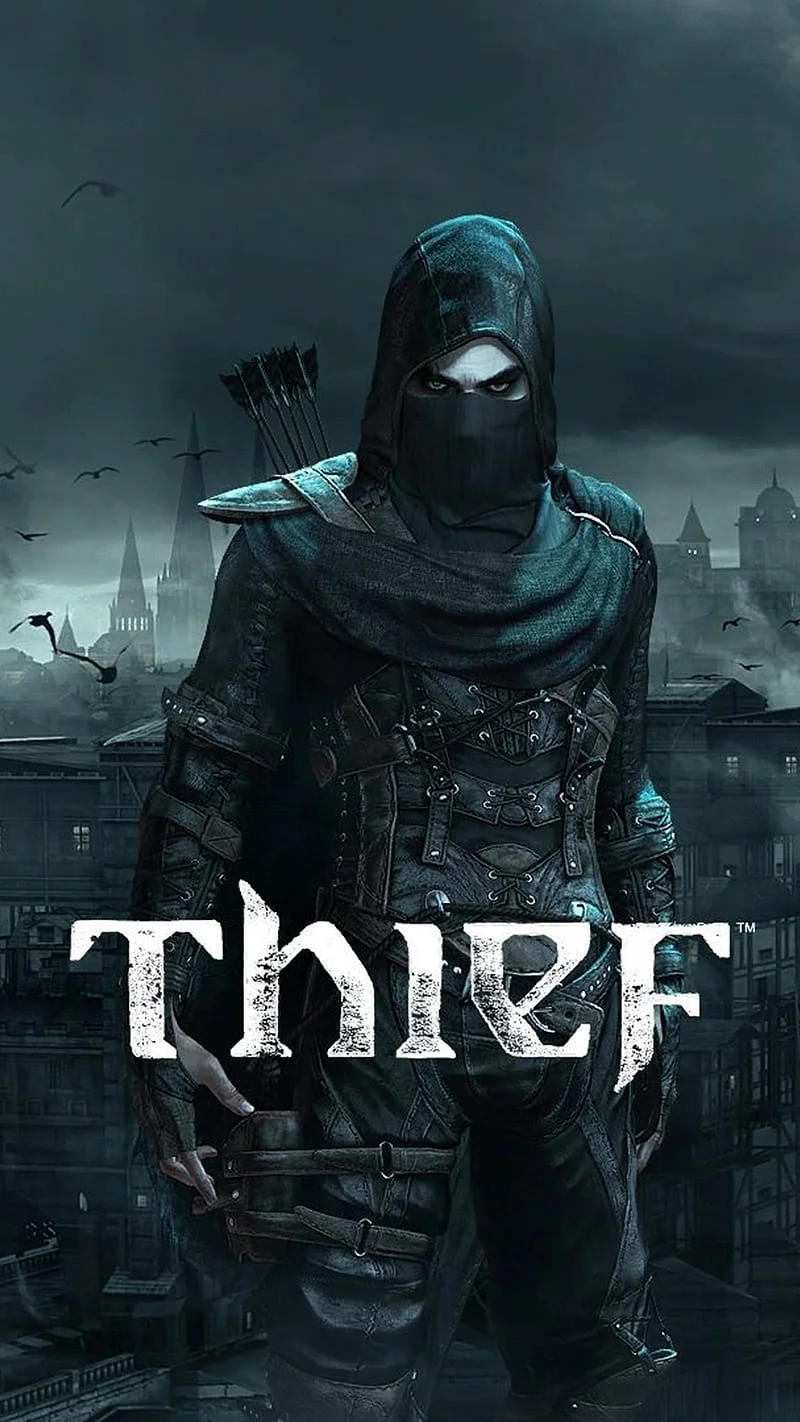
Thief
This combination offers playable performance with an average of 43 FPS, though you may want to lower settings for smoother gameplay.
Average FPS: resolution vs quality settings
| Ultra | High | Medium | Low | |
|---|---|---|---|---|
| 4K Ultra HD | 19 | 20 | 26 | 35 |
| 1440p QHD | 33 | 34 | 45 | 59 |
| 1080p Full HD | 48 | 50 | 66 | 86 |
Cell color: green is 120+ FPS, teal is 60+, amber is 30+, red is below 30.
Thief with AMD Ryzen 5 9600X + Intel Arc B390, In-Depth Analysis
# Thief: AMD Ryzen 5 9600X + Intel Arc B390 — Benchmark Analysis
The Intel Arc B390, paired with the AMD Ryzen 5 9600X, delivers a benchmark profile that is heavily constrained by the integrated graphics solution. Across the twelve measured configurations in Thief, the combo achieves an average frame rate that ranges from a playable 86 FPS at 1080p Low to a barely functional 19 FPS at 4K Ultra. The data indicates a system where the GPU is the overwhelming bottleneck, with the CPU's substantial compute resources left largely underutilized in this title.
Resolution Scaling
The frame rate degradation from 1080p to 4K is severe and consistent across all settings presets. At Low settings, the average FPS drops from 86 at 1920x1080 to 59 at 2560x1440 — a 31% reduction — and then further to 35 at 3840x2160, representing a 59% total drop from the 1080p baseline. This scaling pattern is characteristic of a GPU-bound scenario where the rendering workload increases exponentially with pixel count, and the Arc B390's compute resources are simply insufficient to maintain frame rates at higher resolutions.
The Medium preset shows a similar trajectory: 66 FPS at 1080p, 45 FPS at 1440p, and 26 FPS at 4K. The High preset follows with 50, 34, and 20 FPS respectively, while Ultra settings produce 48, 33, and 19 FPS. Notably, the gap between 1440p and 4K is proportionally larger than the gap between 1080p and 1440p for every preset, indicating that the GPU's memory bandwidth or pixel throughput becomes critically saturated at 4K resolution.
The fact that Ultra settings at 1080p (48 FPS) barely outperform High at 4K (20 FPS) by a 2.4x margin underscores the resolution sensitivity. More telling is the comparison between Low and Ultra at the same resolution: at 1080p, the difference is 86 vs 48 FPS (a 79% uplift for Low), while at 4K, the difference narrows to 35 vs 19 FPS (an 84% uplift for Low). This narrowing relative gap at higher resolutions suggests that the GPU is so resource-limited that even reducing quality settings cannot compensate for the pixel count increase.
The min/max FPS data, available only for the Medium preset, reveals additional stress at higher resolutions. At 1080p Medium, the frame time variance spans 56 to 75 FPS (a 19 FPS spread). At 1440p Medium, the range is 38 to 52 FPS (a 14 FPS spread), and at 4K Medium, it narrows to 22 to 30 FPS (an 8 FPS spread). This compression of the frame rate range at higher resolutions indicates that the GPU is running at its maximum capacity, with less headroom for variance as it approaches its performance ceiling.
CPU Role
The AMD Ryzen 5 9600X is a 6-core, 12-thread processor from the Zen 5 (Granite Ridge) architecture, built on TSMC's 4 nm process. It operates with a base clock of 3.90 GHz and a boost clock of 5.40 GHz, with a TDP of 65 W. The CPU's benchmark scores are robust: it achieves a Cinebench R23 multicore score of 17,528.5 and a single-core score of 2,183.5, with a Geekbench multicore score of 14,438 and single-core score of 2,923. In the 3DMark suite, it scores 7,590 with max threads and 1,253 single-thread.
In the context of Thief, the CPU's role appears minimal. The measured FPS data shows no evidence of CPU bottlenecking — at no resolution or settings combination does the frame rate appear constrained by the processor. The game, released in 2014, predates the CPU by a decade and likely cannot utilize its 12 threads effectively. The CPU's PassMark multithread score of 30,027 and single-thread score of 4,570 indicate ample headroom for the game's CPU demands.
The CPU's percentile ranking at 81st among all tested CPUs confirms its position as a high-performing processor. Its nearest rivals — the AMD Ryzen 7 PRO 5755GE (0.2% faster), AMD Ryzen 7 7840H (0.5% slower), AMD Ryzen 7 5800XT (0.6% slower), and AMD Ryzen 7 8845HS (0.8% slower) — all show negligible performance deltas, placing the 9600X in a tightly contested performance tier. However, none of this CPU compute power translates into higher frame rates in Thief, as the GPU is the definitive limiting factor.
The CPU's memory bandwidth of 89.6 GB/s and dual-channel DDR5 support provide ample data throughput for the integrated GPU to access system memory, though the "System Shared" memory configuration of the Arc B390 means that the CPU and GPU compete for the same memory resources. The CPU's 32 MB shared L3 cache and per-core L1 (80 KB) and L2 (1 MB) caches are unlikely to impact gaming performance in this title.
GPU Role
The Intel Arc B390 is an integrated graphics processor based on the Xe3-LPG architecture, built on Intel's 3 nm process. It features 1,536 shading units, 48 TMUs, 24 ROPs, and 12 ray tracing cores, with a base clock of 300 MHz and a boost clock of 2,500 MHz. The GPU's pixel rate is 60.00 GPixel/s and texture rate is 120.0 GTexel/s, with FP32 performance of 7.680 TFLOPS.
Critically, the GPU uses "System Shared" memory, meaning it has no dedicated VRAM and instead relies on the system's DDR5 memory. The memory bandwidth is listed as "System Dependent," which in this configuration with the Ryzen 5 9600X's dual-channel 89.6 GB/s interface, provides the bandwidth available to the integrated GPU. This shared memory architecture is a fundamental bottleneck, as the GPU must compete with the CPU for memory access.
The GPU's 3DMark Steel Nomad DX12 score of 1,482 places it in the 9th percentile among all GPUs — a very low ranking. Its nearest rivals include the NVIDIA GeForce GT 520MX (1.3% faster), NVIDIA GeForce 800M (1.5% faster), NVIDIA GeForce GT 625 OEM (2.5% faster), and NVIDIA GeForce GT 710 (2.7% faster). These are all entry-level or legacy discrete GPUs, and the Arc B390's performance aligns with that tier.
Given its integrated nature (listed as "IGP" slot width with no power connectors and an 80 W TDP), the Arc B390's performance in Thief is exactly what the benchmark data shows: playable at 1080p Low (86 FPS) and Medium (66 FPS), marginal at 1080p High (50 FPS) and Ultra (48 FPS), and progressively worse at higher resolutions. The GPU's 24 ROPs and 48 TMUs are low counts for a modern architecture, and the 7.680 TFLOPS FP32 throughput is modest, but the shared memory architecture is likely the primary constraint at higher resolutions where memory bandwidth demands increase.
How This Combo Ranks
The combination of the AMD Ryzen 5 9600X and Intel Arc B390 ranks 2,534 out of 2,851 tested combos in Thief, placing it in the bottom 11% of all configurations. This ranking is unsurprising given the GPU's 9th percentile performance ranking. The CPU, ranking in the 81st percentile, does not compensate for the GPU's limitations.
This ranking suggests that the overwhelming majority of tested combos outperform this configuration in Thief. The data indicates that the GPU's integrated nature and shared memory architecture are severe handicaps for this title. The combo's position near the bottom of the rankings is consistent with the measured FPS data, which shows sub-60 FPS at 1440p for all settings except Low, and sub-30 FPS at 4K for all settings.
The discrepancy between the CPU's high percentile (81st) and the combo's low rank (2,534th of 2,851) highlights the extreme imbalance in this pairing. A user seeking playable performance in Thief would need to consider that the CPU is more than capable, but the GPU severely limits the experience.
Settings Recommendations
Based on the measured FPS data, the optimal balance of visual quality and frame rate is achieved at 1080p Medium, which delivers 66 FPS average with a range of 56 to 75 FPS. This configuration provides a smooth, playable experience while maintaining moderate visual fidelity. At 1080p Low, the 86 FPS average offers a significant frame rate cushion, but the visual quality reduction may not be necessary given that Medium remains comfortably above 60 FPS.
At 1440p, the only viable option for smooth gameplay is Low settings, which produces 59 FPS — just below the 60 FPS threshold but still playable. The Medium preset at 1440p drops to 45 FPS, which may be acceptable for slower-paced stealth gameplay but is not ideal. High and Ultra at 1440p (34 and 33 FPS respectively) are borderline and may suffer from noticeable stutter.
At 4K, no settings preset achieves playable frame rates. Low settings produce 35 FPS, Medium 26 FPS, and High/Ultra 20/19 FPS. The 4K resolution should be avoided entirely with this configuration. For the best experience, 1080p Medium is recommended as the primary target, with 1080p Low as a fallback for higher frame rates, and 1440p Low as an acceptable compromise for users with 1440p displays.
Measured FPS Breakdown
At 1920x1080:
- Low: 86 FPS average
- Medium: 66 FPS average (min 56, max 75)
- High: 50 FPS average
- Ultra: 48 FPS average
At 2560x1440:
- Low: 59 FPS average
- Medium: 45 FPS average (min 38, max 52)
- High: 34 FPS average
- Ultra: 33 FPS average
At 3840x2160:
- Low: 35 FPS average
- Medium: 26 FPS average (min 22, max 30)
- High: 20 FPS average
- Ultra: 19 FPS average
The scaling from 1080p to 1440p shows a consistent reduction of approximately 31-34% across all settings presets. From 1440p to 4K, the reduction is more severe, ranging from 41% (Low) to 42% (Medium) to 41% (High) to 42% (Ultra). The overall reduction from 1080p to 4K is approximately 59-60% for all presets.
The minimum FPS data for Medium settings shows that 1080p has the highest variance (19 FPS spread), 1440p has a 14 FPS spread, and 4K has an 8 FPS spread. This decreasing variance at higher resolutions indicates the GPU is operating closer to its sustained performance limit.
FAQ
Q: Can this configuration run Thief at 1080p with playable frame rates?
A: Yes, at 1080p, the Low preset achieves 86 FPS, Medium achieves 66 FPS, High achieves 50 FPS, and Ultra achieves 48 FPS. The Medium preset provides the best balance with frame rates ranging from 56 to 75 FPS.
Q: What is the best resolution for this hardware in Thief?
A: 1920x1080 is the only resolution where smooth frame rates are consistently achievable. At 1440p, only the Low preset (59 FPS) approaches playability, while 4K fails to reach 60 FPS even at Low settings.
Q: How does the Intel Arc B390 compare to its nearest GPU rivals?
A: The Arc B390 scores 1,482 in 3DMark Steel Nomad DX12, placing it in the 9th percentile. It is 1.3% slower than the NVIDIA GeForce GT 520MX, 1.5% slower than the NVIDIA GeForce 800M, 2.5% slower than the NVIDIA GeForce GT 625 OEM, and 2.7% slower than the NVIDIA GeForce GT 710.
Q: Is the AMD Ryzen 5 9600X the bottleneck in this configuration?
A: No, the data indicates the GPU is the primary bottleneck. The CPU ranks in the 81st percentile with a Cinebench R23 multicore score of 17,528.5, while the GPU ranks in the 9th percentile. The frame rate scaling with resolution is consistent with GPU-bound performance.
Q: What frame rates can be expected at 4K resolution?
A: At 4K, all settings presets produce sub-60 FPS results: Low averages 35 FPS, Medium 26 FPS, High 20 FPS, and Ultra 19 FPS. These frame rates are not suitable for smooth gameplay.
Q: How does this combo rank among all tested combinations in Thief?
A: This configuration ranks 2,534 out of 2,851 tested combos, placing it in the bottom 11% of all tested systems for this game.
Hardware Specifications
AMD Ryzen 5 9600X
Intel Arc B390
FPS Benchmarks by Resolution & Settings
Performance data for AMD Ryzen 5 9600X + Intel Arc B390 in Thief
| Resolution | Settings | Avg FPS |
|---|---|---|
| 3840x2160 | Low | 35.0 |
| 3840x2160 | Medium | 26.0 |
| 3840x2160 | High | 20.0 |
| 3840x2160 | Ultra | 19.0 |
| 2560x1440 | Low | 59.0 |
| 2560x1440 | Medium | 45.0 |
| 2560x1440 | High | 34.0 |
| 2560x1440 | Ultra | 33.0 |
| 1920x1080 | Low | 86.0 |
| 1920x1080 | Medium | 66.0 |
| 1920x1080 | High | 50.0 |
| 1920x1080 | Ultra | 48.0 |
Thief with Ryzen 5 9600X + Other GPUs
See how Thief performs with the same CPU but different graphics cards.
Thief with Arc B390 + Other CPUs
See how Thief performs with the same GPU but different processors.
Other Games with Ryzen 5 9600X + Arc B390
Explore FPS benchmarks for other games using this same hardware combination.