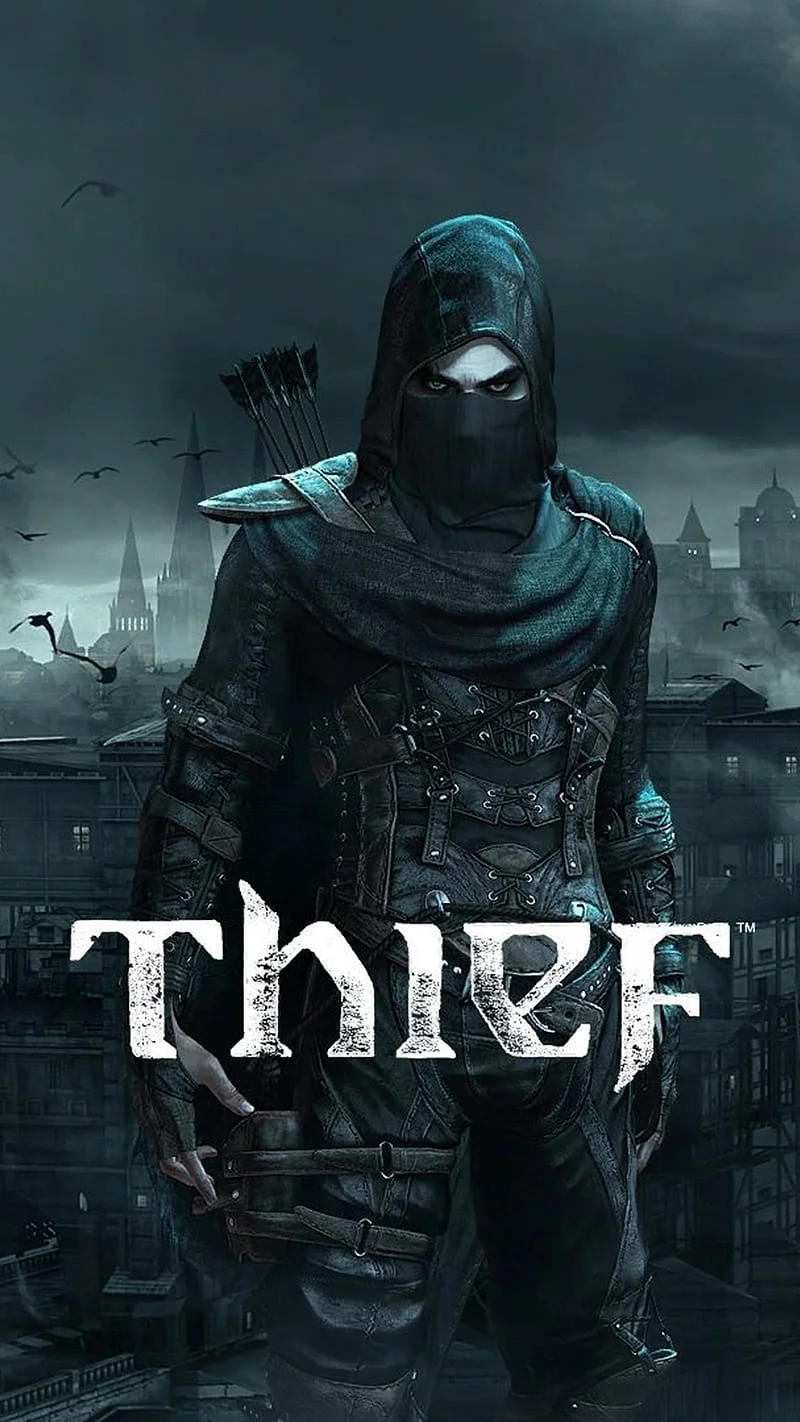
Thief
This combination offers playable performance with an average of 43 FPS, though you may want to lower settings for smoother gameplay.
Average FPS: resolution vs quality settings
| Ultra | High | Medium | Low | |
|---|---|---|---|---|
| 4K Ultra HD | 19 | 20 | 26 | 35 |
| 1440p QHD | 33 | 34 | 45 | 59 |
| 1080p Full HD | 48 | 50 | 66 | 86 |
Cell color: green is 120+ FPS, teal is 60+, amber is 30+, red is below 30.
Thief with AMD Ryzen 5 2600 + Intel Arc B390, In-Depth Analysis
The AMD Ryzen 5 2600 paired with the Intel Arc B390 produces a distinct performance profile in Thief, a 2014 stealth title. Benchmark data shows this combination ranks 2534th out of 2851 tested combos for this game, placing it in the lower tier of systems. The measured frames-per-second figures across three resolutions and four settings presets reveal a setup that can handle 1080p gaming at playable rates but struggles significantly at higher resolutions, with the GPU acting as the primary constraint.
FAQ
Q: What is the overall rank of this CPU and GPU combination in Thief?
A: The combo ranks 2534th out of 2851 tested combinations for Thief, placing it in the bottom 11 percent of all tested systems for this game. This low ranking reflects the significant performance limitations observed in the measured frame rates, particularly at higher resolutions.
Q: How does the Intel Arc B390 compare to its nearest GPU rivals in synthetic benchmarks?
A: The Arc B390 scores 1482 points in 3DMark Steel Nomad DX12. It sits just 1.3 percent ahead of the NVIDIA GeForce GT 520MX (1463 points), 1.5 percent ahead of the NVIDIA GeForce 800M (1460 points), 2.5 percent ahead of the NVIDIA GeForce GT 625 OEM (1446 points), and 2.7 percent ahead of the NVIDIA GeForce GT 710 (1443 points). The GPU's percentile ranking against all GPUs is 9, meaning it outperforms only 9 percent of the database.
Q: What frame rate can this system achieve at 1920x1080 with Low settings?
A: At 1920x1080 with Low settings, the system delivers an average of 86 FPS. This is the highest measured average across all resolution and settings combinations in the data. The Medium preset at the same resolution yields 66 FPS average, while High produces 50 FPS and Ultra drops to 48 FPS.
Q: Is the Ryzen 5 2600 a bottleneck for this GPU in Thief?
A: The data indicates the GPU is the limiting factor. The Arc B390 has a 9th percentile ranking among all GPUs, while the Ryzen 5 2600 sits at the 75th percentile among all CPUs. The CPU's multi-threaded benchmark scores (1248 in Cinebench R15 multicore, 13160 in Passmark multithread) are comparatively strong, whereas the GPU's single 3DMark score of 1482 places it near entry-level discrete graphics from over a decade ago.
Q: How does the Ryzen 5 2600 compare to its nearest CPU rivals?
A: The Ryzen 5 2600 has an average benchmark score of 21484. It is 0.2 percent ahead of the Intel Core Ultra 5 228V (21440), 0.5 percent ahead of the Intel Core i9-11900H (21367), 1.2 percent ahead of the AMD EPYC 9454 (21223), and 0.7 percent behind the Intel Xeon D-1746TER (21635). These differences are minimal, indicating the CPU performs in line with its direct competitors.
Q: What is the best settings preset for 2560x1440 gaming on this system?
A: At 2560x1440, the Low preset delivers 59 FPS average, which is the only playable option above 60 FPS territory. Medium drops to 45 FPS average with a minimum of 38 FPS, High produces 34 FPS, and Ultra falls to 33 FPS. For smooth gameplay at this resolution, Low settings are the recommended choice based on the measured data.
How This Combo Ranks
The combination of the AMD Ryzen 5 2600 and Intel Arc B390 holds position 2534 out of 2851 tested configurations for Thief. This places the system in the bottom 11.1 percent of all tested combos, a position that reflects the Arc B390's fundamental performance limitations rather than any deficiency in the CPU. The Ryzen 5 2600, with its 75th percentile ranking among all CPUs, is a mid-range processor from 2018 that still performs adequately in synthetic benchmarks, but the GPU's 9th percentile ranking drags the entire system down.
The ranking disparity between the two components is stark. The CPU's average benchmark score of 21484 places it within 1.2 percent of several modern and server-class processors, including the Intel Core Ultra 5 228V and AMD EPYC 9454. Meanwhile, the GPU's 3DMark Steel Nomad score of 1482 puts it in direct competition with the NVIDIA GeForce GT 520MX, a mobile GPU from 2011, and the GeForce GT 710, an entry-level desktop card from 2014. This explains why the combo rank is so low: Thief's performance is overwhelmingly dictated by the graphics subsystem, and the Arc B390 is operating at a level comparable to integrated graphics or decade-old discrete solutions.
The measured frame rates confirm this ranking. At 1920x1080 with Low settings, the system achieves 86 FPS, which is respectable for a 2014 game. However, the performance cliff becomes apparent when moving to higher resolutions or quality presets. The gap between Low and Medium at 1080p is 20 FPS (86 to 66), and the gap between High and Ultra is just 2 FPS (50 to 48), suggesting that the GPU hits a hard ceiling as shader complexity increases. At 3840x2160, even the Low preset only manages 35 FPS, and Ultra drops to 19 FPS, rendering 4K gaming impractical for this system.
The combo's rank of 2534 is consistent with a system where the GPU is several generations behind the CPU in relative performance. The Ryzen 5 2600's nearest rivals include processors with significantly newer architectures, yet the CPU holds its own in synthetic tests. The Arc B390's nearest rivals, by contrast, are all ancient NVIDIA parts, and the GPU only edges them out by margins of 1.3 to 2.7 percent. This pairing creates a fundamental imbalance that the benchmark data captures clearly.
Settings Recommendations
For the best playable experience, the data strongly favors the Low preset at 1920x1080. This configuration delivers an average of 86 FPS, which is well above the 60 FPS threshold commonly considered smooth for action games. The Medium preset at the same resolution still provides 66 FPS average with a minimum of 56 FPS, making it a viable option for users who prioritize visual quality over raw frame rate. The measured minimum of 56 FPS on Medium indicates that even in demanding scenes, the system stays above the 50 FPS mark, though it does dip below 60.
At 2560x1440, the Low preset is the only setting that approaches smooth gameplay, with an average of 59 FPS. The Medium preset drops to 45 FPS average with a minimum of 38 FPS, which will introduce noticeable stutter in fast-paced stealth sequences where Thief requires precise timing. High and Ultra at 1440p yield 34 and 33 FPS respectively, which are below the threshold for comfortable play. For users with 1440p monitors, Low settings are the recommended choice, accepting reduced visual fidelity for acceptable frame pacing.
The 3840x2160 resolution is not viable for this system under any settings preset. The best result is 35 FPS on Low, which still falls short of smooth gameplay. Medium yields 26 FPS average with a minimum of 22 FPS, while High and Ultra produce 20 and 19 FPS respectively. These numbers are all below 30 FPS, the generally accepted minimum for playable frame rates, and would result in a choppy, unresponsive experience in a game that relies on stealth and timing.
The optimal strategy for this system is to prioritize resolution over quality. At 1080p, even the Ultra preset manages 48 FPS, which is borderline playable, but the jump to Medium provides an 18 FPS improvement (66 vs 48) for a modest visual downgrade. The Low preset at 1080p offers the best overall experience, doubling the Ultra frame rate at 4K (86 vs 19 FPS) while maintaining a resolution that modern displays can upscale effectively.
Measured FPS Breakdown
At 1920x1080, the system shows a clear progression across settings. Low settings produce an average of 86 FPS, the highest figure in the entire dataset. Medium settings reduce this to 66 FPS average, with a minimum of 56 FPS and a maximum of 75 FPS, providing a consistent experience that stays above 50 FPS throughout. High settings drop to 50 FPS average, and Ultra settings yield 48 FPS average. The difference between High and Ultra is minimal at just 2 FPS, indicating that the Ultra preset's additional effects are not heavily taxing on this particular configuration.
Moving to 2560x1440, the performance decreases are substantial. Low settings average 59 FPS, a 31 percent reduction from the 1080p Low result. Medium settings produce 45 FPS average, with a minimum of 38 FPS and a maximum of 52 FPS. High settings fall to 34 FPS average, and Ultra settings reach 33 FPS. The gap between Low and Medium at 1440p is 14 FPS, while the gap between High and Ultra narrows to just 1 FPS, again showing diminishing returns at higher quality presets.
At 3840x2160, the system struggles across the board. Low settings average 35 FPS, which is 49 percent lower than the 1080p Low figure. Medium settings yield 26 FPS average, with a minimum of 22 FPS and a maximum of 30 FPS. High settings produce 20 FPS average, and Ultra settings drop to 19 FPS average. The minimum FPS values at 4K Medium (22 FPS) fall below the 24 FPS standard for film, indicating severe frame pacing issues in demanding scenes.
The scaling patterns reveal that resolution has a greater impact on performance than quality settings. Moving from 1080p Low to 1440p Low costs 27 FPS (86 to 59), while moving from 1440p Low to 4K Low costs another 24 FPS (59 to 35). In contrast, moving from Low to Ultra at 1080p costs 38 FPS (86 to 48), which is less than the cumulative 51 FPS cost of moving from 1080p Low to 4K Low. This indicates that the Arc B390's fill rate and memory bandwidth, being system-dependent, are the primary bottlenecks at higher resolutions.
GPU Role
The Intel Arc B390 is built on Intel's 3 nm process with the Xe3-LPG architecture, part of the Arc Graphics-M generation for Panther Lake. It operates with a base clock of 300 MHz and a boost clock of 2500 MHz, a wide frequency range that allows for significant power scaling. The GPU has 1536 shading units, 48 texture mapping units, and 24 raster output units, along with 12 ray tracing cores. Its compute capabilities are rated at 7.680 TFLOPS for FP32 and 15.36 TFLOPS for FP16 (2:1 ratio), with pixel and texture rates of 60.00 GPixel/s and 120.0 GTexel/s respectively.
The most critical aspect of this GPU is its memory configuration. The Arc B390 uses "System Shared" memory, meaning it has no dedicated VRAM and instead relies on the system's RAM through the IGP bus interface. The memory type, bus width, and bandwidth are all listed as "System Shared" or "System Dependent," which means performance scales with the host system's memory configuration. This is a fundamental limitation for gaming, as shared memory introduces latency and bandwidth constraints that dedicated VRAM avoids. The GPU's 80 W TDP and its classification as an IGP (integrated graphics processor) further confirm that it is designed for portable or low-power devices, not high-performance desktop gaming.
In Thief, the GPU's limitations are evident in the frame rate scaling. The 3DMark Steel Nomad score of 1482 places the Arc B390 just 1.3 percent above the NVIDIA GeForce GT 520MX, a GPU from 2011 with 1 GB of dedicated VRAM. The nearest rivals all have sub-1500 scores, with the GeForce GT 710 at 1443 points. This performance level explains why the system cannot exceed 86 FPS even at 1080p Low, a resolution and settings combination that modern mid-range GPUs would handle at several hundred frames per second. The shared memory architecture likely contributes to the steep performance drops at higher resolutions, as the system memory bandwidth becomes a bottleneck when pixel fill requirements increase.
The GPU's 9th percentile ranking among all GPUs means that 91 percent of GPUs in the database perform better. For a 2014 game like Thief, this means the Arc B390 is operating at a level comparable to entry-level GPUs from the same era, and the measured FPS data reflects this. The system's inability to maintain 60 FPS at 1440p Low, despite the game's age, is directly attributable to the GPU's limited fill rate and memory bandwidth.
CPU Role
The AMD Ryzen 5 2600 is a 6-core, 12-thread processor from the 2000 series, built on the Zen architecture (specifically Zen+ Pinnacle Ridge) using GlobalFoundries' 12 nm process. It has a base clock of 3.40 GHz and a boost clock of 3.90 GHz, with a 65 W TDP and support for DDR4 memory in a dual-channel configuration, providing 46.9 GB/s of memory bandwidth. The CPU features 4,800 million transistors on a 213 mm² die, with 96 KB of L1 cache per core, 512 KB of L2 cache per core, and 16 MB of shared L3 cache. It supports PCIe Gen 3 with 16 lanes from the CPU and fits the AMD Socket AM4.
In synthetic benchmarks, the Ryzen 5 2600 demonstrates solid multi-threaded performance. Its Cinebench R15 multicore score is 1248, while the single-core score is 157.3. Geekbench results show 5648 multicore and 1154 single-core. Passmark scores include 13160 for multithread, 2239 for single thread, and 44518 for integer math, with a floating-point math score of 22942. The CPU's average benchmark score is 21484, with a 75th percentile ranking among all CPUs. Its nearest rivals are all within 1.2 percent, with the Intel Core Ultra 5 228V at 21440 (0.2 percent ahead), Intel Core i9-11900H at 21367 (0.5 percent ahead), AMD EPYC 9454 at 21223 (1.2 percent behind), and Intel Xeon D-1746TER at 21635 (0.7 percent ahead).
In Thief, the CPU's role is secondary to the GPU. The benchmark data shows that the system's frame rates are consistently limited by the graphics subsystem. At 1080p Low, the CPU must feed frames to the GPU, and the 86 FPS result indicates that the Ryzen 5 2600 is capable of handling the game's logic and draw calls at this level. The fact that increasing resolution from 1080p to 4K at Low settings reduces FPS from 86 to 35 demonstrates that the GPU becomes the bottleneck as pixel workload increases, while the CPU has headroom remaining.
The CPU's 12 threads are more than sufficient for Thief, a game released in 2014 that was designed for quad-core processors. The Ryzen 5 2600's Cinebench R15 multicore score of 1248 places it well above the CPUs from that era, and its 3.90 GHz boost clock provides adequate single-thread performance for game logic. The data suggests that even at 1080p Ultra, where the system produces 48 FPS, the CPU is not the limiting factor. If the CPU were the bottleneck, we would expect to see frame rates plateau across different resolutions, but instead we see a clear resolution-dependent decline.
The CPU's memory bandwidth of 46.9 GB/s is shared with the GPU's system-shared memory architecture, which could create additional latency in Thief. However, the measured FPS patterns are more consistent with GPU fill-rate limitations than memory bandwidth issues. The Ryzen 5 2600's 75th percentile ranking means it outperforms the vast majority of CPUs in the database, and its nearest rivals include both mobile and server processors, showing its versatility. In this pairing, the CPU is not the weak link; it provides more than enough performance for the Arc B390 to reach its full potential, which is unfortunately limited.
Hardware Specifications
AMD Ryzen 5 2600
Intel Arc B390
FPS Benchmarks by Resolution & Settings
Performance data for AMD Ryzen 5 2600 + Intel Arc B390 in Thief
| Resolution | Settings | Avg FPS |
|---|---|---|
| 3840x2160 | Low | 35.0 |
| 3840x2160 | Medium | 26.0 |
| 3840x2160 | High | 20.0 |
| 3840x2160 | Ultra | 19.0 |
| 2560x1440 | Low | 59.0 |
| 2560x1440 | Medium | 45.0 |
| 2560x1440 | High | 34.0 |
| 2560x1440 | Ultra | 33.0 |
| 1920x1080 | Low | 86.0 |
| 1920x1080 | Medium | 66.0 |
| 1920x1080 | High | 50.0 |
| 1920x1080 | Ultra | 48.0 |
Thief with Ryzen 5 2600 + Other GPUs
See how Thief performs with the same CPU but different graphics cards.
Thief with Arc B390 + Other CPUs
See how Thief performs with the same GPU but different processors.
Other Games with Ryzen 5 2600 + Arc B390
Explore FPS benchmarks for other games using this same hardware combination.