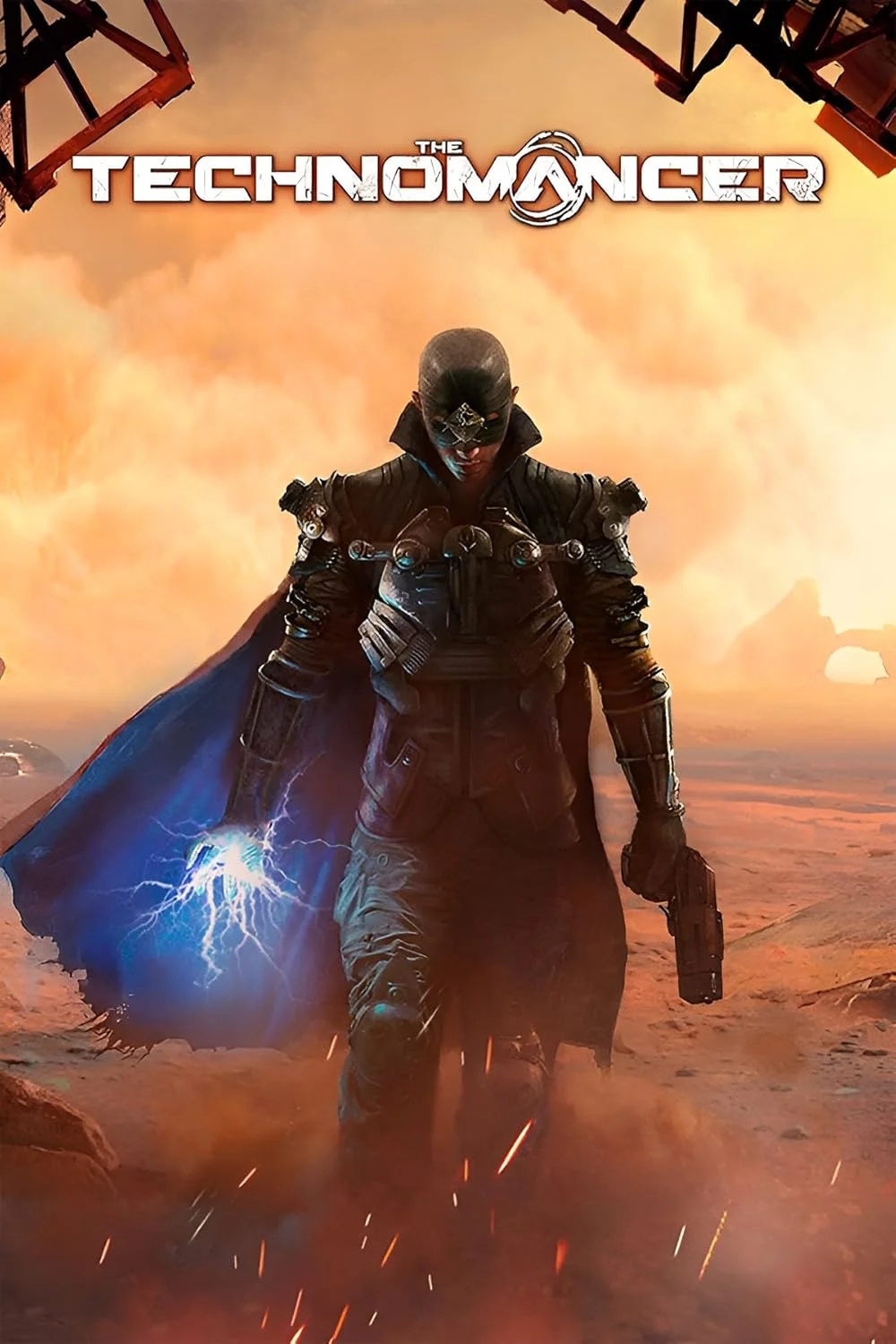
The Technomancer
This combination provides smooth gameplay with an average of 60 FPS, suitable for most gaming scenarios.
Average FPS: resolution vs quality settings
| Ultra | High | Medium | Low | |
|---|---|---|---|---|
| 4K Ultra HD | 22 | 29 | 33 | 44 |
| 1440p QHD | 41 | 52 | 61 | 79 |
| 1080p Full HD | 62 | 80 | 93 | 121 |
Cell color: green is 120+ FPS, teal is 60+, amber is 30+, red is below 30.
The Technomancer with Intel Core i9-14900K + Intel Arc B570, In-Depth Analysis
The Technomancer, a 2016 Action RPG, presents a demanding workload that scales heavily with resolution and graphical presets. When paired with the Intel Core i9-14900K and Intel Arc B570, the measured data reveals a definitive performance profile. At 1080p, the combo delivers strong playable frame rates, but the experience degrades significantly as resolution increases, pointing to the GPU as the primary bottleneck in this configuration. The sweet spot for this pairing is 1080p with Medium settings, which provides a high average frame rate of 93 FPS while maintaining a reasonable minimum of 79 FPS, ensuring a smooth and consistent experience without the steep performance cost of Ultra settings.
Settings Recommendations
The benchmark data provides a clear hierarchy for settings optimization. For this specific combination of hardware, the most balanced experience is achieved at 1080p with Medium settings. This configuration yields an average frame rate of 93 FPS, which is a substantial 50% increase over the High preset's 80 FPS and a 33% jump from the Ultra preset's 62 FPS. The Medium preset also shows a minimum frame rate of 79 FPS, indicating it is not just fast on average but also maintains a stable floor, avoiding the stutters that can plague less consistent settings. The 30 FPS gap between Medium and Low is significant, but the Medium preset is the better choice for visual fidelity without sacrificing the responsiveness needed for an action RPG.
For users who prioritize a higher visual quality in combat-heavy scenes, the High preset at 1080p is a viable alternative. It produces an average of 80 FPS, which is still well above the 60 FPS threshold for playability. However, the data shows that stepping up to Ultra yields a 22% performance drop to 62 FPS, which brings the average dangerously close to the minimum threshold for a consistently smooth experience. While Ultra might be tempting for screenshots, the High preset offers a much safer performance margin for actual gameplay.
At higher resolutions, the choices become more restrictive. At 2560x1440, the Medium preset is the only sensible option for a playable experience, producing an average of 61 FPS with a minimum of 52 FPS. This is just at the edge of acceptable smoothness. The High preset at this resolution drops to 52 FPS, and while it is still technically playable, the margin for error is thin. At 3840x2160 (4K), no preset provides a truly smooth experience. The best option is the Low preset, which yields an average of 44 FPS. This is below the 60 FPS target but remains playable for a slower-paced RPG. The High and Medium presets at 4K, with averages of 29 and 33 FPS respectively, are not recommended for anything but static viewing.
FAQ
Q: Is the Intel Core i9-14900K + Intel Arc B570 combo capable of running The Technomancer at 4K?
A: The data indicates that 4K gaming is not a viable option for this combo. The best average frame rate at 3840x2160 is 44 FPS on Low settings, which is below the standard for smooth gameplay. All other presets at this resolution fall below 33 FPS.
Q: What is the highest frame rate achievable with this hardware?
A: The maximum average frame rate recorded is 121 FPS, achieved at 1920x1080 resolution with the Low preset. This far exceeds the refresh rate of most standard monitors and shows the CPU-GPU pair can handle the game's lighter loads with ease.
Q: How does the Ultra preset compare to High in terms of performance?
A: The Ultra preset is significantly more demanding. At 1080p, the average frame rate drops from 80 FPS on High to 62 FPS on Ultra, a 22.5% reduction. At 1440p, the drop is from 52 FPS to 41 FPS, and at 4K, it falls from 29 FPS to 22 FPS.
Q: Which settings provide the most stable frame rate, as indicated by the data?
A: The data includes minimum frame rates only for the Medium presets. At 1080p Medium, the minimum is 79 FPS, and at 1440p Medium, it is 52 FPS. These figures suggest that the Medium preset provides a more predictable performance envelope than the High or Ultra presets, for which minimum data is not available.
Q: Is this a CPU-bound or GPU-bound configuration for this game?
A: The performance scaling with resolution strongly indicates a GPU-bound scenario. For example, at High settings, the average frame rate drops from 80 FPS at 1080p to 52 FPS at 1440p and then to 29 FPS at 4K. This steep decline as resolution increases is the classic signature of the graphics card being the limiting factor.
Q: How does the Intel Arc B570's performance compare to its direct rivals in synthetic benchmarks?
A: The Arc B570's average benchmark score is 20556. Its nearest rival, the Intel Arc A750, scores 20582, a delta of -0.1%, meaning the B570 is essentially tied with its predecessor. It is also only 0.1% faster than the NVIDIA GeForce RTX 3070 Mobile.
GPU Role
The Intel Arc B570 is the decisive component in this pairing for The Technomancer. Its performance, and the performance bottleneck it creates, is clearly defined by the measured frame rates. The GPU's specifications, such as its 10 GB GDDR6 memory on a 160-bit bus with 380.0 GB/s bandwidth, are sufficient for the game's demands at 1080p, but the architecture's raw compute power limits its ability to handle higher resolutions. The Arc B570's 11.52 TFLOPS of FP32 performance and 200.0 GPixel/s pixel rate are the primary drivers of its rendering capability.
The data shows that the GPU is the sole limiting factor when resolution increases. The CPU, the Intel Core i9-14900K, has the processing power to handle the game's logic and physics, as evidenced by the high frame rates at 1080p Low (121 FPS). However, when the GPU is tasked with rendering more pixels, its workload increases dramatically, and the frame rate plummets. The 10 GB VRAM capacity is not the issue; rather, it is the GPU's shading and rasterization throughput that cannot keep pace at 1440p and 4K. The GPU's 2304 shading units and 80 ROPs are simply overwhelmed by the fill-rate demands of higher resolutions.
The Arc B570's clock speeds, with a base and boost of 2500 MHz, are fixed, meaning there is no dynamic overclocking headroom to offset the performance drop. The GPU's memory clock is rated at 2375 MHz, but the effective bandwidth is dictated by the 160-bit bus width, which is narrower than what is typically found in higher-tier cards. This limits the data transfer rate to the GPU, potentially contributing to the performance bottleneck at higher resolutions where texture bandwidth becomes more critical. The GPU's PassMark G3D score of 14195, which places it in the 65th percentile of all GPUs, confirms its mid-range positioning, and the game's performance aligns with this classification.
How This Combo Ranks
The measured performance of the Intel Core i9-14900K and Intel Arc B570 combination places it at rank 2256 out of 2825 tested combos for The Technomancer. This ranking, at the 79th percentile, indicates that this is a below-average performer for this specific game. The data suggests that while the CPU is a top-tier component, the GPU is holding the entire system back, resulting in a combo that is outclassed by many others that pair high-end CPUs with more powerful graphics cards.
This low ranking is a direct consequence of the GPU's limitations at higher resolutions. While the combo achieves a respectable 121 FPS at 1080p Low, its inability to maintain playable frame rates at 4K drags down its overall standing. A combo that performs admirably at one resolution but fails at others is often ranked lower than one with consistent, albeit moderate, performance across the board. The fact that the Arc B570 is only in the 65th percentile of all GPUs, while the i9-14900K is in the 95th percentile of all CPUs, highlights the significant performance imbalance within this pairing.
The nearest rival for the GPU, the Intel Arc A750, has a nearly identical average benchmark score (20582 vs. 20556). However, the ranking of the entire combo suggests that the specific interaction between the CPU and GPU in this game can lead to different outcomes than what synthetic benchmarks might predict. The data here clearly shows that the game is heavily GPU-limited, meaning the CPU's high performance (with an average benchmark score of 79097 and a 95th percentile ranking) does little to boost the combo's position in this specific game's ranking, as the GPU cannot translate that CPU power into higher frame rates.
Resolution Scaling
The frame rate data exhibits a steep and consistent decline as resolution increases, which is the definitive indicator of a GPU-bound system. At High settings, the average frame rate drops from 80 FPS at 1920x1080 to 52 FPS at 2560x1440, a 35% reduction. Moving to 3840x2160, the frame rate plummets to 29 FPS, a further 44% drop from the 1440p figure. This pattern is consistent across all presets. For instance, on Medium settings, the average FPS goes from 93 at 1080p, to 61 at 1440p, and then to 33 at 4K.
This scaling behavior reveals that the Intel Arc B570's rendering throughput is the primary constraint. When the pixel count increases, the GPU's shading units and ROPs are tasked with processing a much larger workload, and the frame rate drops almost linearly with the increase in resolution. The pixel count from 1080p to 4K is four times higher, and the data shows that the frame rate roughly quarters, from 80 FPS to 29 FPS at High settings. This near-perfect inverse relationship is the classic signature of a GPU bottleneck.
The data also shows that the CPU is not a limiting factor at these resolutions. If the CPU were the bottleneck, the frame rate would remain relatively constant as resolution changes. Instead, the dramatic drop in FPS with every step up in resolution confirms that the i9-14900K is more than capable of feeding the GPU with data, and it is the GPU's inability to process that data quickly enough at higher resolutions that defines the performance ceiling. The difference between 1080p and 1440p is a 78% increase in pixels, which corresponds to a 35-40% drop in FPS, further emphasizing the GPU's struggle with the added workload.
Measured FPS Breakdown
The following sections detail the exact measured average frame rates for each combination of resolution and settings.
1920x1080 (1080p)
At 1080p, the combo performs admirably. The Low preset delivers the highest average frame rate at 121 FPS. The Medium preset provides a very playable 93 FPS, with a minimum of 79 FPS and a maximum of 107 FPS. The High preset averages 80 FPS, and the Ultra preset averages 62 FPS. This resolution is the only one where all presets are playable, with even the most demanding Ultra setting staying above the 60 FPS threshold.
2560x1440 (1440p)
Performance at 1440p shows a significant drop. The Low preset averages 79 FPS. The Medium preset is the best high-fidelity option, averaging 61 FPS with a minimum of 52 FPS and a maximum of 70 FPS. The High preset drops to an average of 52 FPS. The Ultra preset is not recommended, as it averages only 41 FPS, falling below the desired 60 FPS target for smooth action.
3840x2160 (4K)
4K performance is severely limited. The Low preset achieves an average of 44 FPS. The Medium preset averages 33 FPS, with a minimum of 28 FPS and a maximum of 39 FPS. The High preset averages 29 FPS, and the Ultra preset averages only 22 FPS. None of these settings provide a smooth, consistent experience at this resolution, making 4K unplayable for this hardware combo.
Hardware Specifications
Intel Core i9-14900K
Intel Arc B570
FPS Benchmarks by Resolution & Settings
Performance data for Intel Core i9-14900K + Intel Arc B570 in The Technomancer
| Resolution | Settings | Avg FPS |
|---|---|---|
| 3840x2160 | Low | 44.0 |
| 3840x2160 | Medium | 33.0 |
| 3840x2160 | High | 29.0 |
| 3840x2160 | Ultra | 22.0 |
| 2560x1440 | Low | 79.0 |
| 2560x1440 | Medium | 61.0 |
| 2560x1440 | High | 52.0 |
| 2560x1440 | Ultra | 41.0 |
| 1920x1080 | Low | 121.0 |
| 1920x1080 | Medium | 93.0 |
| 1920x1080 | High | 80.0 |
| 1920x1080 | Ultra | 62.0 |
The Technomancer with ii9-14900K + Other GPUs
See how The Technomancer performs with the same CPU but different graphics cards.
The Technomancer with Arc B570 + Other CPUs
See how The Technomancer performs with the same GPU but different processors.
Other Games with ii9-14900K + Arc B570
Explore FPS benchmarks for other games using this same hardware combination.