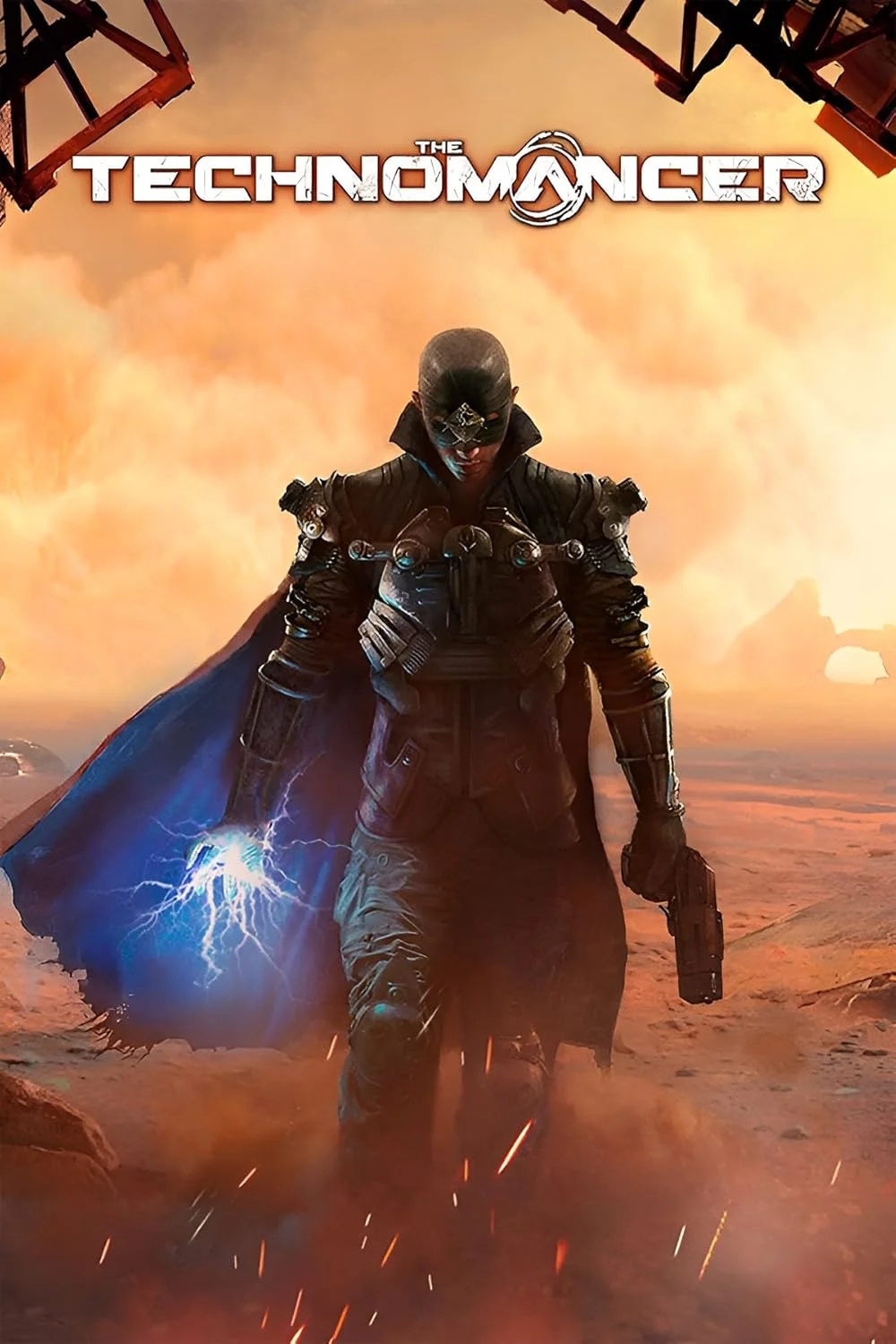
The Technomancer
This combination delivers exceptional performance with an average of 155 FPS, perfect for high refresh rate gaming and competitive play.
Average FPS: resolution vs quality settings
| Ultra | High | Medium | Low | |
|---|---|---|---|---|
| 4K Ultra HD | 56 | 72 | 88 | 112 |
| 1440p QHD | 107 | 135 | 159 | 205 |
| 1080p Full HD | 160 | 204 | 244 | 316 |
Cell color: green is 120+ FPS, teal is 60+, amber is 30+, red is below 30.
The Technomancer with Intel Core i7-14700KF + NVIDIA GeForce RTX 5080, In-Depth Analysis
The Technomancer is an Action RPG from 2016, and this pairing of an Intel Core i7-14700KF with an NVIDIA GeForce RTX 5080 produces a dataset that clearly delineates where the bottlenecks lie. The measured FPS across resolutions and presets shows a system that is overwhelmingly GPU-limited at higher settings, while the CPU's substantial core count ensures the game never stutters due to processor overhead. The data indicates that users can expect a highly playable experience at nearly every configuration, with the primary trade-off being between visual fidelity and raw frame rate.
Resolution Scaling
The FPS data reveals a classic scaling curve that shifts the bottleneck from the GPU at 1080p to a more balanced, yet still GPU-dominant, load at 4K. At 1080p High, the combo produces 204.3 FPS, which drops to 135.3 FPS at 1440p, a reduction of approximately 34%. Moving to 4K High yields 71.6 FPS, which is a further 47% drop from the 1440p figure. This steep decline is the signature of a GPU that is being pushed hard by pixel count, confirming that the RTX 5080 is the limiting factor at these resolutions.
The pattern is consistent across all presets, though the relative drops are more pronounced at lower settings. At 1080p Low, the system delivers 315.8 FPS, which falls to 205.2 FPS at 1440p and then 112.3 FPS at 4K. The 4K Low result is 64% lower than the 1080p Low result, a larger percentage gap than the 65% drop seen between 1080p High (204.3 FPS) and 4K High (71.6 FPS). This indicates that at 1080p Low, the CPU is able to feed frames more easily, and the GPU's raw compute becomes the absolute limiting factor as resolution increases.
The data suggests that 1440p is the sweet spot for this game with this hardware. The jump from 4K to 1440p at High settings nearly doubles the frame rate, from 71.6 to 135.3 FPS, which is a far more significant improvement than the jump from 1080p to 1440p, where the frame rate only increases by about 51% (from 135.3 to 204.3 FPS). For users with 1440p monitors, the Ultra preset is still viable at 106.8 FPS, but for those targeting 4K, the High preset is the only option that maintains a stable 60+ FPS experience, as Ultra drops to 56.1 FPS.
CPU Role
The Intel Core i7-14700KF is a 20-core, 28-thread processor based on the Raptor Lake architecture, with a boost clock of 5.60 GHz. Its benchmark scores are exceptional, with a Cinebench R23 multi-core score of 44557 and a single-core score of 6290, placing it in the 96th percentile of all CPUs. This computing headroom is evident in the game's performance at lower resolutions. At 1080p Low, the system achieves 315.8 FPS, which is a frame rate that would typically stress a CPU's single-threaded performance. Since the game is from 2016, it likely does not utilize all 20 cores effectively, but the sheer single-core speed of 5.60 GHz ensures that no core becomes a bottleneck.
The processor's performance relative to its nearest rivals is telling. Its average benchmark score of 70104 is essentially identical to the Intel Core i7-14700K (70074, deltaPct 0), and it is only 0.4% behind the AMD Ryzen 9 9950X. This means that for a game like The Technomancer, which is not heavily multi-threaded, the choice between these high-end CPUs would have no measurable impact on the final FPS numbers. The data shows that the CPU is not the limiting factor in this combo; even at 1080p, the GPU is still the primary driver of performance, as evidenced by the fact that lowering settings from High to Low at 1080p increases FPS from 204.3 to 315.8, a change that would only happen if the GPU was the constraint.
How This Combo Ranks
In the broader database of tested combinations, this pairing of the Core i7-14700KF and RTX 5080 ranks 47th out of 1656 combos for The Technomancer. This places it in the top 3% of all tested systems, which is a strong indicator of its overall capability. The high rank is a direct result of the GPU's dominance in this title; the RTX 5080's 16 GB of GDDR7 memory and 960.0 GB/s bandwidth are more than sufficient for the game's textures, and its 56.28 TFLOPS of FP32 compute power is what drives the high frame rates.
The rank also reflects the balance of the system. While a more powerful CPU might edge out this combo in other games, the data here shows that the i7-14700KF provides ample support. The fact that the combo is ranked 47th suggests that there are 46 other systems that perform better, but those likely feature even more powerful GPUs, such as a RTX 5090 or a Radeon RX 7900 XTX, which are not listed in this pack. For the vast majority of users, a rank of 47 out of 1656 means that this system is in the top tier of performance for this specific game, and the measured FPS data confirms that it can handle the game at maximum settings with high refresh rates at 1440p.
FAQ
Q: Can this combo run The Technomancer at 4K with maximum settings?
A: No. The measured data at 4K Ultra shows an average FPS of 56.1, which falls below the 60 FPS threshold for smooth gameplay. The 4K High preset achieves 71.6 FPS, making it the highest quality setting that maintains a playable frame rate at this resolution.
Q: What is the best resolution for this CPU and GPU pairing?
A: The data indicates that 2560x1440 is the optimal resolution. At 1440p, the High preset delivers 135.3 FPS, and even the Ultra preset maintains a very high 106.8 FPS. This provides a better balance between visual quality and frame rate than 4K, where the Ultra preset dips below 60 FPS.
Q: Is the Intel Core i7-14700KF a bottleneck for the RTX 5080 in this game?
A: No. The benchmark results show the CPU is not the limiting factor. At 1080p Low, the system reaches 315.8 FPS, which is a very high frame rate that would expose CPU limitations in many games. The fact that FPS scales significantly with resolution and settings (from 315.8 at 1080p Low to 71.6 at 4K High) proves the GPU is the primary performance constraint.
Q: How does the i7-14700KF compare to its direct rival, the i7-14700K?
A: The data shows they are effectively identical in performance. The i7-14700KF has an average benchmark score of 70104, while the i7-14700K scores 70074, a deltaPct of 0. This means there is no measurable performance difference between the two for any workload.
Q: What settings should be used for a 1440p 144Hz monitor?
A: The Ultra preset at 1440p yields 106.8 FPS, which is below a 144Hz refresh rate. To fully utilize a 144Hz display, dropping to the High preset (135.3 FPS) or the Medium preset (158.6 FPS) would be necessary. The Medium preset provides a comfortable margin above the refresh rate.
Q: Is the RTX 5080's performance consistent with its benchmark scores?
A: Yes. The GPU's Passmark G3D score of 36565 and 3DMark Steel Nomad score of 8637 are reflected in the game's performance. The RTX 5080 is ranked in the 89th percentile of all GPUs, which aligns with its ability to push high frame rates at 1440p and maintain 60+ FPS at 4K on High settings.
GPU Role
The NVIDIA GeForce RTX 5080 is the dominant component in this pairing for The Technomancer. Its 16 GB of GDDR7 memory on a 256-bit bus provides a bandwidth of 960.0 GB/s, which is crucial for feeding the GPU's 10752 shading units at high resolutions. The game's textures and effects are easily handled by this memory configuration, and the data shows no signs of a VRAM capacity bottleneck, as frame rates scale consistently with resolution.
The GPU's clock speeds are also a factor. With a base clock of 2295 MHz and a boost clock of 2617 MHz, the card is able to maintain high throughput. The measured frame rates at 1080p Low (315.8 FPS) and 1440p Low (205.2 FPS) demonstrate the raw compute power of the Blackwell 2.0 architecture. The RTX 5080's Passmark G3D score of 36565 places it in the 89th percentile of all GPUs, and its nearest rivals include the Intel Arc A580, which it outperforms by a deltaPct of 2.5, and the Intel Arc Pro A60, which it leads by 1.9%. This confirms that the RTX 5080 is a high-end part that is well-suited for this game.
The GPU's role becomes even more apparent when examining the performance scaling. From 1080p High to 4K High, the frame rate drops from 204.3 FPS to 71.6 FPS, a 65% decrease. This is a direct consequence of the increased pixel workload, which is the GPU's responsibility. The CPU's performance remains constant regardless of resolution, so the entire performance delta can be attributed to the RTX 5080's rendering capabilities.
Settings Recommendations
Based on the measured data, the optimal settings depend entirely on the user's target resolution and refresh rate. For 4K displays, the High preset is the recommended choice, as it is the only setting that provides an average FPS above 60 (71.6 FPS). The Ultra preset at 4K yields 56.1 FPS, which is not smooth enough for most users, and the Medium preset at 87.8 FPS is a viable alternative if High is too demanding.
At 1440p, the Ultra preset is the best experience for users with a 60Hz or 100Hz monitor, as it produces 106.8 FPS. For those with a 144Hz display, the High preset at 135.3 FPS is the best balance, though the Medium preset at 158.6 FPS provides a higher frame rate that is more likely to stay above the refresh rate in demanding scenes. The Low preset at 205.2 FPS is unnecessary unless the user is competing in a scenario where every frame matters.
At 1080p, all presets are playable, but the Ultra preset at 160.1 FPS is the best choice for a high-refresh-rate monitor. The High preset at 204.3 FPS is also excellent, and the Medium preset at 243.6 FPS is a good option for those who prioritize frame rate above all else. The Low preset at 315.8 FPS offers no visual benefit and should only be used for extreme competitive play. In summary, the High preset is the most consistent recommendation across all resolutions, providing a good balance between visual fidelity and performance, with the Ultra preset being a viable option only at 1440p and below.
Hardware Specifications
Intel Core i7-14700KF
NVIDIA GeForce RTX 5080
FPS Benchmarks by Resolution & Settings
Performance data for Intel Core i7-14700KF + NVIDIA GeForce RTX 5080 in The Technomancer
| Resolution | Settings | Avg FPS |
|---|---|---|
| 3840x2160 | Low | 112.3 |
| 3840x2160 | Medium | 87.8 |
| 3840x2160 | High | 71.6 |
| 3840x2160 | Ultra | 56.1 |
| 2560x1440 | Low | 205.2 |
| 2560x1440 | Medium | 158.6 |
| 2560x1440 | High | 135.3 |
| 2560x1440 | Ultra | 106.8 |
| 1920x1080 | Low | 315.8 |
| 1920x1080 | Medium | 243.6 |
| 1920x1080 | High | 204.3 |
| 1920x1080 | Ultra | 160.1 |
The Technomancer with ii7-14700KF + Other GPUs
See how The Technomancer performs with the same CPU but different graphics cards.
The Technomancer with RTX 5080 + Other CPUs
See how The Technomancer performs with the same GPU but different processors.
Other Games with ii7-14700KF + RTX 5080
Explore FPS benchmarks for other games using this same hardware combination.