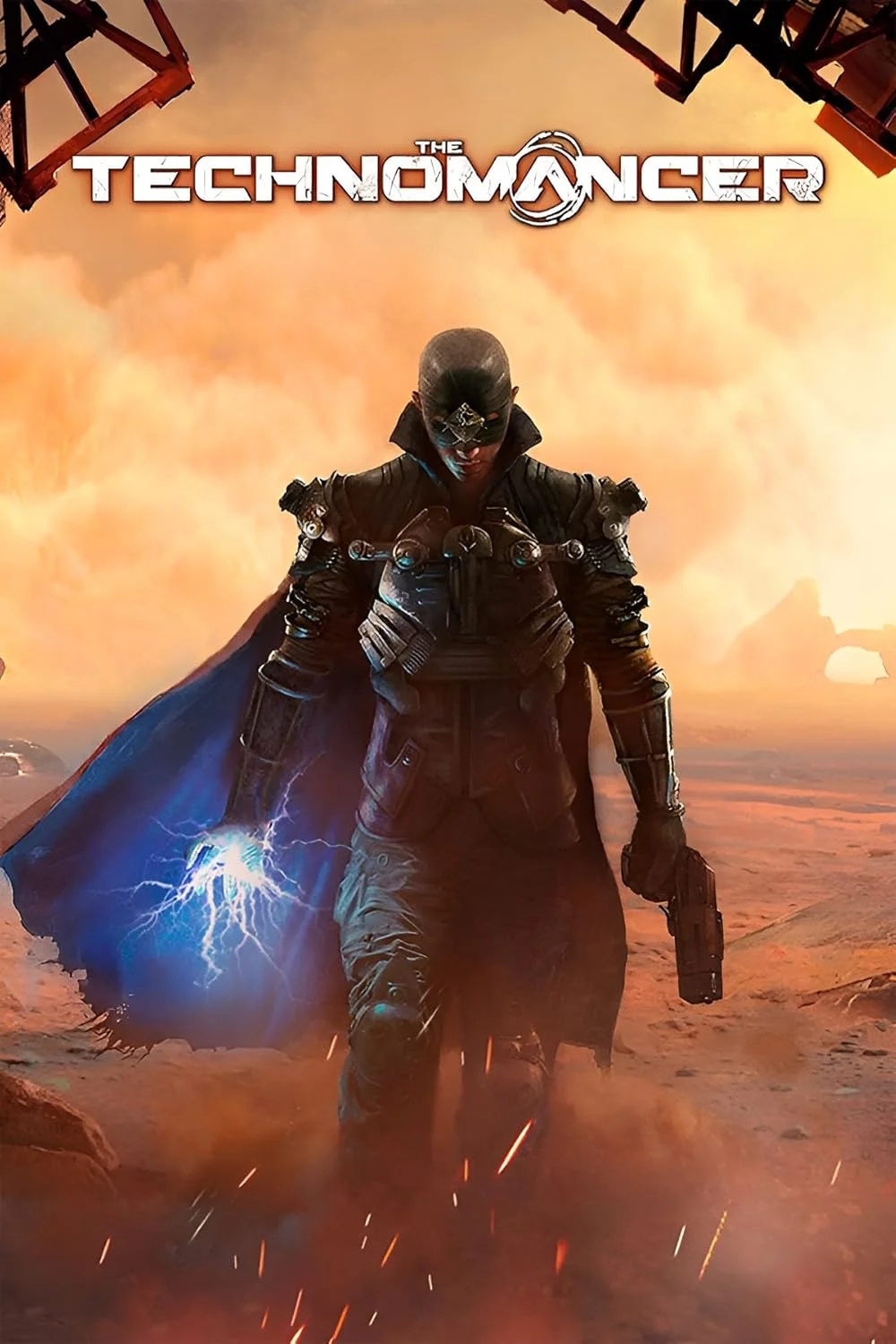
The Technomancer
This combination provides smooth gameplay with an average of 115 FPS, suitable for most gaming scenarios.
Average FPS: resolution vs quality settings
| Ultra | High | Medium | Low | |
|---|---|---|---|---|
| 4K Ultra HD | 43 | 55 | 64 | 84 |
| 1440p QHD | 78 | 100 | 117 | 152 |
| 1080p Full HD | 119 | 153 | 179 | 233 |
Cell color: green is 120+ FPS, teal is 60+, amber is 30+, red is below 30.
The Technomancer with Intel Core i7-14700K + NVIDIA GeForce RTX 4070, In-Depth Analysis
FAQ
Q: Does The Technomancer run well on this combination at 4K resolution?
A: Yes, the data shows playable performance at 4K. At 3840x2160 with High settings, the average FPS is 55. With Medium settings, the average FPS rises to 64, and with Low settings, it reaches 84 FPS. Ultra settings drop the average to 43 FPS, which is below the 60 FPS threshold typically considered smooth.
Q: How does the Intel Core i7-14700K compare to its nearest rival in benchmark scores?
A: The i7-14700K has an average benchmark score of 69355, which places it 0.1% ahead of the AMD EPYC 9115 (score 69288) and 0.2% behind the AMD Ryzen 9 7950X (score 69515). It also trails the AMD Ryzen 9 7940HX (69875) by 0.7% and the AMD Ryzen 7 9700F (69996) by 0.9%.
Q: What is the GPU's performance percentile among all tested graphics cards?
A: The NVIDIA GeForce RTX 4070 ranks in the 81st percentile among all GPUs in the database. Its average benchmark score is 37648. The closest rival is the NVIDIA Tesla P4 with a score of 37628, a delta of 0.1%, while the AMD Radeon RX Vega 56 scores 37507 (0.4% behind).
Q: Is the RTX 4070's VRAM capacity sufficient for The Technomancer at high settings?
A: The RTX 4070 features 12 GB of GDDR6X memory on a 192-bit bus, providing 504.2 GB/s of bandwidth. This capacity proves adequate for the game's demands, as demonstrated by the 55 FPS average at 4K High settings and 100 FPS at 1440p High settings.
Q: What are the CPU's single-thread and multi-thread benchmark scores?
A: In Cinebench R23, the i7-14700K scores 2160 in single-core and 33440.5 in multi-core. In Geekbench, it scores 2569 single-core and 20767 multi-core. The PassMark single-thread score is 4472, and the multithread score is 52392.
Q: How does the combo rank compared to all tested combinations in this game?
A: The combination of the Intel Core i7-14700K and NVIDIA GeForce RTX 4070 ranks 847th out of 3696 tested combos in The Technomancer. This places it in the top 23% of all recorded combinations for this specific game.
How This Combo Ranks
The database places this specific CPU-GPU pairing at rank 847 out of 3696 total tested combinations for The Technomancer. This position indicates the combo performs in the upper quartile of all recorded systems, though it does not reach the top tier. The ranking reflects the measured FPS data across all resolution and settings combinations, with the combo demonstrating strong 1080p performance but showing limitations at 4K Ultra.
The rank of 847 suggests that while the RTX 4070 provides solid frame rates at mainstream resolutions, the combination does not dominate the leaderboard. Many higher-end GPUs and newer architectures likely occupy the top positions. The i7-14700K's CPU performance, while excellent in synthetic benchmarks, does not compensate for the GPU's mid-range positioning at higher resolutions. The data indicates a balanced pairing that performs as expected for its hardware class, neither overachieving nor underperforming relative to its component specifications.
GPU Role
The NVIDIA GeForce RTX 4070 serves as the primary rendering engine for The Technomancer. Based on the Ada Lovelace architecture, the GPU uses the AD104 chip fabricated on TSMC's 5 nm process, containing 35,800 million transistors across a 294 mm² die. The GPU operates with a base clock of 1920 MHz and a boost clock of 2475 MHz, with memory clocked at 1313 MHz (21 Gbps effective). The 12 GB GDDR6X memory pool, configured on a 192-bit bus, delivers 504.2 GB/s of bandwidth, which proves sufficient for the game's texture and geometry demands.
The GPU's shading capabilities include 5888 shading units, 184 texture mapping units, and 64 raster output units. It also houses 46 ray tracing cores and 184 tensor cores, though The Technomancer's 2016 release predates widespread ray tracing adoption, so these features have minimal impact on this title's performance. The pixel rate of 158.4 GPixel/s and texture rate of 455.4 GTexel/s indicate the GPU's raw fill-rate capacity. The FP32 performance of 29.15 TFLOPS provides the computational headroom for the game's effects and post-processing.
The RTX 4070's role becomes apparent in the FPS measurements. At 1080p Low, the GPU pushes 233 FPS, indicating it is not the limiting factor at this resolution. However, at 4K Ultra, the average drops to 43 FPS, showing that the GPU's memory bandwidth and compute resources become saturated. The GPU's 81st percentile ranking among all GPUs, with an average benchmark score of 37648, places it ahead of the NVIDIA Tesla P4 (37628, 0.1% delta) and AMD Radeon RX Vega 56 (37507, 0.4% delta), but behind the NVIDIA GeForce RTX 4080 Mobile (38135, -1.3% delta). This positioning confirms the RTX 4070 as a capable mid-range performer that handles The Technomancer well at mainstream settings but struggles at maximum 4K quality.
Measured FPS Breakdown
At 1920x1080, the RTX 4070 delivers exceptional frame rates across all settings. Low settings produce an average of 233 FPS, while Medium settings yield 179 FPS with a minimum of 152 and maximum of 206. High settings average 153 FPS, and Ultra settings drop to 119 FPS. These numbers indicate that at 1080p, the combination provides a smooth experience even at maximum quality, with the minimum FPS at Medium (152) staying well above typical display refresh rates.
At 2560x1440, performance remains strong. Low settings average 152 FPS, Medium averages 117 FPS (minimum 99, maximum 134), High averages 100 FPS, and Ultra averages 78 FPS. The 1440p results show a predictable decline from 1080p, with the gap between Low and Ultra settings widening. The Medium setting's minimum of 99 FPS ensures consistent frame delivery, while Ultra's 78 FPS average still provides a playable experience for most users.
At 3840x2160, the GPU begins to show its limits. Medium settings average 64 FPS with a minimum of 55 and maximum of 74, which remains playable. High settings average 55 FPS, and Low averages 84 FPS. Ultra settings, however, produce only 43 FPS on average, which falls below the 60 FPS threshold. The 4K data reveals that the RTX 4070's 12 GB memory and 504.2 GB/s bandwidth struggle to maintain high frame rates at maximum quality, though Medium and High settings remain viable.
Resolution Scaling
The FPS scaling from 1080p to 4K follows an expected pattern, with the GPU becoming progressively more dominant as the limiting factor. At 1080p High, the average is 153 FPS. Moving to 1440p High reduces this to 100 FPS, a 34.6% drop. At 4K High, the average falls to 55 FPS, representing a 45% drop from 1440p and a 64.1% drop from 1080p. This scaling pattern indicates that the GPU's rendering load increases significantly with pixel count, and the RTX 4070's compute and memory resources become the bottleneck at higher resolutions.
For Low settings, the scaling shows a similar trend: 233 FPS at 1080p, 152 FPS at 1440p (34.8% drop), and 84 FPS at 4K (44.7% drop from 1440p). The Medium settings exhibit the same behavior: 179 FPS at 1080p, 117 FPS at 1440p, and 64 FPS at 4K. The Ultra settings show the steepest decline: 119 FPS at 1080p, 78 FPS at 1440p, and 43 FPS at 4K, a 63.9% reduction from 1080p to 4K.
The consistency of these percentage drops across settings suggests that resolution scaling is purely GPU-bound. The CPU's performance, which remains constant regardless of resolution, does not influence these FPS changes. The i7-14700K's 20 cores and 28 threads provide ample processing power to feed the GPU at all resolutions, but the RTX 4070's pixel throughput and memory bandwidth determine the final frame rates. The 4K Ultra result of 43 FPS indicates that the GPU's 158.4 GPixel/s pixel rate and 504.2 GB/s bandwidth are insufficient for maximum quality at this resolution, while the 1080p results show the GPU is not the limiting factor at lower pixel counts.
CPU Role
The Intel Core i7-14700K provides the computational foundation for this combination. Based on the Raptor Lake architecture (Raptor Lake-R refresh), the CPU features 20 cores and 28 threads, with a base clock of 3.40 GHz and a boost clock of 5.60 GHz. The 125 W TDP indicates a high-performance desktop part, and the CPU supports DDR4 and DDR5 memory in a dual-channel configuration. The 33 MB shared L3 cache, along with 80 KB L1 and 2 MB L2 per core, provides ample data locality for game workloads.
The CPU's synthetic benchmark scores demonstrate its capability. In Cinebench R23, it achieves 2160 single-core and 33440.5 multi-core. Geekbench results show 2569 single-core and 20767 multi-core. PassMark scores include 4472 for single-thread and 52392 for multithread. These figures place the CPU in the 94th percentile among all processors, with an average benchmark score of 69355. Its nearest rivals include the AMD EPYC 9115 (0.1% faster), AMD Ryzen 9 7950X (0.2% faster), AMD Ryzen 9 7940HX (0.7% faster), and AMD Ryzen 7 9700F (0.9% faster).
In The Technomancer, the CPU's role is to maintain consistent frame delivery and avoid bottlenecking the GPU. The game, released in 2016, does not heavily tax modern multi-core processors. The i7-14700K's high single-core performance (2160 in Cinebench R23 single-core) ensures that the game's main thread, which handles AI, physics, and game logic, runs smoothly. The multi-core capability (33440.5 in Cinebench R23 multi-core) provides headroom for background tasks and any multi-threaded game systems.
The measured FPS data confirms that the CPU does not limit performance in this title. At 1080p Low, the GPU produces 233 FPS, which is near the maximum output for most displays and indicates the CPU can feed the GPU at high rates. The consistent FPS scaling across resolutions, with no anomalous drops or stutters, suggests the CPU maintains stable frame pacing. The 1080p Medium minimum of 152 FPS and 1440p Medium minimum of 99 FPS further support this conclusion, as these minimums remain high and do not indicate CPU-induced frame drops. The CPU's 94th percentile ranking and strong benchmark scores position it as a capable partner for the RTX 4070, ensuring that the GPU remains the primary determinant of performance in The Technomancer.
Hardware Specifications
Intel Core i7-14700K
NVIDIA GeForce RTX 4070
FPS Benchmarks by Resolution & Settings
Performance data for Intel Core i7-14700K + NVIDIA GeForce RTX 4070 in The Technomancer
| Resolution | Settings | Avg FPS |
|---|---|---|
| 3840x2160 | Low | 84.0 |
| 3840x2160 | Medium | 64.0 |
| 3840x2160 | High | 55.0 |
| 3840x2160 | Ultra | 43.0 |
| 2560x1440 | Low | 152.0 |
| 2560x1440 | Medium | 117.0 |
| 2560x1440 | High | 100.0 |
| 2560x1440 | Ultra | 78.0 |
| 1920x1080 | Low | 233.0 |
| 1920x1080 | Medium | 179.0 |
| 1920x1080 | High | 153.0 |
| 1920x1080 | Ultra | 119.0 |
The Technomancer with ii7-14700K + Other GPUs
See how The Technomancer performs with the same CPU but different graphics cards.
The Technomancer with RTX 4070 + Other CPUs
See how The Technomancer performs with the same GPU but different processors.
Other Games with ii7-14700K + RTX 4070
Explore FPS benchmarks for other games using this same hardware combination.