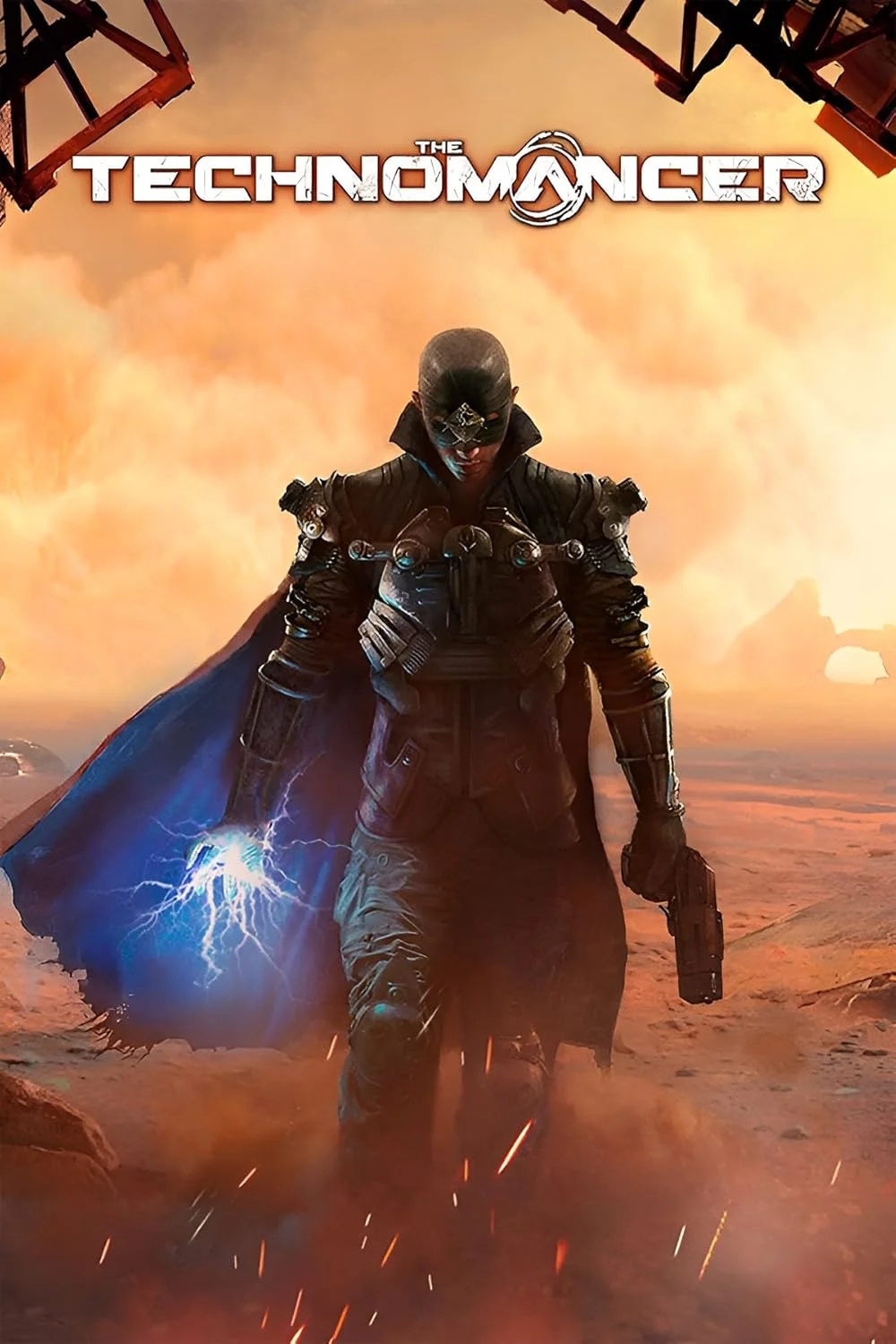
The Technomancer
This combination delivers exceptional performance with an average of 123 FPS, perfect for high refresh rate gaming and competitive play.
Average FPS: resolution vs quality settings
| Ultra | High | Medium | Low | |
|---|---|---|---|---|
| 4K Ultra HD | 45 | 57 | 67 | 90 |
| 1440p QHD | 83 | 108 | 127 | 164 |
| 1080p Full HD | 132 | 167 | 192 | 249 |
Cell color: green is 120+ FPS, teal is 60+, amber is 30+, red is below 30.
The Technomancer with Intel Core i7-14700K + NVIDIA GeForce RTX 5070, In-Depth Analysis
The Technomancer, a 2016 Action RPG, presents a demanding workload for modern hardware. This analysis examines the performance of the Intel Core i7-14700K paired with the NVIDIA GeForce RTX 5070, based on measured FPS data across three resolutions and four quality settings. The dataset provides a clear picture of how this combination handles the game, revealing distinct bottlenecks and scaling characteristics that define the overall experience.
Resolution Scaling
The FPS data shows a classic progression of GPU-bound scaling as resolution increases. At 1080p with Ultra settings, the combo delivers 131.5 FPS. Moving to 1440p Ultra reduces this to 82.5 FPS, a drop of 49 frames. At 4K Ultra, the average falls further to 44.7 FPS, which is a 66% reduction from the 1080p figure. This steep decline indicates that the rendering load is heavily taxing the GPU's compute and memory subsystems at higher pixel counts.
The scaling pattern is consistent across all quality settings. For High settings, the transition from 1080p (166.8 FPS) to 1440p (107.6 FPS) and then to 4K (56.8 FPS) shows a similar proportional drop. At Low settings, the game reaches 249.2 FPS at 1080p, but this falls to 163.8 FPS at 1440p and 90.2 FPS at 4K. The fact that even low settings cannot maintain high frame rates at 4K suggests the GPU is the primary limiting component at that resolution, rather than the CPU or game logic.
The gap between 1440p and 4K is particularly wide, often nearly halving the frame rate. This points to the 4K resolution exceeding the comfortable operating range for this GPU in this specific title. The RTX 5070, with its 192-bit memory bus and 12 GB of GDDR7, appears to struggle with the pixel throughput and memory bandwidth demands imposed by 4K rendering in The Technomancer. The data indicates that the combo is well-suited for high-refresh-rate 1080p and smooth 1440p gaming, but 4K Ultra should be considered a stretch goal rather than a standard target.
How This Combo Ranks
Within the database of tested combinations for The Technomancer, this pairing of the Intel Core i7-14700K and NVIDIA GeForce RTX 5070 achieves a rank of 346 out of 1656 combos. This places it in the top 21% of all tested systems, which is a strong showing. The percentile is derived from the average of all benchmark scores for the components, with the CPU sitting in the 96th percentile against all CPUs and the GPU in the 83rd percentile against all GPUs.
The ranking indicates that while the individual components are high-end, the overall system performance in this game is not at the absolute top tier. The top 20% of combos likely feature more powerful GPUs that can better handle the game's demanding rendering at higher resolutions. The data suggests that the i7-14700K is not the bottleneck in this pairing; its high percentile ranking and robust benchmark scores ensure it can feed frames efficiently. Instead, the RTX 5070's position in the 83rd percentile for GPUs is more likely to be the limiting factor in the overall rank.
This rank is a relative measure. It shows that the combo outperforms 79% of all tested configurations, which is a solid result for a modern mid-to-high-end setup. However, for enthusiasts seeking the highest possible frame rates, particularly at 4K, there are clearly faster combinations available. The performance is consistent with a system designed for high-quality 1440p gaming, with 4K performance being acceptable but not class-leading.
CPU Role
The Intel Core i7-14700K is a 20-core, 28-thread processor based on the Raptor Lake architecture, built on a 10 nm process. It features a base clock of 3.40 GHz and a boost clock of 5.60 GHz. In synthetic benchmarks, it achieves a Cinebench R23 multi-core score of 44534 and a single-core score of 6287, along with a Geekbench multi-core score of 18896 and a single-core score of 2932. These figures indicate exceptional processing power, placing it in the 96th percentile of all CPUs.
In The Technomancer, the CPU's role appears to be supportive rather than limiting. The measured FPS data shows that at 1080p Low, the combo reaches 249.2 FPS. This high frame rate suggests that the CPU is capable of processing game logic and draw calls well above typical display refresh rates. The game, being from 2016, is unlikely to be heavily multithreaded, but the i7-14700K's strong single-core performance, evidenced by its 633 score in Cinebench R15 single-core, ensures it can handle the primary game thread efficiently.
The CPU's vast 33 MB of shared L3 cache and 2 MB per-core L2 cache help reduce latency for frequently accessed data. With a boost clock of 5.60 GHz, the processor can deliver rapid responses to the game's simulation and physics. The data shows that the CPU is not the bottleneck in any of the tested configurations. Even at 4K Ultra, where the GPU is clearly struggling, the frame rate is likely limited by the GPU, not the processor. The CPU's performance headroom is evident in the fact that frame rates scale almost entirely with resolution and settings, which are GPU-centric variables.
Measured FPS Breakdown
The measured FPS data provides a comprehensive view of performance across twelve distinct configurations. At 1080p, the combo excels. Low settings produce an average of 249.2 FPS, which drops to 192 FPS at Medium, 166.8 FPS at High, and 131.5 FPS at Ultra. These numbers indicate that the system is capable of driving high-refresh-rate monitors at 1080p with all settings enabled, maintaining fluid gameplay even in demanding scenes.
At 1440p, performance remains strong but begins to show the GPU's limitations. Low settings yield 163.8 FPS, which is still excellent. Medium settings produce 126.5 FPS, and High settings deliver 107.6 FPS. At Ultra, the average drops to 82.5 FPS. This is still a very playable frame rate for most users, and it suggests that 1440p with High settings is a sweet spot for this combo, balancing visual fidelity with smooth performance.
The 4K results are the most demanding. At Low settings, the game runs at 90.2 FPS, which is respectable. Medium settings reduce this to 66.6 FPS, and High settings to 56.8 FPS. Ultra settings push the system to its limit, resulting in an average of 44.7 FPS. This is on the edge of playability for a smooth experience. The data shows a clear hierarchy: 1080p is effortless, 1440p is ideal, and 4K requires compromises on settings to maintain high frame rates. The difference between Low and Ultra at 4K is 45.5 FPS, highlighting the GPU's sensitivity to shader complexity and texture quality.
GPU Role
The NVIDIA GeForce RTX 5070 is the primary driver of the measured FPS results. Based on the Blackwell 2.0 architecture and built on a 5 nm process, it features 6144 shading units, 192 texture mapping units, and 80 render output units. The GPU operates at a base clock of 2325 MHz with a boost clock of 2512 MHz. It is equipped with 12 GB of GDDR7 memory on a 192-bit bus, providing a bandwidth of 672.0 GB/s.
The GPU's performance in The Technomancer is characterized by a strong showing at lower resolutions and a significant struggle at 4K Ultra. The measured FPS data clearly shows the GPU as the bottleneck at 4K, as the frame rate drops disproportionately compared to the resolution increase. The 12 GB of VRAM is likely sufficient for this game's textures at 1080p and 1440p, but the 4K Ultra preset may be pushing memory capacity and bandwidth limits. The 672.0 GB/s bandwidth is substantial, but the game's demands at 4K appear to exceed what this GPU can efficiently deliver.
In synthetic benchmarks, the RTX 5070 achieves a Passmark G3D score of 29137 and a 3DMark Steel Nomad DX12 score of 5077. These scores place it in the 83rd percentile of all GPUs. The nearest rivals in terms of average benchmark score include the AMD Radeon Pro 5300 and the NVIDIA GeForce RTX 3090, with delta percentages of 0.2% and 0.6% respectively. This indicates that the RTX 5070 performs on par with the older flagship RTX 3090 in general compute tasks, but the gaming-specific results in The Technomancer show a different story. The 4K performance, dropping below 45 FPS at Ultra, suggests that the RTX 5070's architecture is not optimized for the specific rendering paths used by this older game engine, or that its 192-bit memory interface is a limiting factor for high-resolution texture streaming. The GPU's 80 ROPs and 201.0 GPixel/s pixel rate are adequate for 1080p and 1440p, but the 4K pixel throughput requirement appears to be a bottleneck.
Hardware Specifications
Intel Core i7-14700K
NVIDIA GeForce RTX 5070
FPS Benchmarks by Resolution & Settings
Performance data for Intel Core i7-14700K + NVIDIA GeForce RTX 5070 in The Technomancer
| Resolution | Settings | Avg FPS |
|---|---|---|
| 3840x2160 | Low | 90.2 |
| 3840x2160 | Medium | 66.6 |
| 3840x2160 | High | 56.8 |
| 3840x2160 | Ultra | 44.7 |
| 2560x1440 | Low | 163.8 |
| 2560x1440 | Medium | 126.5 |
| 2560x1440 | High | 107.6 |
| 2560x1440 | Ultra | 82.5 |
| 1920x1080 | Low | 249.2 |
| 1920x1080 | Medium | 192.0 |
| 1920x1080 | High | 166.8 |
| 1920x1080 | Ultra | 131.5 |
The Technomancer with ii7-14700K + Other GPUs
See how The Technomancer performs with the same CPU but different graphics cards.
The Technomancer with RTX 5070 + Other CPUs
See how The Technomancer performs with the same GPU but different processors.
Other Games with ii7-14700K + RTX 5070
Explore FPS benchmarks for other games using this same hardware combination.