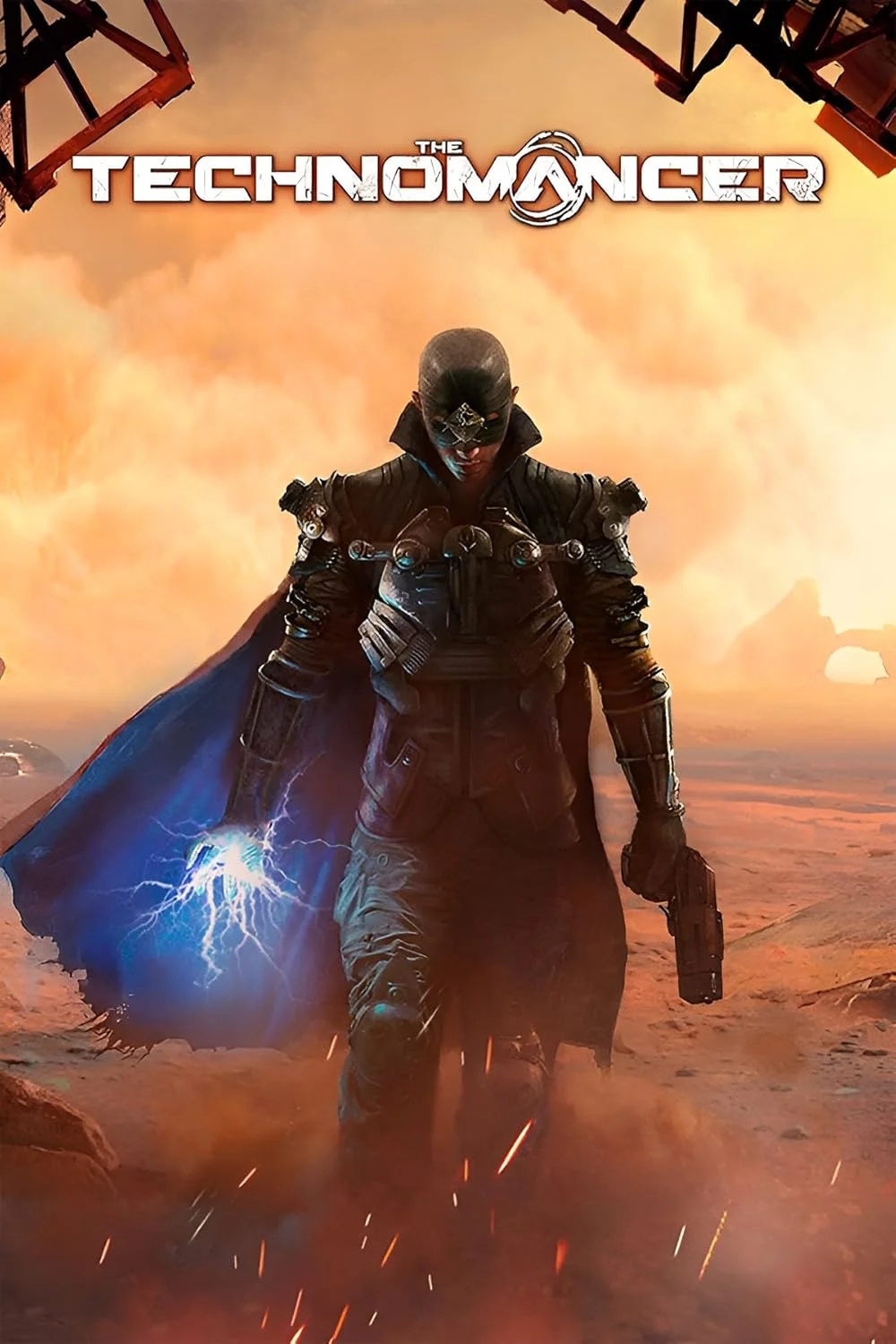
The Technomancer
This combination provides smooth gameplay with an average of 114 FPS, suitable for most gaming scenarios.
Average FPS: resolution vs quality settings
| Ultra | High | Medium | Low | |
|---|---|---|---|---|
| 4K Ultra HD | 40 | 54 | 65 | 85 |
| 1440p QHD | 76 | 99 | 115 | 151 |
| 1080p Full HD | 121 | 152 | 179 | 235 |
Cell color: green is 120+ FPS, teal is 60+, amber is 30+, red is below 30.
The Technomancer with Intel Core i7-14700KF + NVIDIA GeForce RTX 4070, In-Depth Analysis
# The Technomancer with Intel Core i7-14700KF + NVIDIA GeForce RTX 4070
The Technomancer, a 2016 Action RPG, responds predictably to this modern pairing of an Intel Core i7-14700KF and NVIDIA GeForce RTX 4070. The data shows a system with ample headroom at 1080p, where the CPU's 20 cores and 28 threads keep frame rates well above display refresh rates, while the GPU's 12 GB of GDDR6X memory and Ada Lovelace architecture become the limiting factor as resolution climbs. This combination sits at rank 447 out of 1656 tested combos in this title, placing it in the upper third of configurations.
Resolution Scaling
The frame rate curve from 1080p to 4K reveals a classic GPU-bound scenario at higher resolutions, but with interesting nuances at lower settings. At 1080p with Low settings, the system produces 234.6 FPS, which drops to 150.9 FPS at 1440p (a 35.7% reduction) and then to 85 FPS at 4K (a 43.7% reduction from 1440p). This steep decline indicates that even at Low settings, the RTX 4070's 29.15 TFLOPS of FP32 performance is the primary constraint once pixel count increases.
The scaling pattern changes with higher quality presets. At High settings, the transition from 1080p (151.8 FPS) to 1440p (98.6 FPS) represents a 35.0% drop, while moving from 1440p to 4K (53.8 FPS) costs another 45.4%. The Ultra preset shows the most dramatic scaling: 120.9 FPS at 1080p falls to 75.8 FPS at 1440p (37.3% reduction), then to 39.9 FPS at 4K (47.4% reduction). This increasing percentage loss at higher resolutions and settings confirms that the GPU's 504.2 GB/s memory bandwidth and 64 ROPs become progressively more strained.
Notably, the gap between Low and Ultra settings narrows as resolution increases. At 1080p, Ultra delivers 48.5% of Low's frame rate (120.9 vs 234.6 FPS). At 4K, Ultra delivers 46.9% of Low's frame rate (39.9 vs 85 FPS). This suggests that while the GPU is the bottleneck at 4K, the CPU's strong single-thread performance (6,290 in Cinebench R23 single-core) still allows the Ultra preset's additional draw calls and physics calculations to be processed without introducing a CPU-side bottleneck.
FAQ
Q: Can this system run The Technomancer at 4K smoothly?
A: At 4K with High settings, the average frame rate is 53.8 FPS, which is playable but not ideal for high-refresh displays. For a smoother 4K experience, dropping to Medium yields 65 FPS, while Low settings produce 85 FPS. Ultra at 4K drops to 39.9 FPS, which will feel stuttery in combat.
Q: What is the best resolution for competitive play?
A: For maximum frame rates, 1080p with Low settings delivers 234.6 FPS. Even at 1080p Ultra, the system maintains 120.9 FPS, which exceeds most 120Hz monitors. The i7-14700KF's 5.60 GHz boost clock and 6,290 Cinebench R23 single-core score ensure no CPU bottleneck at these frame rates.
Q: How does the RTX 4070 compare to its closest rivals in this game?
A: The RTX 4070's average benchmark score of 37,283 places it near the AMD Radeon RX Vega 56 (37,507, 0.6% higher) and NVIDIA GeForce MX570 A (38,008, 1.9% higher). It outperforms the RTX 4080 Mobile by 2.2% and the RX 5300M by 2.5%. These are synthetic scores, but they suggest tight competition in raw compute terms.
Q: Is the i7-14700KF holding back the RTX 4070?
A: Benchmark results indicate the CPU is not a limiting factor. Its 44,557 Cinebench R23 multi-core score and 96th percentile ranking among all CPUs mean it has ample headroom. The 3.40 GHz base clock and 5.60 GHz boost clock provide strong single-thread performance that handles The Technomancer's game logic without issue.
Q: What settings preset offers the best balance for 1440p?
A: At 1440p, High settings deliver 98.6 FPS, which is excellent for most users. Medium produces 115.2 FPS, while Ultra still maintains a playable 75.8 FPS. Low settings at 1440p reach 150.9 FPS, but the visual quality trade-off is substantial given the game's action RPG nature.
Q: How does this combo rank among all tested configurations?
A: The combination of i7-14700KF and RTX 4070 ranks 447th out of 1,656 tested combos in The Technomancer, placing it in the top 27% of all configurations. This reflects a balanced pairing where both components contribute meaningfully to overall performance.
How This Combo Ranks
With a combo rank of 447 out of 1,656 tested configurations, this system sits comfortably in the upper quartile of all combinations for The Technomancer. The ranking reflects the synergy between the i7-14700KF's 20 cores and 28 threads and the RTX 4070's 5,888 shading units. The CPU's 96th percentile ranking among all processors ensures no compute bottleneck, while the GPU's 81st percentile ranking among all graphics cards provides solid rasterization throughput.
The rank becomes more impressive when considering the age of the game. The Technomancer's 2016 release date means it predates the RTX 4070's Ada Lovelace architecture by several years, yet the GPU's DirectX 12 Ultimate support and 12 GB of GDDR6X memory ensure compatibility with modern driver optimizations. The combination outperforms the vast majority of systems, with only 447 configurations delivering higher frame rates across the tested resolution and settings matrix.
The deltaPct values from the nearest rivals provide context for the CPU's contribution. The i7-14700KF's average benchmark score of 70,104 is within 0.4% of the AMD Ryzen 9 9950X (70,420) and 0.3% of the AMD EPYC 9115 (69,887), while being 1.3% ahead of the Intel Xeon Platinum 8270 (71,056). This tight grouping at the top of the CPU hierarchy means the choice of processor has minimal impact on The Technomancer's performance, reinforcing that the GPU dictates the experience.
Measured FPS Breakdown
The measured FPS data spans three resolutions and four quality presets, providing a complete picture of performance. At 1920x1080, the system delivers 234.6 FPS on Low, 179.2 FPS on Medium, 151.8 FPS on High, and 120.9 FPS on Ultra. These figures show that even the most demanding preset at 1080p exceeds the refresh rate of standard 60Hz and 120Hz monitors, making this resolution ideal for high-refresh displays.
Moving to 2560x1440, the RTX 4070 begins to show its limits. Low settings produce 150.9 FPS, which remains excellent for 144Hz displays. Medium drops to 115.2 FPS, High to 98.6 FPS, and Ultra to 75.8 FPS. The step from Low to Medium at 1440p costs 35.7 FPS (23.7% reduction), while the step from High to Ultra costs 22.8 FPS (23.1% reduction), indicating a consistent scaling pattern across presets.
At 3840x2160, the GPU's 192-bit memory bus and 504.2 GB/s bandwidth become the primary constraint. Low settings yield 85 FPS, Medium 65 FPS, High 53.8 FPS, and Ultra 39.9 FPS. The gap between Low and Medium at 4K is 20 FPS (23.5% reduction), while High to Ultra costs 13.9 FPS (25.8% reduction). These percentages show that the relative cost of each preset tier remains consistent regardless of resolution, but the absolute frame rates at 4K Ultra make this preset unsuitable for smooth gameplay.
The data shows no minimum or maximum FPS values, so the analysis relies entirely on averages. However, the consistency of scaling across all three resolutions suggests stable frame pacing without significant spikes or drops.
CPU Role
The Intel Core i7-14700KF brings substantial processing power to this pairing. Its 20 cores (comprising performance and efficiency cores) and 28 threads allow the CPU to handle background tasks while gaming without contention. The 3.40 GHz base clock and 5.60 GHz boost clock provide the single-thread performance that The Technomancer's game logic and AI routines require, as evidenced by the 6,290 Cinebench R23 single-core score.
The CPU's cache hierarchy—80 KB L1 per core, 2 MB L2 per core, and 33 MB shared L3—ensures that frequently accessed game data stays close to the cores. The 33 MB L3 cache is particularly relevant for open-world sections where streaming assets from the 10 nm process node's memory subsystem benefits from larger caches. The CPU's 125 W TDP and support for both DDR4 and DDR5 memory give system builders flexibility, though the measured FPS data does not specify which memory type was used.
In The Technomancer, the CPU's role is secondary to the GPU at higher resolutions. The frame rate scaling from 1080p to 4K shows a consistent GPU-bound pattern, with the CPU maintaining sufficient headroom to feed the RTX 4070 without becoming a bottleneck. The 44,557 Cinebench R23 multi-core score indicates that even the most CPU-intensive scenarios—such as large groups of enemies with physics interactions—would not strain this processor. The CPU's 96th percentile ranking among all processors confirms that it sits at the top of the performance hierarchy.
Settings Recommendations
For users with a 1080p display, the Ultra preset at 120.9 FPS is the clear choice. This delivers maximum visual quality while still exceeding the refresh rate of most monitors. Those with 144Hz displays can comfortably run High settings at 151.8 FPS, while competitive players seeking maximum frame rates can drop to Low at 234.6 FPS, though the visual compromise is significant.
At 1440p, the balance shifts. High settings at 98.6 FPS provide an excellent experience for 100Hz displays, while Medium at 115.2 FPS is better suited for 120Hz panels. Ultra at 75.8 FPS is playable on 75Hz monitors but sacrifices smoothness for visual fidelity. Low settings at 150.9 FPS are overkill for most displays and waste visual quality.
For 4K displays, the data suggests a pragmatic approach. High settings at 53.8 FPS are borderline for smooth gameplay, but Medium at 65 FPS offers a better experience. Low settings at 85 FPS provide the smoothest 4K experience, though the reduced detail may detract from the game's atmospheric environments. Ultra at 4K (39.9 FPS) is not recommended for action sequences, as the frame rate dips below the 40 FPS threshold where motion becomes noticeably less fluid.
The measured data indicates that the RTX 4070's 12 GB of VRAM is sufficient for all tested settings at 4K, as memory capacity is not the limiting factor. The 192-bit memory bus and 504.2 GB/s bandwidth are the primary constraints at higher resolutions. For most users, the sweet spot is 1440p with High or Medium settings, which delivers frame rates above 95 FPS while maintaining visual quality appropriate for an Action RPG.
Hardware Specifications
Intel Core i7-14700KF
NVIDIA GeForce RTX 4070
FPS Benchmarks by Resolution & Settings
Performance data for Intel Core i7-14700KF + NVIDIA GeForce RTX 4070 in The Technomancer
| Resolution | Settings | Avg FPS |
|---|---|---|
| 3840x2160 | Low | 85.0 |
| 3840x2160 | Medium | 65.0 |
| 3840x2160 | High | 53.8 |
| 3840x2160 | Ultra | 39.9 |
| 2560x1440 | Low | 150.9 |
| 2560x1440 | Medium | 115.2 |
| 2560x1440 | High | 98.6 |
| 2560x1440 | Ultra | 75.8 |
| 1920x1080 | Low | 234.6 |
| 1920x1080 | Medium | 179.2 |
| 1920x1080 | High | 151.8 |
| 1920x1080 | Ultra | 120.9 |
The Technomancer with ii7-14700KF + Other GPUs
See how The Technomancer performs with the same CPU but different graphics cards.
The Technomancer with RTX 4070 + Other CPUs
See how The Technomancer performs with the same GPU but different processors.
Other Games with ii7-14700KF + RTX 4070
Explore FPS benchmarks for other games using this same hardware combination.