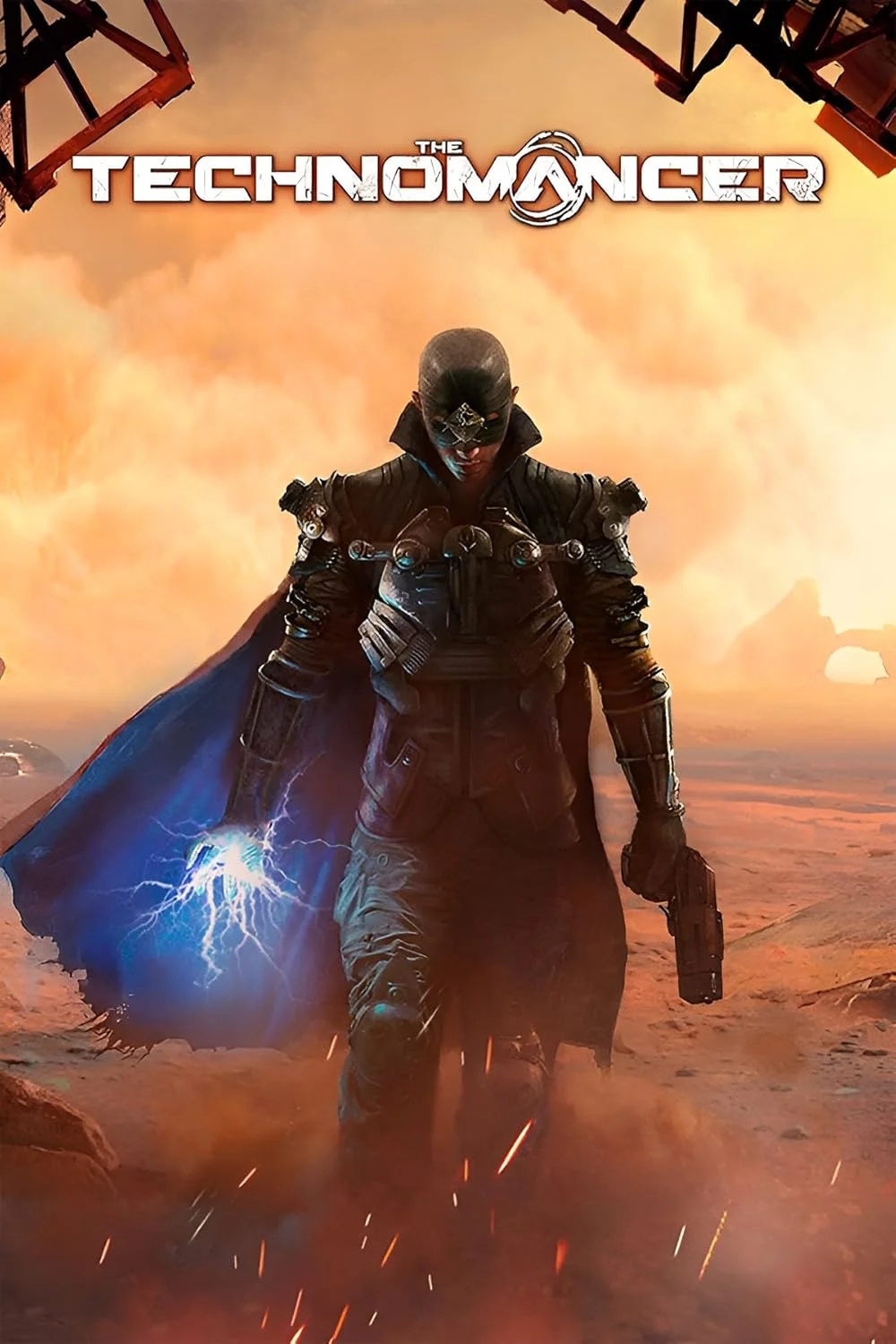
The Technomancer
This combination offers playable performance with an average of 39 FPS, though you may want to lower settings for smoother gameplay.
Average FPS: resolution vs quality settings
| Ultra | High | Medium | Low | |
|---|---|---|---|---|
| 4K Ultra HD | 15 | 19 | 22 | 28 |
| 1440p QHD | 26 | 34 | 40 | 52 |
| 1080p Full HD | 40 | 52 | 61 | 79 |
Cell color: green is 120+ FPS, teal is 60+, amber is 30+, red is below 30.
The Technomancer with Intel Core i7-14700K + Intel Arc B390, In-Depth Analysis
The Technomancer is a 2016 Action RPG that, when paired with the Intel Core i7-14700K and the Intel Arc B390, produces a performance profile defined by severe GPU limitation. The data indicates that this combination struggles significantly, particularly as resolution increases, leaving the substantial processing power of the i7-14700K largely unused. This analysis breaks down the measured FPS data to show exactly where the bottleneck lies and what it means for playability.
Resolution Scaling
The FPS drop from 1080p to 4K is stark and reveals a purely GPU-bound scenario. At 1080p with Low settings, the combo achieves an average of 79 FPS. Moving to 1440p Low, this falls to 52 FPS, a reduction of roughly 34%. At 2160p (4K) Low, the average plunges to 28 FPS, which is a 65% decrease from the 1080p Low result and a 46% drop from 1440p Low. This scaling pattern is characteristic of a graphics card that is completely overwhelmed by pixel count.
The situation is even more pronounced at higher quality presets. At High settings, the average FPS goes from 52 at 1080p to 34 at 1440p and then to 19 at 4K. The Ultra preset is nearly unplayable at 4K, with an average of just 15 FPS. The consistent and massive drops at every resolution step confirm that the Intel Arc B390's rendering capacity is the sole limiting factor. The i7-14700K is not the constraint here; if it were, the FPS would remain relatively flat as resolution increases, since the CPU workload for the same scene doesn't scale with resolution. Instead, we see a near-linear collapse in performance that directly correlates with the increasing number of pixels being rendered.
This behavior indicates that the system is operating at the edge of the GPU's capability even at 1080p, and any additional resolution demand causes a disproportionate penalty. The measured data suggests that for this game, the combination is only viable at 1080p, and even then, only at lower settings for a smooth experience.
GPU Role
The Intel Arc B390 is an integrated graphics processor (IGP) based on the Xe3-LPG architecture and is fabricated on a 3 nm process. Its specifications show a design aimed at efficiency rather than high-end gaming. It has a base clock of 300 MHz and a boost clock of 2500 MHz. Its memory is "System Shared," meaning it uses the system's main memory rather than dedicated VRAM, with bandwidth described as "System Dependent." This is a critical factor in its performance, as shared memory can introduce latency and bandwidth bottlenecks that dedicated VRAM does not.
The GPU's raw compute figures are modest, with an FP32 performance of 7.680 TFLOPS, a pixel rate of 60.00 GPixel/s, and a texture rate of 120.0 GTexel/s. These numbers are consistent with its performance in The Technomancer. The benchmark results show the Arc B390 has a percentile rank of only 9 when compared to all GPUs, placing it in the bottom tier of performance. Its average benchmark score of 1482 places it in direct competition with very old, low-end discrete graphics solutions. The nearest rivals, based on the average benchmark score, are the NVIDIA GeForce GT 520MX (with a deltaPct of 1.3% higher) and the NVIDIA GeForce 800M (with a deltaPct of 1.5% higher). This puts its theoretical performance in the same class as those decade-old parts.
In The Technomancer, this translates to the low FPS figures observed. The GPU's 24 ROPs and 48 TMUs are simply not enough to handle the fill rate demands of modern resolutions. The data shows that the Arc B390 is the definitive bottleneck, and its performance is the primary factor determining the playability of this title. The fact that it is an IGP with system-shared memory means the system's overall memory performance will also play a role, but the GPU's own shading and rasterization capabilities are clearly the main limitation.
How This Combo Ranks
The combination of the Intel Core i7-14700K and the Intel Arc B390 ranks 2500 out of 2825 tested combos in The Technomancer. This places it in the bottom 12% of all systems tested, a poor showing that underscores the massive imbalance between the CPU and GPU. This low rank is not a reflection of the CPU's capabilities, which are top-tier, but rather a direct consequence of the GPU's inability to keep pace.
To put this in perspective, the i7-14700K alone has a percentile rank of 94 when compared to all CPUs, and its average benchmark score of 69355 is nearly identical to that of the AMD Ryzen 9 7950X (with a deltaPct of -0.2% for the Ryzen). This means the CPU is one of the most powerful on the market. However, the Arc B390's percentile rank of 9 drags the entire system down to the bottom of the game's performance charts. The data clearly shows that the combo's rank is almost entirely determined by the GPU's performance. The CPU is effectively in a waiting state for the majority of the time, as the GPU struggles to render each frame. This is a classic example of a severe bottleneck, where the system's overall performance is dictated by its weakest component, and in this case, the disparity is extreme.
Measured FPS Breakdown
The measured FPS data for The Technomancer provides a detailed look at the system's performance across different resolutions and settings. All figures are average FPS unless otherwise noted.
At 1920x1080, the results are as follows:
- Low: 79 FPS
- Medium: 61 FPS (min 52, max 70)
- High: 52 FPS
- Ultra: 40 FPS
At 2560x1440, the performance drops significantly:
- Low: 52 FPS
- Medium: 40 FPS (min 34, max 46)
- High: 34 FPS
- Ultra: 26 FPS
At 3840x2160, the system is heavily taxed:
- Low: 28 FPS
- Medium: 22 FPS (min 19, max 25)
- High: 19 FPS
- Ultra: 15 FPS
The data shows a clear and consistent trend. At 1080p, the system can provide a playable experience at Low and Medium settings, with 79 and 61 FPS respectively. The 52 FPS at High is borderline, and 40 FPS at Ultra is playable for some but may feel less smooth. When moving to 1440p, the Low preset is the only one that remains consistently above 50 FPS. High and Ultra settings produce 34 and 26 FPS, which are getting into the territory of a less fluid experience. At 4K, every preset results in an average FPS below 30, making the game effectively unplayable for a smooth experience. The minimum FPS values recorded at Medium settings (19 at 4K, 34 at 1440p, and 52 at 1080p) show that there are also frame time spikes, which can cause noticeable stutter, further detracting from the experience.
CPU Role
The Intel Core i7-14700K is a 20-core, 28-thread processor based on the Raptor Lake architecture. It has a base clock of 3.40 GHz and a boost clock of 5.60 GHz. Its substantial processing power is evident in its benchmark scores, which include a Cinebench R23 multi-core score of 33440.5 and a single-core score of 2160. Its PassMark multithread score is 52392, and its single-thread score is 4472. These are excellent results that place it in the top 6% of all CPUs. Its nearest rivals include the AMD Ryzen 9 7950X and the AMD Ryzen 9 7940HX, with the i7-14700K's average score being 0.2% lower than the 7950X and 0.7% lower than the 7940HX. This shows that the CPU is a powerhouse, more than capable of handling any modern game's logic, physics, and AI.
However, in The Technomancer with the Arc B390, the CPU's role is almost entirely secondary. The game's engine is not demanding enough to stress the i7-14700K, and the GPU is so slow that the CPU is never given a chance to become a bottleneck. The i7-14700K has 33 MB of shared L3 cache and 2 MB of L2 cache per core, which are ample for gaming workloads. The CPU's high single-thread performance is also irrelevant here, as the GPU is the limiting factor in every scenario. The data shows that the CPU is effectively "GPU-bound" at all settings and resolutions. This means that the i7-14700K's potential is completely squandered in this configuration. The system would perform nearly identically with a significantly weaker CPU, as the Arc B390 would still be the primary constraint. The high core count and clock speeds of the i7-14700K are simply not utilized by this game when paired with such a low-end GPU.
FAQ
Q: Is the Intel Core i7-14700K + Intel Arc B390 combo good for playing The Technomancer at 4K?
A: No. At 3840x2160, the average FPS is 28 on Low, 22 on Medium, 19 on High, and 15 on Ultra. These frame rates are far below what is needed for a smooth experience, indicating the GPU is not capable of handling 4K in this game.
Q: What is the best resolution and settings for this combo in The Technomancer?
A: The data shows that 1920x1080 is the only resolution with acceptable performance. At 1080p, the Low preset achieves 79 FPS and Medium achieves 61 FPS. High and Ultra also produce 52 and 40 FPS respectively, which may be playable for some users.
Q: How does the Intel Arc B390's performance compare to its nearest rivals?
A: The Arc B390 has an average benchmark score of 1482. Its nearest rivals are the NVIDIA GeForce GT 520MX and NVIDIA GeForce 800M, which have average scores of 1463 and 1460 respectively. This means the Arc B390 is 1.3% faster than the GT 520MX and 1.5% faster than the 800M.
Q: Is the Intel Core i7-14700K the bottleneck in this system for The Technomancer?
A: The data suggests that the CPU is not the bottleneck. The i7-14700K has a percentile rank of 94 among all CPUs. The massive FPS drops with increasing resolution indicate that the Intel Arc B390, with a percentile rank of 9, is the sole limiting component.
Q: What is the performance ranking of this specific CPU+GPU combination?
A: This combo ranks 2500 out of 2825 tested combinations in The Technomancer. This places it near the very bottom of the performance charts, primarily due to the GPU's low performance.
Q: What kind of frame rate can I expect at 1440p with High settings?
A: At 2560x1440 with High settings, the system produces an average of 34 FPS. This is a playable but not perfectly smooth frame rate, and it demonstrates a significant drop from the 52 FPS seen at 1080p High.
Hardware Specifications
Intel Core i7-14700K
Intel Arc B390
FPS Benchmarks by Resolution & Settings
Performance data for Intel Core i7-14700K + Intel Arc B390 in The Technomancer
| Resolution | Settings | Avg FPS |
|---|---|---|
| 3840x2160 | Low | 28.0 |
| 3840x2160 | Medium | 22.0 |
| 3840x2160 | High | 19.0 |
| 3840x2160 | Ultra | 15.0 |
| 2560x1440 | Low | 52.0 |
| 2560x1440 | Medium | 40.0 |
| 2560x1440 | High | 34.0 |
| 2560x1440 | Ultra | 26.0 |
| 1920x1080 | Low | 79.0 |
| 1920x1080 | Medium | 61.0 |
| 1920x1080 | High | 52.0 |
| 1920x1080 | Ultra | 40.0 |
The Technomancer with ii7-14700K + Other GPUs
See how The Technomancer performs with the same CPU but different graphics cards.
The Technomancer with Arc B390 + Other CPUs
See how The Technomancer performs with the same GPU but different processors.
Other Games with ii7-14700K + Arc B390
Explore FPS benchmarks for other games using this same hardware combination.