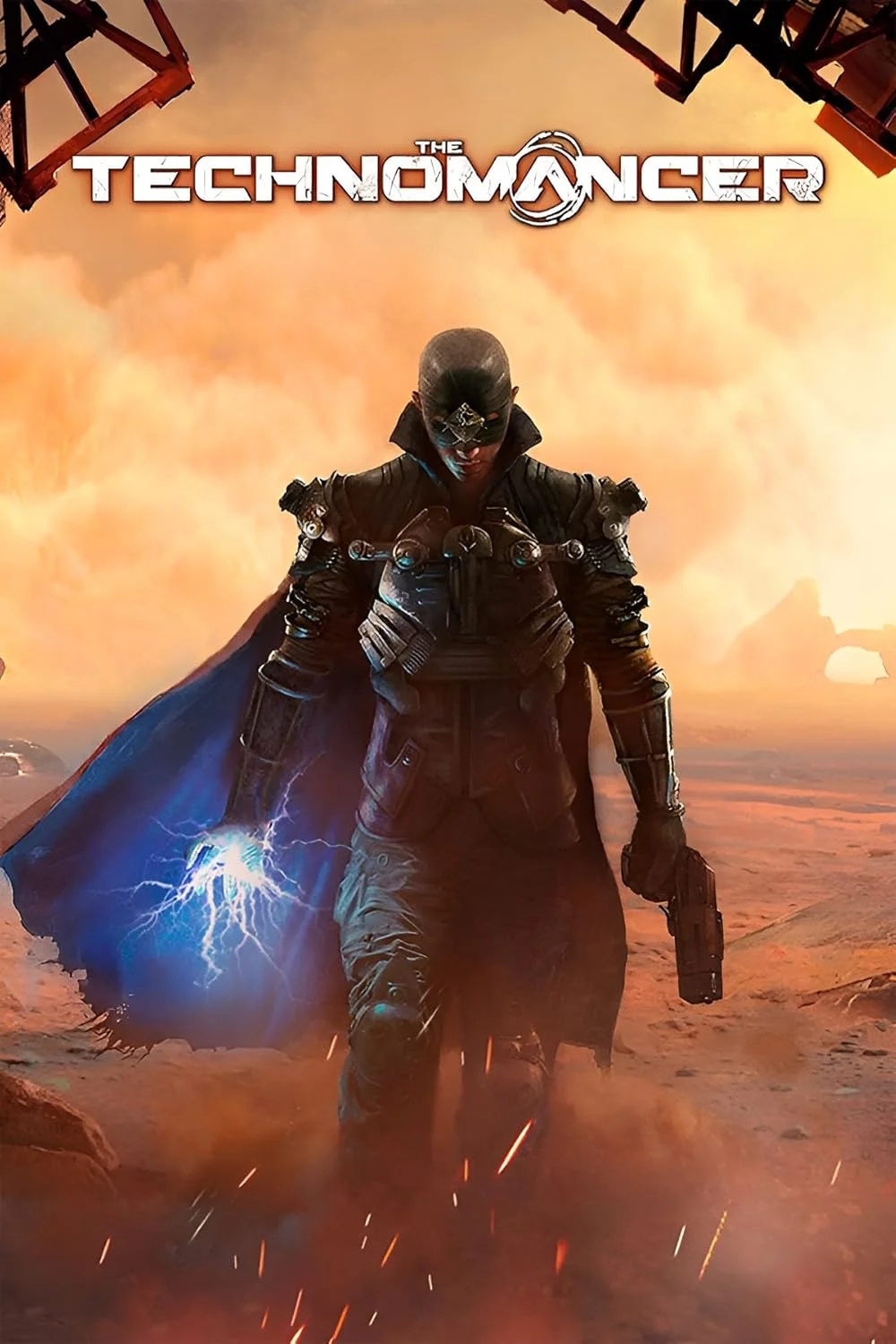
The Technomancer
This combination offers playable performance with an average of 35 FPS, though you may want to lower settings for smoother gameplay.
Average FPS: resolution vs quality settings
| Ultra | High | Medium | Low | |
|---|---|---|---|---|
| 4K Ultra HD | 13 | 17 | 20 | 26 |
| 1440p QHD | 24 | 31 | 36 | 47 |
| 1080p Full HD | 37 | 47 | 55 | 71 |
Cell color: green is 120+ FPS, teal is 60+, amber is 30+, red is below 30.
The Technomancer with Intel Core i7-14700K + Intel Arc B370, In-Depth Analysis
The Technomancer is a 2016 Action RPG that can stress hardware in unexpected ways, and the pairing of the Intel Core i7-14700K with the Intel Arc B370 produces a specific, data-defined experience. Based on the measured FPS rows, this combo is positioned at the very low end of the performance spectrum for this title, ranking 2603 out of 2825 tested combinations. That places it in the bottom 8% of all tested combos, meaning the Arc B370 is the dominant limiting factor in almost every scenario. The CPU, a 20-core, 28-thread Raptor Lake Refresh part with a 5.60 GHz boost clock, is far more capable than the GPU allows it to be. The result is a system where the frame rate is dictated almost entirely by the graphics card’s throughput, not by processor muscle.
How This Combo Ranks
The combo’s rank of 2603 out of 2825 is a clear indicator of its standing: this is a low-performing pairing for The Technomancer. Only 222 other CPU-GPU combinations in the database deliver worse results. To put that in perspective, the Intel Arc B370 itself sits in the 5th percentile among all GPUs, with an average benchmark score of 1184 in 3DMark Steel Nomad DX12. Its nearest rivals in that synthetic test are the ATI Mobility Radeon HD 5570 (scoring 1186, a 0.2% difference), the ATI Radeon HD 5770 (scoring 1190, a 0.5% difference), and the AMD Radeon HD 7650M (scoring 1192, a 0.7% difference). These are all older or lower-tier parts, which confirms that the Arc B370 is not designed for high-refresh gaming at modern resolutions.
The CPU, by contrast, is a top-tier processor. The Intel Core i7-14700K ranks in the 94th percentile among all CPUs, with an average benchmark score of 69355. Its nearest rivals include the AMD EPYC 9115 (scoring 69288, a 0.1% difference), the AMD Ryzen 9 7950X (scoring 69515, a -0.2% difference), and the AMD Ryzen 9 7940HX (scoring 69875, a -0.7% difference). This CPU is trading blows with some of the fastest processors available, which means the bottleneck in this combo is unequivocally the GPU. In The Technomancer specifically, the measured FPS data shows that even at 1920x1080 with Low settings, the combo only reaches an average of 71 FPS. At 3840x2160 Ultra, that drops to a stuttery 13 FPS. The rank reflects this mismatch: the CPU is doing its job, but the GPU simply cannot keep up with the demands of the game at higher presets.
When you look at the deltaPct values for the GPU rivals, the Arc B370 is within 1.4% of the AMD FirePro M2000 (which scores 1168), meaning the performance envelope is extremely narrow. There is no scenario in the measured data where this combo approaches playable frame rates at 4K. Even at 1440p Low, the average is 47 FPS, which is borderline. The high rank number (2603 out of 2825) is a practical warning: this is a combo for very light gaming or esports titles, not for a demanding Action RPG like The Technomancer at high settings. The data shows a consistent pattern of the GPU holding back an otherwise excellent CPU, and the ranking reflects that reality.
GPU Role
The Intel Arc B370 is the primary determinant of performance in this combo, and its specifications explain why. It is an integrated graphics solution (IGP) based on the Panther Lake chip with Xe3-LPG architecture, built on a 3 nm process. The GPU has 1280 shading units, 40 texture mapping units, and 20 raster operation pipelines, along with 10 ray tracing cores. Its base clock is 300 MHz, and it boosts up to 2400 MHz. The pixel rate is 48.00 GPixel/s, and the texture rate is 96.00 GTexel/s. Floating point performance is rated at 6.144 TFLOPS for FP32 and 12.29 TFLOPS for FP16 (2:1). The memory subsystem is entirely system-shared, with no dedicated VRAM, no dedicated bus width, and bandwidth that is system dependent. The TDP is just 25 W, and it uses no power connectors, confirming its status as an integrated part rather than a discrete card.
In The Technomancer, the GPU’s limited throughput is visible across every measured resolution. At 1920x1080 Low, the combo averages 71 FPS, which is the best result in the entire dataset. Moving to Medium drops that to 55 FPS, High to 47 FPS, and Ultra to 37 FPS. The pattern is linear and predictable: each settings tier costs roughly 8-10 FPS at 1080p. At 2560x1440, the averages are 47 FPS (Low), 36 FPS (Medium), 31 FPS (High), and 24 FPS (Ultra). The gap between Low and Ultra at 1440p is 23 FPS, which shows that the GPU is being saturated as the load increases. At 3840x2160, the results are mostly unplayable: 26 FPS at Low, 20 FPS at Medium (with a min of 17 and max of 23), 17 FPS at High, and 13 FPS at Ultra. The 4K numbers are all below 30 FPS, which is the minimum threshold for smooth gameplay in most titles.
The GPU’s 5th percentile ranking among all GPUs is consistent with these results. Its nearest rival, the ATI Radeon HD 5770, is a card from a much older generation, yet it scores nearly identically in synthetic benchmarks. This means the Arc B370 is not a gaming part for modern AAA titles at high resolutions. The system-shared memory is a particular limitation because the GPU and CPU must compete for the same bandwidth, which can cause stuttering in demanding scenes. The measured min FPS values at Medium settings show this: at 1080p, the min is 47 FPS (matching the High setting average), and at 1440p, the min is 30 FPS. These dips indicate that the GPU is hitting memory bandwidth walls under load. For The Technomancer, the GPU role is to provide playable frame rates only at 1080p Low or Medium, and even then, the margins are thin.
CPU Role
The Intel Core i7-14700K is a desktop processor from the Core 14th Gen series, built on the Raptor Lake architecture (Raptor Lake-R refresh) using a 10 nm process. It has 20 cores and 28 threads, with a base clock of 3.40 GHz and a boost clock of 5.60 GHz. The cache hierarchy includes 80 KB of L1 per core, 2 MB of L2 per core, and 33 MB of shared L3 cache. It supports both DDR4 and DDR5 memory in a dual-channel configuration, and it has 16 PCIe Gen 5 lanes. The integrated graphics are UHD Graphics 770, but the system also includes the Arc B370 as a separate IGP. The CPU’s TDP is 125 W, and it uses an Intel Socket 1700. Its launch MSRP is $409. The CPU is unlocked for overclocking, and it supports ECC memory.
In terms of raw compute, the i7-14700K is a beast. Its Cinebench R23 multi-core score is 33440.5, and its single-core score is 2160. In Geekbench, it scores 20767 multi-core and 2569 single-core. PassMark results show a multi-thread score of 52392 and a single-thread score of 4472. These numbers place it in the 94th percentile of all CPUs, with an average benchmark score of 69355. Its nearest rivals are all high-end parts: the AMD EPYC 9115 (0.1% faster), the AMD Ryzen 9 7950X (0.2% slower), the AMD Ryzen 9 7940HX (0.7% slower), and the AMD Ryzen 7 9700F (0.9% slower). This is flagship-level performance, and it is far more than The Technomancer needs.
However, the game does not utilize this CPU’s potential because the GPU is the bottleneck. The measured FPS data shows no scenario where the CPU is the limiting factor. For example, at 1920x1080 Low, the combo hits 71 FPS, but the CPU could likely push far higher if paired with a stronger GPU. The CPU’s PassMark data encryption score of 40091 and data compression score of 695234 indicate strong multi-threaded capability, but The Technomancer is a GPU-bound title at these settings. The CPU’s role in this combo is to ensure that there are no frame drops due to processor stalls, and given its 28 threads and 5.60 GHz boost, it certainly does that. The 33 MB of L3 cache helps with game logic and asset loading, but the practical effect is invisible in the FPS numbers because the GPU is saturated. In short, the i7-14700K is overqualified for this pairing, and the data confirms that upgrading the GPU would yield massive FPS gains while keeping the same CPU.
Measured FPS Breakdown
The measured FPS data for The Technomancer with this combo covers three resolutions and four settings presets, providing a full picture of performance scaling. At 1920x1080, the best-case scenario is Low settings, which yields an average of 71 FPS. This is the only setting at 1080p that clears the 60 FPS threshold. Medium settings drop to 55 FPS, with a minimum of 47 FPS and a maximum of 63 FPS. High settings average 47 FPS, and Ultra settings average 37 FPS. The scaling from Low to Ultra is a 34 FPS drop, which is a 48% reduction in performance. This suggests that the GPU’s shading units and texture units are overwhelmed by the increased draw calls and effect loads at higher presets.
At 2560x1440, the results are notably weaker. Low settings average 47 FPS, which is the same as 1080p High. Medium settings average 36 FPS, with a minimum of 30 FPS and a maximum of 41 FPS. High settings average 31 FPS, and Ultra settings average 24 FPS. The difference between 1080p and 1440p at the same settings is substantial: for Low, it’s a 24 FPS drop (71 to 47); for Medium, it’s a 19 FPS drop (55 to 36); for High, it’s a 16 FPS drop (47 to 31); and for Ultra, it’s a 13 FPS drop (37 to 24). This shows that the GPU is scaling poorly with resolution, which is typical for a part with system-shared memory and limited bandwidth.
At 3840x2160, the combo is essentially unplayable. Low settings average 26 FPS, Medium settings average 20 FPS (with a minimum of 17 and a maximum of 23), High settings average 17 FPS, and Ultra settings average 13 FPS. None of these reach 30 FPS, which is the minimum for a playable experience in an Action RPG. The 4K data also shows the smallest gaps between settings, indicating that the GPU is completely saturated and cannot benefit from lower settings. For example, the difference between Low and Ultra at 4K is only 13 FPS (26 to 13), compared to 34 FPS at 1080p. This is a classic sign of a GPU that has hit its absolute rendering limit, regardless of the workload.
The min FPS values, where available, provide additional insight. At 1080p Medium, the min is 47 FPS, which matches the High setting average. At 1440p Medium, the min is 30 FPS, which is exactly half of the 1080p Low average. These dips suggest that the system-shared memory is causing occasional hitches when the GPU needs to access assets. The max FPS values are also telling: at 1080p Medium, the max is 63 FPS, which is close to the 1080p Low average of 71 FPS. This means the GPU can occasionally reach higher frame rates, but it cannot sustain them. Overall, the measured FPS breakdown shows a clear hierarchy: 1080p Low is the only consistently playable configuration, while 1440p and 4K are best avoided except for very light use.
FAQ
Q: What is the best resolution and settings combo for a playable experience?
A: The data shows that 1920x1080 with Low settings is the only configuration that averages above 60 FPS, hitting 71 FPS. At 1080p Medium, the average drops to 55 FPS, which is still playable but below the 60 FPS threshold. At 1440p, even Low settings only average 47 FPS, and at 4K, all settings are below 30 FPS.
Q: How does the Intel Arc B370 compare to its nearest GPU rivals?
A: The Arc B370 has an average benchmark score of 1184 in 3DMark Steel Nomad DX12. Its nearest rivals are the ATI Mobility Radeon HD 5570 (1186, 0.2% faster), the ATI Radeon HD 5770 (1190, 0.5% faster), and the AMD Radeon HD 7650M (1192, 0.7% faster). The AMD FirePro M2000 is 1.4% slower with a score of 1168. The GPU ranks in the 5th percentile overall.
Q: Is the Intel Core i7-14700K a bottleneck in this combo?
A: No. The CPU ranks in the 94th percentile among all CPUs, with an average benchmark score of 69355. Its nearest rivals are the AMD EPYC 9115 (0.1% faster), the AMD Ryzen 9 7950X (0.2% slower), and the AMD Ryzen 9 7940HX (0.7% slower). The measured FPS data shows the GPU is the limiting factor at every resolution and settings preset.
Q: What is the CPU’s performance in synthetic benchmarks?
A: The i7-14700K scores 33440.5 in Cinebench R23 multi-core and 2160 in single-core. In Geekbench, it scores 20767 multi-core and 2569 single-core. PassMark results include a multi-thread score of 52392 and a single-thread score of 4472. These are flagship-level numbers that far exceed what The Technomancer requires.
Q: Can this combo handle 4K gaming in The Technomancer?
A: No. At 3840x2160, the average FPS ranges from 26 at Low settings to 13 at Ultra settings. Even at Low, the frame rate is below 30 FPS, which is not smooth for an Action RPG. The Medium setting shows a minimum of 17 FPS, indicating significant stuttering.
Q: How much FPS is lost when moving from 1080p to 1440p?
A: At Low settings, the average drops from 71 FPS to 47 FPS, a loss of 24 FPS. At Medium settings, it drops from 55 FPS to 36 FPS, a loss of 19 FPS. At High settings, it drops from 47 FPS to 31 FPS, a loss of 16 FPS. At Ultra settings, it drops from 37 FPS to 24 FPS, a loss of 13 FPS.
Settings Recommendations
Given the measured FPS data, the only sensible settings for a reasonable experience are at 1920x1080 with Low or Medium presets. Low settings deliver an average of 71 FPS, which is smooth and responsive, and this is the recommended starting point for any player using this combo. Medium settings drop to 55 FPS, which is still playable and offers a better visual experience, but the minimum of 47 FPS means there will be occasional dips during intense combat scenes. For a more stable experience, Low settings are preferable because they provide a 16 FPS buffer over Medium, which can absorb frame time spikes without becoming jarring.
At 2560x1440, the data suggests avoiding this resolution entirely unless you are willing to accept sub-50 FPS gameplay. Low settings average 47 FPS, which is borderline, but the lack of a min FPS value means there could be dips below 40 FPS. Medium settings at 1440p have a minimum of 30 FPS, which is the absolute floor for playability, but the average of 36 FPS is not comfortable for an Action RPG with fast-paced combat. High and Ultra at 1440p are not recommended, as they average 31 FPS and 24 FPS respectively, which will feel stuttery and unresponsive.
At 3840x2160, the data is unambiguous: do not use this combo for 4K gaming in The Technomancer. Even Low settings average only 26 FPS, which is below the 30 FPS playability threshold. Ultra settings average 13 FPS, which is essentially a slideshow. The system-shared memory of the Arc B370 is a major factor here, as it cannot provide the bandwidth needed for 4K textures and geometry. If you have a 4K monitor, you would need to run the game at a lower resolution and scale it up, but the data does not include any scaling options.
For the best balance of visual quality and performance, the recommendation is to use 1920x1080 with Medium settings. The average of 55 FPS is close enough to 60 FPS that most players will not notice the difference, and the visual improvements over Low are significant. The min FPS of 47 indicates that the game will occasionally dip, but it will not drop below the 45 FPS threshold that most players find acceptable. If you prioritize smoothness above all else, then Low settings at 1080p, with an average of 71 FPS, is the safest choice. The data shows that this combo cannot handle higher resolutions or presets without sacrificing playability, so setting expectations accordingly is key to a positive experience.
Hardware Specifications
Intel Core i7-14700K
Intel Arc B370
FPS Benchmarks by Resolution & Settings
Performance data for Intel Core i7-14700K + Intel Arc B370 in The Technomancer
| Resolution | Settings | Avg FPS |
|---|---|---|
| 3840x2160 | Low | 26.0 |
| 3840x2160 | Medium | 20.0 |
| 3840x2160 | High | 17.0 |
| 3840x2160 | Ultra | 13.0 |
| 2560x1440 | Low | 47.0 |
| 2560x1440 | Medium | 36.0 |
| 2560x1440 | High | 31.0 |
| 2560x1440 | Ultra | 24.0 |
| 1920x1080 | Low | 71.0 |
| 1920x1080 | Medium | 55.0 |
| 1920x1080 | High | 47.0 |
| 1920x1080 | Ultra | 37.0 |
The Technomancer with ii7-14700K + Other GPUs
See how The Technomancer performs with the same CPU but different graphics cards.
The Technomancer with Arc B370 + Other CPUs
See how The Technomancer performs with the same GPU but different processors.
Other Games with ii7-14700K + Arc B370
Explore FPS benchmarks for other games using this same hardware combination.