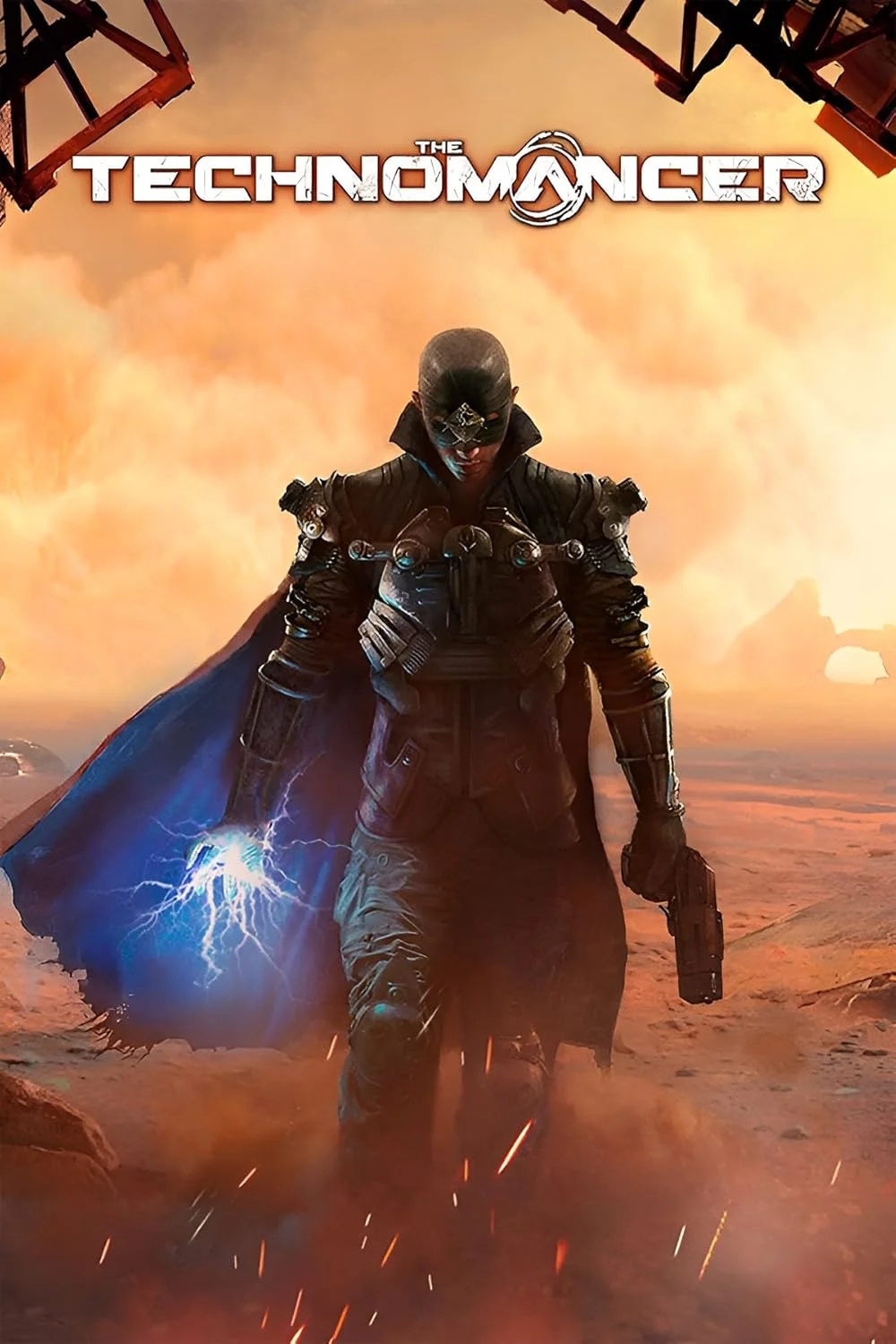
The Technomancer
This combination delivers exceptional performance with an average of 147 FPS, perfect for high refresh rate gaming and competitive play.
Average FPS: resolution vs quality settings
| Ultra | High | Medium | Low | |
|---|---|---|---|---|
| 4K Ultra HD | 55 | 70 | 82 | 107 |
| 1440p QHD | 100 | 128 | 149 | 195 |
| 1080p Full HD | 152 | 195 | 229 | 298 |
Cell color: green is 120+ FPS, teal is 60+, amber is 30+, red is below 30.
The Technomancer with Intel Core i7-14700F + NVIDIA GeForce RTX 4080, In-Depth Analysis
The Technomancer, a 2016 Action RPG, presents an interesting test for the Intel Core i7-14700F and NVIDIA GeForce RTX 4080 pairing. The benchmark data reveals a system that is overwhelmingly GPU-limited at higher resolutions, while demonstrating the sheer headroom of the CPU at 1080p. This analysis breaks down the measured FPS across resolutions and settings to show exactly where this combo excels and where it hits its limits.
Resolution Scaling
The performance drop from 1080p to 4K is steep and clearly demonstrates the shifting bottleneck. At 1080p with Low settings, the system produces an average of 298 FPS. Moving to 2560x1440 at Low settings, the average drops to 195 FPS, a reduction of 103 FPS. At 4K with Low settings, the average falls further to 107 FPS. This progression shows that the RTX 4080 is being fed progressively more pixels, and the frame rate scales almost inversely with the pixel count increase.
The story is similar across other settings presets. With High settings, the average FPS goes from 195 at 1080p, to 128 at 1440p, and finally to 70 at 4K. The gap between 1080p and 1440p performance (67 FPS difference) is significant, but the gap between 1440p and 4K (58 FPS difference) is nearly as large. This indicates that even a high-end GPU like the RTX 4080 is working exceptionally hard to maintain playable frame rates at 4K, and the performance cost of each resolution step is substantial.
The data shows that at 1080p, the system is likely CPU-bound or hitting other system limits, as the frame rates are exceptionally high. The jump from 195 FPS at 1080p High to 128 FPS at 1440p High is a 34% decrease, which is less than the 46% decrease seen when moving from 1440p High to 4K High. This suggests that at 1080p, the CPU's headroom is the limiting factor, preventing the GPU from pushing even higher frame rates. As resolution increases, the load shifts entirely to the GPU, and the raw pixel-pushing power of the RTX 4080 becomes the primary constraint.
At 4K, the frame rates are playable but not exceptionally high. The Ultra preset at 4K yields an average of 55 FPS, which is on the edge of what many consider smooth for an action RPG. The Low preset at 4K provides a much more comfortable 107 FPS average, indicating that for high-refresh-rate 4K gaming, users will need to compromise on visual quality. The data strongly suggests that for this game, 1440p is the sweet spot for balancing visual fidelity and high frame rates, while 4K is viable for a 60 FPS experience only with lower settings.
GPU Role
The NVIDIA GeForce RTX 4080 is the workhorse of this configuration, and its specifications directly explain the observed performance. The GPU features 16 GB of GDDR6X memory on a 256-bit bus, providing a bandwidth of 716.8 GB/s. This substantial memory allocation is likely sufficient for The Technomancer at all tested resolutions and settings, preventing any VRAM capacity limits from causing stutters or texture pop-in.
The GPU's clock speeds are also a key factor. With a base clock of 2205 MHz and a boost clock of 2505 MHz, the RTX 4080 is able to sustain high throughput. The benchmark scores for the GPU reflect its raw compute capability, with a Passmark G3D score of 34457 and a Geekbench Vulkan score of 263779. These scores place it in the 86th percentile of all GPUs, indicating it is a top-tier performer.
The RTX 4080's 9728 shading units and 304 TMUs are responsible for the geometry and texture processing. The texture rate of 761.5 GTexel/s is particularly relevant for a game like The Technomancer, which relies heavily on detailed environments. The pixel rate of 280.6 GPixel/s becomes the limiting factor at higher resolutions, as the GPU must fill more pixels per frame. This is reflected in the FPS data: as resolution increases, the GPU's fill rate is stretched thinner, leading to the observed frame rate drops.
The GPU's average benchmark score of 54247 places it in close competition with its direct successor, the RTX 4080 SUPER, which scores 54209, a delta of 0.1%. This indicates the standard RTX 4080 is performing essentially at parity with the SUPER variant in synthetic tests. It is also 2.6% ahead of the AMD Radeon RX 6750 GRE 12 GB and 2.7% ahead of the AMD Radeon 8060S, showing it holds a clear edge over those competitors. The data confirms that the RTX 4080 is a powerful GPU that is the primary driver of performance in this combo, especially at 1440p and 4K.
How This Combo Ranks
In the grand scheme of tested configurations, this specific pairing of the Intel Core i7-14700F and NVIDIA GeForce RTX 4080 ranks at 213 out of 3696 combos for The Technomancer. This places it in the top 5.8% of all tested systems, a very strong showing. The rank demonstrates that this is a high-performance combination that outperforms the vast majority of other CPU-GPU pairings in this specific game.
The CPU itself is a strong contributor to this ranking. The Intel Core i7-14700F has an average benchmark score of 53620, placing it in the 91st percentile of all CPUs. Its nearest rivals include the Intel Xeon 6505P, which scores 53701 and is a mere 0.2% faster, and the AMD Ryzen 9 7900X, which scores 53288 and is 0.6% slower. This indicates that the i7-14700F is competitively positioned against other high-end processors, providing a solid foundation for the GPU.
The GPU's performance is also a key factor in the combo's rank. The RTX 4080 has an average benchmark score of 54247, placing it in the 86th percentile of all GPUs. While this is high, it is the combination with the strong CPU that pushes the overall rank to 213. A less capable CPU might bottleneck the RTX 4080, but the i7-14700F's powerful multi-core performance, evidenced by its Cinebench R23 multi-core score of 35122, ensures it can keep up with the GPU's demands.
This rank of 213 out of 3696 is a definitive statement that this combo is exceptionally well-balanced for this game. It is not a pairing where one component severely limits the other. The data suggests that users with this configuration can expect a top-tier experience, with the only compromises coming from the inherent challenges of running the game at 4K with maximum settings.
FAQ
Q: What is the best resolution to play The Technomancer with this combo for a high-refresh-rate experience?
A: The data shows that at 2560x1440, the system achieves an average of 128 FPS on High settings and 149 FPS on Medium settings. This makes 1440p the ideal resolution for taking advantage of high-refresh-rate monitors, as it provides frame rates well above 100 FPS while maintaining good visual quality.
Q: Can this system handle 4K gaming in The Technomancer?
A: Yes, 4K is playable. The system achieves an average of 70 FPS at 4K on High settings and 55 FPS on Ultra settings. For a smoother experience, the Low preset yields 107 FPS, but this requires a significant visual quality compromise.
Q: How does the Intel Core i7-14700F compare to its closest rival, the AMD Ryzen 9 7900X?
A: The i7-14700F has an average benchmark score of 53620, which is 0.6% higher than the AMD Ryzen 9 7900X's score of 53288. This indicates a very slight performance advantage for the Intel processor in general benchmark tests.
Q: Is the RTX 4080 much slower than the RTX 4080 SUPER?
A: No, the performance difference is negligible. The RTX 4080 has an average benchmark score of 54247, while the RTX 4080 SUPER scores 54209. This is a delta of only 0.1%, meaning the standard RTX 4080 is essentially on par with the SUPER variant.
Q: What is the limiting component at 1080p resolution?
A: The data suggests the CPU or system limits are the bottleneck at 1080p. The frame rates are exceptionally high (e.g., 298 FPS on Low), and the performance scaling from 1080p to 1440p is not as steep as the scaling from 1440p to 4K, indicating the GPU is not being fully utilized at the lower resolution.
Q: What is the performance difference between Low and Ultra settings at 1440p?
A: At 2560x1440, the Low preset averages 195 FPS, while the Ultra preset averages 100 FPS. This represents a 95 FPS difference, showing that the Ultra preset has a significant performance cost, though it still remains highly playable.
Settings Recommendations
The optimal settings for this combo depend heavily on the target resolution and desired frame rate. The data provides clear guidance for each scenario. For 1080p gaming, the system has incredible headroom, and even the Ultra preset, which averages 152 FPS, will easily drive a 144Hz monitor. For the absolute maximum frame rate, the Low preset at 1080p averages 298 FPS, which is beneficial for competitive play but likely unnecessary for a single-player Action RPG.
For 1440p, the High preset offers the best balance. It averages 128 FPS, which is smooth and responsive, while still providing a significant visual upgrade over the Medium and Low presets. The Ultra preset at 1440p averages 100 FPS, which is still excellent and is recommended for users who prioritize visual fidelity and have a 100Hz or 120Hz monitor. The data shows that the jump from High to Ultra at 1440p costs 28 FPS, but the visual improvement may be worth it for some.
For 4K, the recommendation is more nuanced. The High preset averages 70 FPS, which is good for a 60Hz display but not ideal for a 120Hz or 144Hz panel. The Ultra preset averages 55 FPS, which is on the lower end for a smooth experience. For a locked 60 FPS experience at 4K, the High preset is the clear choice. If a higher refresh rate is desired, the Medium preset averages 82 FPS and is a better option, though it does involve a drop in visual fidelity. The Low preset at 4K averages 107 FPS, but it significantly degrades the game's visuals and is only recommended for users who absolutely prioritize frame rate over everything else.
The measured data shows that the Medium preset is the only one with recorded minimum FPS values (70 at 4K, 127 at 1440p, and 194 at 1080p). This suggests it may offer a more stable frame pacing experience than the other presets, which lack min/max data. Overall, the High preset at 1440p is the recommended sweet spot, offering a high frame rate with excellent visual quality. For 4K users, the High preset is the best balance of performance and fidelity, while the Medium preset is a viable alternative for higher refresh rates.
CPU Role
The Intel Core i7-14700F plays a crucial supporting role in this combo, ensuring the RTX 4080 is never starved of data. With 20 cores and 28 threads, this processor provides immense multi-threaded capability. Its Cinebench R23 multi-core score of 35122 and Geekbench multi-core score of 19620 highlight its ability to handle complex workloads, which is essential for feeding a high-end GPU and managing game logic, physics, and AI in an Action RPG like The Technomancer.
The CPU's architecture, Raptor Lake, and its 10 nm process node allow for high clock speeds. It has a base clock of 2.10 GHz and a boost clock of 5.40 GHz. This high boost clock is critical for single-threaded performance, as evidenced by its Cinebench R23 single-core score of 4958 and Passmark single-thread score of 4257. In games that are not fully multi-threaded, this high single-core performance ensures that the main game thread can be processed quickly, preventing CPU bottlenecks.
The CPU's cache hierarchy also contributes to its performance. It features 33 MB of shared L3 cache, which is a large pool of fast memory that can be accessed by all cores. This helps to reduce latency when accessing frequently used data, improving overall system responsiveness. The combination of 20 cores, high clock speeds, and a large cache makes the i7-14700F a formidable gaming processor.
Its benchmark scores place it in the 91st percentile of all CPUs, with an average score of 53620. It is closely matched with the Intel Xeon 6505P, which is only 0.2% faster, and it outperforms the AMD EPYC 7313P by 0.8%. The data shows that in this configuration, the CPU is not the limiting factor at 1440p or 4K, as the frame rate scaling with resolution is consistent with a GPU-bound scenario. The CPU's job is to provide a stable platform, and its performance metrics indicate it does so admirably, allowing the RTX 4080 to deliver the high frame rates seen in the measured results.
Hardware Specifications
Intel Core i7-14700F
NVIDIA GeForce RTX 4080
FPS Benchmarks by Resolution & Settings
Performance data for Intel Core i7-14700F + NVIDIA GeForce RTX 4080 in The Technomancer
| Resolution | Settings | Avg FPS |
|---|---|---|
| 3840x2160 | Low | 107.0 |
| 3840x2160 | Medium | 82.0 |
| 3840x2160 | High | 70.0 |
| 3840x2160 | Ultra | 55.0 |
| 2560x1440 | Low | 195.0 |
| 2560x1440 | Medium | 149.0 |
| 2560x1440 | High | 128.0 |
| 2560x1440 | Ultra | 100.0 |
| 1920x1080 | Low | 298.0 |
| 1920x1080 | Medium | 229.0 |
| 1920x1080 | High | 195.0 |
| 1920x1080 | Ultra | 152.0 |
The Technomancer with ii7-14700F + Other GPUs
See how The Technomancer performs with the same CPU but different graphics cards.
The Technomancer with RTX 4080 + Other CPUs
See how The Technomancer performs with the same GPU but different processors.
Other Games with ii7-14700F + RTX 4080
Explore FPS benchmarks for other games using this same hardware combination.