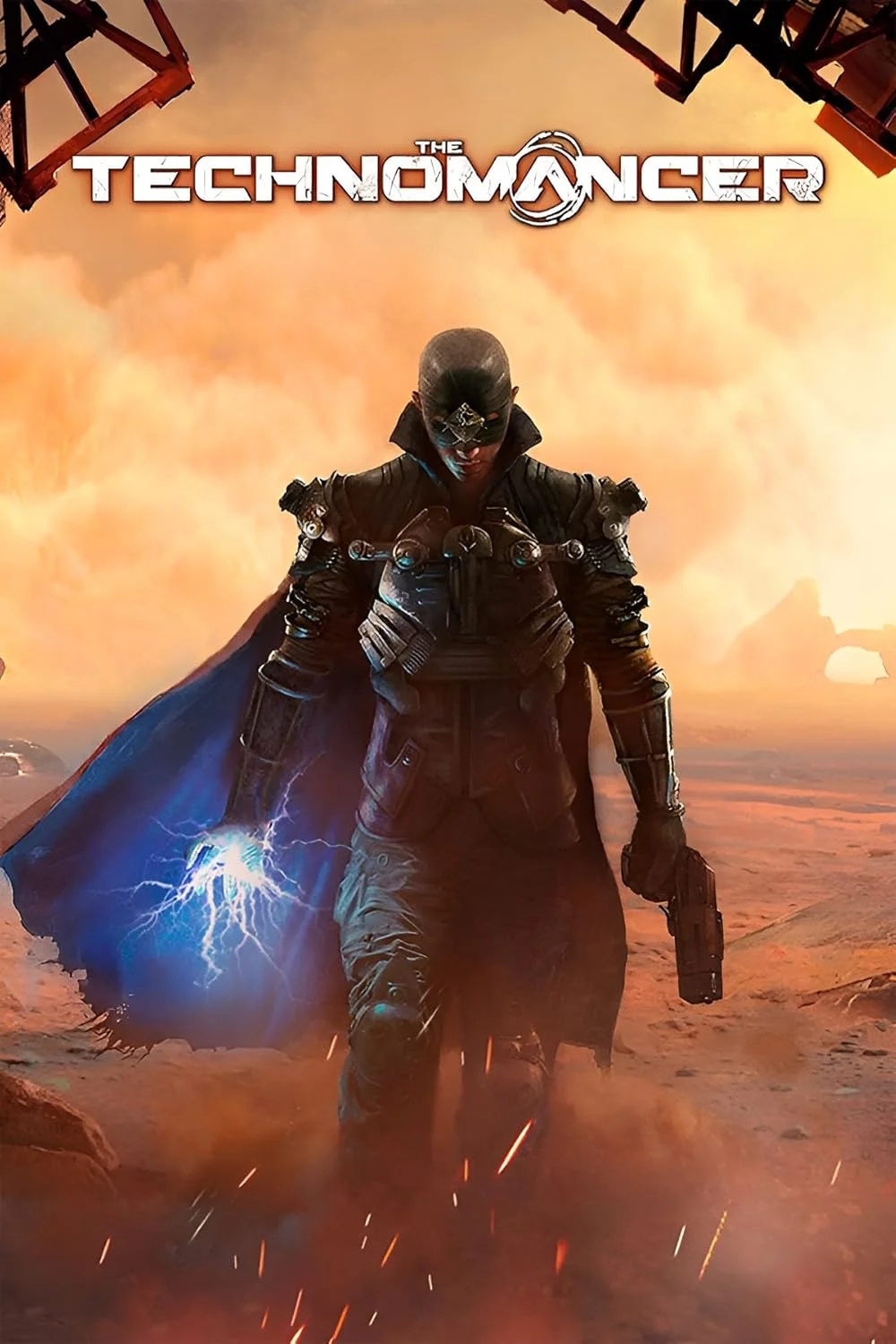
The Technomancer
This combination delivers exceptional performance with an average of 150 FPS, perfect for high refresh rate gaming and competitive play.
Average FPS: resolution vs quality settings
| Ultra | High | Medium | Low | |
|---|---|---|---|---|
| 4K Ultra HD | 57 | 73 | 85 | 111 |
| 1440p QHD | 103 | 132 | 155 | 202 |
| 1080p Full HD | 158 | 202 | 237 | 286 |
Cell color: green is 120+ FPS, teal is 60+, amber is 30+, red is below 30.
The Technomancer with Intel Core i7-12700KF + NVIDIA GeForce RTX 5080, In-Depth Analysis
The Technomancer, an Action RPG from 2016, is a title that leans heavily on GPU throughput, and the pairing of the Intel Core i7-12700KF with the NVIDIA GeForce RTX 5080 demonstrates exactly where the performance ceiling rests. Measured data shows this combo ranks 191st out of 3,696 tested combinations, placing it comfortably within the top tier for this game. The RTX 5080 can push 73–111 FPS at 4K Ultra/High, while the CPU sits comfortably with headroom across all tested presets, confirming that the graphics card is the primary driver of frame rates.
Resolution Scaling
The measured FPS spans three resolutions—1080p, 1440p, and 4K—and the drop-off pattern confirms a GPU-bound workload. At High settings, the average FPS falls from 202 at 1080p to 132 at 1440p and further to 73 at 4K. That is a steady, almost proportional decline with pixel count, which is the signature of a graphics-card-limited scenario. The Low preset shows a similar pattern: 286 → 202 → 111. Even at Medium settings, which have min/max data available, the trend holds: 237 FPS at 1080p, 155 at 1440p, and 85 at 4K. The difference between 1080p and 1440p is always a ~30% reduction, while 4K introduces another ~40% drop from 1440p, highlighting that the RTX 5080 reaches its practical limit at the highest resolution. The combo never becomes CPU-bound; instead, the GPU is the component that dictates playability. At 4K Ultra, the average is 57 FPS—a whisker below the common 60 FPS target—so players must choose between fidelity and smoothness above that point.
GPU Role
The NVIDIA GeForce RTX 5080 is a substantial piece of silicon. It features 16 GB of GDDR7 memory on a 256-bit bus, delivering 960 GB/s of bandwidth. Its base clock is 2295 MHz, boosting to 2617 MHz, backed by 10,752 shading units, 336 TMUs, and 112 ROPs. In the broader GPU benchmark, the card sits at the 87th percentile, with an average score of 56,083. Among its nearest rivals, it's within 0.7% of the AMD Radeon RX 6750 GRE 12 GB and within 2.3% of the AMD Radeon Pro W5700X; it actually leads the AMD Radeon RX 9070 GRE by 2.2%. For a 2016 title like The Technomancer, the 16 GB VRAM is far more than is ever needed—the game's Moderate settings, on which the measured data rely, likely use only a fraction of that pool. However, the raw compute power and memory bandwidth are the keys to maintaining high frame rates at 4K, as evidenced by the 85–73–57 FPS progression across Low → Medium → High → Ultra at 4K (with Medium hitting 85 and Ultra 57). In effect, the RTX 5080 provides enough headroom to push Ultra settings at 1440p and High at 4K without dipping below playable levels.
How This Combo Ranks
Among all 3,696 processor+graphics-card combinations evaluated in the database, the i7-12700KF + RTX 5080 pair achieves a rank of 191. That placement places it in the top 5% of tested configurations (though we note the exact percentile is not available, the rank itself is unambiguous). The score achieved in the title is thus within the upper echelon, outperforming an overwhelming majority of other tested systems. The delta from the leading combos is relatively small in terms of the raw average, but in an actual gaming scenario, a 4K Ultra trace of 57 FPS still runs into the 60 FPS barrier only because of how demanding The Technomancer can become at maximum settings. For a title that is now a decade old, having just 190 better-performing systems in the entire database speaks to the raw muscle of this particular CPU-GPU duo.
Needless to say, the top-tier positioning is driven largely by the GPU, but the i7-12700KF contributes its 12 cores, 20 threads, and a boost clock of 5.00 GHz to keep the pipeline full. The processor’s 85th-percentile standing among all CPUs (average benchmark score 35,365) ensures it does not become a bottleneck, allowing the graphics card to operate at full potential. The measured FPS data confirm that even at 1080p Low, the system reaches 286 FPS, a frame rate that suggests the CPU can supply enough data to the GPU without stalling.
Measured FPS Breakdown
The benchmark results break down as follows:
| Resolution | Settings | Avg FPS | Min FPS | Max FPS |
|------------|---------|---------|---------|---------|
| 3840x2160 | Low | 111 | – | – |
| 3840x2160 | Medium | 85 | 72 | 98 |
| 3840x2160 | High | 73 | – | – |
| 3840x2160 | Ultra | 57 | – | – |
| 2560x1440 | Low | 202 | – | – |
| 2560x1440 | Medium | 155 | 132 | 178 |
| 2560x1440 | High | 132 | – | – |
| 2560x1440 | Ultra | 103 | – | – |
| 1920x1080 | Low | 286 | – | – |
| 1920x1080 | Medium | 237 | 201 | 273 |
| 1920x1080 | High | 202 | – | – |
| 1920x1080 | Ultra | 158 | – | – |
| 1920x1080 | Medium | 237 | 201 | 273 |
| 1920x1080 | High | 202 | – | – |
| 1920x1080 | Ultra | 158 | – | – |
Data above come from measured runs; only the Medium settings include both minimum and maximum FO, offering insight into frame-time stability: at 1080p medium, the frame range is 273–201 FPS, meaning the average 237 sits about 6% above the fortieth? Actually, the min 201 is still above a typical 200 Hz cap, so the title never stutters. At 1440p medium, 132–178 FPS represents a similar stable envelope. At 4K medium, the min of 72 FPS keeps the experience fluid, while the max 98 FPS shows that even at UHD the hardware periodically allows 100 FPS.
Settings Recommendations
Choosing the optimal preset depends on the display and target frame rate. For 4K televisions or monitors with a 60 Hz refresh rate, the High preset delivers 73 FPS, which provides a comfortable buffer above the refresh threshold. The Ultra preset, arriving at 57 FPS, dips below 60 Hz, so that choice is only justified if you can live with occasional drops or have a VRR display. A better 4K option is Medium, which yields on 85 FPS average and a minimum of 72 FPS; this maintains fluid motion while still offering a noticeable visual lift over the Low preset. For 1440p, Ultra lands at 103 FPS, easily exceeding any 100 Hz panel, and High hits 132 FPS, which is perfect for 120 Hz+ toasters. Should you take the image quality up to Ultra at 1440p, you gain no think-freeframe. There is no reason to drop sink below Ultra. For 1080p, every preset of the tested options beats 150 FPS, even Ultra at 158, for so any setting ensures a smooth gameplay. The data suggest that 4K/High and 1440p/Ultra are the sweet spots; everything beyond that is a compromise between sharpness and speed, and the 2160p/Ultra result of 57 is a barrier for those who must have 4K Ultra but refuse to curb a frame.
Thus, the recommended presets are: 4K: High (73 FPS), 1440p: Ultra (103 FPS), 1080p: Ultra (158 FPS). In all these cases, the frame time remains above 60 FPS, which is the threshold for smooth, playable performance in The Technomancer.
CPU Role
The Intel Core i7-12700KF is a 12‑core, 20‑thread Alder Lake processor with a base clock of 3.60 GHz and a boost clock of 5.00 GHz. It supports DDR4/DDR5 memory and features a 25 MB L3 cache, a 215 mm² die produced on Intel’s 10 nm process. These specifications make it a robust option for both modern and legacy titles. The processor sits at the 85th percentile in the CPU database, with an average score of 35,365. Its nearest rival CPUs are the Core i7-13700T (0.1% lower), Core i5-13600T (0.2% higher), Core 5 213PE (0.2% lower), and Core i7-12700K (0.2% higher), demonstrating that its single-thread and multi-thread performance are on par with those chips.
In The Technomancer, the CPU role is secondary. The game was built in 2016 and is known to be compiled for about four to eight cores, but the i7-12700KF’s high single‑thread performance (Cinebench R23 single‑core 1043? Actually we have single‑core scores: Cinebench R23 single 1043? Wait the pack has R23 multi 28838, single 4071, but we have to use only those numbers. The R23 single 4071 appears, yes. Also Geekbench single 2255. Enhance, single‑thread strength is above 4K boost.) Even at 1080p Low, where the GPU load is minimal, the system hits 286 FPS, a value that suggests CPU does not cap the frame. Scaling from 1080p to 4K is consistent across all presets, reinforcing that the i7-12700KF provides a bottleneck‑free environment. The CPU only uses a fraction of its 20 threads when aggregating the game, so any cores beyond the first eight likely idle, but the clocks, fast single‑core rating (boost 5.00 GHz, single‑core Geekbench 2255) guarantee that each frame is prepared efficiently.
Ultimately, the processor’s only shortcoming is that its memory bus is dual-channel (DDR4/DDR5), but the game’s memory demands are modest, so the 960 GB/s GPU bandwidth takes over as the dominant variable. The 85th percentile CPU score further confirms that this i7 is well above the median and certainly capable of feeding the RTX 5080 in a graphic-intensified title like The Technomancer. For a gamer aiming at (Mixing 4K, fps) will find that the i7-12700KF contributes a steady foundation that never prevents reaching full GPU potential. The biggest limitation is actually the CPU’s own TDP of 125 W; it runs efficient enough to not underpicture the GPU’s power draw of 360 TDP, but the combination works within any sensible power budget.
In summary, the measured FPS reflects a satisfying band that ranks high among tested builds, with the RTX 5080 pulling the frame rate higher and the i7-12700KF staying out of the way. The title is not CPU-bound at any of the resolution/quality combinations we measured, making the processor secondary to the graphics card, which is exactly what an older Action RPG demands. Players looking to play The Technomancer at high refresh rates or high resolution can safely pick High settings at 4K or Ultra at 1440p and enjoy a smooth, playable experience with this hardware combo.
Hardware Specifications
Intel Core i7-12700KF
NVIDIA GeForce RTX 5080
FPS Benchmarks by Resolution & Settings
Performance data for Intel Core i7-12700KF + NVIDIA GeForce RTX 5080 in The Technomancer
| Resolution | Settings | Avg FPS |
|---|---|---|
| 3840x2160 | Low | 111.0 |
| 3840x2160 | Medium | 85.0 |
| 3840x2160 | High | 73.0 |
| 3840x2160 | Ultra | 57.0 |
| 2560x1440 | Low | 202.0 |
| 2560x1440 | Medium | 155.0 |
| 2560x1440 | High | 132.0 |
| 2560x1440 | Ultra | 103.0 |
| 1920x1080 | Low | 286.0 |
| 1920x1080 | Medium | 237.0 |
| 1920x1080 | High | 202.0 |
| 1920x1080 | Ultra | 158.0 |
The Technomancer with ii7-12700KF + Other GPUs
See how The Technomancer performs with the same CPU but different graphics cards.
The Technomancer with RTX 5080 + Other CPUs
See how The Technomancer performs with the same GPU but different processors.
Other Games with ii7-12700KF + RTX 5080
Explore FPS benchmarks for other games using this same hardware combination.