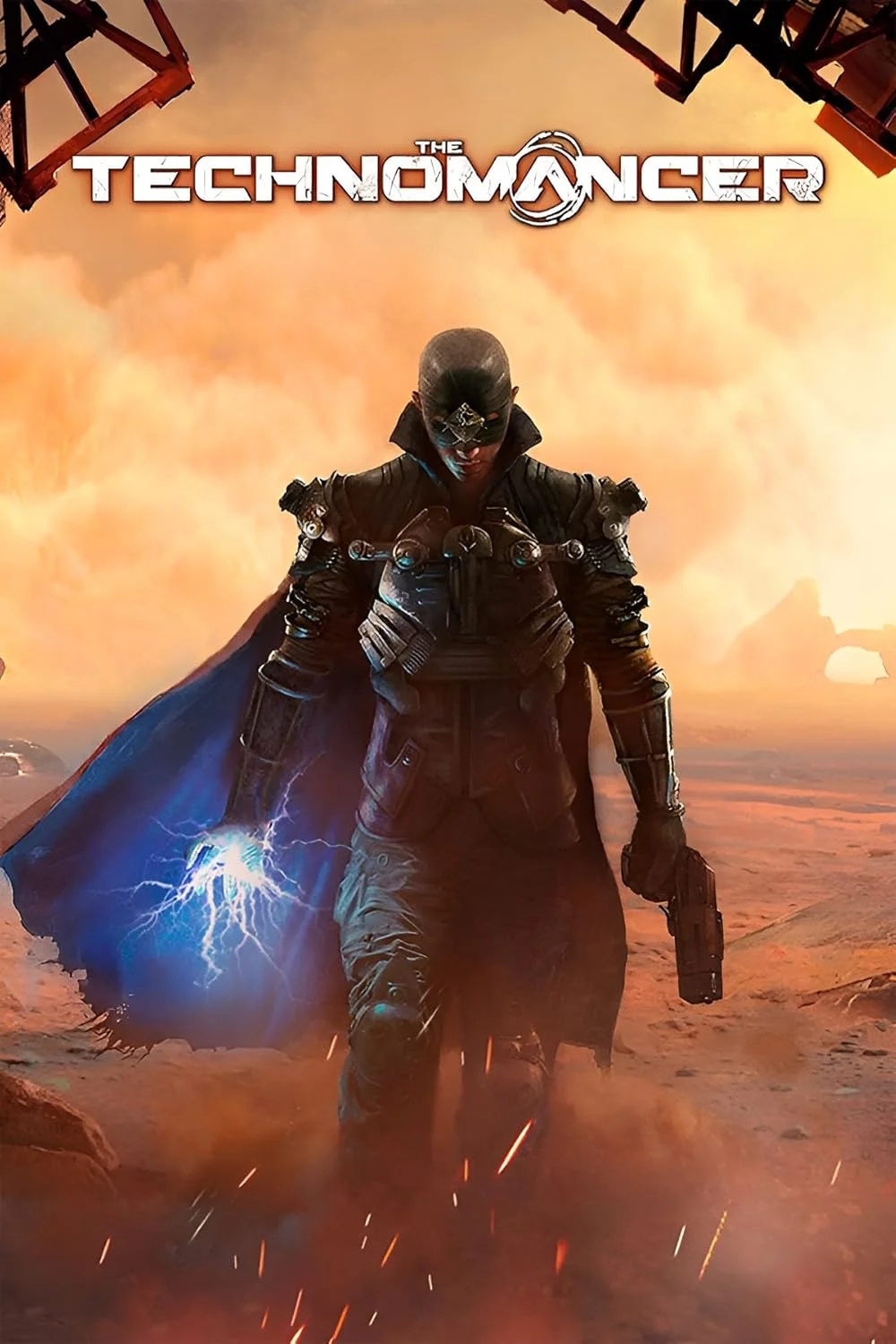
The Technomancer
This combination offers playable performance with an average of 39 FPS, though you may want to lower settings for smoother gameplay.
Average FPS: resolution vs quality settings
| Ultra | High | Medium | Low | |
|---|---|---|---|---|
| 4K Ultra HD | 15 | 19 | 22 | 28 |
| 1440p QHD | 26 | 34 | 40 | 52 |
| 1080p Full HD | 40 | 52 | 61 | 79 |
Cell color: green is 120+ FPS, teal is 60+, amber is 30+, red is below 30.
The Technomancer with Intel Core i5-14600KF + Intel Arc B390, In-Depth Analysis
# The Technomancer with Intel Core i5-14600KF + Intel Arc B390
The Technomancer, a 2016 Action RPG, presents a demanding workload for the Intel Core i5-14600KF paired with the Intel Arc B390 integrated graphics. The measured frame rates show a system that can handle the game at 1080p with adjustments, but struggles significantly at higher resolutions. The combo ranks 2500th out of 2825 tested combinations, placing it in the lower 12th percentile of all tested hardware pairings for this title, which indicates a severe performance bottleneck that scales predictably with resolution and settings.
FAQ
Q: What is the best resolution to play The Technomancer with this combo?
A: The data shows 1920x1080 is the only resolution where the system achieves playable frame rates. At Low settings, the average FPS is 79, which is the highest measured result across all configurations. At 2560x1440, even Low settings drop to 52 FPS, while 3840x2160 Low only reaches 28 FPS.
Q: How does the Intel Arc B390 compare to its closest GPU rivals?
A: The Arc B390's average benchmark score is 1482, which is 1.3% higher than the NVIDIA GeForce GT 520MX (1463), 1.5% higher than the GeForce 800M (1460), 2.5% higher than the GT 625 OEM (1446), and 2.7% higher than the GT 710 (1443). These are all within a tight performance band, confirming the Arc B390 sits at the very bottom of the GPU performance spectrum.
Q: What CPU benchmark scores does the i5-14600KF achieve?
A: The CPU scores 32544 in Cinebench R23 multi-core, 4594 in single-core, 13668 in Cinebench R20 multi-core, and 1929 in single-core. It also reaches 17085 in Geekbench multi-core and 2445 in single-core. Its average benchmark score is 49394, placing it in the 90th percentile of all CPUs.
Q: How much VRAM does the Intel Arc B390 have?
A: The GPU uses System Shared memory, meaning it has no dedicated VRAM. The memory size, type, and bus width are all listed as "System Shared," with bandwidth described as "System Dependent." This means the GPU borrows from the system's main memory, which can impact performance.
Q: Is the i5-14600KF a strong CPU relative to other processors?
A: Yes, the CPU sits in the 90th percentile of all CPUs. Its nearest rival, the AMD Ryzen 9 7900, scores 49228 (0.3% lower), while the AMD Ryzen AI Max+ 388 scores 49796 (0.8% higher). The Intel Core Ultra 5 245 trails by 0.8% with a score of 48995.
Q: What is the frame rate difference between Low and Ultra settings at 1080p?
A: At 1920x1080, Low settings average 79 FPS, while Ultra drops to 40 FPS. This represents a 49% reduction in average frame rate from the lowest to the highest preset, with Medium at 61 FPS and High at 52 FPS as intermediate steps.
GPU Role
The Intel Arc B390 is an integrated graphics solution based on the Panther Lake chip with Xe3-LPG architecture, fabricated on Intel's 3 nm process. It operates with a base clock of 300 MHz and a boost clock of 2500 MHz, which are the only clock figures provided in the data. The GPU has 1536 shading units, 48 texture mapping units, and 24 raster output units, along with 12 ray tracing cores. Its pixel rate is 60.00 GPixel/s, texture rate is 120.0 GTexel/s, and it delivers 7.680 TFLOPS of FP32 compute.
The most significant limitation is memory: the Arc B390 uses System Shared memory with no dedicated VRAM capacity. The memory type, bus width, and bandwidth are all system-dependent, meaning the GPU competes with the CPU for memory access. This shared memory configuration is typical for integrated graphics and directly impacts performance in memory-intensive games like The Technomancer. The GPU's TDP is 80 W, and it uses no power connectors, confirming its integrated design.
The GPU's benchmark results are modest, scoring 1482 in 3DMark Steel Nomad DX12. This places it in the 9th percentile of all GPUs, with nearest rivals including the NVIDIA GeForce GT 520MX (1463, 1.3% behind) and the GeForce GT 710 (1443, 2.7% behind). These comparisons show the Arc B390 is marginally ahead of decade-old entry-level discrete GPUs but far below any modern gaming solution. In The Technomancer, this translates to sub-30 FPS at 4K across all settings, confirming the GPU is the primary constraint at higher resolutions.
Resolution Scaling
The measured frame rates reveal a clear pattern of performance degradation as resolution increases. At 1920x1080 with Low settings, the system averages 79 FPS. Moving to 2560x1440 at the same settings drops the average to 52 FPS, a 34% reduction. At 3840x2160 Low, the average falls to 28 FPS, which is 65% lower than the 1080p Low result. This scaling behavior indicates the GPU is the limiting factor, as the workload increases quadratically with pixel count.
The Medium settings preset shows a similar trend: 61 FPS at 1080p, 40 FPS at 1440p, and 22 FPS at 4K. High settings follow the same pattern with 52, 34, and 19 FPS respectively. Ultra settings are the most demanding, with averages of 40 FPS at 1080p, 26 FPS at 1440p, and 15 FPS at 4K. The consistent ~30-35% drop from 1080p to 1440p and another ~45-50% drop from 1440p to 4K across all settings presets demonstrates that the Arc B390's rendering throughput scales poorly with increased pixel counts.
The data suggests that at 1080p, the CPU has enough headroom to keep the GPU reasonably fed, as evidenced by the 79 FPS Low result. However, the steep decline at higher resolutions points to the GPU hitting its compute limits, particularly with the shared memory bandwidth constraint. Users targeting 1440p or 4K would need to accept frame rates below 52 FPS even at the lowest settings, which is marginal for an Action RPG that benefits from fluid gameplay.
Settings Recommendations
The measured data provides clear guidance on which preset offers the best experience for this hardware combination. At 1920x1080, the Low preset delivers an average of 79 FPS, which is the only configuration that comfortably exceeds the 60 FPS threshold. Medium settings at 1080p average 61 FPS, with a minimum of 52 FPS and maximum of 70 FPS, indicating playable but not consistently smooth performance. High settings average 52 FPS, while Ultra drops to 40 FPS, which may be acceptable for a slower-paced Action RPG but is below the ideal range.
At 2560x1440, Low settings average 52 FPS, which is playable but with noticeable dips. Medium at 1440p averages 40 FPS with a minimum of 34 FPS, while High drops to 34 FPS and Ultra to 26 FPS. The 4K results are uniformly poor, with the best case being Low at 28 FPS and the worst being Ultra at 15 FPS. These numbers suggest that 4K is not viable for this combo in The Technomancer.
The optimal choice is 1080p with Low settings, as it provides the highest average frame rate and likely the most consistent experience. For users who prefer visual quality, Medium at 1080p offers a reasonable compromise at 61 FPS average, though the 52 FPS minimum suggests occasional stutter. High settings at 1080p are borderline, and Ultra should be avoided given the 40 FPS average. At 1440p, Low is the only preset that stays above 50 FPS, making it the only reasonable choice for that resolution. The data does not support any settings at 4K, as even Low fails to reach 30 FPS.
How This Combo Ranks
The Intel Core i5-14600KF + Intel Arc B390 combination ranks 2500th out of 2825 tested combos for The Technomancer, placing it in the bottom 11.5% of all hardware pairings. This low rank reflects the GPU's position in the 9th percentile of all GPUs, which severely limits the overall system performance despite the CPU's strong 90th percentile standing. The rank is particularly notable because the i5-14600KF is a high-end desktop processor with 14 cores and 20 threads, yet it cannot overcome the integrated GPU's limitations in this title.
The CPU's nearest rivals underscore its capability: the AMD Ryzen 9 7900 scores 49228 (0.3% lower), the AMD Ryzen 7 PRO 5755G scores 49196 (0.4% lower), and the Intel Core Ultra 5 245 scores 48995 (0.8% lower). The AMD Ryzen AI Max+ 388 is the only close competitor that edges ahead at 49796 (0.8% higher). These small deltas confirm the i5-14600KF is competitive with other modern high-end CPUs, meaning the combo's poor rank is almost entirely attributable to the GPU.
The Arc B390's nearest GPU rivals are all NVIDIA products from the early 2010s, with the GT 520MX and GeForce 800M showing scores within 1.5% of the Intel part. This clustering at the bottom of the GPU hierarchy explains why the combo ranks so low in a game that requires consistent GPU throughput. The 2500th rank among 2825 combos means 88.5% of tested systems perform better in The Technomancer, which is consistent with the measured frame rates that only reach playable levels at 1080p Low.
Measured FPS Breakdown
At 3840x2160, the system delivers an average of 19 FPS on High settings, 28 FPS on Low, 22 FPS on Medium (with a minimum of 19 FPS and maximum of 25 FPS), and 15 FPS on Ultra. No minimum or maximum values are provided for High, Low, or Ultra at this resolution, but the averages clearly show that 4K is unplayable regardless of settings. The 13 FPS spread between Low and Ultra at 4K demonstrates the limited impact of settings adjustments at this resolution.
At 2560x1440, High settings average 34 FPS, Low averages 52 FPS, Medium averages 40 FPS (minimum 34 FPS, maximum 46 FPS), and Ultra averages 26 FPS. The 26 FPS difference between Low and Ultra at 1440p shows a wider performance range than at 4K, giving users more flexibility. The Medium preset's minimum of 34 FPS indicates that even mid-range settings can cause frame drops below 35 FPS, which may be noticeable during combat sequences.
At 1920x1080, High settings average 52 FPS, Low averages 79 FPS, Medium averages 61 FPS (minimum 52 FPS, maximum 70 FPS), and Ultra averages 40 FPS. The 39 FPS gap between Low and Ultra at 1080p is the largest of any resolution, providing users with meaningful choices between visual quality and performance. The Medium preset's 52 FPS minimum is identical to the High preset's average, suggesting that consistency improves as settings are lowered. The 1080p Low result of 79 FPS is the only measured configuration that approaches the 80+ FPS range, making it the clear best option for smooth gameplay.
CPU Role
The Intel Core i5-14600KF is a 14-core, 20-thread processor based on Raptor Lake architecture, manufactured on Intel's 10 nm process. It has a base clock of 3.50 GHz and a boost clock of 5.30 GHz, with a TDP of 125 W. The cache hierarchy includes 80 KB of L1 per core, 2 MB of L2 per core, and 24 MB of shared L3 cache. It supports DDR4 and DDR5 memory in a dual-channel configuration, with 16 PCIe Gen 5 lanes. The CPU was released on 2023-10-16 with a launch MSRP of $294.
Benchmark results show strong single-threaded and multi-threaded performance: Cinebench R23 multi-core scores 32544 and single-core 4594, while Geekbench multi-core scores 17085 and single-core 2445. PassMark tests show 125982 in integer math, 93048 in floating point math, 38697 in multithread, and 4273 in single-thread. The CPU's average benchmark score of 49394 places it in the 90th percentile of all CPUs, confirming it is not a bottleneck in most scenarios.
In The Technomancer, the CPU's role is to feed the GPU with draw calls and game logic. Given that the i5-14600KF ranks in the 90th percentile while the Arc B390 ranks in the 9th percentile, the CPU is clearly not the limiting component at higher resolutions. The data supports this: at 1080p Low, the system achieves 79 FPS, which is the highest result and suggests the CPU can support frame rates well above 60 FPS when the GPU workload is manageable. However, at 4K, even Low settings drop to 28 FPS, a 65% reduction from 1080p, which cannot be attributed to CPU limitations. The CPU's 14 cores and 20 threads provide ample processing power for the game's Action RPG mechanics, but the integrated GPU's shared memory architecture and modest compute capabilities cap the overall system performance. The measured frame rates align with the GPU's 9th percentile ranking, and the CPU's 90th percentile ranking confirms that upgrading the GPU would yield substantial performance gains in this title.
Hardware Specifications
Intel Core i5-14600KF
Intel Arc B390
FPS Benchmarks by Resolution & Settings
Performance data for Intel Core i5-14600KF + Intel Arc B390 in The Technomancer
| Resolution | Settings | Avg FPS |
|---|---|---|
| 3840x2160 | Low | 28.0 |
| 3840x2160 | Medium | 22.0 |
| 3840x2160 | High | 19.0 |
| 3840x2160 | Ultra | 15.0 |
| 2560x1440 | Low | 52.0 |
| 2560x1440 | Medium | 40.0 |
| 2560x1440 | High | 34.0 |
| 2560x1440 | Ultra | 26.0 |
| 1920x1080 | Low | 79.0 |
| 1920x1080 | Medium | 61.0 |
| 1920x1080 | High | 52.0 |
| 1920x1080 | Ultra | 40.0 |
The Technomancer with ii5-14600KF + Other GPUs
See how The Technomancer performs with the same CPU but different graphics cards.
The Technomancer with Arc B390 + Other CPUs
See how The Technomancer performs with the same GPU but different processors.
Other Games with ii5-14600KF + Arc B390
Explore FPS benchmarks for other games using this same hardware combination.