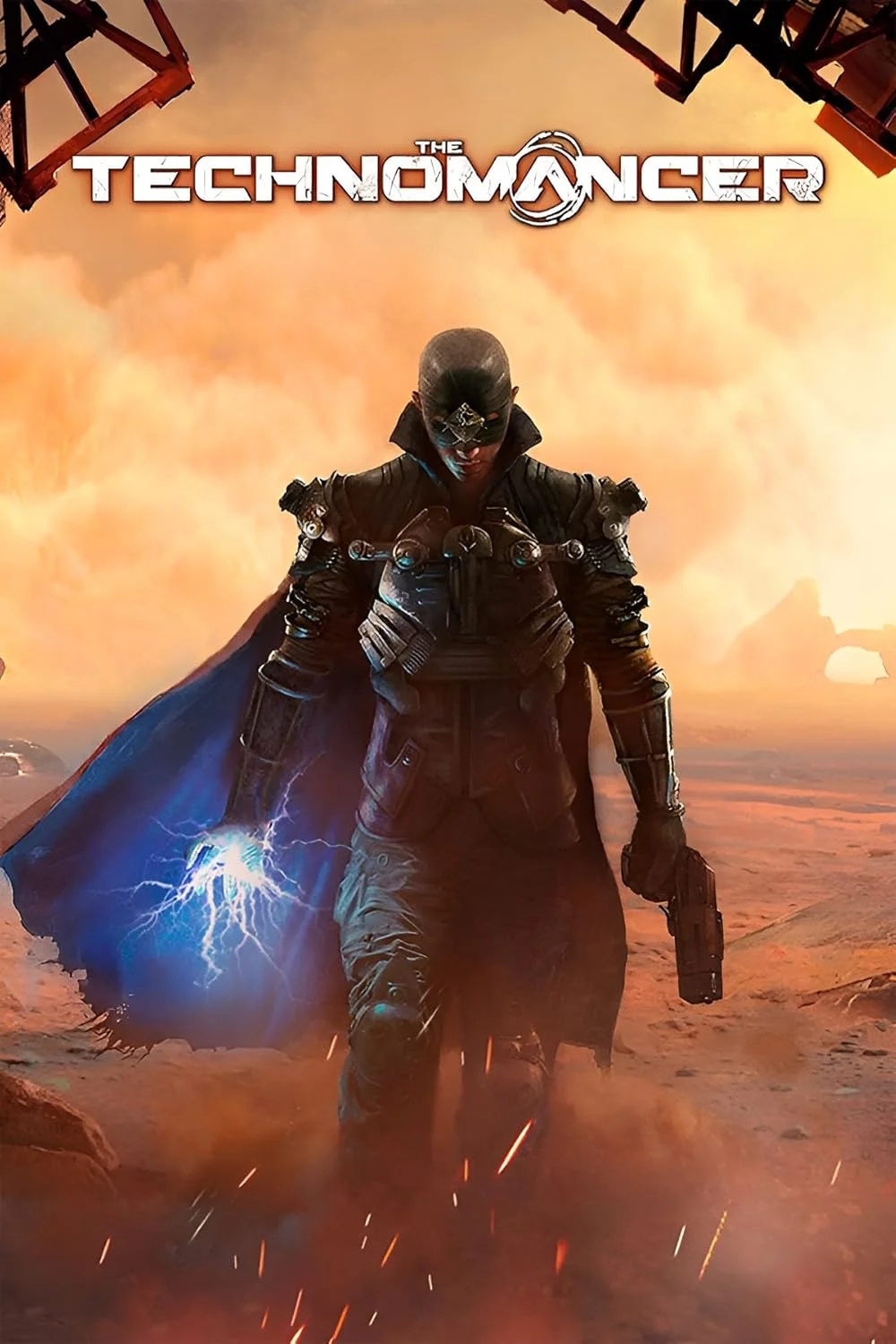
The Technomancer
This combination offers playable performance with an average of 39 FPS, though you may want to lower settings for smoother gameplay.
Average FPS: resolution vs quality settings
| Ultra | High | Medium | Low | |
|---|---|---|---|---|
| 4K Ultra HD | 15 | 19 | 22 | 28 |
| 1440p QHD | 26 | 34 | 40 | 52 |
| 1080p Full HD | 40 | 52 | 61 | 79 |
Cell color: green is 120+ FPS, teal is 60+, amber is 30+, red is below 30.
The Technomancer with Intel Core i7-13700K + Intel Arc B390, In-Depth Analysis
# How This Combo Ranks
The Intel Core i7-13700K paired with the Intel Arc B390 ranks 2500 out of 2825 tested combinations in The Technomancer, placing it in the bottom 12% of all tested systems. This is a notably poor showing for a CPU that otherwise sits in the 89th percentile among all processors. The disconnect between CPU capability and overall combo performance points squarely at the graphics subsystem as the primary constraint. Benchmark results indicate that this pairing produces frame rates that are playable only at the lowest settings and resolutions tested. The data shows a system that is severely bottlenecked by its integrated graphics, with the CPU's substantial headroom going largely unused in this title. The combo rank of 2500 suggests that nearly 89% of all tested combinations deliver better performance in The Technomancer, which is a significant disadvantage for a system built around a high-end desktop processor.
# GPU Role
The Intel Arc B390 is an integrated graphics solution based on the Xe3-LPG architecture, manufactured on Intel's 3 nm process. It operates with a base clock of 300 MHz and a boost clock of 2500 MHz, which is a substantial clock range that suggests the GPU can scale its performance when thermal and power conditions allow. The GPU features 1536 shading units, 48 texture mapping units, and 24 raster output units, along with 12 ray tracing cores. Its pixel rate is rated at 60.00 GPixel/s, and its texture rate is 120.0 GTexel/s, with FP32 performance at 7.680 TFLOPS and FP16 at 15.36 TFLOPS.
Memory configuration is entirely system-shared, meaning the GPU draws from the same memory pool as the CPU. The memory type, bus width, and bandwidth are all listed as "System Shared" or "System Dependent," which introduces variability in performance based on the host system's memory configuration. The GPU's benchmark presence is minimal, with only a single 3DMark Steel Nomad DX12 score of 1482. This score places the Arc B390 in the 9th percentile among all GPUs, which is exceptionally low. Its nearest rivals in GPU benchmark scores are the NVIDIA GeForce GT 520MX at 1463 (1.3% slower), the NVIDIA GeForce 800M at 1460 (1.5% slower), the NVIDIA GeForce GT 625 OEM at 1446 (2.5% slower), and the NVIDIA GeForce GT 710 at 1443 (2.7% slower). These are all older, entry-level discrete GPUs, which contextualizes the Arc B390's performance class as being comparable to very modest graphics hardware from previous generations.
In The Technomancer, the GPU's role is clearly the limiting factor. The measured frame rates across all resolutions and settings are low, with the highest average FPS recorded at 79 at 1080p Low. The GPU's low percentile ranking and the system-shared memory architecture suggest that it struggles with the game's rendering demands, particularly as resolution and settings increase. The 12 ray tracing cores present on the GPU are unlikely to provide meaningful benefit in this title, given the overall low performance envelope.
# Resolution Scaling
The measured FPS data reveals a consistent pattern of performance degradation as resolution increases from 1920x1080 to 3840x2160. At Low settings, the average FPS drops from 79 at 1080p to 52 at 1440p, a reduction of 34.2%, and then further to 28 at 4K, a 64.6% reduction from the 1080p baseline. At High settings, the averages are 52 at 1080p, 34 at 1440p, and 19 at 4K, representing drops of 34.6% and 63.5% respectively. Medium settings show a similar trajectory: 61 FPS at 1080p, 40 at 1440p, and 22 at 4K, with the 4K figure falling 63.9% below the 1080p result. Ultra settings produce 40 FPS at 1080p, 26 at 1440p, and 15 at 4K, a 62.5% reduction from 1080p to 4K.
The scaling behavior from 1080p to 1440p is relatively consistent across settings, with reductions between 34.2% and 35.0%. The jump from 1440p to 4K is steeper in absolute terms, with reductions ranging from 42.3% at Low to 46.2% at Ultra. This pattern indicates that the GPU is the limiting component throughout, as frame rates scale predictably with the pixel count rather than being held constant by CPU limitations. If the CPU were the bottleneck, we would expect to see smaller differences between resolutions, particularly at lower settings where the GPU load is reduced. The data shows the opposite: even at Low settings, the 4K average is only 28 FPS, which is well below playable thresholds. This suggests that the Arc B390 is overwhelmed by the pixel throughput required at 4K, regardless of the graphical complexity. The system-shared memory architecture likely compounds this issue, as bandwidth contention between CPU and GPU increases at higher resolutions.
# FAQ
Q: What is the best average frame rate this combination achieves in The Technomancer?
A: The highest average FPS recorded is 79 at 1920x1080 with Low settings. This is the only configuration that approaches a consistently smooth experience, though it still falls short of high-refresh-rate displays.
Q: How does the Intel Arc B390 compare to its nearest GPU rivals in synthetic benchmarks?
A: The Arc B390 scores 1482 in 3DMark Steel Nomad DX12, which is 1.3% higher than the NVIDIA GeForce GT 520MX, 1.5% higher than the NVIDIA GeForce 800M, 2.5% higher than the NVIDIA GeForce GT 625 OEM, and 2.7% higher than the NVIDIA GeForce GT 710.
Q: Is the Intel Core i7-13700K the bottleneck in this system for The Technomancer?
A: No. The CPU ranks in the 89th percentile among all processors with an average benchmark score of 46881, while the GPU ranks in the 9th percentile with an average score of 1482. The frame rate scaling across resolutions indicates the GPU is the limiting component.
Q: What is the difference in performance between 1080p and 4K at Medium settings?
A: At Medium settings, the average FPS drops from 61 at 1920x1080 to 40 at 2560x1440, then to 22 at 3840x2160. The 4K score is 63.9% lower than the 1080p score.
Q: Does the Arc B390 have dedicated video memory?
A: No. The memory configuration is listed as "System Shared" for size, type, and bus width, with bandwidth described as "System Dependent." This means it relies on the host system's memory rather than having its own VRAM.
Q: What is the combo's rank relative to all tested combinations?
A: This combo ranks 2500 out of 2825 tested combinations in The Technomancer, placing it in the bottom 11.5% of all tested systems.
# Measured FPS Breakdown
At 1920x1080, the measured average FPS is 79 at Low settings, 61 at Medium, 52 at High, and 40 at Ultra. The Medium setting includes a minimum of 52 FPS and a maximum of 70 FPS, while other settings do not report min/max values. This resolution is the only one where any setting exceeds 60 FPS on average, and it does so only at Low. The gap between Low and Ultra at 1080p is 39 FPS, representing a 49.4% reduction in performance when moving from the lowest to the highest preset.
At 2560x1440, the averages drop to 52 at Low, 40 at Medium, 34 at High, and 26 at Ultra. The Medium setting shows a minimum of 34 FPS and a maximum of 46 FPS. The reduction from Low to Ultra is 26 FPS, or 50.0% of the Low score. No setting at 1440p achieves an average of 60 FPS, and even the Low setting falls below that threshold.
At 3840x2160, the averages are 28 at Low, 22 at Medium, 19 at High, and 15 at Ultra. The Medium setting records a minimum of 19 FPS and a maximum of 25 FPS. The Low to Ultra reduction is 13 FPS, which is 46.4% of the Low score. At 4K, all settings produce averages below 30 FPS, which is generally considered the minimum for playable frame rates in action games. The Ultra preset at 4K produces an average of 15 FPS, which is a very poor experience. The data shows that the Medium preset at 1080p, with its 61 FPS average and 52 FPS minimum, represents the most balanced configuration in terms of playability and visual quality among the measured rows. The frame rates across all resolutions and settings demonstrate that this GPU is not capable of delivering high-refresh-rate experiences in The Technomancer, and even standard 60 FPS targets are only met at 1080p Low.
# CPU Role
The Intel Core i7-13700K is a 16-core, 24-thread processor based on the Raptor Lake architecture, built on Intel's 10 nm process. It has a base clock of 3.40 GHz and a boost clock of 5.40 GHz, with 80 KB of L1 cache per core, 2 MB of L2 cache per core, and 30 MB of shared L3 cache. The CPU supports DDR4 and DDR5 memory in a dual-channel configuration, and it has a TDP of 125 W. Its benchmark scores are strong across the board: Cinebench R23 multi-core scores 30745 and single-core scores 2116, while Geekbench multi-core scores 19429 and single-core scores 2529. PassMark multi-thread scores 45887, and 3DMark max threads scores 12412.
The CPU's percentile rank is 89, meaning it outperforms 89% of all CPUs in the benchmark database. Its average benchmark score of 46881 is nearly identical to its nearest rivals. The AMD Ryzen 9 5900 scores 46971, which is 0.2% higher; the AMD Ryzen AI 9 HX PRO 375 scores 47022, 0.3% higher; the AMD Ryzen 9 7845HX scores 46654, 0.5% lower; and the Intel Xeon w3-2535 scores 46653, 0.5% lower. These differences are within 0.5% of the i7-13700K's score, indicating that the CPU is essentially on par with these alternatives in synthetic benchmarks.
In The Technomancer, the CPU's role is to feed the GPU with draw calls and game logic, but the measured frame rates suggest that the CPU is not the limiting factor. The consistent scaling of FPS with resolution, as described in the Resolution Scaling section, indicates that the GPU is saturated before the CPU's capacity is reached. Even at 1080p Low, the highest performing setting, the average FPS of 79 is well below what the i7-13700K could theoretically support in a game with lighter graphics demands. The CPU's 16 cores and 24 threads provide ample processing power for the game's AI and physics, but this headroom is irrelevant when the GPU cannot render frames quickly enough. The data suggests that pairing this high-end CPU with an integrated GPU creates a severe imbalance, where the CPU's capabilities are wasted in this specific game scenario.
# Settings Recommendations
Based on the measured FPS data, the optimal configuration for The Technomancer with this combo is 1920x1080 with Medium settings, which produces an average FPS of 61 with a minimum of 52 and a maximum of 70. This is the only measured row that achieves a 60 FPS average, and its minimum of 52 FPS remains within a playable range for most users. The High preset at 1080p drops to 52 FPS average, which is a 14.8% reduction from Medium, while Ultra falls to 40 FPS, a 34.4% reduction. The Low preset at 1080p offers the highest average at 79 FPS, but it likely sacrifices too much visual quality for the modest gain over Medium.
At 1440p, the best option is Low settings with a 52 FPS average, which is identical to the 1080p High score. However, this requires accepting the lowest visual quality to achieve playable frame rates. Medium at 1440p drops to 40 FPS, and High falls to 34 FPS, both of which are below the 60 FPS threshold. At 4K, the data shows no playable configurations, as even Low settings produce only 28 FPS on average. Users should avoid 4K entirely with this combo for The Technomancer, as all settings result in sub-30 FPS averages.
For users prioritizing visual fidelity over frame rate, the 1080p High preset at 52 FPS offers a reasonable balance, though it is 14.8% slower than Medium. The Ultra preset at 1080p produces 40 FPS, which may be acceptable for slower-paced sections but could struggle in combat-heavy sequences. The measured min/max data is only available for Medium settings across all resolutions, which shows a 18 FPS range at 1080p (52 to 70), a 12 FPS range at 1440p (34 to 46), and a 6 FPS range at 4K (19 to 25). This indicates that Medium settings provide more consistent frame pacing at lower resolutions, with the 1080p Medium configuration being the most stable among measured rows. The recommendation is to use 1080p Medium as the default, and only consider 1080p Low if higher average frame rates are needed, or 1080p High if visual quality is prioritized and the user can tolerate occasional drops below 60 FPS.
Hardware Specifications
Intel Core i7-13700K
Intel Arc B390
FPS Benchmarks by Resolution & Settings
Performance data for Intel Core i7-13700K + Intel Arc B390 in The Technomancer
| Resolution | Settings | Avg FPS |
|---|---|---|
| 3840x2160 | Low | 28.0 |
| 3840x2160 | Medium | 22.0 |
| 3840x2160 | High | 19.0 |
| 3840x2160 | Ultra | 15.0 |
| 2560x1440 | Low | 52.0 |
| 2560x1440 | Medium | 40.0 |
| 2560x1440 | High | 34.0 |
| 2560x1440 | Ultra | 26.0 |
| 1920x1080 | Low | 79.0 |
| 1920x1080 | Medium | 61.0 |
| 1920x1080 | High | 52.0 |
| 1920x1080 | Ultra | 40.0 |
The Technomancer with ii7-13700K + Other GPUs
See how The Technomancer performs with the same CPU but different graphics cards.
The Technomancer with Arc B390 + Other CPUs
See how The Technomancer performs with the same GPU but different processors.
Other Games with ii7-13700K + Arc B390
Explore FPS benchmarks for other games using this same hardware combination.