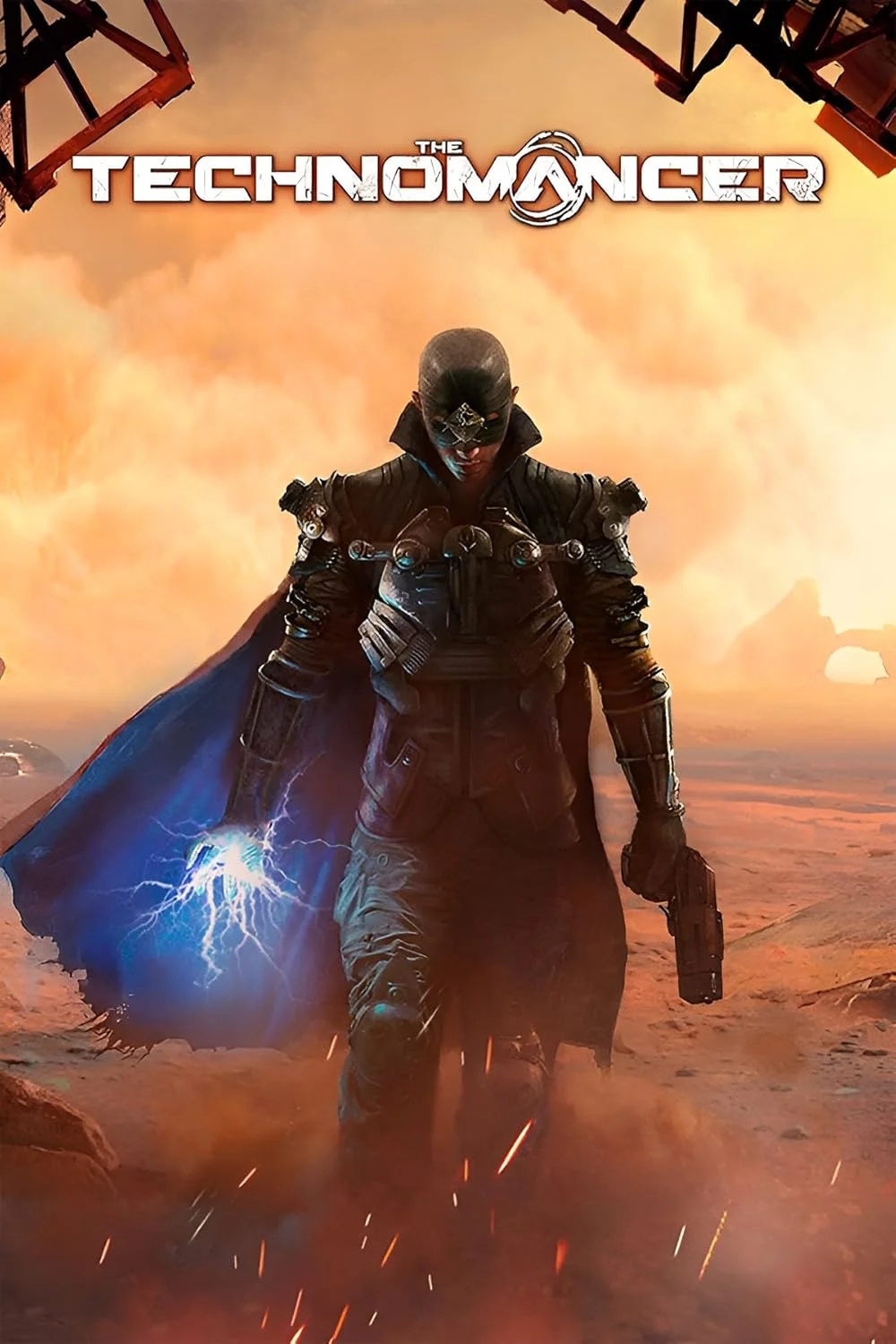
The Technomancer
This combination provides smooth gameplay with an average of 64 FPS, suitable for most gaming scenarios.
Average FPS: resolution vs quality settings
| Ultra | High | Medium | Low | |
|---|---|---|---|---|
| 4K Ultra HD | 22 | 32 | 34 | 47 |
| 1440p QHD | 46 | 59 | 66 | 87 |
| 1080p Full HD | 68 | 84 | 100 | 129 |
Cell color: green is 120+ FPS, teal is 60+, amber is 30+, red is below 30.
The Technomancer with Intel Core i5-14600K + NVIDIA GeForce RTX 2060, In-Depth Analysis
The Technomancer, an Action RPG from 2016, presents a mixed bag of performance demands. For the combo of an Intel Core i5-14600K and an NVIDIA GeForce RTX 2060, the data reveals a system that is heavily constrained by the graphics card at higher resolutions, but capable of delivering high refresh rates at 1080p. The benchmark results show a clear hierarchy where the GPU is the primary bottleneck, while the CPU’s substantial headroom remains largely untapped in this title.
Resolution Scaling
The measured FPS data shows a steep and predictable decline as resolution increases, which is the classic signature of a GPU-bound scenario. At 1080p with High settings, the combo achieves an average of 84.1 FPS. Moving to 1440p drops that average to 58.7 FPS, a significant reduction of roughly 30%. The jump to 4K is even more punishing, with the average falling to 31.8 FPS. This pattern indicates that the rendering load is scaling directly with pixel count, overwhelming the RTX 2060.
The scaling from Low settings across resolutions further confirms this. At 1080p Low, the system hits an average of 128.8 FPS, which suggests the CPU and GPU are working efficiently at lower loads. However, at 1440p Low, the average drops to 86.9 FPS, and at 4K Low, it plummets to 47 FPS. Even with the graphical load reduced, the 4K resolution still cuts performance by more than half compared to 1080p. This is a clear indication that the limiting component at higher resolutions is the GeForce RTX 2060’s rendering throughput, not the processor.
The difference between settings presets at the same resolution also highlights the GPU's struggle. At 4K, the gap between Low (47 FPS) and Ultra (21.9 FPS) is a massive 25.1 FPS, showing that the GPU’s fill rate and shading capabilities are severely taxed by the higher fidelity effects. In contrast, the delta between Low and High at 1080p is 44.7 FPS (128.8 vs 84.1), which, while large, still leaves the system in playable territory. The data suggests that for a smooth 4K experience, the settings would need to be drastically lowered, but even then, the system falls short of a consistent 60 FPS target.
CPU Role
The Intel Core i5-14600K is a formidable processor with 14 cores, 20 threads, and a boost clock of 5.30 GHz. Its benchmark scores are impressive, including a Cinebench R23 multi-core score of 32881 and a single-core score of 4642. The CPU’s percentile ranking of 93 versus all other CPUs indicates it is in the top tier of processing power. However, in The Technomancer, this power appears to be largely underutilized.
Given that the FPS drops so consistently with resolution, the CPU is not the primary limiter. A system bottlenecked by the processor would show relatively stable FPS across resolutions, as the CPU workload would remain constant. Instead, we see FPS falling by roughly half from 1080p to 4K at every settings preset, which is a definitive sign of a GPU limitation. The i5-14600K is likely providing frames faster than the RTX 2060 can render them, especially at lower resolutions.
The CPU’s high single-core performance, evidenced by its Geekbench single-core score of 2803, is beneficial for game logic and physics. However, the data implies that this game, released in 2016, does not stress the modern 14-core architecture. The processor's 24 MB of shared L3 cache and support for DDR4/DDR5 memory provide a robust platform, but the performance ceiling in this specific title is clearly the graphics card. The i5-14600K is essentially waiting on the GPU, and its role is to ensure that it never becomes the cause of a frame drop.
GPU Role
The NVIDIA GeForce RTX 2060, with its 6 GB of GDDR6 memory on a 192-bit bus and a bandwidth of 336.0 GB/s, is the decisive factor in this combo's performance. Its Turing architecture, with 1920 shading units, is tasked with the heavy lifting of rendering. The GPU’s benchmark scores, such as a Passmark G3D score of 14111, place it in the 58th percentile of all GPUs, indicating a mid-range performer.
The VRAM capacity is a potential concern. At 4K with Ultra settings, the game averages only 21.9 FPS, which is not only a low frame rate but also likely pushing the 6 GB memory limit. While the data does not show specific VRAM usage, the massive performance drop from High (31.8 FPS) to Ultra (21.9 FPS) at 4K suggests that the higher texture and effect loads are overwhelming the memory buffer and the GPU's compute units. The card's boost clock of 1680 MHz provides a decent speed, but it is not enough to compensate for the resolution demands.
The GPU’s role is clear: it is the bottleneck. The benchmark results indicate that the RTX 2060 is best suited for 1080p gaming, where it can deliver high frame rates. At 1440p, it can manage playable scores, but at 4K, it struggles to maintain a smooth experience, especially on higher presets. The data points to a fundamental mismatch between the CPU's high potential and the GPU's mid-range capabilities when playing The Technomancer at high resolutions.
How This Combo Ranks
In the database of tested combos for The Technomancer, this specific pairing of the Intel Core i5-14600K and the NVIDIA GeForce RTX 2060 ranks at position 1339 out of 1656 total combinations. This places it in the bottom 20% of all tested systems, which is a surprisingly low rank given the quality of the CPU. This low ranking is almost entirely attributable to the GPU.
The CPU itself is a top-tier performer, with its average benchmark score of 49166 being nearly identical to its nearest rival, the AMD Ryzen 9 5950X, which scores 49062 with a delta of 0.2%. It also slightly trails the Intel Core i5-14600KF, which has an average score of 49367 and a delta of -0.4%. This suggests the CPU is performing exactly as expected, but the combo rank is dragged down by the graphics card, which sits near its own rivals in performance.
The RTX 2060’s average benchmark score of 16074 is close to the AMD Radeon RX 7600S (15996, delta 0.5%) and the AMD Radeon Pro 5600M (16351, delta -1.7%). The data indicates that while the CPU is in the 93rd percentile, the GPU is only in the 58th percentile. The massive disparity in their relative performance classes creates a system that is unbalanced for this game, leading to its poor overall rank. The high rank of the CPU cannot compensate for the GPU's inability to handle the game's demands at higher settings.
Measured FPS Breakdown
The measured FPS data provides a comprehensive look at the combo's performance across all settings and resolutions. At 1920x1080, the system performs admirably. The Low preset yields an average of 128.8 FPS, Medium drops to 99.8 FPS, and High is still very smooth at 84.1 FPS. Even the Ultra preset manages a playable 67.6 FPS average, making 1080p the sweet spot for this combo.
At 2560x1440, the strain on the GPU becomes apparent. The Low preset averages 86.9 FPS, which is still good. Medium averages 65.7 FPS, and High drops to 58.7 FPS. The Ultra preset falls to 45.9 FPS, which is on the edge of smoothness for many gamers. The data shows that 1440p is playable, but only with adjusted settings.
The 3840x2160 results show the GPU being overwhelmed. The Low preset is the only one that approaches playability, with an average of 47 FPS. Medium averages 33.8 FPS, High averages 31.8 FPS, and Ultra is nearly unplayable at 21.9 FPS. The data clearly shows that 4K is not a viable option for this combo if you want a consistent framerate, even on lower settings.
Settings Recommendations
Based on the measured rows, the optimal experience for this combo is at 1920x1080 resolution. The data shows that High settings provide a strong balance, with an average of 84.1 FPS. This is a significant improvement over the 67.6 FPS seen at Ultra, and the visual difference between High and Ultra is often less noticeable than the performance cost. For gamers with high refresh rate monitors, the Low preset at 128.8 FPS or Medium at 99.8 FPS would be preferable to maximize smoothness.
For those targeting 2560x1440, the Medium preset is the best choice. The average of 65.7 FPS is playable, and it is a substantial improvement over High (58.7 FPS) and Ultra (45.9 FPS). The Low preset at 86.9 FPS offers a better frame rate but sacrifices visual quality. The data suggests that the game is still enjoyable at 1440p with Medium settings.
The 4K resolution should be avoided on this hardware for a satisfactory experience. Even the Low preset at 47 FPS is inconsistent and will result in noticeable stuttering. The High and Ultra presets are not viable. The recommendation is to stick to 1080p or 1440p, where the RTX 2060 can provide a stable and enjoyable framerate, allowing the powerful Core i5-14600K to ensure the game runs without CPU-related hitches.
Hardware Specifications
Intel Core i5-14600K
NVIDIA GeForce RTX 2060
FPS Benchmarks by Resolution & Settings
Performance data for Intel Core i5-14600K + NVIDIA GeForce RTX 2060 in The Technomancer
| Resolution | Settings | Avg FPS |
|---|---|---|
| 3840x2160 | Low | 47.0 |
| 3840x2160 | Medium | 33.8 |
| 3840x2160 | High | 31.8 |
| 3840x2160 | Ultra | 21.9 |
| 2560x1440 | Low | 86.9 |
| 2560x1440 | Medium | 65.7 |
| 2560x1440 | High | 58.7 |
| 2560x1440 | Ultra | 45.9 |
| 1920x1080 | Low | 128.8 |
| 1920x1080 | Medium | 99.8 |
| 1920x1080 | High | 84.1 |
| 1920x1080 | Ultra | 67.6 |
The Technomancer with ii5-14600K + Other GPUs
See how The Technomancer performs with the same CPU but different graphics cards.
The Technomancer with RTX 2060 + Other CPUs
See how The Technomancer performs with the same GPU but different processors.
Other Games with ii5-14600K + RTX 2060
Explore FPS benchmarks for other games using this same hardware combination.