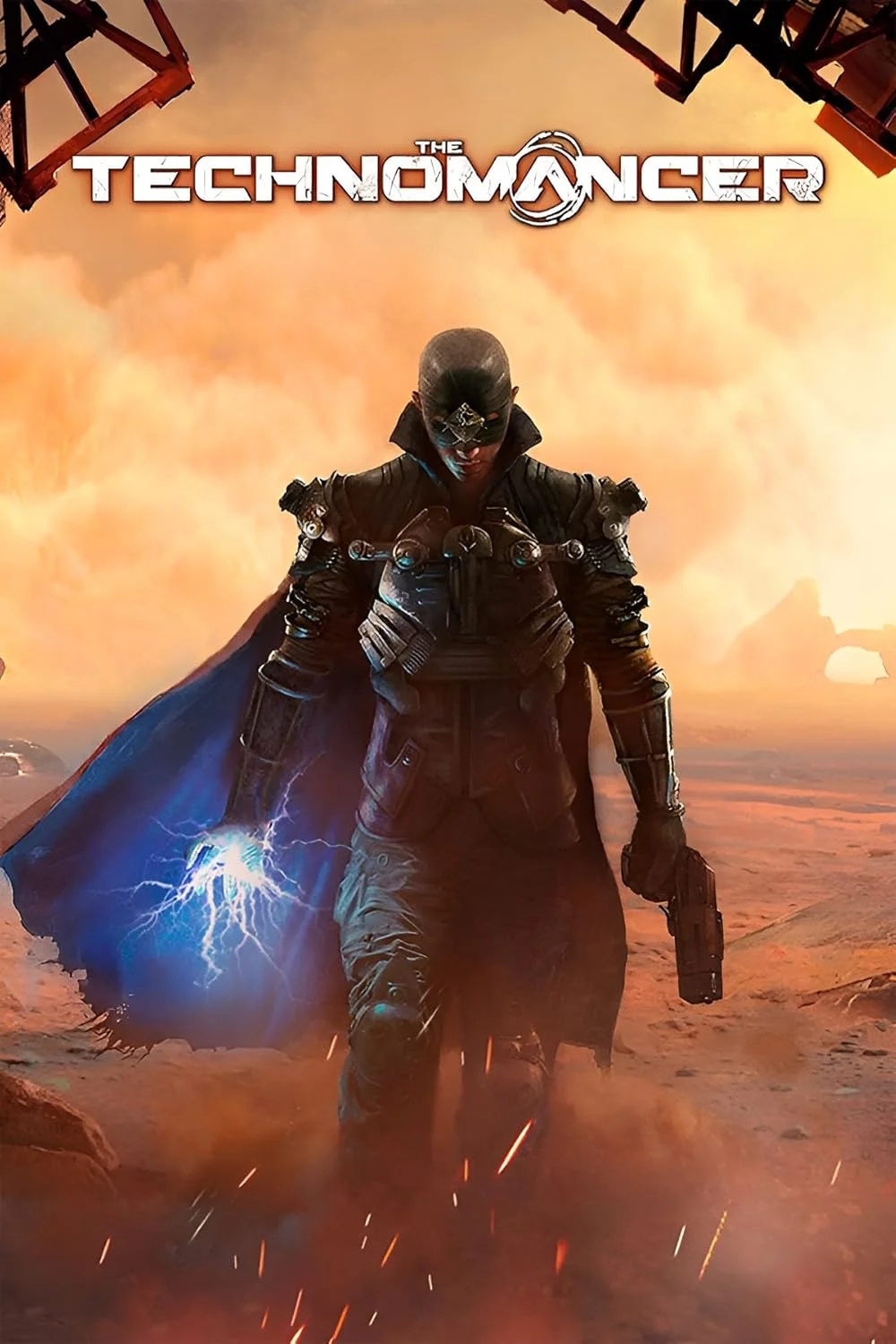
The Technomancer
This combination provides smooth gameplay with an average of 63 FPS, suitable for most gaming scenarios.
Average FPS: resolution vs quality settings
| Ultra | High | Medium | Low | |
|---|---|---|---|---|
| 4K Ultra HD | 25 | 28 | 34 | 45 |
| 1440p QHD | 41 | 54 | 66 | 82 |
| 1080p Full HD | 67 | 87 | 100 | 133 |
Cell color: green is 120+ FPS, teal is 60+, amber is 30+, red is below 30.
The Technomancer with Intel Core i7-13700K + NVIDIA GeForce RTX 2060, In-Depth Analysis
The Intel Core i7-13700K paired with the NVIDIA GeForce RTX 2060 produces a playable but heavily GPU-limited experience in The Technomancer, with the CPU's substantial multi-threading capability providing headroom that the graphics card cannot fully utilize at higher settings. This combination ranks in the 1379th position out of 1656 tested combos, placing it in the lower third of the database. The benchmark data indicates that this system is best suited for 1080p gameplay, where it achieves consistently high frame rates, but struggles to maintain fluid motion at 4K resolution with demanding presets.
CPU Role
The Intel Core i7-13700K is a 16-core, 24-thread processor based on the Raptor Lake architecture, with a base clock of 3.40 GHz and a boost clock of 5.40 GHz. Its benchmark results show a multi-core Cinebench R23 score of 39,000 and a single-core score of 5,505, placing it in the 93rd percentile of all CPUs tested. The processor's 30 MB of shared L3 cache and 2 MB per-core L2 cache provide ample bandwidth for game logic and physics calculations.
In The Technomancer, the CPU's high single-thread performance is more relevant than its multi-core prowess, as the action RPG genre typically does not scale perfectly across 24 threads. The 3DMark single-thread score of 1,136 and 2-thread score of 2,262 suggest that the processor can easily feed the GPU with draw calls and AI updates. However, the measured frame rates show that the RTX 2060 becomes the limiting factor well before the CPU's capabilities are stressed. At 1080p Low settings, the system achieves 132.9 FPS, which is likely near the upper limit of what this GPU can output in this title, while the CPU sits idle waiting for the next frame to render.
Settings Recommendations
The optimal experience for this combination is achieved at High settings, which provides the best balance between visual fidelity and frame rate. At 1080p High, the system delivers 86.7 FPS, which is smooth for an action RPG and maintains the game's visual details without the performance penalty of Ultra settings. The data shows that dropping from High to Medium at 1080p only yields a modest improvement to 100.4 FPS, while Low settings jump to 132.9 FPS but sacrifice significant graphical quality.
At 1440p, High settings remain the recommended choice, producing 53.6 FPS which is acceptable for a slower-paced RPG. The Ultra preset at 1440p drops to 41.4 FPS, which begins to feel sluggish during combat sequences. For players who prioritize frame rate over visual fidelity, Medium at 1440p offers 66.1 FPS and represents a reasonable compromise. At 4K resolution, no setting provides an ideal experience, with High achieving only 27.8 FPS and even Low struggling to reach 45 FPS, making 4K impractical for this hardware combination.
Resolution Scaling
The frame rate drop from 1080p to 4K clearly demonstrates the GPU-bound nature of this system. At High settings, the average FPS falls from 86.7 at 1080p to 53.6 at 1440p, a decrease of 38.2%, and then to 27.8 at 4K, representing a further 48.1% drop from 1440p. This scaling pattern is characteristic of a graphics card that is saturated with pixel work, as the CPU's performance headroom remains constant across resolutions.
The Low settings row provides the clearest evidence of GPU limitation. At 1080p Low, the system produces 132.9 FPS, but this falls to 82 FPS at 1440p and 45 FPS at 4K. The 1080p Low result is likely close to the CPU's maximum frame delivery capability in this game, but the rapid decline at higher resolutions indicates that the RTX 2060's shading units and memory bandwidth are the primary constraints. The GPU's 192-bit memory bus and 336.0 GB/s bandwidth become increasingly taxed as pixel count rises, explaining why the 4K numbers remain below 30 FPS even on the lowest preset.
How This Combo Ranks
This combination ranks 1379th out of 1656 tested combos, placing it in the 17th percentile of all tested systems for The Technomancer. The ranking reflects the RTX 2060's mid-range position in the GPU hierarchy, as the CPU is among the fastest available. The Intel Core i7-13700K's nearest rivals include the Core i7-13700KF with a delta of -0.1%, the AMD EPYC 4364P at +0.3%, and the Core i9-12900F at +0.4%, all of which are statistically negligible differences in synthetic benchmarks.
The GPU's nearest rivals show similar clustering, with the AMD Radeon RX 7600S at +0.5% and the AMD Radeon Pro 5600M at -1.7%. This tight grouping suggests that the RTX 2060 is well-positioned among its contemporaries, but the overall combo ranking is dragged down by the GPU's 58th percentile standing among all GPUs. In a game like The Technomancer that appears to favor GPU throughput, the 16-core CPU's advantages have minimal impact on the final ranking.
GPU Role
The NVIDIA GeForce RTX 2060 is built on the Turing architecture with 1,920 shading units, 30 RT cores, and 240 tensor cores. Its base clock of 1,365 MHz boosts to 1,680 MHz, and it features 6 GB of GDDR6 memory on a 192-bit bus, delivering 336.0 GB/s of bandwidth. The GPU's 6.451 TFLOPS of FP32 performance and 201.6 GTexel/s texture rate are modest by modern standards, and the 58th percentile ranking reflects its mid-range status.
The Technomancer's performance data shows that the RTX 2060's 6 GB VRAM capacity is sufficient at 1080p and 1440p, where textures fit comfortably within the memory pool. However, at 4K Ultra settings, the card produces only 25.1 FPS, indicating that both the shading units and memory bandwidth are overwhelmed. The GPU's DirectX 12 benchmark score of 53 in PassMark and DirectX 11 score of 110 suggest that the card handles this era of game engine well, but the 80.64 GPixel/s pixel rate becomes a bottleneck at higher resolutions. The 12 nm process node results in a 160 W TDP, which is reasonable for the performance delivered, but the card's age shows in the 4K results.
FAQ
Q: Can this system run The Technomancer at 4K?
A: Technically yes, but not comfortably. At 4K High settings, the average frame rate is 27.8 FPS, which is below the generally accepted threshold for smooth gameplay. Even at 4K Low, the system only reaches 45 FPS, so 4K is not recommended for this combination.
Q: What is the best resolution for this CPU and GPU combo?
A: The data indicates that 1080p is the optimal resolution, where High settings deliver 86.7 FPS and Ultra maintains 67.1 FPS. At 1440p, High settings provide a playable 53.6 FPS, but the system is clearly more comfortable at 1080p.
Q: How does the CPU compare to its closest rivals in synthetic benchmarks?
A: The Intel Core i7-13700K has an average benchmark score of 47,282, which is nearly identical to the Core i7-13700KF at 47,334 (-0.1% delta). The AMD EPYC 4364P scores 47,131 (+0.3%) and the Core i9-12900F scores 47,081 (+0.4%), all within a negligible margin.
Q: Is the RTX 2060 the limiting factor in this system?
A: Yes, the benchmark results clearly show GPU limitation. The frame rate drops dramatically when moving from 1080p to 4K, while the CPU's 93rd percentile ranking suggests it has ample headroom. The GPU's 58th percentile ranking is the primary constraint on performance.
Q: What settings provide the best experience at 1440p?
A: High settings at 1440p produce 53.6 FPS, which is the best balance of visual quality and performance. Medium settings increase the frame rate to 66.1 FPS, but the visual downgrade may not be worth the 23% improvement for a slower-paced RPG.
Q: How does the GPU compare to its nearest rivals?
A: The RTX 2060 has an average benchmark score of 16,074, which is slightly below the AMD Radeon Pro 5600M and Pro 5700 at 16,351 (-1.7% delta). It outperforms the AMD Radeon RX 7600S at 15,996 (+0.5%) and the AMD Radeon Pro W5500 at 15,786 (+1.8%).
Measured FPS Breakdown
1080p Resolution:
- Low settings: 132.9 FPS average
- Medium settings: 100.4 FPS average
- High settings: 86.7 FPS average
- Ultra settings: 67.1 FPS average
1440p Resolution:
- Low settings: 82 FPS average
- Medium settings: 66.1 FPS average
- High settings: 53.6 FPS average
- Ultra settings: 41.4 FPS average
4K Resolution:
- Low settings: 45 FPS average
- Medium settings: 33.6 FPS average
- High settings: 27.8 FPS average
- Ultra settings: 25.1 FPS average
The frame rate scaling across resolutions follows a consistent pattern, with the 1080p Low result of 132.9 FPS representing the system's peak performance. Each resolution increase roughly halves the frame rate at equivalent settings, confirming that the RTX 2060's 6 GB memory pool and 336.0 GB/s bandwidth are the determining factors. The gap between High and Ultra settings narrows at higher resolutions, suggesting that the GPU's compute resources are fully saturated before the visual quality difference becomes significant.
Hardware Specifications
Intel Core i7-13700K
NVIDIA GeForce RTX 2060
FPS Benchmarks by Resolution & Settings
Performance data for Intel Core i7-13700K + NVIDIA GeForce RTX 2060 in The Technomancer
| Resolution | Settings | Avg FPS |
|---|---|---|
| 3840x2160 | Low | 45.0 |
| 3840x2160 | Medium | 33.6 |
| 3840x2160 | High | 27.8 |
| 3840x2160 | Ultra | 25.1 |
| 2560x1440 | Low | 82.0 |
| 2560x1440 | Medium | 66.1 |
| 2560x1440 | High | 53.6 |
| 2560x1440 | Ultra | 41.4 |
| 1920x1080 | Low | 132.9 |
| 1920x1080 | Medium | 100.4 |
| 1920x1080 | High | 86.7 |
| 1920x1080 | Ultra | 67.1 |
The Technomancer with ii7-13700K + Other GPUs
See how The Technomancer performs with the same CPU but different graphics cards.
The Technomancer with RTX 2060 + Other CPUs
See how The Technomancer performs with the same GPU but different processors.
Other Games with ii7-13700K + RTX 2060
Explore FPS benchmarks for other games using this same hardware combination.