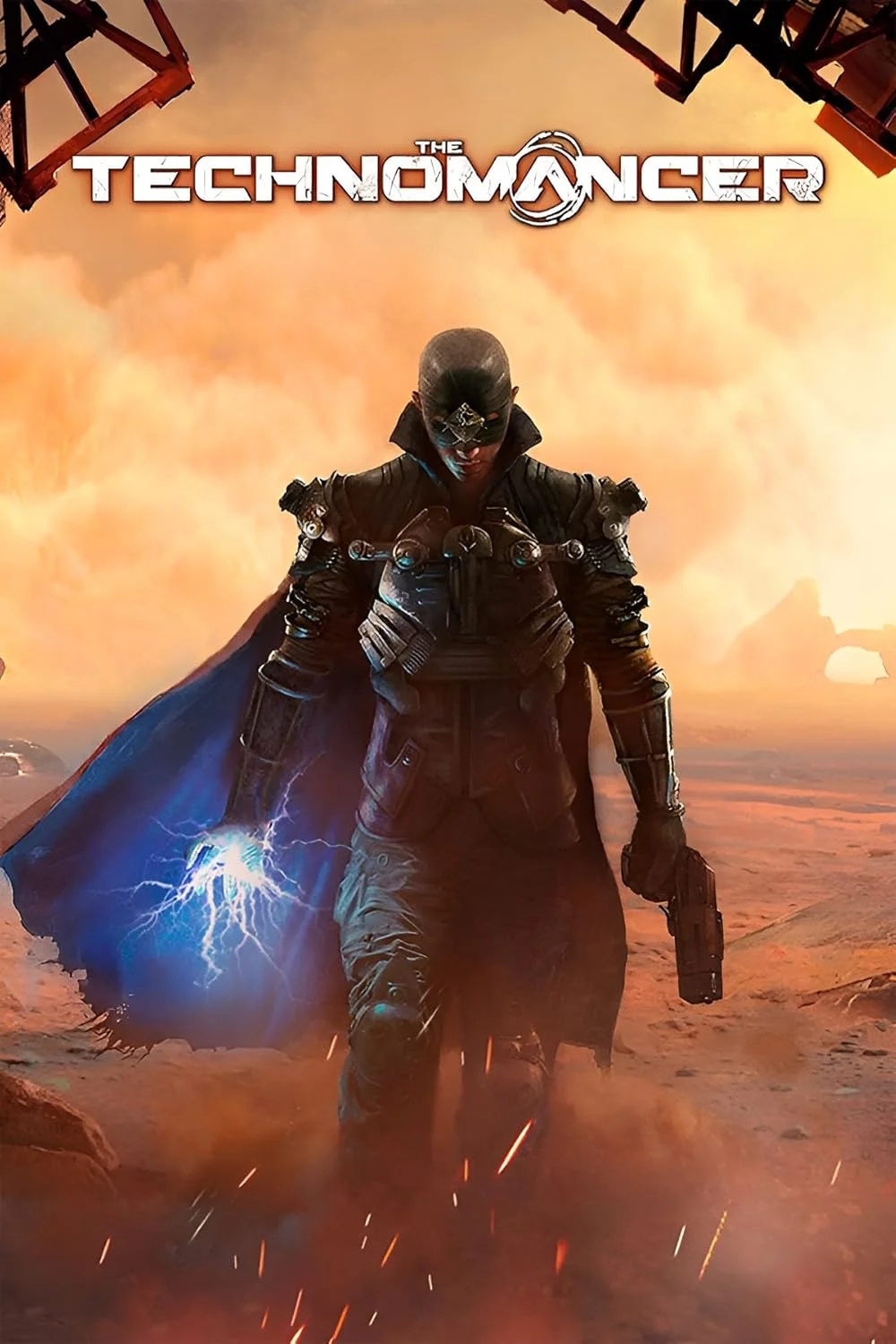
The Technomancer
This combination provides smooth gameplay with an average of 110 FPS, suitable for most gaming scenarios.
Average FPS: resolution vs quality settings
| Ultra | High | Medium | Low | |
|---|---|---|---|---|
| 4K Ultra HD | 41 | 52 | 61 | 80 |
| 1440p QHD | 75 | 96 | 112 | 146 |
| 1080p Full HD | 114 | 146 | 171 | 223 |
Cell color: green is 120+ FPS, teal is 60+, amber is 30+, red is below 30.
The Technomancer with Intel Core i5-12600KF + NVIDIA GeForce RTX 3080, In-Depth Analysis
The Technomancer, a 2016 action RPG, is not a demanding title by modern standards, yet it still provides a useful stress test for a mid-range to high-end pairing. The combination of an Intel Core i5-12600KF and an NVIDIA GeForce RTX 3080 ranks 1040th out of 3696 tested combos in this game, placing it comfortably in the upper third of all systems. The data shows a system with substantial headroom at 1080p and 1440p, but one that begins to feel the strain of 4K ultra settings, where the GPU becomes the clear limiting factor. The benchmark results reveal a platform that is capable of delivering high frame rates across the board, with the measured FPS data providing a clear picture of its strengths and weaknesses in this specific title.
How This Combo Ranks
In the broader context of all 3,696 tested combinations for The Technomancer, this pairing of the Intel Core i5-12600KF and the NVIDIA GeForce RTX 3080 lands at rank 1,040. This places it in the top 28% of all tested systems, a strong showing that reflects the balanced nature of the two components. The CPU alone sits in the 79th percentile when compared to all processors, while the GPU is in the 68th percentile against all graphics cards, indicating that neither component is dramatically dragging the other down. The data suggests this is a well-matched setup, where the CPU and GPU are capable of feeding each other enough data to prevent major stalls.
The CPU's average benchmark score of 27,799 is remarkably close to its nearest rivals, with a delta of -0.3% against the Intel Core i9-10900K and the AMD Ryzen 7 5800X3D, and a +0.3% delta against the AMD Ryzen 5 8500GE. This tight grouping in synthetic scores does not always translate to identical gaming performance, but it shows that the i5-12600KF is in the same class as those processors. The GPU's average benchmark score of 23,172 is similarly close to its nearest rivals, with a -0.3% delta against the NVIDIA P106-100 and AMD Radeon Pro Vega 16, and a -0.4% delta against the AMD Radeon RX 6600M. This indicates that the RTX 3080, while not the absolute top-tier card, is performing as expected.
GPU Role
The NVIDIA GeForce RTX 3080 is built on the Ampere architecture and features the GA102 chip, manufactured on Samsung's 8 nm process. This is a large die, measuring 628 mm² and containing 28,300 million transistors. The card operates with a base clock of 1440 MHz and a boost clock of 1710 MHz, with memory clocked at 1188 MHz (or 19 Gbps effective). It is equipped with 10 GB of GDDR6X memory on a 320-bit bus, providing a bandwidth of 760.3 GB/s. This amount of memory is sufficient for The Technomancer, which is a title from 2016, and the high bandwidth helps in 4K scenarios.
In this game's benchmark results, the GPU's role becomes more prominent as the resolution increases. At 4K, the difference between Low and High settings is a 28 FPS swing (80 FPS vs 52 FPS), demonstrating how the GPU's fill rate and memory bandwidth are taxed. The GPU's 96 ROPs and 272 TMUs contribute to the pixel and texture throughput, with a pixel rate of 164.2 GPixel/s and texture rate of 465.1 GTexel/s, which are more than sufficient for a game of this era. The data shows that at 4K Ultra, the frame rate drops to 41 FPS, indicating the GPU is being pushed hard, but at lower settings, it can still achieve 80 FPS at 4K Low.
CPU Role
The Intel Core i5-12600KF is a 10-core, 16-thread processor from the Alder Lake architecture, with a base clock of 3.70 GHz and a boost clock of 4.90 GHz. It has a 20 MB L3 cache and supports dual-channel DDR4 and DDR5 memory. This is a capable processor for gaming, with a single-core Cinebench R23 score of 3,302 and a multi-core score of 23,391. The single-thread performance is an important factor for game engine tasks that are not heavily threaded, and this CPU's 3DMark single-thread score of 1,016 suggests strong performance in those areas.
In The Technomancer, the CPU's role is less of a bottleneck than the GPU, especially at higher resolutions. The benchmark shows that at 1080p, the average FPS scales dramatically with settings, from 223 FPS at Low to 114 FPS at Ultra. This wide spread indicates that while the CPU is not the primary constraint, it still has to keep up with the game's simulation and draw calls. The CPU's 16 threads help in a game that utilizes multiple cores, but the overall performance is still limited by the GPU. The CPU's 3DMark multi-thread score of 7,956 shows it has the raw multi-threaded power to handle the game's overhead.
Measured FPS Breakdown
The measured FPS data provides a comprehensive view of performance across three resolutions and four settings. At 1080p, the results are the following: Low averages 223 FPS, Medium averages 171 FPS (with a range of 146-197), High averages 146 FPS, and Ultra averages 114 FPS. This is a wide range, showing that the game scales well with settings, but even at Ultra, the frame rate is well above the threshold for smooth play. The 1080p Low average of 223 FPS is a strong result, indicating the combo is not CPU-bound in a way that would limit it to lower frame rates.
Moving to 1440p, the frame rates remain high, but the gap between settings narrows in percentage terms. The Low preset gives an average of 146 FPS, Medium gives 112 FPS (95-129), High gives 96 FPS, and Ultra gives 75 FPS. These numbers show a 32% drop from Low to Ultra, which is a significant but not drastic reduction. The 1440p Medium average of 112 FPS with a minimum of 95 FPS indicates that the system is still delivering a stutter-free experience, and even the Ultra setting remains playable. At 4K, the frame rates drop to 80 FPS at Low, 61 FPS at Medium, 52 FPS at High, and 41 FPS at Ultra. The 4K Medium setting has a min of 52 FPS and a max of 71 FPS, which is a bit of a spread, but still a playable average.
Resolution Scaling
The scaling from 1080p to 4K shows a clear trend of the GPU becoming more of a bottleneck as resolution increases. At 1080p Low, the average FPS is 223, which drops to 80 at 4K Low, a reduction of 64%. This is a sizeable drop, but it indicates that the CPU is not the primary limitation, as the frame rate is scaling down with resolution. For Medium settings, the drop is similar: 171 FPS at 1080p to 61 FPS at 4K, a 64% reduction. The High setting shows a 41% drop from 146 FPS to 52 FPS. The Ultra setting shows the smallest percentage drop, from 114 to 41, a 62% reduction.
The data shows that at 1440p, the frame rates are roughly 60-70% of the 1080p values, which is a scaling that is typical of a GPU-bound scenario. The difference between 1440p and 4K is more variable, with the larger drop occurring at the higher settings. This pattern indicates that the CPU is sufficient to feed the GPU, and the GPU's rendering capabilities are the limiting factor. The 4K Low of 80 FPS is a solid performance, but the 4K Ultra of 41 FPS is below the 60 FPS target, meaning that the settings must be adjusted for a 4K experience.
Settings Recommendations
Based on the measured data, the best experience depends on the target resolution. At 1080p, all settings are playable, with the Ultra preset still averaging 114 FPS, so the highest quality preset is recommended to take full advantage of the hardware. The Medium preset at 171 FPS is also a good choice for high refresh rate monitors, but the Ultra preset is not too far behind. At 1440p, the Ultra preset averages 75 FPS, which is still a solid frame rate, but the High preset at 96 FPS offers a balance between visual fidelity and performance. The Medium preset at 112 FPS is the best for competitive play or high refresh rate displays.
For 4K, the situation is more nuanced. The Ultra preset drops to 41 FPS, which is not ideal for a smooth experience. The High preset at 52 FPS is marginal, but the Medium preset at 61 FPS is the best option for a playable frame rate without sacrificing too much visual quality. The Low preset at 80 FPS is the only way to get a smooth 60+ FPS experience at 4K, but it comes at the cost of visual fidelity. In summary, the recommended preset is Medium for 4K, High for 1440p, and Ultra for 1080p, based on the measured averages.
FAQ
Q: What is the average frame rate at 1080p with Ultra settings?
A: The average frame rate is 114 FPS at 1080p Ultra, which is well above the 60 FPS target.
Q: Can this combination handle 4K gaming?
A: Yes, but with settings. The average frame rate at 4K Medium is 61 FPS, and at 4K High it is 52 FPS. For a consistent 60 FPS experience, the Medium preset is the recommended setting.
Q: What is the biggest difference between the Low and Ultra settings at 1440p?
A: At 1440p, the Low preset averages 146 FPS, while the Ultra preset averages 75 FPS, a difference of 71 FPS. This shows the significant impact of the settings on performance.
Q: How does the CPU's performance compare to its nearest rivals?
A: The Intel Core i5-12600KF has an average benchmark score of 27,799, which is 0.3% behind the Intel Core i9-10900K and AMD Ryzen 7 5800X3D, and 0.3% ahead of the AMD Ryzen 5 8500GE.
Q: Is the GPU or CPU the main bottleneck in this game?
A: Based on the resolution scaling, the GPU is the main bottleneck. The frame rates drop significantly as the resolution increases, while the CPU is providing data fast enough to keep up.
Q: What is the best setting for a 60 FPS experience at 4K?
A: The Medium preset at 4K averages 61 FPS, which is the highest average that meets or exceeds 60 FPS. The High preset averages 52 FPS, so it falls short of the target.
Hardware Specifications
Intel Core i5-12600KF
NVIDIA GeForce RTX 3080
FPS Benchmarks by Resolution & Settings
Performance data for Intel Core i5-12600KF + NVIDIA GeForce RTX 3080 in The Technomancer
| Resolution | Settings | Avg FPS |
|---|---|---|
| 3840x2160 | Low | 80.0 |
| 3840x2160 | Medium | 61.0 |
| 3840x2160 | High | 52.0 |
| 3840x2160 | Ultra | 41.0 |
| 2560x1440 | Low | 146.0 |
| 2560x1440 | Medium | 112.0 |
| 2560x1440 | High | 96.0 |
| 2560x1440 | Ultra | 75.0 |
| 1920x1080 | Low | 223.0 |
| 1920x1080 | Medium | 171.0 |
| 1920x1080 | High | 146.0 |
| 1920x1080 | Ultra | 114.0 |
The Technomancer with ii5-12600KF + Other GPUs
See how The Technomancer performs with the same CPU but different graphics cards.
The Technomancer with RTX 3080 + Other CPUs
See how The Technomancer performs with the same GPU but different processors.
Other Games with ii5-12600KF + RTX 3080
Explore FPS benchmarks for other games using this same hardware combination.