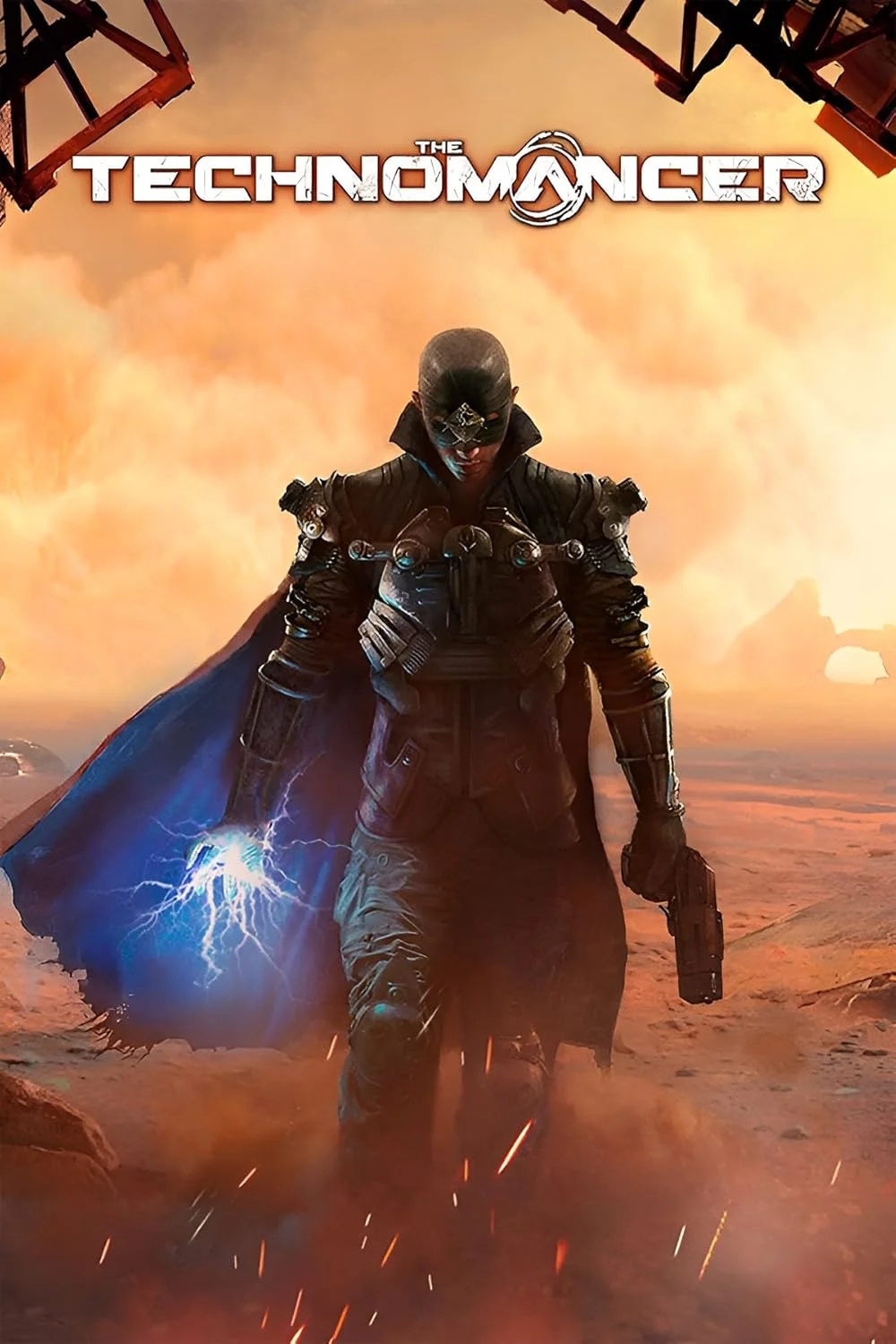
The Technomancer
This combination delivers exceptional performance with an average of 120 FPS, perfect for high refresh rate gaming and competitive play.
Average FPS: resolution vs quality settings
| Ultra | High | Medium | Low | |
|---|---|---|---|---|
| 4K Ultra HD | 46 | 59 | 69 | 89 |
| 1440p QHD | 83 | 107 | 125 | 162 |
| 1080p Full HD | 127 | 163 | 191 | 214 |
Cell color: green is 120+ FPS, teal is 60+, amber is 30+, red is below 30.
The Technomancer with Intel Core i5-11400F + NVIDIA GeForce RTX 5070, In-Depth Analysis
The Technomancer, a 2016 Action RPG, presents an interesting test for the Intel Core i5-11400F and NVIDIA GeForce RTX 5070 pairing. This combination delivers a wide range of frame rates that are heavily dependent on the graphics settings and resolution chosen. The data reveals a system capable of high refresh rate gaming at lower resolutions but one that requires careful settings management to achieve smooth performance at 4K. This analysis will break down the measured performance to guide you on how to best configure this setup for this specific title.
Resolution Scaling
The performance drop from 1080p to 4K is substantial and clearly illustrates where the bottleneck lies. At 1080p with High settings, the combo produces 163 FPS, but this falls to 107 FPS at 1440p and further to just 59 FPS at 4K. This represents a 64% reduction in frame rate from 1080p to 4K, a scaling factor that points directly at the graphics card as the primary limiting component. The RTX 5070 is working progressively harder as pixel count increases, and the strain becomes evident at the higher resolutions.
The scaling pattern is consistent across all settings. With Low settings, the frame rate drops from 214 FPS at 1080p to 162 FPS at 1440p and then to 89 FPS at 4K. The drop from 1440p to 4K is a 45% reduction, showing that the GPU's rendering workload is not linear with resolution. The RTX 5070's 12 GB of GDDR7 memory and 672.0 GB/s of bandwidth are being taxed, and the data suggests that for a 60 FPS experience at 4K, you must be selective with the quality preset.
The transition from 1440p to 1080p shows a more moderate improvement, indicating that the CPU is beginning to play a larger role. For instance, at High settings, the jump from 1440p to 1080p yields a 52% increase in frame rate (from 107 to 163 FPS). This suggests that while the GPU is still the main driver of performance, the Intel Core i5-11400F can start to limit the maximum frame rate at lower resolutions where the GPU can produce frames more quickly.
The measured data shows that the delta between Low and Ultra settings widens as resolution decreases. At 4K, the gap between Low and Ultra is 43 FPS (89 vs. 46), but at 1080p, that gap expands to 87 FPS (214 vs. 127). This is a classic sign of GPU-bound behavior at high resolutions, where the graphics card is the sole constraint, and CPU-bound behavior at low resolutions, where the processor's limits become more apparent.
GPU Role
The NVIDIA GeForce RTX 5070 is the clear workhorse in this pairing for The Technomancer. Its performance, as measured by the average FPS, scales predictably with the workload imposed by the game's settings and resolution. The card's 12 GB of VRAM is sufficient for this title, as the data does not show any anomalies that would suggest memory capacity is a limiting factor even at 4K Ultra.
The RTX 5070's clock speeds of 2325 MHz base and 2512 MHz boost, combined with its 6144 shading units, are the core components driving these numbers. The card's 30.87 TFLOPS of FP32 performance is being fully utilized at 4K, where it achieves a 59 FPS average on High settings. This indicates that the GPU is performing admirably for a title from this era, but the demands of 4K Ultra at 46 FPS show that the card is not over-provisioned for the most demanding presets.
The GPU's memory bandwidth of 672.0 GB/s is a critical factor at higher resolutions. The measured results show that at 4K, the frame rate is highly sensitive to changes in settings, with a 13 FPS difference between Medium and High and a 13 FPS difference between High and Ultra. This sensitivity suggests that the card's memory subsystem and processing power are being pushed to their limits, and every incremental increase in graphical fidelity has a measurable impact.
Looking at the GPU's benchmark scores, its Passmark G3D score of 29137 and its 82nd percentile ranking among all GPUs indicate a high-performance part. However, the in-game data for The Technomancer shows a more nuanced picture. While the card is capable of high frame rates, the game's engine appears to place a heavy load on the GPU at higher resolutions, confirming that the RTX 5070 is the component that dictates the overall experience in this title.
How This Combo Ranks
This specific combination of the Intel Core i5-11400F and NVIDIA GeForce RTX 5070 ranks 794th out of 3696 tested combos for this game. This places the system in the top 21.5% of all configurations tested, which is a strong showing. The rank reflects the balance between the CPU and GPU, and the data suggests that while the RTX 5070 is a powerful card, the i5-11400F is a capable but not top-tier partner for it in this context.
The CPU's performance benchmarks help contextualize this ranking. The i5-11400F has an average benchmark score of 17177 and sits in the 71st percentile of all CPUs. Its nearest rivals, such as the AMD EPYC 7H12 and the Intel Core i5-12450H, have nearly identical average scores, with delta percentages of 0.3% and -0.4% respectively. This indicates that the i5-11400F is a solid mid-range performer, but it is not in the same performance class as the high-end CPUs that might be paired with an RTX 5070 in other systems.
The combo's rank of 794 suggests that many other tested combinations, likely those with more powerful processors, are able to achieve higher frame rates, particularly at lower resolutions. The data shows that at 1080p Low, the system hits 214 FPS, which is a very high number. However, a system with a higher-ranked CPU might push this even further, demonstrating that the CPU can be a limiting factor in this specific scenario despite the GPU's capabilities.
In practical terms, this ranking means the system is well above average for gaming, but it is not at the absolute top tier. The performance is more than adequate for a smooth experience at 1440p, and it can handle 4K with some settings adjustments. The ranking is a useful metric for understanding the system's overall potential, but the resolution-specific FPS data provides a more actionable guide for tuning the game.
Settings Recommendations
Based on the measured FPS data, the optimal settings for this combo depend heavily on your target resolution and refresh rate. For a 60 FPS target, the data shows that 4K High is the most demanding setting that can be used, achieving an average of 59 FPS. If you have a 60Hz 4K display, this is the recommended starting point, as it delivers the best visual quality while maintaining playable frame rates.
At 1440p, the system has more headroom. The High preset achieves 107 FPS, which is ideal for a 100Hz+ monitor. If you want to maximize visual fidelity, the Ultra preset at 83 FPS is still above the 60 FPS threshold and provides a smoother experience than the 4K High setting. For competitive play on a high-refresh-rate 1440p monitor, the Medium preset at 125 FPS offers a good balance, while Low at 162 FPS will fully utilize a 144Hz display.
For 1080p, the system is exceptionally capable. The Ultra preset at 127 FPS will satisfy most gamers, while the High preset at 163 FPS is perfect for 144Hz monitors. The Medium preset at 191 FPS and Low at 214 FPS are for those with 200Hz+ displays, but the visual trade-offs may not be worth it for a game like The Technomancer. The data suggests that High is the sweet spot for 1080p, offering a significant visual upgrade over Medium with only a 28 FPS penalty.
The measured minimum FPS values provide additional insight. At 4K Medium, the minimum FPS is 58, which is just below the 60 FPS target. At 1440p Medium, the minimum is 106 FPS, and at 1080p Medium, it is 162 FPS. These minimums indicate that frame pacing is generally stable and that the average FPS figures are representative of the actual experience. For the most stable 60 FPS experience at 4K, High settings are the safest bet, as the 59 FPS average is close to the line, and the unlisted minimum for High could potentially dip below 60.
Measured FPS Breakdown
The following is the complete set of measured data for this configuration in The Technomancer.
At 3840x2160 (4K), the performance is as follows:
- Low Settings: 89 FPS average.
- Medium Settings: 69 FPS average, with a minimum of 58 FPS and a maximum of 79 FPS.
- High Settings: 59 FPS average.
- Ultra Settings: 46 FPS average.
At 2560x1440 (1440p), the performance is significantly higher:
- Low Settings: 162 FPS average.
- Medium Settings: 125 FPS average, with a minimum of 106 FPS and a maximum of 143 FPS.
- High Settings: 107 FPS average.
- Ultra Settings: 83 FPS average.
At 1920x1080 (1080p), the system reaches its highest frame rates:
- Low Settings: 214 FPS average.
- Medium Settings: 191 FPS average, with a minimum of 162 FPS and a maximum of 220 FPS.
- High Settings: 163 FPS average.
- Ultra Settings: 127 FPS average.
This data shows a clear performance hierarchy. The jump from 4K to 1440p provides a substantial frame rate boost across all settings, making 1440p the sweet spot for this hardware. The 1080p results are exceptionally high, confirming that the system is not CPU-bound at this resolution for most settings, except perhaps for the Low preset where the 214 FPS average is approaching the limits of what the i5-11400F can deliver.
CPU Role
The Intel Core i5-11400F with its 6 cores and 12 threads plays a supporting role in this configuration for The Technomancer. Its base clock of 2.60 GHz and boost clock of 4.40 GHz are sufficient to keep up with the RTX 5070 in most scenarios, but the data reveals its limitations at lower resolutions. The CPU's 12 MB of shared L3 cache is a key resource for gaming, and its performance in the Cinebench R23 multi-core test (14340 points) and single-core test (2024 points) demonstrates its capability.
The CPU's bottleneck becomes apparent when examining the frame rate scaling at 1080p. While the GPU is clearly the dominant factor at 4K and 1440p, the difference between the High (163 FPS) and Low (214 FPS) presets at 1080p shows that the CPU can influence the maximum achievable frame rate. In less demanding scenes, the i5-11400F may not be able to feed the RTX 5070 data fast enough to reach its full potential, preventing the system from hitting even higher frame rates at the Low preset.
The CPU's benchmark scores, such as its Passmark multi-thread score of 16908 and its 3DMark single-thread score of 868, place it as a competent processor. However, its nearest rivals, including the AMD Ryzen 3 PRO 8300G and Intel Core Ultra 7 164U, show that it is not at the top of the performance stack. The 0.3% delta from the AMD EPYC 7H12 and the -0.4% delta from the Intel Core i5-12450H indicate that the i5-11400F is competitive with other mid-range and even some higher-end processors.
In The Technomancer, the CPU's role is to ensure a consistent frame pacing and prevent stutters. The measured minimum FPS values at Medium settings, such as 162 FPS at 1080p and 106 FPS at 1440p, are high and suggest that the CPU is maintaining a steady stream of frames. The pairing works well, but the data indicates that for a system with an RTX 5070, the i5-11400F is a balanced choice that will not hold back performance at 4K or 1440p, but may be the limiting factor for a 240Hz 1080p display. The system's overall 794th rank out of 3696 combos reflects this balance; it is a capable setup, but one where the CPU is the more modest component.
Hardware Specifications
Intel Core i5-11400F
NVIDIA GeForce RTX 5070
FPS Benchmarks by Resolution & Settings
Performance data for Intel Core i5-11400F + NVIDIA GeForce RTX 5070 in The Technomancer
| Resolution | Settings | Avg FPS |
|---|---|---|
| 3840x2160 | Low | 89.0 |
| 3840x2160 | Medium | 69.0 |
| 3840x2160 | High | 59.0 |
| 3840x2160 | Ultra | 46.0 |
| 2560x1440 | Low | 162.0 |
| 2560x1440 | Medium | 125.0 |
| 2560x1440 | High | 107.0 |
| 2560x1440 | Ultra | 83.0 |
| 1920x1080 | Low | 214.0 |
| 1920x1080 | Medium | 191.0 |
| 1920x1080 | High | 163.0 |
| 1920x1080 | Ultra | 127.0 |
The Technomancer with ii5-11400F + Other GPUs
See how The Technomancer performs with the same CPU but different graphics cards.
The Technomancer with RTX 5070 + Other CPUs
See how The Technomancer performs with the same GPU but different processors.
Other Games with ii5-11400F + RTX 5070
Explore FPS benchmarks for other games using this same hardware combination.