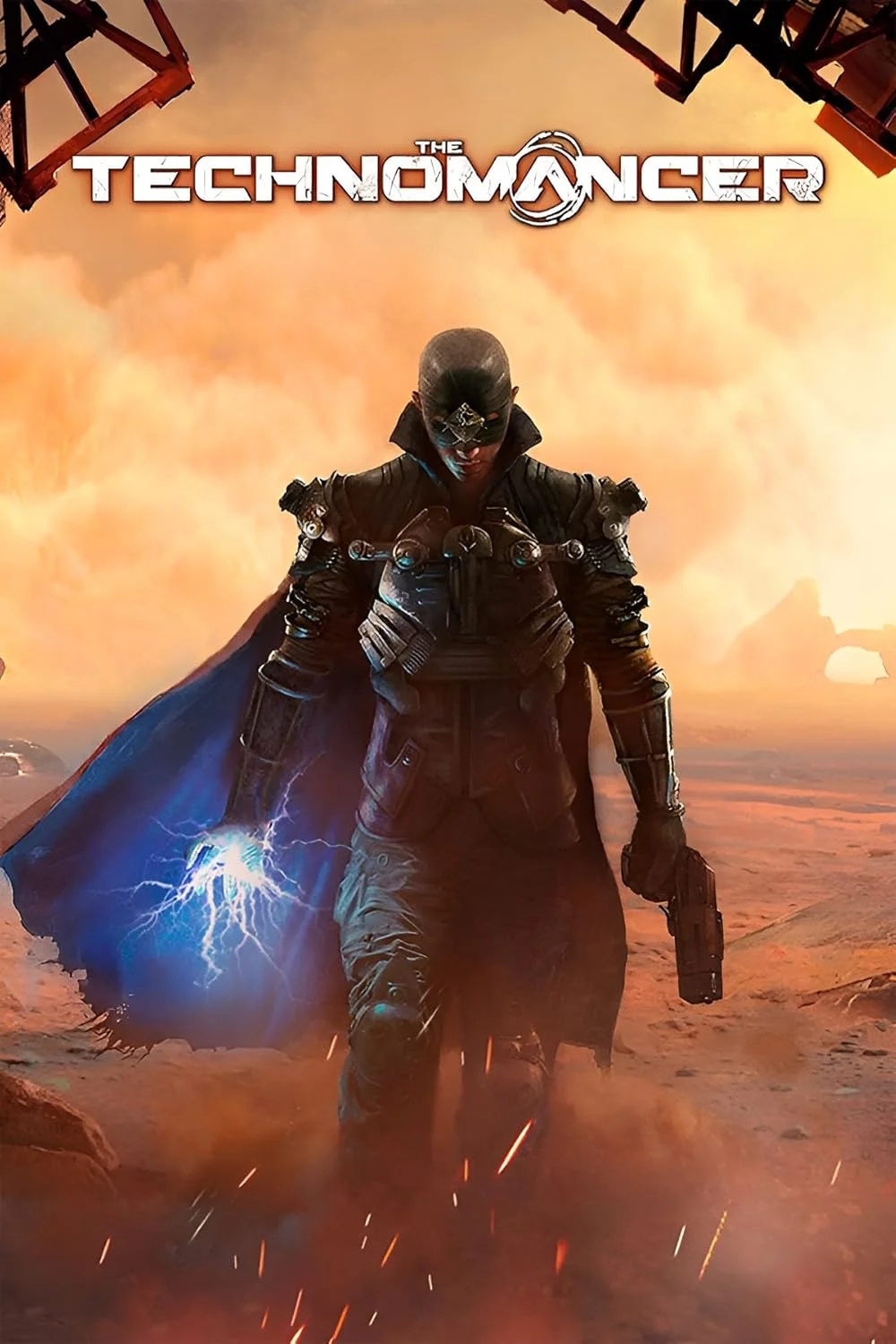
The Technomancer
This combination provides smooth gameplay with an average of 113 FPS, suitable for most gaming scenarios.
Average FPS: resolution vs quality settings
| Ultra | High | Medium | Low | |
|---|---|---|---|---|
| 4K Ultra HD | 40 | 51 | 64 | 84 |
| 1440p QHD | 79 | 99 | 119 | 154 |
| 1080p Full HD | 119 | 156 | 182 | 213 |
Cell color: green is 120+ FPS, teal is 60+, amber is 30+, red is below 30.
The Technomancer with Intel Core i5-11400F + NVIDIA GeForce RTX 4070, In-Depth Analysis
The Technomancer, a 2016 Action RPG, presents an interesting scalability challenge for the Intel Core i5-11400F paired with the NVIDIA GeForce RTX 4070. The measured data reveals a configuration that is heavily influenced by resolution and preset selection, with performance ranging from highly playable at 1080p to demanding at 4K. This analysis breaks down the measured FPS rows to interpret how this specific CPU-GPU pairing behaves across the tested settings.
Resolution Scaling
The transition from 1080p to 4K exposes a classic shift in system bottleneck. At 1920x1080, the average FPS across all settings is exceptionally high, indicating that the NVIDIA GeForce RTX 4070 is not being fully utilized. The gap between Low and Ultra settings at 1080p is substantial, with a difference of 94.5 FPS (213.1 down to 118.6). This wide spread suggests that at this resolution, the CPU is capable of feeding frames far faster than the GPU can render them at higher quality settings, but the GPU still has headroom to spare even on Ultra.
Moving to 2560x1440, the overall FPS drops are significant but the system remains fluid. The Low preset at 1440p achieves 153.6 FPS, while Ultra drops to 78.6 FPS. The scaling from 1080p Low to 1440p Low shows a 27.9% reduction in frame rate, which is a typical cost for the increased pixel count. More telling is the behavior at 4K, where the RTX 4070 begins to show its limits. At 3840x2160, the Low preset still manages a respectable 83.7 FPS, but the High preset falls to 51.4 FPS and Ultra drops to 39.6 FPS. This pattern indicates that at 4K, the GPU becomes the primary limiting component, as the frame rate deltas between presets compress compared to lower resolutions.
The data suggests that the sweet spot for this combination is 1440p, where the GPU can still flex its muscle without being bottlenecked by the CPU at lower settings or overwhelmed by pixel count at higher settings. The 1080p results are so high that they are likely beyond the refresh rate of most monitors, making the extra performance somewhat academic. The 4K results are playable on Low and Medium, but the drop to 39.6 FPS on Ultra shows a clear ceiling for this pairing at that resolution.
GPU Role
The NVIDIA GeForce RTX 4070, built on the Ada Lovelace architecture, brings 12 GB of GDDR6X memory and a 192-bit bus to the table. Its memory bandwidth of 504.2 GB/s is a critical factor in the 4K results, where texture data demands are highest. The GPU’s boost clock of 2475 MHz and its 5888 shading units are the primary drivers of the raw frame rates seen in the measured data. The benchmark results place this GPU in the 81st percentile of all GPUs, with an average benchmark score of 37283, which is consistent with its strong performance in this game.
The RTX 4070's role becomes more pronounced as resolution increases. At 1080p, the GPU is likely idling for significant portions of the frame time, waiting for the CPU to deliver draw calls. However, at 4K, the GPU's compute and memory subsystems are taxed heavily. The 12 GB VRAM capacity is not a limiting factor at any of the tested settings in The Technomancer, but the bandwidth is likely what separates the Low preset (83.7 FPS) from the Medium preset (64.2 FPS) at 4K. The GPU's performance relative to its nearest rivals shows it is closely matched with the AMD Radeon RX Vega 56, which has a deltaPct of -0.6%, and the NVIDIA GeForce MX570 A, at -1.9%. This suggests that while the RTX 4070 is a strong card, it is not in a performance class of its own in this title.
CPU Role
The Intel Core i5-11400F is a 6-core, 12-thread processor based on the Rocket Lake architecture. Its base clock of 2.60 GHz and boost clock of 4.40 GHz are sufficient to avoid becoming a severe bottleneck in most scenarios, as evidenced by the high frame rates at 1080p. The CPU's 12 MB of shared L3 cache and support for PCIe Gen 4 help feed the GPU quickly. Its average benchmark score of 17181 places it in the 75th percentile of all CPUs, which is respectable for a mid-range part.
The CPU's role is most apparent at 1080p with lower graphics settings. At 1080p Low, the system achieves 213.1 FPS, a figure that is likely limited by the CPU's single-thread performance. The passmark single-thread score of 2981 and the 3dmark single-thread score of 868 indicate that the processor can handle a high rate of draw calls, but it has a finite ceiling. As resolution increases, the CPU's workload relative to the GPU decreases, and the frame rate becomes more dependent on the GPU. The data shows that from 1080p Low to 1440p Low, the FPS drops by 59.5 FPS, which is a larger absolute drop than the move from 1440p Low to 4K Low (69.9 FPS). This indicates that the CPU is still a contributing factor at 1440p, but its influence wanes as the GPU takes over the primary rendering duties at 4K.
How This Combo Ranks
In the database of tested combinations for The Technomancer, this specific pairing of the Intel Core i5-11400F and the NVIDIA GeForce RTX 4070 ranks 483rd out of 1656 combos. This places it in the top 29.2% of all tested configurations, which is a strong showing for a mid-range CPU paired with a high-end GPU. The ranking suggests that while the combination is capable, there are many other pairings that achieve higher average frame rates across the tested matrix.
The CPU's nearest rivals, such as the AMD Ryzen 7 5700U and the Intel Core i7-1260P, have nearly identical average benchmark scores, with deltas of 0% and -0.2%, respectively. This indicates that the i5-11400F is not a performance outlier in either direction; it is a solid, predictable performer. The GPU's nearest rivals, including the AMD Radeon RX Vega 56 and the NVIDIA GeForce RTX 4080 Mobile, show small deltas (-0.6% and -2.2%), reinforcing that the RTX 4070 is a mainstream high-end part rather than a top-tier enthusiast offering. The combo's rank is therefore a result of the balanced, but not exceptional, performance of both components in The Technomancer.
Measured FPS Breakdown
At 1920x1080, the system delivers a wide range of performance. Low settings achieve an average of 213.1 FPS, which is the highest measured result in the entire dataset. Medium settings drop to 181.5 FPS, while High settings yield 155.6 FPS. Ultra settings at 1080p produce an average of 118.6 FPS. This shows a linear progression of performance cost as visual fidelity increases, with a 94.5 FPS difference between the lowest and highest presets.
Moving to 2560x1440, the averages are still high but begin to show the GPU's workload. Low settings at 1440p achieve 153.6 FPS, Medium drops to 118.6 FPS, High comes in at 99.2 FPS, and Ultra falls to 78.6 FPS. The relative drop from 1080p to 1440p is consistent across all settings, with approximately a 30-35% reduction in frame rate. At 3840x2160, the performance curve flattens considerably. Low settings at 4K yield 83.7 FPS, Medium drops to 64.2 FPS, High produces 51.4 FPS, and Ultra bottoms out at 39.6 FPS. The difference between Low and Ultra at 4K is 44.1 FPS, which is less than half the spread seen at 1080p, confirming the GPU-bound nature of 4K rendering.
Settings Recommendations
For users with a 1080p display, the Ultra preset is the clear choice, as it maintains an average of 118.6 FPS. This provides a high level of visual detail while still delivering a frame rate that exceeds most standard 60Hz monitors and is well-suited for high-refresh-rate panels. The High preset at 155.6 FPS is also viable for competitive play, but Ultra offers the best balance of visuals and performance without significant compromise.
At 1440p, the recommendation is the High preset, which achieves 99.2 FPS. This is comfortably above the 60 FPS threshold and provides a smooth experience. The Ultra preset at 78.6 FPS is also playable, but the drop from High to Ultra (20.6 FPS) is more noticeable than the visual improvement in most scenes. For those who prioritize frame rate over absolute fidelity, the Medium preset at 118.6 FPS is an excellent option.
For 4K displays, the data suggests that Low settings at 83.7 FPS are the most consistent choice for a fluid experience. Medium settings at 64.2 FPS are also acceptable, providing a better visual presentation while staying above 60 FPS. The High and Ultra presets at 51.4 FPS and 39.6 FPS, respectively, are best avoided unless the user has a variable refresh rate monitor and is willing to accept lower frame rates for higher fidelity. The performance drop from Medium to High at 4K is significant, and the Ultra preset's sub-40 FPS average indicates that this combination is not suited for maximum settings at that resolution.
Hardware Specifications
Intel Core i5-11400F
NVIDIA GeForce RTX 4070
FPS Benchmarks by Resolution & Settings
Performance data for Intel Core i5-11400F + NVIDIA GeForce RTX 4070 in The Technomancer
| Resolution | Settings | Avg FPS |
|---|---|---|
| 3840x2160 | Low | 83.7 |
| 3840x2160 | Medium | 64.2 |
| 3840x2160 | High | 51.4 |
| 3840x2160 | Ultra | 39.6 |
| 2560x1440 | Low | 153.6 |
| 2560x1440 | Medium | 118.6 |
| 2560x1440 | High | 99.2 |
| 2560x1440 | Ultra | 78.6 |
| 1920x1080 | Low | 213.1 |
| 1920x1080 | Medium | 181.5 |
| 1920x1080 | High | 155.6 |
| 1920x1080 | Ultra | 118.6 |
The Technomancer with ii5-11400F + Other GPUs
See how The Technomancer performs with the same CPU but different graphics cards.
The Technomancer with RTX 4070 + Other CPUs
See how The Technomancer performs with the same GPU but different processors.
Other Games with ii5-11400F + RTX 4070
Explore FPS benchmarks for other games using this same hardware combination.