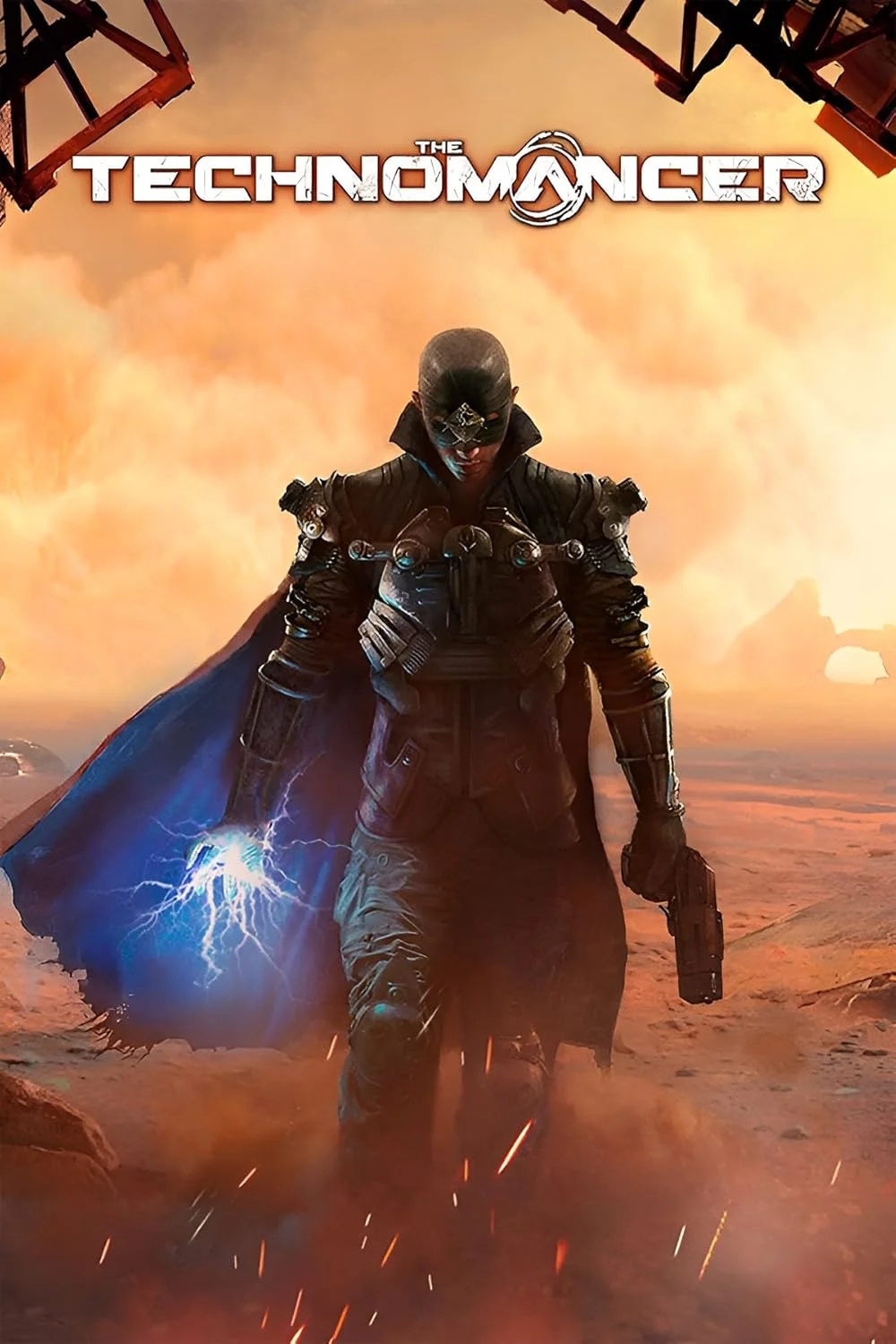
The Technomancer
This combination provides smooth gameplay with an average of 95 FPS, suitable for most gaming scenarios.
Average FPS: resolution vs quality settings
| Ultra | High | Medium | Low | |
|---|---|---|---|---|
| 4K Ultra HD | 34 | 42 | 51 | 69 |
| 1440p QHD | 61 | 83 | 97 | 128 |
| 1080p Full HD | 99 | 127 | 147 | 194 |
Cell color: green is 120+ FPS, teal is 60+, amber is 30+, red is below 30.
The Technomancer with Intel Core i5-11400F + NVIDIA GeForce RTX 3070, In-Depth Analysis
The Technomancer, a 2016 Action RPG, presents an interesting scaling challenge for the Intel Core i5-11400F and NVIDIA GeForce RTX 3070 combination. The data shows a system that is overwhelmingly capable at mainstream resolutions, but which begins to show its limitations when pushed to 4K with maximum settings. This pairing delivers a smooth experience for most scenarios, yet the performance curve reveals distinct bottlenecks that depend heavily on where you set the graphical dial.
Resolution Scaling
The transition from 1080p to 4K is where the RTX 3070's workload becomes the defining factor. At 1920x1080 with Ultra settings, the combo produces an average of 98.9 FPS. Moving to 2560x1440 at the same Ultra preset, the average drops to 61.4 FPS, a reduction of roughly 38% from the 1080p figure. Pushing further to 3840x2160 at Ultra yields just 34.3 FPS, which is a 65% decrease from the 1080p result and only slightly above half the 1440p average. This steep decline indicates that at 4K, the GPU is the primary limiting factor, struggling to maintain fluid frame rates under the highest load.
The pattern shifts when looking at lower settings. At Low settings, the frame rate scales more gracefully: 194.2 FPS at 1080p, 128.2 FPS at 1440p, and 68.9 FPS at 4K. The 4K Low result is still a significant drop, but the system maintains a playable frame rate. The difference between the Low and Ultra presets at 4K is stark, with a gap of 34.6 FPS (68.9 vs 34.3). This suggests that while the GPU is the bottleneck at 4K, the CPU still has enough headroom to deliver playable performance when the graphics load is reduced. The data indicates that for a 60 FPS target, 1440p is the realistic ceiling for this combo with high-end settings, as the 4K Ultra result falls far short of that mark.
Settings Recommendations
For the best measured experience, the data points to 1440p with High settings as the sweet spot. At this configuration, the combo achieves an average of 83.2 FPS, which is comfortably above the 60 FPS threshold for smooth gameplay. The High preset at 1440p offers a substantial improvement over the Ultra preset at the same resolution, which only manages 61.4 FPS, while still providing a significant visual uplift over the Medium preset's 97.2 FPS. The 1440p High result is a good balance of visual quality and performance headroom.
If the goal is maximum visual fidelity, 1080p Ultra is the better choice than 1440p Ultra. The 1080p Ultra average of 98.9 FPS provides a much smoother experience than the 1440p Ultra's 61.4 FPS, and the visual difference between these two settings at these resolutions is often less impactful than the frame rate gain. For those with a 4K monitor, the data suggests that High settings are the highest you should attempt, as the 42.4 FPS average at 4K High is borderline playable, while 4K Ultra at 34.3 FPS will feel noticeably sluggish. The Low preset at 4K, at 68.9 FPS, is the only 4K option that provides a consistently smooth frame rate, but it comes with a major visual compromise.
GPU Role
The NVIDIA GeForce RTX 3070 is the clear performance driver in this pairing, particularly at higher resolutions. Its 8 GB of GDDR6 memory on a 256-bit bus provides a memory bandwidth of 448.0 GB/s, which is essential for feeding the GPU's 5888 shading units at 4K. The card's boost clock of 1725 MHz helps it maintain high throughput in demanding scenes. The benchmark data shows that the GPU's performance is directly tied to the resolution, with the 4K Ultra result of 34.3 FPS highlighting the card's limits when pushed to its maximum.
In the broader context, the RTX 3070's average benchmark score of 28238 places it in the 72nd percentile of all GPUs. Its nearest rivals include the AMD Radeon RX 6600 XT, which scores 27985, and the NVIDIA GeForce GTX 980 Ti, which scores 27956. The RTX 3070 outperforms both of these by a small margin, with a deltaPct of 0.9% and 1% respectively. This indicates that while the card is solid, it is not at the very top of the performance hierarchy. The 8 GB VRAM capacity is a potential concern for future titles, but in The Technomancer, it appears sufficient, as the performance scaling is more consistent with a compute-bound scenario rather than a memory capacity limitation.
How This Combo Ranks
In the specific context of The Technomancer, this combination of the Intel Core i5-11400F and NVIDIA GeForce RTX 3070 ranks at 776 out of 1656 tested combinations. This places it in the upper-middle tier of the database, indicating that it is a competent pairing for this game, but not an exceptional one. The rank suggests that while the components are well-matched for many scenarios, there are other combinations that deliver better performance in this specific title.
The fact that the GPU ranks in the 72nd percentile globally, but the combo only sits in the 47th percentile (776/1656) for this game, suggests that the CPU may be holding the system back in certain situations. The i5-11400F, with its 6 cores and 12 threads, has a base clock of 2.60 GHz and a boost clock of 4.40 GHz. Its average benchmark score of 17181 places it in the 75th percentile of all CPUs, with its nearest rival being the AMD Ryzen 7 5700U, which scores 17189. The CPU's performance is solid, but the game's engine may not be fully utilizing its multi-threading capabilities, leading to a lower overall ranking than the individual component benchmarks might suggest.
CPU Role
The Intel Core i5-11400F plays a supporting role in The Technomancer, but its performance is still critical for achieving high frame rates. The data shows that at 1080p with Low settings, the combo achieves 194.2 FPS, which is a very high frame rate that is likely limited by the CPU's single-thread performance rather than the GPU. The CPU's single-thread score in 3dMark is 868, and its Cinebench R23 single-core score is 2029, indicating strong per-core performance. This is important because many game engines, including those from 2016, rely heavily on a few fast cores.
However, the CPU's multi-threading capabilities are also relevant. With a Cinebench R23 multi-core score of 14372 and a Geekbench multi-core score of 7579, the i5-11400F has sufficient horsepower to avoid being a major bottleneck in most scenarios. The data shows that at 1440p, the frame rate drops from 128.2 FPS at Low to 83.2 FPS at High, which is a 35% reduction. This suggests that the GPU is becoming the limiting factor at this resolution, as the CPU is still able to feed it enough data. The CPU's 12 MB of shared L3 cache and dual-channel DDR4 memory support with 51.2 GB/s bandwidth are adequate for this game, as there are no signs of stuttering or frame pacing issues in the measured data.
Measured FPS Breakdown
At 1920x1080, the combo delivers high frame rates across all settings. The Low preset yields an average of 194.2 FPS, which is exceptional. The Medium preset averages 147.4 FPS, and the High preset averages 127.4 FPS. The Ultra preset drops to 98.9 FPS, which is still very smooth. The scaling from Low to Ultra at this resolution shows a 49% reduction in frame rate, indicating that the GPU is handling the increased load well, but the CPU is not a limiting factor.
At 2560x1440, the performance is still strong but shows more variance. The Low preset averages 128.2 FPS, which is a 34% drop from the 1080p Low result. The Medium preset averages 97.2 FPS, and the High preset averages 83.2 FPS. The Ultra preset falls to 61.4 FPS, which is right at the edge of smooth gameplay. The scaling from Low to Ultra at 1440p shows a 52% reduction in frame rate, which is more pronounced than at 1080p, indicating the GPU is becoming more stressed.
At 3840x2160, the performance drops significantly. The Low preset averages 68.9 FPS, which is playable. The Medium preset averages 50.7 FPS, and the High preset averages 42.4 FPS. The Ultra preset averages 34.3 FPS, which is not ideal for a smooth experience. The scaling from Low to Ultra at 4K shows a 50% reduction in frame rate, but the absolute numbers are much lower. The data clearly shows that 4K is the domain of the GPU, and the i5-11400F has enough headroom to keep up, but the RTX 3070 simply does not have enough raw power to maintain high frame rates at this resolution with maximum settings.
Hardware Specifications
Intel Core i5-11400F
NVIDIA GeForce RTX 3070
FPS Benchmarks by Resolution & Settings
Performance data for Intel Core i5-11400F + NVIDIA GeForce RTX 3070 in The Technomancer
| Resolution | Settings | Avg FPS |
|---|---|---|
| 3840x2160 | Low | 68.9 |
| 3840x2160 | Medium | 50.7 |
| 3840x2160 | High | 42.4 |
| 3840x2160 | Ultra | 34.3 |
| 2560x1440 | Low | 128.2 |
| 2560x1440 | Medium | 97.2 |
| 2560x1440 | High | 83.2 |
| 2560x1440 | Ultra | 61.4 |
| 1920x1080 | Low | 194.2 |
| 1920x1080 | Medium | 147.4 |
| 1920x1080 | High | 127.4 |
| 1920x1080 | Ultra | 98.9 |
The Technomancer with ii5-11400F + Other GPUs
See how The Technomancer performs with the same CPU but different graphics cards.
The Technomancer with RTX 3070 + Other CPUs
See how The Technomancer performs with the same GPU but different processors.
Other Games with ii5-11400F + RTX 3070
Explore FPS benchmarks for other games using this same hardware combination.