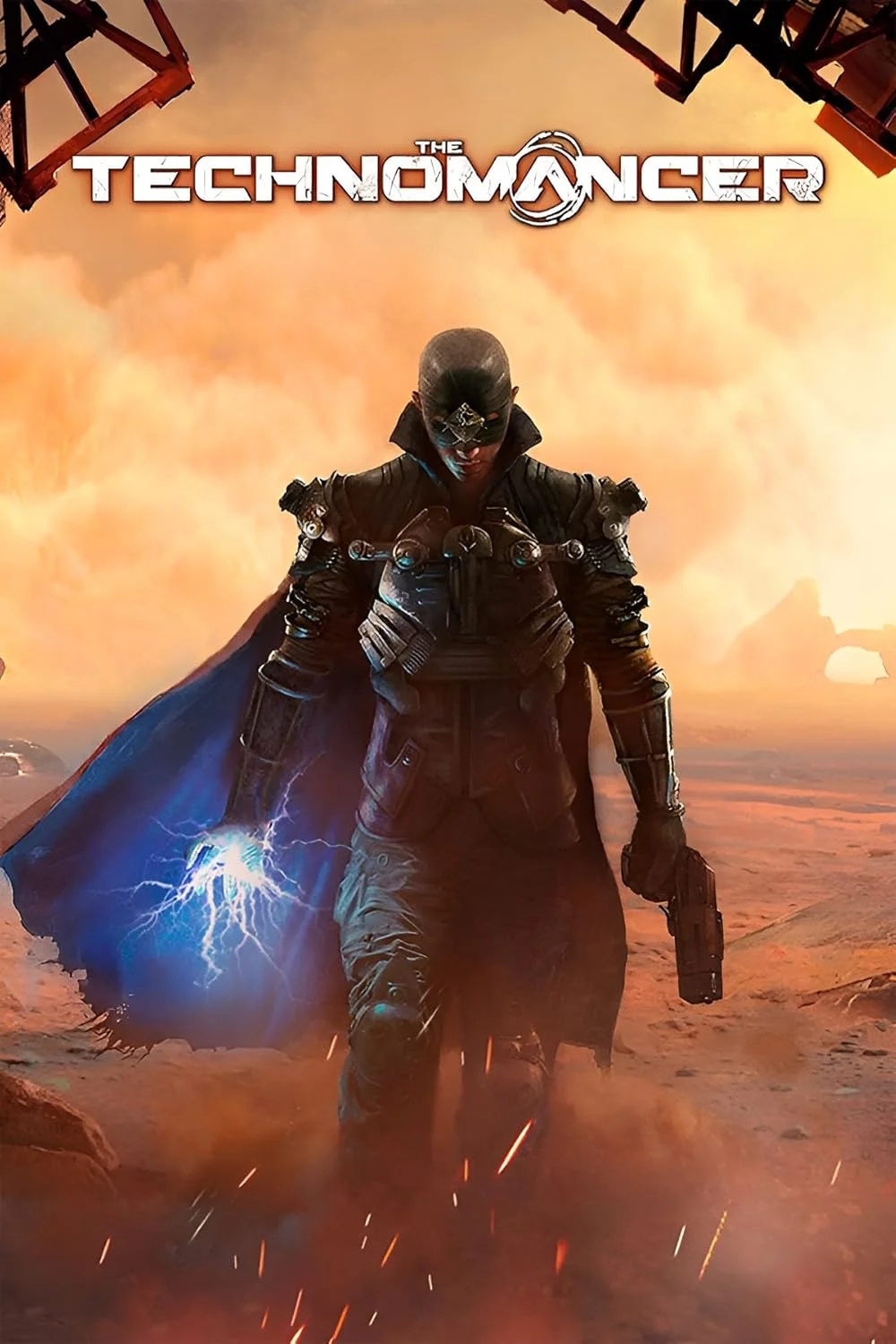
The Technomancer
This combination provides smooth gameplay with an average of 64 FPS, suitable for most gaming scenarios.
Average FPS: resolution vs quality settings
| Ultra | High | Medium | Low | |
|---|---|---|---|---|
| 4K Ultra HD | 24 | 31 | 36 | 47 |
| 1440p QHD | 43 | 56 | 65 | 85 |
| 1080p Full HD | 66 | 85 | 100 | 130 |
Cell color: green is 120+ FPS, teal is 60+, amber is 30+, red is below 30.
The Technomancer with Intel Core i5-11400F + NVIDIA GeForce RTX 2060, In-Depth Analysis
The Technomancer, a 2016 Action RPG, presents a demanding workload that clearly exposes the strengths and limits of the Intel Core i5-11400F paired with the NVIDIA GeForce RTX 2060. The benchmark data shows a configuration that is capable of smooth 1080p play but begins to struggle as resolution increases, with the GPU becoming the primary bottleneck. This analysis breaks down the measured performance to show exactly where this combo excels and where it falls short, providing a clear picture for builders targeting this specific title.
Resolution Scaling
The data reveals a steep performance drop when moving from 1080p to 4K, which is a classic indicator of GPU-bound rendering. At 1920x1080 with High settings, the combo averages 85 FPS. Stepping up to 2560x1440 at the same settings drops the average to 56 FPS, a reduction of 34%. Pushing further to 3840x2160 at High yields just 31 FPS, a 64% reduction from the 1080p figure. This pattern confirms that the RTX 2060's rendering pipeline is the limiting factor at higher resolutions, as the workload on the GPU increases exponentially with pixel count.
The scaling behavior is consistent across all settings presets. At Low settings, the average frame rate falls from 130 FPS at 1080p to 85 FPS at 1440p (a 35% drop) and then to 47 FPS at 4K (a 64% drop from 1080p). This proportional decrease at both Low and High settings suggests that the CPU is not a significant constraint even at the lowest graphical load. If the CPU were the bottleneck, the 1080p to 1440p delta would be much smaller, as the CPU would still be feeding frames at a similar rate. The fact that the percentage drop is nearly identical across settings strongly indicates that the GPU's fillrate and shading capacity are the decisive factors.
At Medium settings, the measured data includes minimum and maximum frame rates, offering a clearer view of performance stability. At 1080p Medium, the average is 100 FPS with a minimum of 85 and a maximum of 115. At 1440p Medium, the average drops to 65 FPS with a range of 55 to 75. The 4K Medium result shows an average of 36 FPS with a minimum of 30 and a maximum of 41. This data shows that not only does the average frame rate drop, but the variance becomes more pronounced at higher resolutions, indicating that the GPU is working closer to its limits and frame times become less consistent.
The 4K Ultra result is the most telling, with an average of just 24 FPS. This is below the threshold for comfortable playability and shows that the RTX 2060 is simply outmatched by the demands of 4K with maximum settings in this game. The scaling from 1440p Ultra (43 FPS) to 4K Ultra (24 FPS) represents a 44% drop, again reinforcing the GPU-bound nature of the workload. For users aiming for 4K, this combo requires significant settings reductions to achieve playable frame rates, and even then, the Low preset only yields 47 FPS.
GPU Role
The NVIDIA GeForce RTX 2060 is the central component in determining this game's performance at higher resolutions. Its specifications from the data show a 6 GB GDDR6 memory pool on a 192-bit bus, providing a bandwidth of 336.0 GB/s. This memory configuration is a key factor, as The Technomancer's textures and geometry at 4K can easily stress a 6 GB buffer. The benchmark results align with this, showing that the GPU's memory subsystem and processing cores are the primary bottleneck as resolution scales.
The GPU's clock speeds are listed with a base of 1365 MHz and a boost of 1680 MHz. The boost clock is the more relevant figure for sustained gaming performance, and the data suggests that the card is able to maintain a reasonable operating frequency, but it is not enough to overcome the raw pixel throughput demands at 4K. The card is built on the Turing architecture with 1920 shading units, 120 TMUs, and 48 ROPs. The ROP count, in particular, is critical for pixel fillrate, and the 4K results indicate that this is a limiting factor. The pixel rate is listed at 80.64 GPixel/s, which is insufficient for maintaining high frame rates at 3840x2160 with demanding settings.
The GPU's benchmark scores place it in the 58th percentile of all GPUs, with an average benchmark score of 15290. Its nearest rivals in the database are the NVIDIA GeForce GTX 580 (0% delta), AMD Radeon 680M (0.1% delta), NVIDIA GeForce RTX 3050 OEM (0.6% delta), and AMD Radeon RX 7600 (0.8% delta). These are all very close in average score, indicating that the RTX 2060 sits in a tightly contested performance tier. In this game, that tier is sufficient for 1080p and 1440p but not for 4K. The 6 GB VRAM capacity is a concern for 4K, as the measured FPS drops to 31 at High and 24 at Ultra, suggesting that memory capacity or bandwidth is being exceeded.
The data shows that the RTX 2060 is a solid mid-range performer that can handle 1440p with most settings, but it is clearly not a 4K-capable card for this title. The gap between 1440p High (56 FPS) and 4K High (31 FPS) is substantial, and the 4K Low result of 47 FPS is still not ideal for a smooth experience. The GPU's role is to provide a playable experience up to 1440p, and its performance ceiling is well-defined by the benchmark data.
How This Combo Ranks
In the database of tested combinations for The Technomancer, this specific pairing of the Intel Core i5-11400F and NVIDIA GeForce RTX 2060 holds a rank of 2911 out of a total of 3696 combos. This places it in the lower 21% of all tested configurations for this game. This rank indicates that, while the combo is functional, there are a significant number of other CPU-GPU pairings that achieve higher frame rates in this specific title. The rank is a holistic measure that incorporates performance across all resolutions and settings, and the 4K results likely drag down the overall standing.
This rank should be interpreted with the resolution data in mind. The combo's performance at 1080p is respectable, but the database includes many configurations with more powerful GPUs that can handle 4K better. The rank of 2911 suggests that this is not a top-tier combination for The Technomancer, but rather a mid-to-low-tier option that is best suited for 1080p or 1440p gaming. The fact that it is in the bottom 21% of all combos indicates that for users seeking high-refresh-rate 4K or max-settings 1440p, other combinations would be more appropriate.
The CPU's own percentile rank is 71, meaning it performs better than 71% of all CPUs in the database. However, this does not translate to a high combo rank because the game is heavily GPU-bound. The GPU's percentile is 58, which is lower than the CPU's, and this disparity is the core reason for the combo's low rank in this game. The CPU is being held back by the GPU's inability to keep up at higher resolutions. The data shows that the combo's performance is not limited by the i5-11400F, but by the RTX 2060, and the low combo rank reflects this GPU bottleneck.
Comparing to the CPU's nearest rivals, the i5-11400F has an average benchmark score of 17177, which is nearly identical to the AMD EPYC 7H12 (17120, 0.3% delta), Intel Core i5-12450H (17239, -0.4% delta), AMD Ryzen 3 PRO 8300G (17278, -0.6% delta), and Intel Core Ultra 7 164U (17074, 0.6% delta). These are all very close in synthetic CPU performance, but the game's frame rates are determined by the GPU, making these CPU differences negligible in this context. The combo rank confirms the GPU's limitations rather than the CPU's capabilities.
FAQ
Q: Can this combo run The Technomancer at 4K?
A: The data shows it is not viable for smooth 4K play. At 3840x2160, the average FPS is 31 on High, 36 on Medium, 24 on Ultra, and 47 on Low. Only the Low preset approaches a playable frame rate, but it is still below 60 FPS.
Q: What is the best resolution to use with this hardware?
A: Based on the measured FPS, 1920x1080 is the most suitable resolution. At High settings, it achieves 85 FPS, and at Medium it reaches 100 FPS with a minimum of 85 FPS. 1440p is also viable, with High settings yielding 56 FPS, but 4K is not recommended.
Q: Is the Intel Core i5-11400F bottlenecking the RTX 2060 in this game?
A: No. The resolution scaling data shows that FPS drops proportionally with pixel count, which is a sign of a GPU bottleneck. The CPU has 6 cores and 12 threads with a boost clock of 4.40 GHz, and its benchmark scores are strong, but the game's performance is limited by the graphics card.
Q: How does the RTX 2060 compare to its closest rivals in the database?
A: The RTX 2060 has an average benchmark score of 15290. Its nearest rivals are the GTX 580 (15283, 0% delta), Radeon 680M (15270, 0.1% delta), RTX 3050 OEM (15199, 0.6% delta), and RX 7600 (15171, 0.8% delta). These scores are all within 1% of each other, indicating similar raw performance.
Q: What is the performance difference between Low and Ultra settings at 1440p?
A: At 2560x1440, the average FPS on Low is 85, while on Ultra it is 43. This represents a 49% reduction in performance when moving from the lowest to the highest settings preset, showing the significant cost of Ultra settings.
Q: What is the combo's overall rank in the database for this game?
A: The combo is ranked 2911 out of 3696 tested combinations. This places it in the lower 21% of all configurations, indicating that many other CPU-GPU pairings deliver better performance in The Technomancer.
Measured FPS Breakdown
The following data is directly from the measured FPS results for this combo in The Technomancer.
1920x1080:
- Ultra: Average 66 FPS.
- High: Average 85 FPS.
- Medium: Average 100 FPS, with a minimum of 85 FPS and a maximum of 115 FPS.
- Low: Average 130 FPS.
2560x1440:
- Ultra: Average 43 FPS.
- High: Average 56 FPS.
- Medium: Average 65 FPS, with a minimum of 55 FPS and a maximum of 75 FPS.
- Low: Average 85 FPS.
3840x2160:
- Ultra: Average 24 FPS.
- High: Average 31 FPS.
- Medium: Average 36 FPS, with a minimum of 30 FPS and a maximum of 41 FPS.
- Low: Average 47 FPS.
The data shows a clear progression: at 1080p, all settings are playable, with even Ultra achieving 66 FPS. At 1440p, the Ultra preset dips to 43 FPS, which is a borderline playable experience. The 4K results are the most revealing, with all presets falling below 50 FPS, and Ultra dropping to 24 FPS. The Medium preset at 4K has a minimum of 30 FPS, which is the lowest recorded minimum in the dataset, indicating frame pacing issues under load. The performance hierarchy is consistent across resolutions, with Low always being the fastest and Ultra the slowest.
CPU Role
The Intel Core i5-11400F plays a supporting role in this game, providing enough processing power to avoid being the primary bottleneck. The CPU has 6 cores and 12 threads, with a base clock of 2.60 GHz and a boost clock of 4.40 GHz. It is built on the Rocket Lake architecture using a 14 nm process node. Its cache configuration includes 80 KB of L1 per core, 512 KB of L2 per core, and 12 MB of shared L3 cache. This setup is more than adequate for a 2016 title like The Technomancer, which is not known for being heavily multi-threaded.
The CPU's benchmark scores are solid, with a Cinebench R23 multi-core score of 14340 and a single-core score of 2024. Its Passmark multithread score is 16908, and its single-thread score is 2981. These results place the CPU in the 71st percentile of all CPUs. However, in The Technomancer, these strong synthetic scores do not translate into high frame rates because the GPU is the limiting factor. The data shows that as resolution increases and frame rates drop, the CPU is not being stressed; it's the GPU that's struggling to keep up.
The CPU's memory support is DDR4 with dual-channel memory, providing a bandwidth of 51.2 GB/s. This is sufficient for feeding the GPU with data. The CPU's nearest rivals in the database, such as the AMD EPYC 7H12 and Intel Core i5-12450H, have nearly identical average benchmark scores, but this has no bearing on the game's performance since the GPU dictates the results. The 65W TDP also suggests it is a power-efficient part, but the game's performance is entirely in the hands of the RTX 2060. For this specific title, the CPU role is to provide a stable foundation, and it does so without issue, but it cannot compensate for the GPU's 4K limitations.
Hardware Specifications
Intel Core i5-11400F
NVIDIA GeForce RTX 2060
FPS Benchmarks by Resolution & Settings
Performance data for Intel Core i5-11400F + NVIDIA GeForce RTX 2060 in The Technomancer
| Resolution | Settings | Avg FPS |
|---|---|---|
| 3840x2160 | Low | 47.0 |
| 3840x2160 | Medium | 36.0 |
| 3840x2160 | High | 31.0 |
| 3840x2160 | Ultra | 24.0 |
| 2560x1440 | Low | 85.0 |
| 2560x1440 | Medium | 65.0 |
| 2560x1440 | High | 56.0 |
| 2560x1440 | Ultra | 43.0 |
| 1920x1080 | Low | 130.0 |
| 1920x1080 | Medium | 100.0 |
| 1920x1080 | High | 85.0 |
| 1920x1080 | Ultra | 66.0 |
The Technomancer with ii5-11400F + Other GPUs
See how The Technomancer performs with the same CPU but different graphics cards.
The Technomancer with RTX 2060 + Other CPUs
See how The Technomancer performs with the same GPU but different processors.
Other Games with ii5-11400F + RTX 2060
Explore FPS benchmarks for other games using this same hardware combination.