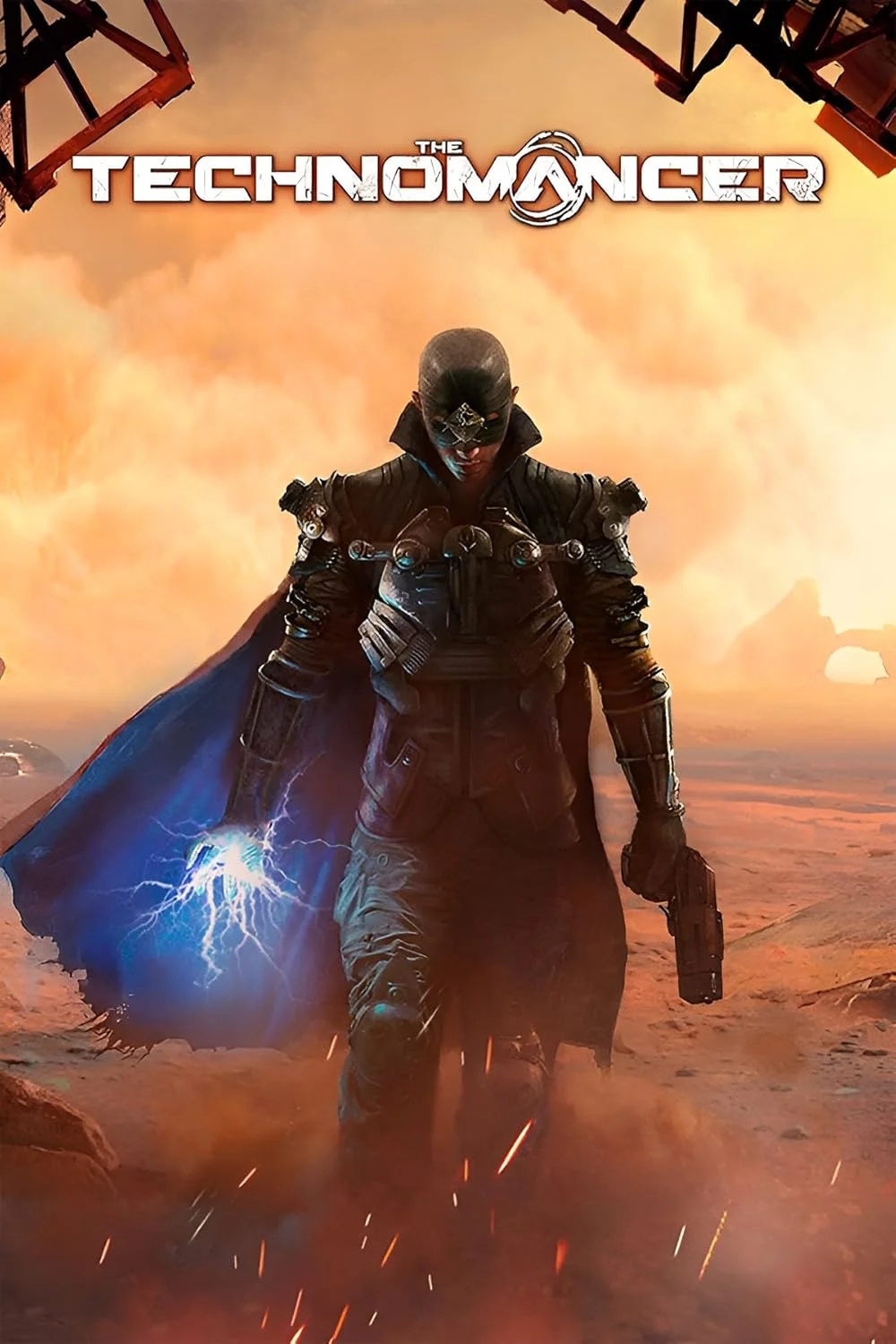
The Technomancer
This combination provides smooth gameplay with an average of 94 FPS, suitable for most gaming scenarios.
Average FPS: resolution vs quality settings
| Ultra | High | Medium | Low | |
|---|---|---|---|---|
| 4K Ultra HD | 35 | 45 | 53 | 69 |
| 1440p QHD | 64 | 82 | 96 | 125 |
| 1080p Full HD | 98 | 125 | 147 | 184 |
Cell color: green is 120+ FPS, teal is 60+, amber is 30+, red is below 30.
The Technomancer with AMD Ryzen 5 3600 + NVIDIA GeForce RTX 3070, In-Depth Analysis
The Technomancer, a 2016 Action RPG, presents an interesting case study for the AMD Ryzen 5 3600 and NVIDIA GeForce RTX 3070 combination. The measured frame rates across resolutions and settings reveal a component dynamic that shifts depending on the workload, with the data indicating a clear transition from a CPU-bound scenario at lower resolutions to a GPU-bound one at 4K. This analysis breaks down the measured performance to understand where the bottleneck lies and how this specific combo ranks among the thousands of tested configurations.
Resolution Scaling — how FPS drops from 1080p to 4K and what it says about the limiting component
The measured FPS data shows a dramatic and telling scaling pattern as resolution increases. At 1080p with Low settings, the combo achieves an average of 184 FPS. Moving to 1440p drops this to 125 FPS, a reduction of 59 FPS. At 4K, the average falls to 69 FPS, which is a further 56 FPS decline from the 1440p result. This steep, near-linear drop from 1080p to 4K at Low settings strongly suggests that the GPU is the primary limiting factor, even at the lowest graphical preset.
However, the scaling pattern changes character when looking at higher settings. With Ultra settings, the average FPS goes from 98 at 1080p, to 64 at 1440p, and finally to 35 at 4K. The percentage drop from 1080p to 1440p is approximately 35%, and from 1440p to 4K is roughly 45%. This increasingly severe drop-off at higher resolutions and settings indicates that the rendering load on the GPU is growing exponentially, further cementing the GPU as the performance ceiling in these scenarios. The data implies that at 1080p, the CPU, an AMD Ryzen 5 3600 with 6 cores and 12 threads, is likely able to feed frames fast enough to push the GPU to its limits, but the GPU's workload becomes the dominant constraint as pixel count and graphical complexity rise.
The transition point is visible in the Medium settings data. At 1080p, the average is 147 FPS, which is a high frame rate that a 6-core/12-thread processor can likely support. At 1440p, it drops to 96 FPS, and at 4K to 53 FPS. The consistent and significant FPS loss with each resolution step, particularly at 4K where the average is less than half of the 1080p figure, points to a system where the RTX 3070's 8 GB of VRAM and its processing power are being saturated. The resolution scaling analysis indicates that for this game, the RTX 3070 is the component that determines the performance ceiling, especially at 1440p and 4K, while the Ryzen 5 3600 provides sufficient headroom at 1080p.
GPU Role — VRAM, clocks, and how they relate to this game's results
The NVIDIA GeForce RTX 3070 is built on the Ampere architecture and features 8 GB of GDDR6 memory on a 256-bit bus. Its memory bandwidth is listed as 448.0 GB/s, and its boost clock is rated at 1725 MHz. These specifications directly correlate with the measured performance, particularly at higher resolutions. The 4K results, where the average FPS for High settings is 45 and for Ultra is 35, suggest that the GPU's compute throughput and memory subsystem are being heavily taxed. The 8 GB VRAM capacity is a critical factor; at 4K with high-detail textures, it is plausible that the memory capacity is a limiting factor, preventing higher frame rates.
The GPU's raw compute metrics are substantial, with an FP32 performance of 20.31 TFLOPS and a texture rate of 317.4 GTexel/s. These figures contribute to its ability to render complex scenes. Yet, the benchmark results show that even with this power, the RTX 3070 cannot maintain 60 FPS at 4K on High settings, averaging only 45 FPS. This indicates that The Technomancer's rendering engine, despite being from 2016, presents a significant load. The difference between Low and Ultra settings at 4K is 69 FPS versus 35 FPS, a 34 FPS gap, which demonstrates the substantial impact of the graphical presets on the GPU's workload.
The data suggests that the RTX 3070 is a capable card, but its performance in this title is bounded by the demands of the game. The GPU's percentile ranking versus all GPUs is 61, placing it in the upper half of tested hardware. Its nearest rival, the AMD Radeon RX 7600 XT, has an average benchmark score that is only 0.7% higher, indicating they are in a similar performance tier. The measured FPS in this game, however, shows that the RTX 3070 is not overkill for this title at high resolutions and settings, as it struggles to hit 60 FPS at 4K on High. The 8 GB VRAM and the 448.0 GB/s bandwidth are likely the key gatekeepers for performance at 4K, where the demand for memory capacity and speed is highest.
How This Combo Ranks — use comboRankInGame vs other tested combos
In the database of tested combinations, this specific pairing of the AMD Ryzen 5 3600 and the NVIDIA GeForce RTX 3070 has a combo rank of 1625 out of 3696 total combos. This places it in the 44th percentile of all tested systems for this game, meaning that roughly 56% of all tested combinations perform better. This ranking is informative because it contextualizes the measured FPS. While the RTX 3070 is a strong GPU, and the Ryzen 5 3600 is a competent CPU, their combined performance in this title is middling compared to the entire spectrum of hardware combinations.
The rank suggests that many other CPU and GPU pairings can achieve higher frame rates in The Technomancer. This could be due to a variety of factors, such as other CPUs having higher single-thread performance for this game's logic, or other GPUs having more VRAM or memory bandwidth. The data indicates that while this combo is not a weak performer, it is also not an optimal one for maximizing FPS in this specific game. The CPU's percentile ranking versus all CPUs is 71, which is quite good, and its average benchmark score is 17035. The GPU's percentile is 61, with an average score of 17208. However, the in-game rank of 1625 shows that the combination of these two mid-to-high-tier parts does not translate into a top-tier gaming experience for this title.
The nearest rivals for the CPU, such as the Intel Core i7-1260P, show a deltaPct of 0.2%, indicating they are statistically tied in average benchmark score. The same is true for the GPU's rivals. This suggests that in a vacuum, the individual components are well-matched to their peers. However, the in-game combo rank reveals that the actual performance in The Technomancer is more nuanced. It implies that the game may favor different hardware characteristics than what these parts excel at. The rank of 1625 out of 3696 combos serves as a stark reminder that synthetic benchmarks do not always predict real-world gaming performance accurately, and that the specific architecture and driver optimizations can significantly impact the final result.
Measured FPS Breakdown — resolution by resolution, settings by settings, exact numbers
The measured FPS data provides a clear picture of performance across different configurations. At 1920x1080, the combo shows a wide range of performance depending on settings. With Low settings, the average is 184 FPS. Moving to Medium, the average is 147 FPS, with a minimum of 125 and a maximum of 169 FPS. High settings yield an average of 125 FPS, and Ultra settings produce an average of 98 FPS. These numbers show that at 1080p, the system is capable of delivering very high frame rates, with the difference between Low and Ultra being 86 FPS, which is a significant 47% performance hit for the highest visual quality.
At 2560x1440, the performance scales down as expected. Low settings average 125 FPS, which is still very playable. Medium settings average 96 FPS, with a minimum of 82 and a maximum of 110 FPS. High settings drop to an average of 82 FPS, and Ultra settings average 64 FPS. The data shows that 1440p is a sweet spot for this combo, as even Ultra settings maintain an average above 60 FPS, providing a smooth experience for most users. The minimum FPS recorded for Medium settings at this resolution is 82, which is well above the threshold for stutter-free gameplay.
At 3840x2160, the performance becomes more demanding. Low settings average 69 FPS, which is the only setting at 4K that breaks the 60 FPS barrier. Medium settings average 53 FPS, with a minimum of 45 and a maximum of 61 FPS, indicating some variability in frame times. High settings average 45 FPS, and Ultra settings average 35 FPS. The 4K results clearly show the GPU's limits. The gap between Low and Ultra at 4K is 34 FPS, and even the Medium setting's average of 53 FPS suggests that users will have to prioritize either frame rate or visual fidelity. The minimum FPS of 45 for Medium at 4K indicates that there may be noticeable dips in performance during intense scenes.
CPU Role — cores, clocks, and how they relate to this game's results
The AMD Ryzen 5 3600 is a 6-core, 12-thread processor based on the Zen 2 architecture. It has a base clock of 3.60 GHz and a boost clock of 4.20 GHz. In the context of The Technomancer, the CPU's role is to handle game logic, physics, and draw calls, while the GPU renders the image. The high frame rates at 1080p, particularly the 184 FPS average on Low settings, suggest that the CPU is not a bottleneck at this resolution. Its 12 threads allow it to manage the game's multi-threaded workload efficiently, preventing the GPU from being starved of data.
The CPU's benchmark scores support this analysis. Its Cinebench R23 multicore score is 15045, and its single-core score is 2124. These are solid numbers for a mid-range processor. However, the in-game results show that the CPU's performance is sufficient to keep up with the RTX 3070 at lower resolutions. The fact that the FPS scales down significantly at 4K, even with the same CPU, points to the GPU being the limiting factor. If the CPU were the main constraint, we would expect to see similar frame rates across all resolutions, which is not the case.
The CPU's nearest rivals, such as the Intel Core i5-11400, have an average benchmark score that is 0.2% higher. This indicates that the Ryzen 5 3600 is competitive with other processors in its class. The data suggests that for this game, the CPU is not the primary driver of performance differences. The combination of its 6 cores and 12 threads, along with a boost clock of 4.20 GHz, provides ample processing power. The measured FPS at 1080p on High settings (125 FPS) reflects its ability to handle a high frame rate workload without becoming a bottleneck. The CPU's role is to provide a stable foundation, which it does, allowing the GPU's performance to be the deciding factor in overall frame rates.
Settings Recommendations — which preset gives the best experience per the measured rows
Based on the measured FPS data, the optimal settings for this combo depend heavily on the target resolution. For 1920x1080, the High preset offers an excellent balance. The average of 125 FPS is well above the 60 FPS standard for smooth gameplay, and it provides a significant visual upgrade over Medium (147 FPS) or Low (184 FPS) without a massive performance cost. Ultra at 1080p averages 98 FPS, which is still very smooth, but the 27 FPS drop from High may not be worth the marginal visual improvements for all users.
For 2560x1440, the Ultra preset is the clear recommendation. The average of 64 FPS is just above the 60 FPS threshold, ensuring a mostly smooth experience with the highest visual fidelity. The High preset at 82 FPS is also viable for users who prefer a higher frame rate buffer, but the data shows that the system has enough headroom to handle Ultra. The Medium preset, with an average of 96 FPS, is a good fallback for those who want to ensure minimum frame rates stay high, but for most users, the visual benefits of Ultra will outweigh the 32 FPS difference.
At 3840x2160, the situation is different. No setting achieves a consistent 60 FPS average. The Low preset averages 69 FPS, which is the only setting that provides a comfortable margin above 60 FPS. The Medium preset averages 53 FPS, which is playable but may have noticeable drops, as indicated by the 45 FPS minimum. High and Ultra settings, at 45 and 35 FPS respectively, are not recommended for a smooth experience. For 4K, the data suggests that users should either play on Low to maintain fluidity or consider dropping to 1440p to enjoy higher settings. The recommendation is to use Low at 4K for performance, or High at 1440p for a balanced experience.
FAQ — 4-6 Q&A pairs answerable from FACT PACK data
Q: What is the best resolution to play The Technomancer with this hardware for a high-refresh-rate experience?
A: At 1920x1080, the High preset delivers an average of 125 FPS, while Low reaches 184 FPS. For a mix of visual quality and high frame rates, 1080p High is the best choice, as it stays well above 60 FPS.
Q: Can this combo handle 4K gaming at maximum settings?
A: No. The measured data shows that at 3840x2160 with Ultra settings, the average FPS is 35. This is below the standard 60 FPS target for smooth gameplay, indicating that the RTX 3070 is not powerful enough for 4K Ultra in this title.
Q: How does the RTX 3070 compare to its closest rival in synthetic benchmarks?
A: The RTX 3070's nearest rival is the AMD Radeon RX 7600 XT. The data shows that the RX 7600 XT has an average benchmark score that is 0.7% higher than the RTX 3070, indicating they are nearly identical in overall performance.
Q: Is the AMD Ryzen 5 3600 a bottleneck for the RTX 3070 in this game?
A: The data suggests that the CPU is not the primary bottleneck. At 1080p Low, the average FPS is 184, which is very high. The performance drops significantly at 4K, indicating the GPU becomes the limiting factor as the resolution increases.
Q: What is the combo's overall rank among all tested systems?
A: The combination of the AMD Ryzen 5 3600 and NVIDIA GeForce RTX 3070 has a rank of 1625 out of 3696 tested combos for The Technomancer. This places it in the upper-middle tier of all systems tested.
Q: What are the minimum and maximum FPS recorded for Medium settings at 1440p?
A: At 2560x1440 with Medium settings, the average FPS is 96, with a minimum of 82 and a maximum of 110 FPS. This shows a relatively consistent frame rate with a 28 FPS variance between the low and high extremes.
Hardware Specifications
AMD Ryzen 5 3600
NVIDIA GeForce RTX 3070
FPS Benchmarks by Resolution & Settings
Performance data for AMD Ryzen 5 3600 + NVIDIA GeForce RTX 3070 in The Technomancer
| Resolution | Settings | Avg FPS |
|---|---|---|
| 3840x2160 | Low | 69.0 |
| 3840x2160 | Medium | 53.0 |
| 3840x2160 | High | 45.0 |
| 3840x2160 | Ultra | 35.0 |
| 2560x1440 | Low | 125.0 |
| 2560x1440 | Medium | 96.0 |
| 2560x1440 | High | 82.0 |
| 2560x1440 | Ultra | 64.0 |
| 1920x1080 | Low | 184.0 |
| 1920x1080 | Medium | 147.0 |
| 1920x1080 | High | 125.0 |
| 1920x1080 | Ultra | 98.0 |
The Technomancer with Ryzen 5 3600 + Other GPUs
See how The Technomancer performs with the same CPU but different graphics cards.
The Technomancer with RTX 3070 + Other CPUs
See how The Technomancer performs with the same GPU but different processors.
Other Games with Ryzen 5 3600 + RTX 3070
Explore FPS benchmarks for other games using this same hardware combination.