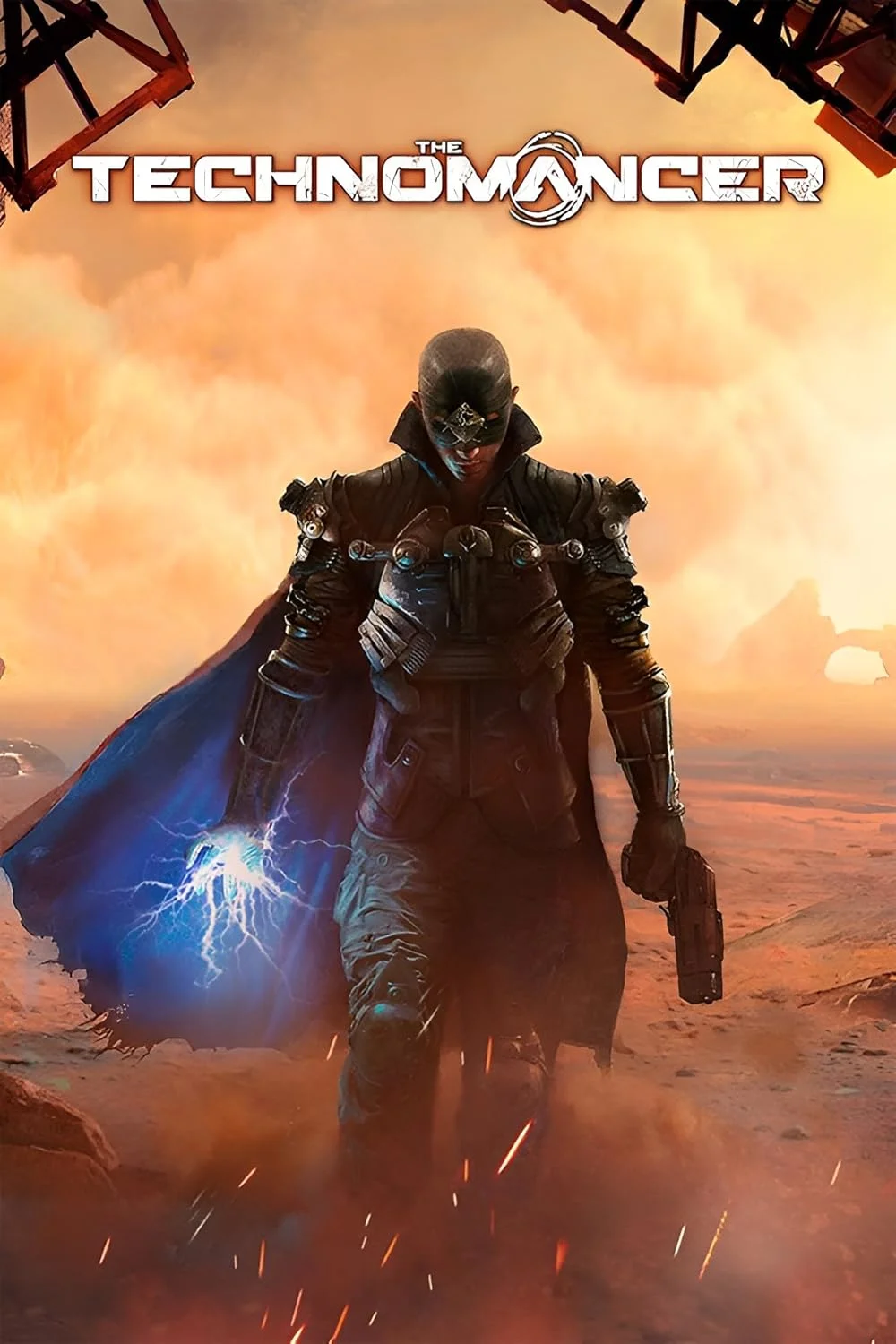
The Technomancer
This combination may struggle with this title, averaging 27 FPS. Consider upgrading hardware or significantly lowering settings.
Average FPS: resolution vs quality settings
| Ultra | High | Medium | Low | |
|---|---|---|---|---|
| 4K Ultra HD | 10 | 13 | 15 | 20 |
| 1440p QHD | 18 | 24 | 28 | 36 |
| 1080p Full HD | 28 | 36 | 42 | 55 |
Cell color: green is 120+ FPS, teal is 60+, amber is 30+, red is below 30.
The Technomancer with AMD Ryzen 7 9700F + NVIDIA GeForce GTX 1050 Ti, In-Depth Analysis
The Technomancer, a 2016 Action RPG, presents a demanding workload for older hardware. This analysis examines the performance of the AMD Ryzen 7 9700F processor paired with the NVIDIA GeForce GTX 1050 Ti graphics card. The measured data reveals a system that is heavily constrained by its GPU, particularly at higher resolutions, while the modern CPU provides ample headroom. The combination ranks at 2788 out of 2825 tested combos, placing it in the bottom 1.3% of systems, a clear indicator of its limitations for this specific title.
Settings Recommendations
The measured FPS data provides a clear picture of which settings preset offers the most balanced experience for this specific hardware combination. At 1920x1080, the resolution most likely to be used with this GPU, the Low preset delivers an average of 55 FPS. This is the only setting that approaches the generally accepted threshold for smooth, playable performance. The Medium preset at the same resolution yields an average of 42 FPS, with a minimum of 36 FPS, which is playable but may feel less fluid in action-heavy scenes. High settings drop the average to 36 FPS, and Ultra brings it down to 28 FPS.
Given these numbers, the Low preset at 1920x1080 is the recommended starting point. It is the only configuration that breaks the 50 FPS barrier, providing a more consistent and responsive experience. While the Medium preset's minimum of 36 FPS is not unplayable, the 13 FPS gap between the average of Low and Medium suggests that the GPU resources are scarce. The data implies that the visual fidelity gains from Medium do not justify the significant performance cost. For players who prioritize frame rate stability over visual details, Low is the clear choice. The 4K and 1440p results are largely academic for this GPU, as even the Low preset at 2560x1440 only manages an average of 36 FPS, which is below the performance of Low at 1080p. Therefore, the best experience per the measured rows is unambiguously the Low preset at 1920x1080.
GPU Role
The NVIDIA GeForce GTX 1050 Ti is the primary bottleneck in this configuration. This is evident from the average benchmark score of 4193, which places it in the 25th percentile of all GPUs. Its performance is closely matched by the AMD Radeon R5 M330, which scores a deltaPct of 0.6% higher, and the NVIDIA Quadro K2100M, which is 1% higher. This positions the GTX 1050 Ti as a decidedly entry-level part by modern standards.
With only 4 GB of GDDR5 memory on a 128-bit bus, the GPU has a bandwidth of 112.1 GB/s. This is a critical specification for The Technomancer, as the data suggests the card struggles to maintain playable frame rates even at lower settings. The memory capacity is likely insufficient for high-resolution textures, forcing the system to use slower fallbacks. The GPU's clock speeds, with a base of 1291 MHz and a boost of 1392 MHz, are modest. The performance in synthetic benchmarks reinforces this picture; for instance, its PassMark G3D score is 6340, and its DirectX 12 score is a paltry 26, indicating very weak modern API performance.
The measured FPS data directly supports this. At 4K, the High preset yields an average of just 13 FPS, which is effectively a slideshow. Even dropping to Low at 4K only yields an average of 20 FPS. This shows that the GPU's raw compute power, rated at 2.138 TFLOPS FP32, is insufficient for the demands of this game at higher resolutions. The GPU is clearly the limiting factor across all tested settings, as the CPU is unlikely to be a constraint at these low frame rates.
FAQ
Q: What is the best average frame rate this combination can achieve?
A: The highest average FPS recorded in the data is 55 FPS, which occurs at 1920x1080 resolution with the Low settings preset.
Q: How does the GTX 1050 Ti's performance compare to its closest rivals?
A: Its average benchmark score of 4193 is nearly identical to the AMD Radeon R5 M330, which scores 0.6% higher, and the NVIDIA Quadro K2100M, which scores 1% higher. It also trails the NVIDIA Quadro K3000M by 1.1% and the AMD Radeon Vega 3 by 1.8%.
Q: Is the 4K resolution playable with this hardware?
A: No. The highest average FPS at 3840x2160 is 20 FPS on the Low preset. The Ultra preset averages only 10 FPS, making the game unplayable at this resolution.
Q: What is the impact of moving from Medium to High settings at 1080p?
A: The average frame rate drops from 42 FPS on Medium to 36 FPS on High, a decrease of 6 FPS. This suggests a moderate performance cost for the visual upgrade.
Q: What is the CPU's percentile ranking among all tested processors?
A: The AMD Ryzen 7 9700F has a percentile rank of 94, indicating it performs better than 94% of all CPUs in the benchmark database.
Q: How much of a performance difference is there between the Low and Ultra presets at 1440p?
A: The Low preset averages 36 FPS, while the Ultra preset averages 18 FPS. This is a 50% reduction in average frame rate when moving to the highest settings.
How This Combo Ranks
The combined performance of the AMD Ryzen 7 9700F and the NVIDIA GeForce GTX 1050 Ti in The Technomancer is ranked 2788 out of 2825 tested combinations. This places the system in the bottom 1.3% of all tested hardware configurations. This ranking is a direct consequence of the GPU's limitations. While the CPU is a modern, high-performance part, the GPU is a legacy entry-level model.
This disparity is stark when comparing the two components' benchmark standings. The CPU sits in the 94th percentile of all CPUs, with an average benchmark score of 69996. Its nearest rivals, the AMD Ryzen 9 7940HX and Intel Core i7-14700KF, are within a 0.2% deltaPct of its score, showing it is a top-tier performer. In contrast, the GPU's 25th percentile ranking and modest score of 4193 place it in the bottom quarter of all GPUs. The combination's rank of 2788 is almost entirely dictated by the GPU. The data suggests that this pairing is severely unbalanced for a game like The Technomancer, where the GPU is the primary arbiter of performance. The CPU's potential is left largely untapped, as it is waiting for a GPU that can feed it more frames.
Resolution Scaling
The measured FPS data shows a predictable and severe decline in performance as resolution increases, which is a classic sign of a GPU-bound system. When moving from 1920x1080 to 2560x1440, the average FPS on the Low preset drops from 55 to 36, a 34.5% decrease. The Medium preset sees a similar proportional drop, going from 42 to 28 FPS (a 33.3% decrease). This consistent scaling pattern is a strong indicator that the graphics card is the limiting component; the additional pixel workload at 1440p is directly translating into a lower frame rate.
The scaling becomes even more brutal at 4K. At 3840x2160, the Low preset averages only 20 FPS, which is a 63.6% drop from the 1080p Low result. The High preset falls to 13 FPS from 36 FPS at 1080p, a 63.9% reduction. This near-linear scaling with pixel count is a textbook example of GPU-limited performance. The GTX 1050 Ti simply does not have the fill rate or memory bandwidth to handle the 4K workload. The data implies that the CPU, with its high single-thread score of 4691 in PassMark, is not the cause of this slowdown. If the CPU were the bottleneck, the frame rates would remain more consistent across resolutions. Instead, the drastic FPS drops with each resolution increase clearly indicate that the GPU is being overwhelmed.
Measured FPS Breakdown
The following data is taken directly from the measured FPS results for The Technomancer with this hardware combination.
1920x1080:
- Ultra: Average FPS of 28.
- High: Average FPS of 36.
- Medium: Average FPS of 42, with a minimum of 36 FPS and a maximum of 49 FPS.
- Low: Average FPS of 55.
2560x1440:
- Ultra: Average FPS of 18.
- High: Average FPS of 24.
- Medium: Average FPS of 28, with a minimum of 23 FPS and a maximum of 32 FPS.
- Low: Average FPS of 36.
3840x2160:
- Ultra: Average FPS of 10.
- High: Average FPS of 13.
- Medium: Average FPS of 15, with a minimum of 13 FPS and a maximum of 17 FPS.
- Low: Average FPS of 20.
The data reveals a consistent performance hierarchy across all resolutions, with the Low preset always providing the highest average FPS. The Medium preset consistently provides a modest improvement over High, suggesting a non-linear scaling of GPU load for those settings. The minimum FPS data, available only for the Medium preset, shows a 6-7 FPS drop from the average, indicating some frame time variance even at this mid-range setting.
CPU Role
The AMD Ryzen 7 9700F is a high-end processor with 8 cores and 16 threads, based on the Zen 5 architecture. Its base clock is 3.80 GHz and it can boost up to 5.50 GHz. The benchmark data confirms its strength, with a PassMark multithread score of 36470 and a single-thread score of 4691. These scores place it in the 94th percentile of all CPUs, making it one of the more powerful processors tested. In The Technomancer, however, the data suggests that this CPU power is largely irrelevant to the final frame rate.
The frame rates at all resolutions and settings are low, ranging from 10 to 55 FPS. At these levels, even a much weaker CPU would likely be able to keep up with the GPU's output. The bottleneck is unambiguously the GPU. The CPU's role is to prepare frames, and with a GPU that can only deliver 20 FPS at 4K, the CPU has ample time to do its work. The high single-thread performance of 4691 ensures that the game's main logic thread is not a limiting factor.
The CPU's nearest rivals in the benchmark database, the AMD Ryzen 9 7940HX and Intel Core i7-14700KF, all have nearly identical average scores, with deltaPct values of 0.2% and -0.2%, respectively. This shows that the 9700F is performing as expected for its class. The data strongly implies that if this CPU were paired with a much more powerful GPU, the performance in The Technomancer would be significantly higher. The current measured FPS is a direct reflection of the GPU's capability, not the CPU's. The CPU is, in essence, waiting for the GPU to catch up.
Hardware Specifications
AMD Ryzen 7 9700F
NVIDIA GeForce GTX 1050 Ti
FPS Benchmarks by Resolution & Settings
Performance data for AMD Ryzen 7 9700F + NVIDIA GeForce GTX 1050 Ti in The Technomancer
| Resolution | Settings | Avg FPS |
|---|---|---|
| 3840x2160 | Low | 20.0 |
| 3840x2160 | Medium | 15.0 |
| 3840x2160 | High | 13.0 |
| 3840x2160 | Ultra | 10.0 |
| 2560x1440 | Low | 36.0 |
| 2560x1440 | Medium | 28.0 |
| 2560x1440 | High | 24.0 |
| 2560x1440 | Ultra | 18.0 |
| 1920x1080 | Low | 55.0 |
| 1920x1080 | Medium | 42.0 |
| 1920x1080 | High | 36.0 |
| 1920x1080 | Ultra | 28.0 |
The Technomancer with Ryzen 7 9700F + Other GPUs
See how The Technomancer performs with the same CPU but different graphics cards.
The Technomancer with GTX 1050 Ti + Other CPUs
See how The Technomancer performs with the same GPU but different processors.
Other Games with Ryzen 7 9700F + GTX 1050 Ti
Explore FPS benchmarks for other games using this same hardware combination.