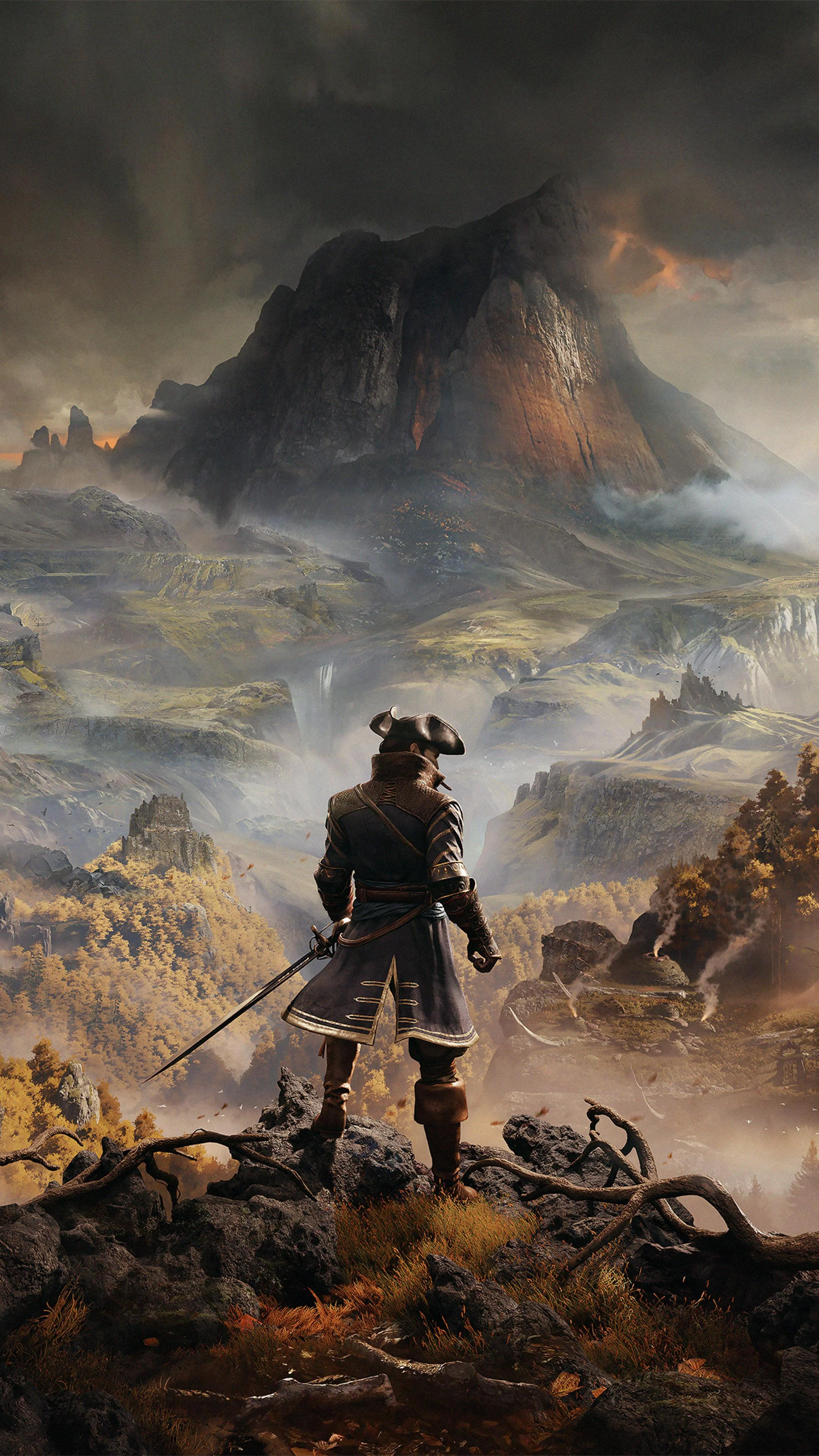
Greedfall
This combination offers playable performance with an average of 44 FPS, though you may want to lower settings for smoother gameplay.
Average FPS: resolution vs quality settings
| Ultra | High | Medium | Low | |
|---|---|---|---|---|
| 4K Ultra HD | 16 | 25 | 27 | 35 |
| 1440p QHD | 27 | 42 | 46 | 58 |
| 1080p Full HD | 38 | 60 | 66 | 84 |
Cell color: green is 120+ FPS, teal is 60+, amber is 30+, red is below 30.
Greedfall with AMD Ryzen 7 5800XT + Intel Arc B390, In-Depth Analysis
Greedfall, a 2019 Action RPG, presents a demanding workload that clearly separates the capabilities of the AMD Ryzen 7 5800XT and the Intel Arc B390. The measured data for this combination shows a system that is firmly anchored by the graphics processor, struggling to maintain playable frame rates at higher resolutions and settings. This analysis details the performance metrics recorded for this specific pairing, placing the results within the context of the processor's and graphics card's respective standings among tested hardware.
FAQ
Q: What is the highest average frame rate achieved by this CPU and GPU combination in Greedfall?
A: The highest recorded average frame rate is 84 FPS, achieved at 1920x1080 resolution with the Low settings preset. This is the only configuration in the measured data that approaches or exceeds a 60 FPS baseline at this resolution.
Q: How does the combo rank among all tested system configurations in Greedfall?
A: This specific combination of the AMD Ryzen 7 5800XT and the Intel Arc B390 ranks 2595th out of 2938 tested combos for this game. This places it in the lower percentile of all systems tested, indicating below-average performance relative to the broader database.
Q: What is the average FPS difference between the High and Ultra presets at 2560x1440 resolution?
A: At 2560x1440, the High preset produces an average of 42 FPS, while the Ultra preset drops to an average of 27 FPS. This represents a 15 FPS decrease, or roughly a 36% reduction in performance when moving from High to Ultra settings.
Q: What is the minimum FPS recorded for any configuration in the measured data?
A: The lowest minimum FPS recorded is 23 FPS, which occurs at 3840x2160 resolution with the Medium settings preset. This specific data point provides a clear indication of the graphics card's limitations at 4K resolution.
Q: Is the Intel Arc B390's performance closer to the AMD Ryzen 7 5800XT's performance in this game?
A: No, the data indicates a vast disparity. The Intel Arc B390 has a benchmark score of 1482, placing it in the 9th percentile of all GPUs, with its nearest rival being the NVIDIA GeForce GT 520MX. In contrast, the Ryzen 7 5800XT scores 29879 on average, placing it in the 81st percentile of all CPUs, indicating the processor is a far stronger component.
Q: What is the performance difference in average FPS between the Low and Ultra settings at 1080p?
A: At 1920x1080, the Low preset achieves an average of 84 FPS, while the Ultra preset achieves an average of 38 FPS. This is a 46 FPS difference, showing that the Ultra preset is more than twice as demanding as the Low preset for the GPU.
How This Combo Ranks
The benchmark data places the AMD Ryzen 7 5800XT and Intel Arc B390 combination at rank 2595 out of 2938 tested combos in Greedfall. This position, within the bottom 12% of all tested systems, is a direct reflection of the severe imbalance between the two components. The ranking is not a measure of the CPU's capability, which is substantial, but rather a measure of the final system's gaming performance, which is overwhelmingly limited by the GPU. The combo rank serves as a holistic indicator that this pairing will not deliver a high-end gaming experience in this title.
This low rank is logically consistent with the individual component benchmarks. The Intel Arc B390's average benchmark score is 1482, placing it in the 9th percentile of all GPUs. Its nearest rivals, such as the NVIDIA GeForce GT 520MX with a score of 1463, are entries from a much older and less capable era. In stark contrast, the AMD Ryzen 7 5800XT achieves an average benchmark score of 29879, placing it in the 81st percentile of all CPUs. Its nearest rivals, like the AMD Ryzen 7 7840H with a score of 29868, are modern, high-performance mobile processors. The system's rank is therefore dragged down by the GPU, which acts as the primary bottleneck in almost every scenario.
The deltaPct values for the GPU's nearest rivals are telling. The GT 520MX is only 1.3% slower than the Arc B390, and the GeForce 800M is 1.5% slower. These are not marginal differences against competitive modern parts; they are close scores against legacy hardware. The CPU, meanwhile, is essentially tied with the Ryzen 7 7840H (0% delta) and the Ryzen 7 8845HS (-0.3% delta). This data confirms that while the CPU is a competitive and modern performer, the GPU is not, and the combo rank is a direct consequence of this pairing. The 2595th rank is a warning that this system will struggle with the graphical demands of Greedfall, particularly at higher settings and resolutions.
GPU Role
The Intel Arc B390 is the decisive factor in this combo's performance, and its characteristics explain the measured FPS results. The GPU is an integrated graphics processor (IGP) based on the Xe3-LPG architecture, built on Intel's 3 nm process. Its performance class is clearly defined by its benchmark data: a 3DMark Steel Nomad DX12 score of 1482, which places it in the 9th percentile of all GPUs. This is a very low score, indicating entry-level or integrated-level graphics capability. The nearest rivals, including the NVIDIA GeForce GT 520MX and GeForce 800M, underscore its position in the lower echelons of graphics performance.
A critical specification for this GPU is its memory configuration. The Arc B390 uses "System Shared" memory, meaning it has no dedicated VRAM. The memory type, bus width, and bandwidth are all listed as "System Shared" or "System Dependent". This is a major architectural limitation for a demanding game like Greedfall. The GPU must contend with the system's main memory for both its own operations and the CPU's, which can lead to significant performance degradation, especially at higher resolutions where memory pressure increases. The clock speeds, with a base of 300 MHz and a boost of 2500 MHz, cannot compensate for the lack of dedicated, high-bandwidth memory. The GPU's rendering capabilities, such as a pixel rate of 60.00 GPixel/s and a texture rate of 120.0 GTexel/s, are simply insufficient for the workload Greedfall presents at higher settings.
The measured FPS data directly reflects this GPU limitation. At 3840x2160 resolution, the highest average FPS achieved is only 35 on the Low preset, dropping to 16 on Ultra. Even at 1920x1080, the GPU manages an average of 84 FPS on Low, but this falls to 38 on Ultra. The GPU's low shader count of 1536 and 24 ROPs are just not enough to process the geometry and pixel data of a modern action RPG at high fidelity. The data suggests that the integrated GPU is the primary bottleneck, and its performance characteristics are the single most important factor in understanding this combo's rank and FPS results.
Measured FPS Breakdown
The measured FPS data for Greedfall provides a comprehensive look at the system's performance across three resolutions and four settings presets. At 1920x1080, the system shows its best results. The Low preset delivers an average of 84 FPS, which is the highest recorded for this combo. The Medium preset averages 66 FPS, with a minimum of 56 FPS and a maximum of 76 FPS. The High preset averages 60 FPS, which is the baseline for smooth gameplay. The Ultra preset drops to an average of 38 FPS, which is noticeably less fluid.
Moving to 2560x1440 resolution, the performance penalty is clear. The Low preset averages 58 FPS, while the Medium preset drops to 46 FPS, with a minimum of 39 FPS and a maximum of 53 FPS. The High preset averages 42 FPS, and the Ultra preset falls to 27 FPS. None of these averages at 1440p reach the 60 FPS target, indicating that the GPU is already struggling to maintain smooth performance at this resolution. The gap between the Low and Ultra presets is 31 FPS, showing the significant cost of higher graphical fidelity.
At 3840x2160, the system's limitations are most pronounced. The Low preset averages 35 FPS, which is the only preset at 4K to break the 30 FPS mark. The Medium preset averages 27 FPS, with a minimum of 23 FPS and a maximum of 32 FPS. The High preset averages 25 FPS, and the Ultra preset averages just 16 FPS. This data shows that the system is not capable of providing a playable experience at 4K resolution, with even the lowest settings failing to maintain a consistent 30 FPS. The performance degradation from 1080p to 4K is severe, reinforcing the GPU as the primary limiting factor. The only configuration with a reported minimum FPS above 30 is the 1080p Medium preset, which has a minimum of 56 FPS.
Resolution Scaling
The FPS data shows a clear and dramatic scaling pattern as resolution increases. At 1920x1080 with High settings, the average FPS is 60. When the resolution is increased to 2560x1440, the average drops to 42 FPS, a reduction of 18 FPS or 30%. At 3840x2160, the average falls to 25 FPS, a 35 FPS drop from the 1080p result, which is a 58% reduction. This pattern is consistent across the Low and Medium presets as well, showing that the system's performance is heavily dependent on the number of pixels being rendered.
This scaling behavior is a classic indicator of a GPU-bound system. When a system is limited by the CPU, increasing the resolution often has a relatively smaller impact on frame rates, as the CPU is still able to feed the GPU with data. However, in this case, the frame rate drops sharply with each resolution increase. For instance, at Low settings, the FPS goes from 84 at 1080p to 58 at 1440p (a 31% drop) and then to 35 at 4K (a 58% drop from 1080p). This steep decline shows that the Intel Arc B390's rendering throughput is being saturated by the increasing pixel count. The GPU's limited number of shading units and ROPs cannot keep up with the higher workload.
The data from the Medium preset further highlights this trend. At 1080p Medium, the average is 66 FPS. At 1440p, it drops to 46 FPS, and at 4K, it falls to 27 FPS. The performance loss is not linear but accelerates at higher resolutions. This is because the GPU must not only process more pixels but also handle the increased memory pressure from using "System Shared" memory. The lack of dedicated VRAM likely exacerbates the performance hit at higher resolutions, as the GPU and CPU compete for the same memory bandwidth. The conclusion from the resolution scaling data is unambiguous: the Intel Arc B390 is the limiting component, and its performance is inversely proportional to the resolution, with the system becoming progressively less playable as the pixel count increases.
CPU Role
In stark contrast to the GPU, the AMD Ryzen 7 5800XT is a high-performance processor that is not the bottleneck in this configuration. The CPU is based on the Zen 3 architecture (codename Vermeer) and manufactured on a 7 nm process. It features 8 cores and 16 threads, with a base clock of 3.80 GHz and a boost clock of 4.80 GHz. Its benchmark results confirm its strong performance. For example, it scores 23794 in Cinebench R23 multi-core and 3359 in single-core. Its average benchmark score is 29879, placing it in the 81st percentile of all CPUs. Its nearest rivals, such as the AMD Ryzen 7 8845HS and Ryzen 5 9600X, have comparable scores, indicating it is a modern, capable part.
The CPU's role in Greedfall is to handle game logic, physics, and draw calls. With 8 cores and 16 threads, it has ample resources to manage these tasks, even in a demanding Action RPG. The high boost clock of 4.80 GHz ensures strong single-threaded performance, which is often critical for game engines. While we do not have direct CPU utilization data for Greedfall, the CPU's overall benchmark scores suggest it is more than capable of feeding the GPU with data. The fact that the FPS scales so dramatically with resolution is a strong indicator that the CPU is not the limiting factor. If the CPU were the bottleneck, we would expect to see less variation in FPS across different resolutions, as the CPU's workload would remain relatively constant.
The CPU's specifications, such as its 32 MB of shared L3 cache, also help in gaming scenarios by reducing memory latency. It supports DDR4 memory with a dual-channel bus and a bandwidth of 51.2 GB/s. While this is not as fast as DDR5, it is sufficient for the CPU's needs. The data strongly suggests that the Ryzen 7 5800XT is a high-end processor that is being held back by the Intel Arc B390's limited graphics capabilities. The system's low combo rank is not a reflection of the CPU's performance but rather a direct consequence of the GPU's inability to keep pace with the CPU's output. The CPU is performing its role effectively; the GPU is failing to deliver the frames.
Settings Recommendations
Based on the measured FPS data, the optimal settings for this combo depend heavily on the user's target resolution and frame rate preferences. At 1920x1080, the High preset is the best choice for a balance between visual quality and performance, as it achieves an average of 60 FPS. This is the standard for smooth gameplay. For users who prioritize higher frame rates, the Low preset offers an average of 84 FPS, but with a significant reduction in visual fidelity. The Medium preset, at 66 FPS, is another viable option that provides a more stable experience than High, though the visual difference between Medium and High may be more noticeable to some players. The Ultra preset, at 38 FPS, is not recommended for a consistently smooth experience at this resolution.
At 2560x1440, the situation becomes more challenging. No preset achieves a 60 FPS average. The Low preset provides the highest average at 58 FPS, which is close to playable but may have noticeable dips. This is the recommended setting for 1440p if smoothness is the priority. The Medium preset, at 46 FPS, offers a better visual experience but with a lower frame rate. The High and Ultra presets, at 42 and 27 FPS respectively, are not recommended for a good gaming experience, as they are likely to feel sluggish and unresponsive. Users playing at this resolution will have to accept a compromise between visual quality and performance, with Low being the only preset that approaches a playable frame rate.
At 3840x2160, the data shows that this system is not suitable for gaming at this resolution. Even the Low preset, with an average of 35 FPS, fails to provide a consistently smooth experience. The Medium preset averages 27 FPS, and the High and Ultra presets are unplayable, with averages of 25 and 16 FPS respectively. The recommendation for this resolution is to lower the resolution to 1440p or 1080p to achieve a playable frame rate. The data clearly indicates that the Intel Arc B390 does not have the rendering power to handle 4K in Greedfall. For the best overall experience, the 1080p High preset offers a 60 FPS average and is the only configuration that meets the standard for smooth, playable performance without sacrificing too much visual quality.
Hardware Specifications
AMD Ryzen 7 5800XT
Intel Arc B390
FPS Benchmarks by Resolution & Settings
Performance data for AMD Ryzen 7 5800XT + Intel Arc B390 in Greedfall
| Resolution | Settings | Avg FPS |
|---|---|---|
| 3840x2160 | Low | 35.0 |
| 3840x2160 | Medium | 27.0 |
| 3840x2160 | High | 25.0 |
| 3840x2160 | Ultra | 16.0 |
| 2560x1440 | Low | 58.0 |
| 2560x1440 | Medium | 46.0 |
| 2560x1440 | High | 42.0 |
| 2560x1440 | Ultra | 27.0 |
| 1920x1080 | Low | 84.0 |
| 1920x1080 | Medium | 66.0 |
| 1920x1080 | High | 60.0 |
| 1920x1080 | Ultra | 38.0 |
Greedfall with Ryzen 7 5800XT + Other GPUs
See how Greedfall performs with the same CPU but different graphics cards.
Greedfall with Arc B390 + Other CPUs
See how Greedfall performs with the same GPU but different processors.
Other Games with Ryzen 7 5800XT + Arc B390
Explore FPS benchmarks for other games using this same hardware combination.