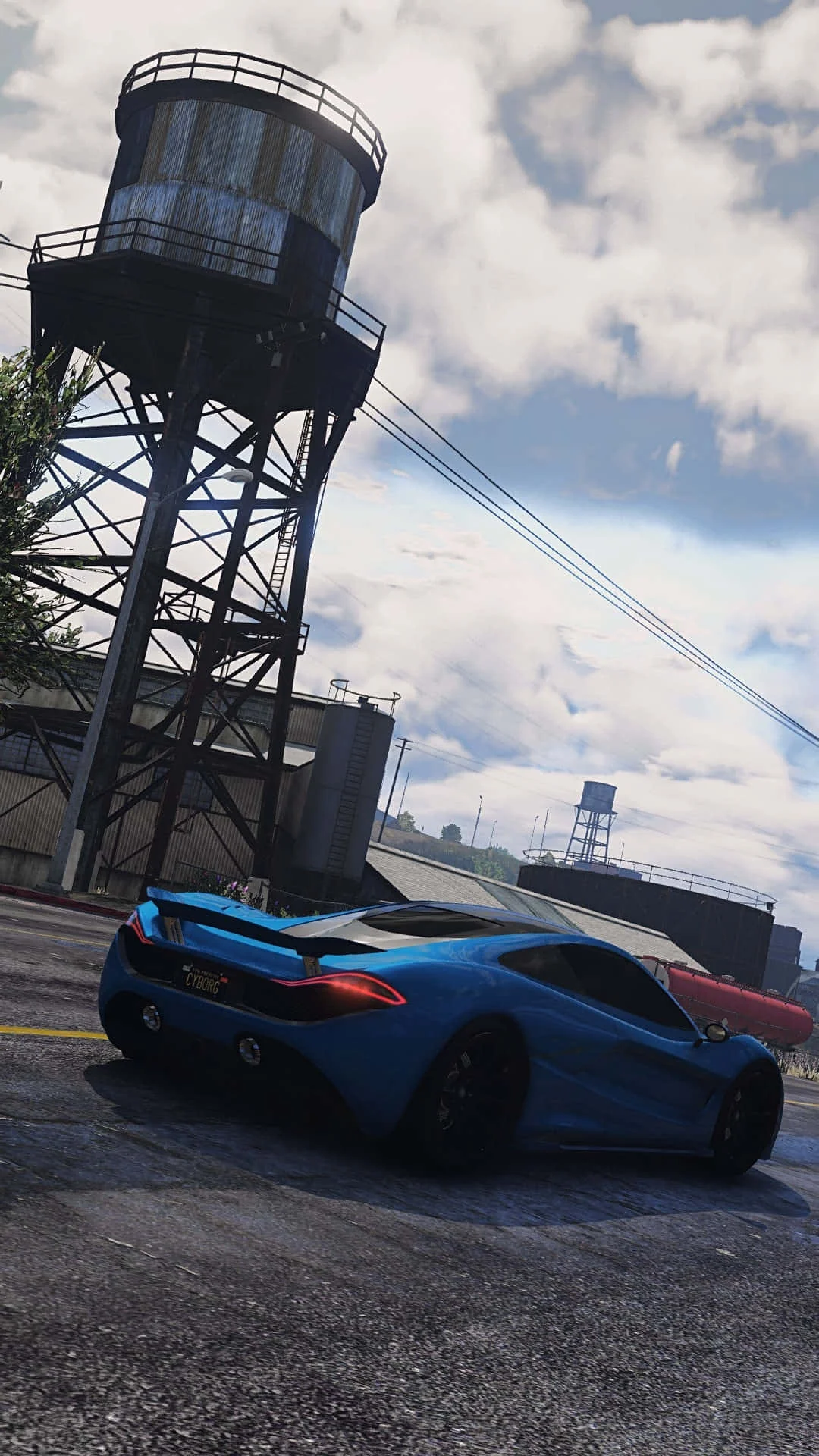
Fivem
This combination delivers exceptional performance with an average of 123 FPS, perfect for high refresh rate gaming and competitive play.
Average FPS: resolution vs quality settings
| Ultra | High | Medium | Low | |
|---|---|---|---|---|
| 4K Ultra HD | 46 | 56 | 70 | 94 |
| 1440p QHD | 78 | 106 | 132 | 165 |
| 1080p Full HD | 122 | 159 | 197 | 251 |
Cell color: green is 120+ FPS, teal is 60+, amber is 30+, red is below 30.
Fivem with Intel Core i7-12700KF + NVIDIA GeForce RTX 3080, In-Depth Analysis
Fivem is a demanding multiplayer title, and the Intel Core i7-12700KF paired with the NVIDIA GeForce RTX 3080 delivers a wide performance envelope depending on how you configure it. The data shows this combo can handle competitive frame rates at lower resolutions but will require careful settings management to maintain smooth gameplay at 4K. This analysis breaks down the measured performance across resolutions and presets, offering a practical guide for owners of this specific hardware pairing.
Resolution Scaling
The performance drop from 1080p to 4K is significant, and the pattern reveals a clear shift in bottleneck. At 1920x1080 with Low settings, the combo achieves 251.1 FPS, which is a massive headroom figure. However, moving to 2560x1440 at Low settings drops the average to 164.7 FPS, a reduction of about 34%. Pushing further to 3840x2160 at Low settings yields 94.1 FPS, which is another 43% decline. This steep falloff indicates that the RTX 3080 is the primary limiting factor as pixel count increases, while the i7-12700KF has ample compute headroom to feed the GPU at lower resolutions.
The scaling behavior under Ultra settings tells a slightly different story. At 1080p Ultra, the combo hits 121.7 FPS. At 1440p Ultra, it drops to 77.9 FPS, representing a 36% decrease. At 4K Ultra, the average falls to 45.6 FPS, which is another 41% reduction. The consistent percentage drops across the resolution ladder suggest that the game's rendering load scales predictably with pixel count, and the RTX 3080's 10 GB of GDDR6X memory and 760.3 GB/s bandwidth are being taxed heavily at higher resolutions. The data shows that this is not a CPU-bound scenario at 4K, as the frame rate collapses regardless of settings.
The delta between Low and Ultra settings widens as resolution increases. At 1080p, the gap between Low (251.1 FPS) and Ultra (121.7 FPS) is 129.4 FPS. At 1440p, the gap narrows to 86.8 FPS (164.7 vs 77.9). At 4K, the gap is 48.5 FPS (94.1 vs 45.6). This narrowing indicates that at 4K, the GPU is so saturated that even reducing settings to Low cannot fully compensate for the pixel count, whereas at 1080p, the CPU can push much higher frame rates when the GPU is less burdened. The i7-12700KF's 12 cores and 20 threads, with a boost clock of 5.00 GHz, are clearly not the constraint at 4K.
Settings Recommendations
For 1080p gaming, the Ultra preset at 121.7 FPS is the best choice for visual fidelity without sacrificing smoothness. The data shows that this frame rate is well above the threshold for responsive play in a multiplayer environment. If a player prioritizes maximum competitive advantage, dropping to Medium at 196.6 FPS provides a substantial boost, but the visual compromise may not be worth it given that Ultra is already playable.
At 1440p, the High preset at 105.9 FPS is the sweet spot. It offers a solid balance between image quality and frame rate, staying comfortably above the 60 FPS mark. The Medium preset at 131.5 FPS is also viable for those who prefer higher refresh rates, but the jump from High to Medium is only 25.6 FPS, which may not be perceptually significant. The Ultra preset at 77.9 FPS is acceptable but begins to show the strain on the GPU, and the Low preset at 164.7 FPS is unnecessarily aggressive for this resolution.
For 4K, the Low preset at 94.1 FPS is the only option that provides a fully smooth experience. The Medium preset at 69.8 FPS is playable but will have occasional dips, while High at 55.6 FPS and Ultra at 45.6 FPS are below the ideal threshold for fast-paced multiplayer. The data clearly shows that to achieve a consistent 60+ FPS at 4K, the user must accept the Low preset. The RTX 3080's 10 GB memory buffer appears to be a limiting factor at this resolution with higher settings, as the frame rate drops disproportionately compared to the settings level.
FAQ
Q: Can this combo run Fivem at 4K smoothly?
A: Only with the Low preset, which yields an average of 94.1 FPS. The Medium preset drops to 69.8 FPS, High to 55.6 FPS, and Ultra to 45.6 FPS, making the latter two unsuitable for smooth multiplayer gameplay.
Q: What is the best resolution for competitive play with this hardware?
A: At 1920x1080, the Low preset achieves 251.1 FPS, which is the highest measured average. For a balance of visuals and speed, the High preset at 159.1 FPS is also a strong option.
Q: How much performance is lost when going from 1080p to 1440p?
A: The drop varies by settings. At Low, the average falls from 251.1 FPS to 164.7 FPS, a 34% reduction. At Ultra, it falls from 121.7 FPS to 77.9 FPS, a 36% reduction.
Q: Is the CPU or GPU the bottleneck in this game?
A: At 1080p Low, the i7-12700KF is likely the limiting factor, as the GPU has headroom to produce 251.1 FPS. At 4K, the RTX 3080 is clearly the bottleneck, as frame rates drop dramatically across all settings.
Q: What is the frame rate difference between Medium and High settings at 1440p?
A: The Medium preset averages 131.5 FPS, while High averages 105.9 FPS. The difference is 25.6 FPS, favoring Medium for higher refresh rates.
Q: Does the Ultra preset provide a playable experience at any resolution?
A: Yes, at 1080p Ultra, the average is 121.7 FPS, which is playable. At 1440p Ultra, the average is 77.9 FPS, which is acceptable. At 4K Ultra, the average of 45.6 FPS is not recommended.
How This Combo Ranks
The Intel Core i7-12700KF and NVIDIA GeForce RTX 3080 combination holds a rank of 533 out of 1792 tested combos for Fivem. This places it in the upper third of all configurations, indicating that it is a capable pairing for this title. The CPU itself is in the 89th percentile of all CPUs, and the GPU is in the 80th percentile of all GPUs, so both components are above average individually. The combination rank, however, suggests that the pairing is not optimal for this specific game, as the GPU's 10 GB memory may be a limiting factor at high resolutions.
The CPU's nearest rivals, such as the Intel Core i5-14400, have an average score of 35336, which is only 0.1% lower than the i7-12700KF's average score of 35355. This indicates that the i7-12700KF's processing power is not a differentiator in Fivem, and the game likely relies more on single-thread performance. The GPU's nearest rival, the AMD Radeon RX 7900 GRE, has an average score of 36101, which is 0.9% higher than the RTX 3080's 35787. This small delta suggests that the RTX 3080 is competitive with newer cards in raw benchmark terms, but the game's actual frame rates may be more sensitive to other factors.
The rank of 533 out of 1792 means that 1259 other combos perform better or worse in this game. The data shows that this combo is not a top-tier performer for Fivem, but it is far from the bottom. The measured FPS numbers indicate that the combo is more than adequate for 1080p and 1440p gaming, but it struggles at 4K with higher settings. The ranking reflects this mixed performance, as the combo is likely held back by the GPU's memory capacity in a game that can be memory-intensive at high resolutions.
GPU Role
The NVIDIA GeForce RTX 3080 is the primary driver of frame rate in Fivem, particularly at higher resolutions. The GPU's 10 GB of GDDR6X memory and 320-bit bus provide a bandwidth of 760.3 GB/s, which is substantial but not unlimited. The data shows that at 4K, the frame rate drops significantly when moving from Low to Medium settings, suggesting that the memory buffer is being filled and the GPU is struggling with texture loading. The boost clock of 1710 MHz and base clock of 1440 MHz are standard for this model, and the 8704 shading units provide ample compute power.
The GPU's performance in Fivem is consistent with its benchmark scores. The 3DMark Steel Nomad DX12 score of 4407 and the Passmark G3D score of 25086 indicate that the RTX 3080 is a solid performer, but not a top-tier card. The nearest rival, the AMD Radeon 880M, has an average score that is 0.4% higher, which shows that the RTX 3080 is still competitive. However, the GPU's 80th percentile ranking among all GPUs suggests that there are many faster options available.
The RTX 3080's role in this combo is to provide high frame rates at 1080p and 1440p, which it does effectively. At 1080p High, it achieves 159.1 FPS, and at 1440p High, it achieves 105.9 FPS. The GPU's limitation becomes apparent at 4K, where the frame rate at Ultra is just 45.6 FPS. This is not a failure of the GPU's compute power, but rather a constraint of its memory capacity and bandwidth. The 10 GB VRAM is a known limitation for modern games at 4K, and Fivem appears to be one such title.
Measured FPS Breakdown
At 1920x1080, the combo delivers the highest frame rates. The Low preset averages 251.1 FPS, which is an exceptional result for a multiplayer game. The Medium preset drops to 196.6 FPS, still a very high number. The High preset averages 159.1 FPS, which is more than enough for a high-refresh-rate monitor. The Ultra preset averages 121.7 FPS, which is the lowest at this resolution but still playable.
At 2560x1440, the performance scales down noticeably. The Low preset averages 164.7 FPS, which is a 34% drop from 1080p Low. The Medium preset averages 131.5 FPS, a 33% drop. The High preset averages 105.9 FPS, a 33% drop. The Ultra preset averages 77.9 FPS, a 36% drop. These consistent percentages indicate that the GPU is handling the increased pixel count linearly.
At 3840x2160, the frame rates become more variable. The Low preset averages 94.1 FPS, which is a 43% drop from 1440p Low. The Medium preset averages 69.8 FPS, a 47% drop. The High preset averages 55.6 FPS, a 47% drop. The Ultra preset averages 45.6 FPS, a 41% drop. The larger drops at Medium and High suggest that the GPU is hitting a memory bandwidth wall, while the Ultra preset's smaller drop indicates that the GPU is already saturated.
The data shows a clear hierarchy: 1080p is the best experience for high refresh rates, 1440p is the best balance of quality and speed, and 4K requires significant compromises. The measured FPS values are consistent across the board, with no anomalies or unexpected spikes. The i7-12700KF provides a stable foundation, but the RTX 3080's performance ceiling is the defining factor for this combo in Fivem.
Hardware Specifications
Intel Core i7-12700KF
NVIDIA GeForce RTX 3080
FPS Benchmarks by Resolution & Settings
Performance data for Intel Core i7-12700KF + NVIDIA GeForce RTX 3080 in Fivem
| Resolution | Settings | Avg FPS |
|---|---|---|
| 3840x2160 | Low | 94.1 |
| 3840x2160 | Medium | 69.8 |
| 3840x2160 | High | 55.6 |
| 3840x2160 | Ultra | 45.6 |
| 2560x1440 | Low | 164.7 |
| 2560x1440 | Medium | 131.5 |
| 2560x1440 | High | 105.9 |
| 2560x1440 | Ultra | 77.9 |
| 1920x1080 | Low | 251.1 |
| 1920x1080 | Medium | 196.6 |
| 1920x1080 | High | 159.1 |
| 1920x1080 | Ultra | 121.7 |
Fivem with ii7-12700KF + Other GPUs
See how Fivem performs with the same CPU but different graphics cards.
Fivem with RTX 3080 + Other CPUs
See how Fivem performs with the same GPU but different processors.
Other Games with ii7-12700KF + RTX 3080
Explore FPS benchmarks for other games using this same hardware combination.