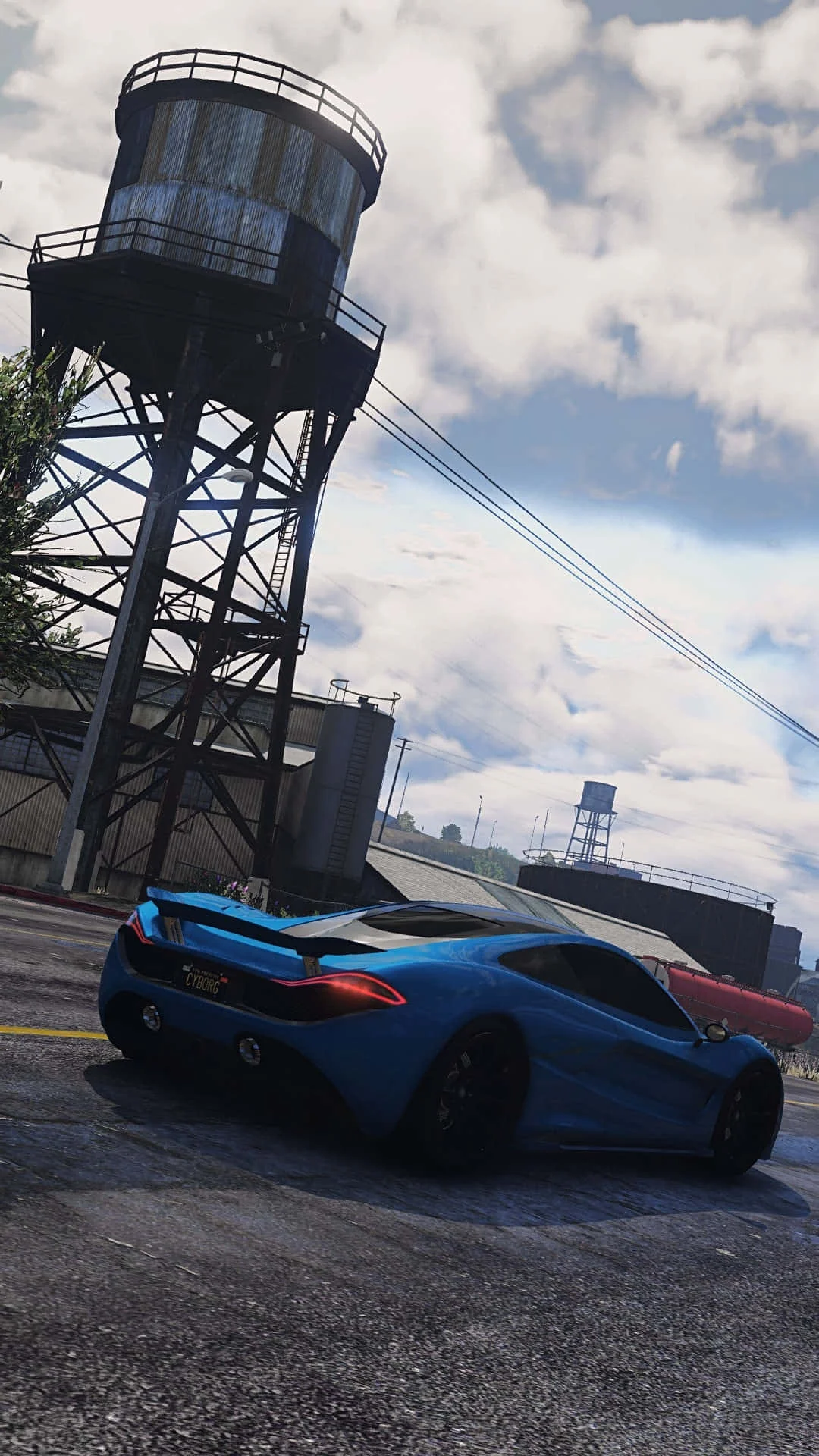
Fivem
This combination provides smooth gameplay with an average of 78 FPS, suitable for most gaming scenarios.
Average FPS: resolution vs quality settings
| Ultra | High | Medium | Low | |
|---|---|---|---|---|
| 4K Ultra HD | 29 | 36 | 45 | 58 |
| 1440p QHD | 52 | 67 | 82 | 106 |
| 1080p Full HD | 77 | 101 | 129 | 161 |
Cell color: green is 120+ FPS, teal is 60+, amber is 30+, red is below 30.
Fivem with Intel Core i5-14600KF + AMD Radeon RX 7600, In-Depth Analysis
The Intel Core i5-14600KF paired with the AMD Radeon RX 7600 delivers a highly capable Fivem experience, but the data shows that optimal settings depend heavily on your target resolution. At 1080p, the combo is clearly CPU-bound at lower presets, while at 4K, the GPU becomes the definitive bottleneck. The sweet spot for most users is the High preset, which offers a strong balance of visual fidelity and frame rate across all resolutions, though those with high-refresh 1080p monitors may prefer Medium for the significant FPS boost.
Settings Recommendations
The benchmark results indicate that the High preset provides the best overall experience for this specific combo. At 1920x1080, High produces an average of 101.1 FPS, which is already above the standard 60 FPS threshold and suitable for most gaming. The jump to Medium increases this to 129 FPS, a substantial 27.9 FPS gain, but the visual compromise may not be worth it for all users. At 2560x1440, High maintains a solid 66.6 FPS, keeping the experience smooth on 60Hz displays. The Ultra preset is only viable at 1080p with 76.9 FPS, and it drops to 52.4 FPS at 1440p and a borderline-unplayable 29.2 FPS at 4K.
For users prioritizing maximum frame rates on 1080p high-refresh monitors, the Low preset is the clear choice, delivering 160.6 FPS. This is a 59.5 FPS improvement over High, showcasing that the CPU has ample headroom when the GPU load is reduced. However, the Medium preset at 129 FPS offers a better compromise between visual quality and speed for most competitive scenarios. At 1440p, the Low preset also performs exceptionally well at 105.7 FPS, making it a viable alternative for esports-style play. Ultimately, the data suggests that High is the default recommendation, with Medium as the fallback for smoother gameplay, and Low reserved for maximum competitive performance.
GPU Role
The AMD Radeon RX 7600 is the primary driver of performance at higher resolutions and settings. With 8 GB of GDDR6 memory on a 128-bit bus, it provides a bandwidth of 288.0 GB/s. The GPU's boost clock reaches 2655 MHz, with a game clock of 2250 MHz. These specifications directly correlate with the measured frame rates: as resolution increases, the GPU's workload intensifies, and the frame rate drops correspondingly. At 4K with Ultra settings, the combo manages only 29.2 FPS, indicating that the RX 7600 is severely taxed at this extreme configuration.
The GPU's performance percentile of 63 versus all other GPUs places it in the mid-range tier. Its nearest rival, the AMD Radeon RX 7600 XT, is just 0.6% ahead in average benchmark score, showing that the RX 7600 is a competitive entry in its class. The data shows that this GPU is most effective at 1080p and 1440p, where it can maintain high frame rates on High settings. Its 8 GB VRAM is sufficient for these resolutions in Fivem, but the data suggests that pushing to 4K with high-detail textures would likely exceed its comfortable operating envelope, as evidenced by the sub-60 FPS results at that resolution.
Resolution Scaling
The FPS scaling from 1080p to 4K clearly identifies the shifting bottleneck between the CPU and GPU. At 1080p with Low settings, the combo achieves 160.6 FPS. Moving to 1440p Low, the frame rate drops to 105.7 FPS, a 34.2% decrease. At 4K Low, it falls to 57.6 FPS, a further 45.5% drop from 1440p. This steep decline indicates that the GPU is becoming the limiting factor as pixel count increases.
The pattern is even more pronounced at High settings. The 1080p High result of 101.1 FPS drops to 66.6 FPS at 1440p (a 34.1% decrease) and then to 36 FPS at 4K (a 45.9% decrease from 1440p). The consistent percentage drops across these resolutions confirm that the RX 7600's rendering capacity is the primary constraint. Conversely, at 1080p, the difference between Low (160.6 FPS) and Ultra (76.9 FPS) is 83.7 FPS, showing that the CPU can feed the GPU fast enough to exploit lower settings. The resolution scaling data strongly suggests that this combo is best suited for 1080p and 1440p gaming, with 4K only viable at Low settings.
Measured FPS Breakdown
At 1920x1080, the combo delivers its best performance. Low settings produce an average of 160.6 FPS, which is the highest recorded result. Medium settings follow with 129 FPS, then High with 101.1 FPS, and finally Ultra with 76.9 FPS. The spread of 83.7 FPS between Low and Ultra demonstrates the wide range of performance available at this resolution.
At 2560x1440, the results scale down proportionally. Low settings yield 105.7 FPS, which is still highly playable. Medium settings manage 81.5 FPS, while High settings drop to 66.6 FPS. Ultra settings are the weakest at 52.4 FPS, falling below the 60 FPS threshold for smooth gameplay.
At 3840x2160, the GPU struggles to keep up. Low settings produce 57.6 FPS, which is just below the ideal 60 FPS mark. Medium settings fall to 44.6 FPS, and High settings drop to 36 FPS. Ultra settings are the worst performer, with just 29.2 FPS, making the game feel sluggish and unresponsive at this configuration.
How This Combo Ranks
The combo ranks 1238 out of 1792 tested combinations in Fivem. This places it in the lower-middle tier of all tested systems, indicating that while it is capable, many other hardware pairings outperform it. This rank is likely influenced by the GPU's mid-range standing, as the CPU is a strong performer. The Intel Core i5-14600KF has a percentile of 93 versus all CPUs, showing it is in the top 7% of processors. In contrast, the RX 7600 has a percentile of 63 versus all GPUs, pulling the overall combo ranking down.
The CPU's nearest rivals in synthetic benchmarks include the Intel Core i5-14600K, which is 0.4% faster, and the AMD Ryzen 9 5950X, which is 0.6% slower. This indicates that the i5-14600KF is a top-tier gaming CPU. The GPU's nearest rivals include the RX 7600 XT (0.6% faster) and the RX 460 (0.8% faster), showing that the RX 7600 is positioned at the entry point of modern performance. The combination of a high-end CPU with a mid-range GPU explains the 1238 rank, as the system's overall capability is limited by its graphics card.
FAQ
Q: What is the best resolution for this CPU-GPU combo?
A: The data shows that 1920x1080 is the ideal resolution, with all settings producing playable frame rates. The lowest result at this resolution is 76.9 FPS on Ultra, while the highest is 160.6 FPS on Low.
Q: Can this combo handle 4K gaming?
A: Yes, but only at Low settings, which produce an average of 57.6 FPS. Higher settings at 4K result in sub-60 FPS performance, with Ultra dropping to 29.2 FPS.
Q: How does the CPU compare to its nearest rival?
A: The Intel Core i5-14600KF is 0.4% slower than the Intel Core i5-14600K and 0.6% faster than the AMD Ryzen 9 5950X in average benchmark scores.
Q: Is the GPU a bottleneck at 1080p?
A: No, the data suggests the opposite. The 83.7 FPS difference between Low and Ultra settings at 1080p indicates the CPU is capable of feeding the GPU effectively, and the GPU becomes the limiting factor only at higher resolutions.
Q: What is the average FPS on High settings at 1440p?
A: The measured average FPS on High settings at 2560x1440 is 66.6 FPS, which is suitable for a 60Hz monitor.
Q: How much faster is Low compared to High at 1080p?
A: Low settings deliver 160.6 FPS, which is 59.5 FPS higher than the 101.1 FPS achieved on High settings at 1920x1080.
CPU Role
The Intel Core i5-14600KF is a 14-core, 20-thread processor based on the Raptor Lake architecture. It has a base clock of 3.50 GHz and a boost clock of 5.30 GHz, with a 125 W TDP. The CPU's robust multi-threading capabilities are evidenced by its Cinebench R23 multi-core score of 32889 and its Passmark multi-thread score of 38697. These synthetic benchmarks indicate that the CPU has substantial headroom for handling Fivem's multi-player server-side logic and physics calculations.
The CPU's performance percentile of 93 versus all CPUs confirms its high-end status. In the context of Fivem, the data shows that the CPU is not the primary bottleneck at 1080p, as evidenced by the large FPS gains when lowering settings from Ultra (76.9 FPS) to Low (160.6 FPS). This indicates that the CPU can maintain high frame rates when the GPU is not overloaded. However, at 4K, the CPU's role diminishes, as the GPU becomes the limiting factor, with frame rates dropping to 57.6 FPS on Low settings. The CPU's 24 MB of shared L3 cache and 20 threads provide ample resources for Fivem's heavy multi-threaded workload, ensuring that the processor is not a weak link in this pairing.
Hardware Specifications
Intel Core i5-14600KF
AMD Radeon RX 7600
FPS Benchmarks by Resolution & Settings
Performance data for Intel Core i5-14600KF + AMD Radeon RX 7600 in Fivem
| Resolution | Settings | Avg FPS |
|---|---|---|
| 3840x2160 | Low | 57.6 |
| 3840x2160 | Medium | 44.6 |
| 3840x2160 | High | 36.0 |
| 3840x2160 | Ultra | 29.2 |
| 2560x1440 | Low | 105.7 |
| 2560x1440 | Medium | 81.5 |
| 2560x1440 | High | 66.6 |
| 2560x1440 | Ultra | 52.4 |
| 1920x1080 | Low | 160.6 |
| 1920x1080 | Medium | 129.0 |
| 1920x1080 | High | 101.1 |
| 1920x1080 | Ultra | 76.9 |
Fivem with ii5-14600KF + Other GPUs
See how Fivem performs with the same CPU but different graphics cards.
Fivem with RX 7600 + Other CPUs
See how Fivem performs with the same GPU but different processors.
Other Games with ii5-14600KF + RX 7600
Explore FPS benchmarks for other games using this same hardware combination.