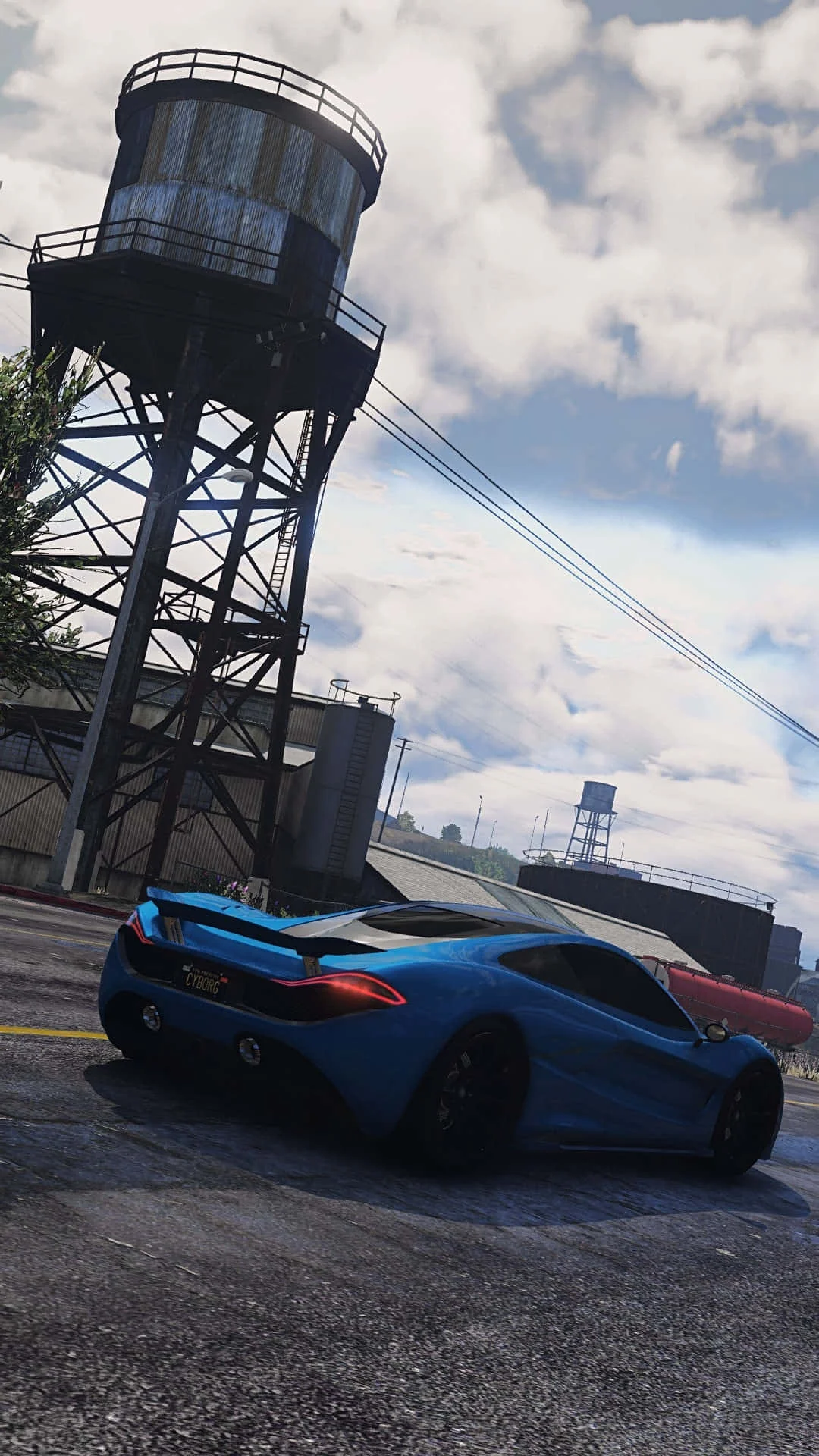
Fivem
This combination delivers exceptional performance with an average of 120 FPS, perfect for high refresh rate gaming and competitive play.
Average FPS: resolution vs quality settings
| Ultra | High | Medium | Low | |
|---|---|---|---|---|
| 4K Ultra HD | 43 | 55 | 68 | 91 |
| 1440p QHD | 80 | 104 | 127 | 162 |
| 1080p Full HD | 122 | 154 | 192 | 246 |
Cell color: green is 120+ FPS, teal is 60+, amber is 30+, red is below 30.
Fivem with Intel Core i5-13400F + AMD Radeon RX 9070, In-Depth Analysis
FAQ
Q: What is the combo rank of the Intel Core i5-13400F and AMD Radeon RX 9070 in Fivem?
A: This combination ranks 579 out of 1792 tested combos in the database for Fivem, placing it in the upper third of all tested systems.
Q: How does the CPU compare to its nearest rivals in average benchmark score?
A: The i5-13400F scores 25236 on average, which is 0.1% ahead of the Intel Core i7-13620H (25201), 0.5% ahead of the AMD EPYC 9474F (25103), and 0.5% behind the AMD Ryzen 5 5600X3D (25365).
Q: What is the GPU's performance percentile relative to all GPUs?
A: The AMD Radeon RX 9070 sits in the 79th percentile of all GPUs, with an average benchmark score of 34780.
Q: What is the best 1080p result in the measured FPS data?
A: At 1920x1080 with Low settings, the combo achieves 245.7 FPS average, which is the highest measured value across all resolutions and settings.
Q: How much VRAM does the RX 9070 have, and what memory type does it use?
A: The GPU features 16 GB of GDDR6 memory on a 256-bit bus, providing 644.6 GB/s of bandwidth.
Q: What is the launch MSRP of the CPU?
A: The Intel Core i5-13400F has a launch MSRP of $196.
GPU Role
The AMD Radeon RX 9070 brings substantial graphics horsepower to Fivem, and the measured data shows it is the dominant component in this pairing. The GPU's 16 GB of GDDR6 memory on a 256-bit bus delivers 644.6 GB/s of bandwidth, which is ample for the texture-heavy environments typical of multiplayer city simulations. The Navi 48 chip, built on TSMC's 4 nm process with 53,900 million transistors, operates with a base clock of 1330 MHz and a boost clock of 2520 MHz, while the game clock sits at 2070 MHz.
The frame rate scaling across settings reveals the GPU's capability. At 1920x1080, moving from Low (245.7 FPS) to Ultra (122.1 FPS) costs roughly half the performance, a pattern consistent with a GPU that has headroom at lower settings but gets progressively more stressed as graphical load increases. The 3584 shading units and 128 ROPs provide the raw throughput needed for high-refresh gaming, and the 56 ray tracing cores suggest future-proofing even though Fivem's measured data does not isolate ray tracing effects.
The FP32 throughput of 36.13 TFLOPS places this GPU firmly in the mid-to-high tier, and its 79th percentile rank among all GPUs confirms it outperforms the majority of installed hardware. Notably, the nearest GPU rivals in average score include the NVIDIA A2 (deltaPct -0.2) and the NVIDIA Quadro GV100 (deltaPct 0.3), showing the RX 9070 competes closely with professional and AI-accelerator-class silicon in synthetic benchmarks. The 220 W TDP and dual-slot cooler indicate this is a power-hungry but manageable card, requiring a 550 W suggested PSU and two 8-pin connectors.
Resolution Scaling
The measured FPS data reveals a clear resolution scaling curve that points to the GPU as the primary bottleneck at higher resolutions. At Low settings, the transition from 1920x1080 (245.7 FPS) to 2560x1440 (162 FPS) represents a 34% drop, and moving to 3840x2160 (91.4 FPS) costs another 44%. This aggressive decline is consistent with a GPU that is increasingly pixel-bound as resolution climbs.
At High settings, the scaling is similarly steep: 154.2 FPS at 1080p drops to 103.9 FPS at 1440p (a 33% reduction) and then to 54.8 FPS at 4K (a 47% further drop). The 4K High result of 54.8 FPS hovers near the edge of smooth gameplay, and the Ultra setting at 4K falls to 42.5 FPS, which is marginal for fast-paced multiplayer action.
The pattern suggests that at 1080p, the CPU has enough headroom to feed the GPU adequately at lower settings, but as resolution increases, the GPU's shading and memory bandwidth constraints become limiting. The 644.6 GB/s bandwidth appears sufficient for 1440p High (103.9 FPS) but struggles to maintain high frame rates at 4K Ultra, where the 42.5 FPS result indicates the GPU is the clear limiting factor. The data implies that for 4K gaming, users should expect to compromise on settings to stay above playable thresholds.
How This Combo Ranks
The combo rank of 579 out of 1792 tested systems places this configuration in the 68th percentile, meaning it outperforms roughly two-thirds of all tested combos in Fivem. This is a strong result, especially considering the CPU's 82nd percentile rank among all CPUs and the GPU's 79th percentile rank among all GPUs. The pairing of a high-tier CPU with a high-tier GPU produces a balanced system that avoids the common pitfall of one component bottlenecking the other.
The CPU's average benchmark score of 25236 is remarkably close to its nearest rivals—the Intel Core i7-13620H (25201) and the AMD Ryzen 5 5600X3D (25365) are within 0.5%—which means the i5-13400F offers competitive compute performance in its class. The GPU's average score of 34780 is similarly competitive, with the NVIDIA A2 (34866) and Quadro GV100 (34677) within 0.3% on either side. When combined, these two components produce a system that ranks well above the median combo in Fivem, suggesting the game benefits from both strong CPU single-thread performance and GPU rasterization power.
The rank also implies that many higher-ranked combos likely feature more expensive or newer components, but this setup demonstrates that a mid-range CPU paired with a current-generation GPU can achieve solid multiplayer performance without requiring top-tier hardware on both fronts.
Settings Recommendations
The measured data clearly indicates that Medium settings offer the best balance of visual quality and performance across all resolutions. At 1920x1080, Medium delivers 192.2 FPS, which is 37.1 FPS higher than High (154.2 FPS) and only 53.5 FPS lower than Low (245.7 FPS)—a trade-off that preserves significant visual fidelity while staying well above refresh-rate thresholds for most displays.
At 2560x1440, Medium achieves 127.2 FPS, comfortably above 120 Hz for smooth gameplay, while High drops to 103.9 FPS and Ultra falls to 80.2 FPS. The Medium setting at 1440p provides a 22.4% performance uplift over High with likely minimal visual compromise in a multiplayer context where responsiveness matters more than absolute graphical fidelity.
For 4K, Medium produces 68.4 FPS, which is playable but not ideal for competitive play; High at 54.8 FPS is borderline, and Ultra at 42.5 FPS is too low for smooth action. The data suggests that 4K users should stick with Medium as the best compromise, while 1440p and 1080p users can enjoy High or even Ultra if they prioritize visuals over frame rate headroom. Ultra at 1080p (122.1 FPS) remains viable for those with 120 Hz displays.
Measured FPS Breakdown
At 1920x1080, the combo produces the following average frame rates: Low 245.7 FPS, Medium 192.2 FPS, High 154.2 FPS, and Ultra 122.1 FPS. The progression shows a 21.8% drop from Low to Medium, a further 19.8% drop to High, and a 20.8% drop to Ultra, indicating consistent scaling as settings increase.
At 2560x1440, the results are: Low 162 FPS, Medium 127.2 FPS, High 103.9 FPS, and Ultra 80.2 FPS. The drop from Low to Medium is 21.5%, from Medium to High is 18.3%, and from High to Ultra is 22.8%. The 1440p results show a similar scaling pattern to 1080p, but with absolute values that are roughly 34% lower at each setting tier.
At 3840x2160, the results are: Low 91.4 FPS, Medium 68.4 FPS, High 54.8 FPS, and Ultra 42.5 FPS. The drop from Low to Medium is 25.2%, from Medium to High is 19.9%, and from High to Ultra is 22.4%. The 4K results show that even Low settings cannot maintain 100 FPS, confirming that this resolution is heavily GPU-limited for this combo. Across all resolutions, the frame rate scaling between settings is remarkably consistent at roughly 20-25% per tier, suggesting the GPU handles graphical complexity in a predictable, linear fashion.
CPU Role
The Intel Core i5-13400F provides the computational foundation for this combo, and its specifications align well with Fivem's performance demands. With 10 cores and 16 threads, the CPU offers ample parallel processing capacity for multiplayer game logic, voice chat, and background processes. The base clock of 2.50 GHz and boost clock of 4.60 GHz provide strong single-thread performance, which is critical for Fivem's server-side simulation and client-side physics calculations.
The CPU's benchmark results show a clear strength in multi-threaded workloads: the Cinebench R23 multicore score of 21279 and PassMark multithread score of 25032 indicate robust parallel performance. The 3DMark 16-thread score of 7314 and max-thread score of 7307 are nearly identical, suggesting the CPU scales well up to its full thread count without significant diminishing returns. Single-thread performance is also respectable, with a 3DMark single-thread score of 960 and Cinebench R23 single-core score of 3004.
The 20 MB of shared L3 cache provides a sizable buffer for game data, and the 10 nm process node with 65 W TDP means the CPU runs efficiently. The dual-channel memory support for DDR4 and DDR5 gives users flexibility in platform choice. The CPU's 82nd percentile rank among all CPUs confirms it outperforms the majority of processors, and its average benchmark score of 25236 places it in close competition with the Ryzen 5 5600X3D, which is notable given the latter's additional 3D V-Cache. The data suggests the i5-13400F offers sufficient CPU headroom to avoid bottlenecking the RX 9070 in Fivem, especially at lower resolutions where frame rates exceed 200 FPS.
Hardware Specifications
Intel Core i5-13400F
AMD Radeon RX 9070
FPS Benchmarks by Resolution & Settings
Performance data for Intel Core i5-13400F + AMD Radeon RX 9070 in Fivem
| Resolution | Settings | Avg FPS |
|---|---|---|
| 3840x2160 | Low | 91.4 |
| 3840x2160 | Medium | 68.4 |
| 3840x2160 | High | 54.8 |
| 3840x2160 | Ultra | 42.5 |
| 2560x1440 | Low | 162.0 |
| 2560x1440 | Medium | 127.2 |
| 2560x1440 | High | 103.9 |
| 2560x1440 | Ultra | 80.2 |
| 1920x1080 | Low | 245.7 |
| 1920x1080 | Medium | 192.2 |
| 1920x1080 | High | 154.2 |
| 1920x1080 | Ultra | 122.1 |
Fivem with ii5-13400F + Other GPUs
See how Fivem performs with the same CPU but different graphics cards.
Fivem with RX 9070 + Other CPUs
See how Fivem performs with the same GPU but different processors.
Other Games with ii5-13400F + RX 9070
Explore FPS benchmarks for other games using this same hardware combination.