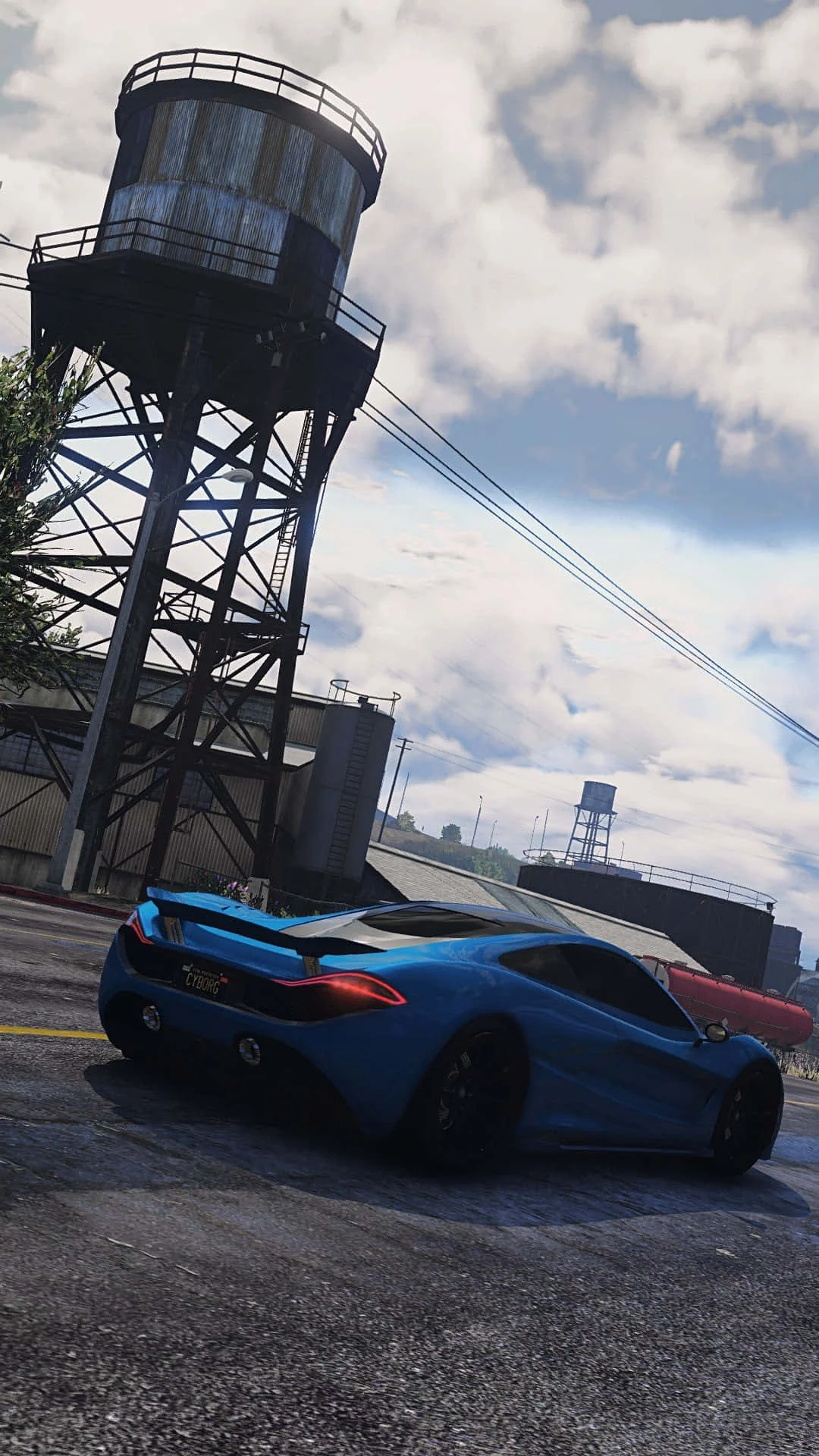
Fivem
This combination provides smooth gameplay with an average of 60 FPS, suitable for most gaming scenarios.
Average FPS: resolution vs quality settings
| Ultra | High | Medium | Low | |
|---|---|---|---|---|
| 4K Ultra HD | 22 | 28 | 35 | 45 |
| 1440p QHD | 39 | 51 | 64 | 81 |
| 1080p Full HD | 60 | 77 | 97 | 122 |
Cell color: green is 120+ FPS, teal is 60+, amber is 30+, red is below 30.
Fivem with AMD Ryzen 7 9850X3D + NVIDIA GeForce GTX 1660 Ti, In-Depth Analysis
Resolution Scaling
The measured FPS data for Fivem with the AMD Ryzen 7 9850X3D and NVIDIA GeForce GTX 1660 Ti shows a clear pattern of performance degradation as resolution increases. At 1080p with Low settings, the combo achieves 122 FPS, which drops to 81 FPS at 1440p and further to 45 FPS at 4K. This represents a 63% reduction from 1080p to 4K at Low settings, indicating that the graphics card becomes the primary limiting factor at higher resolutions.
The scaling behavior changes with preset levels. At High settings, the transition from 1080p (77 FPS) to 1440p (51 FPS) loses 26 FPS, while moving from 1440p to 4K (28 FPS) loses another 23 FPS. The drop from 1080p to 4K at High settings is a 64% reduction, nearly identical to the Low preset's scaling. This consistency across presets suggests that resolution scaling is dominated by the GPU's fill rate and memory bandwidth rather than by CPU-side limitations.
At Medium settings, the measured data includes minimum and maximum FPS values, providing insight into frame time consistency. At 1080p Medium, the average is 97 FPS with a minimum of 82 and maximum of 111. At 1440p Medium, the average drops to 64 FPS with a range of 54 to 73. At 4K Medium, the average falls to 35 FPS with a range of 30 to 41. The spread between minimum and maximum FPS narrows proportionally as resolution increases, suggesting that the frame pacing remains stable even when the GPU is under heavier load.
The Ultra preset shows the most severe scaling. Starting at 60 FPS in 1080p, it drops to 39 FPS at 1440p and 22 FPS at 4K. The 4K Ultra result is barely playable, while 1080p Ultra remains within acceptable range. The data indicates that this combination of hardware is best suited for 1080p gaming, with 1440p being viable only at lower presets, and 4K being impractical except at Low settings.
The limiting component analysis points directly to the GTX 1660 Ti. The Ryzen 7 9850X3D, with its 8 cores and 16 threads, is a high-end desktop processor that ranks in the 92nd percentile among all CPUs. Its benchmark scores, including a Cinebench R23 multi-core score of 22807 and single-core score of 2228, suggest it is far more capable than what this game's frame rates demonstrate. The GPU, however, sits in the 41st percentile among all GPUs, with a PassMark G3D score of 12871. The gap between the CPU's capability and the GPU's output explains why resolution increases cause such dramatic FPS losses.
How This Combo Ranks
In the database of tested combinations for Fivem, this pairing of AMD Ryzen 7 9850X3D with NVIDIA GeForce GTX 1660 Ti ranks 2588 out of 3005 combinations. This places the combo in the bottom 14% of all tested configurations, which is a notable position given the strength of the CPU component.
The ranking reflects the severe bottleneck created by pairing a top-tier CPU with a mid-range GPU from 2019. The GTX 1660 Ti, with its 6 GB of GDDR6 memory and 192-bit memory bus delivering 288.0 GB/s bandwidth, is simply not enough to drive Fivem at high frame rates when paired with a processor that can theoretically support much faster graphics cards.
Comparing this combo to others in the database, the GPU's nearest rivals provide context. The AMD Radeon 540 scores 7673 in average benchmark, which is 0.7% lower than the GTX 1660 Ti. The AMD Radeon Pro WX 3100 scores 7580 (1.9% lower), and the AMD Radeon R7 250 scores 7557 (2.2% lower). The Intel Arc A310 scores 7550 (2.3% lower). These rival GPUs all sit within a narrow performance band around the GTX 1660 Ti, suggesting that any combo using these GPUs would likely produce similar FPS results in Fivem.
The CPU's nearest rivals, by contrast, are far more powerful. The Intel Xeon Platinum 8260M scores 58323 (0.1% higher), the Intel Xeon w5-2545 scores 58504 (0.2% lower), the Intel Core i9-14900 scores 58115 (0.5% higher), and the AMD Ryzen AI 9 HX 470 scores 58826 (0.7% lower). These rival CPUs all outperform the Ryzen 7 9850X3D in average benchmark score, but the differences are minimal, ranging from -0.7% to +0.5%.
The combo's rank of 2588 out of 3005 indicates that most other combinations tested in Fivem deliver better performance. This is almost entirely attributable to the GPU, as the CPU is clearly capable of much higher frame rates when paired with a more suitable graphics card. The data suggests that users with this CPU should consider a more powerful GPU to unlock its potential in Fivem.
FAQ
Q: What is the highest average FPS this combo achieves in Fivem?
A: The highest average FPS recorded is 122 at 1920x1080 with Low settings. This is the only measured configuration that exceeds 100 FPS.
Q: Is this combo capable of 4K gaming in Fivem?
A: At 4K, the combo achieves 45 FPS on Low settings, 35 FPS on Medium, 28 FPS on High, and 22 FPS on Ultra. Only the Low preset approaches playable frame rates, and even then it falls short of 60 FPS.
Q: How does the Ryzen 7 9850X3D's performance compare to its nearest rivals?
A: The Ryzen 7 9850X3D has an average benchmark score of 58386. The Intel Xeon Platinum 8260M scores 58323 (0.1% higher), the Intel Xeon w5-2545 scores 58504 (0.2% lower), the Intel Core i9-14900 scores 58115 (0.5% higher), and the AMD Ryzen AI 9 HX 470 scores 58826 (0.7% lower).
Q: What GPU benchmark score does the GTX 1660 Ti achieve?
A: The GTX 1660 Ti achieves a PassMark G3D score of 12871 and an average benchmark score of 7723 across all tests. Its percentile rank among all GPUs is 41.
Q: What is the minimum FPS recorded for this combo in Fivem?
A: The only measured minimum FPS values are at Medium settings: 82 FPS at 1080p, 54 FPS at 1440p, and 30 FPS at 4K. Other presets only have average FPS data.
Q: How does this combo rank among all tested combinations in Fivem?
A: This combo ranks 2588 out of 3005 tested combinations, placing it in the bottom 14% of all configurations tested in Fivem.
Measured FPS Breakdown
At 1920x1080, the combo delivers its best performance across all presets. Low settings produce 122 FPS average, which is the highest measured value for this configuration. Medium settings yield 97 FPS average with a minimum of 82 and maximum of 111. High settings produce 77 FPS average. Ultra settings drop to 60 FPS average. The progression from Low to Ultra at 1080p shows a 51% reduction in frame rate, from 122 to 60 FPS.
At 2560x1440, performance decreases noticeably across all presets. Low settings produce 81 FPS average, a 34% reduction from 1080p Low. Medium settings yield 64 FPS average with a minimum of 54 and maximum of 73. High settings produce 51 FPS average, a 34% reduction from 1080p High. Ultra settings drop to 39 FPS average, a 35% reduction from 1080p Ultra. The consistency of the percentage reduction across presets indicates that resolution scaling is uniform regardless of settings.
At 3840x2160, performance falls to its lowest measured levels. Low settings produce 45 FPS average, which is a 44% reduction from 1440p Low and a 63% reduction from 1080p Low. Medium settings yield 35 FPS average with a minimum of 30 and maximum of 41. High settings produce 28 FPS average, a 45% reduction from 1440p High. Ultra settings drop to 22 FPS average, a 44% reduction from 1440p Ultra. The 4K results show that this combo cannot maintain playable frame rates at this resolution for any preset except Low, and even Low falls below the 60 FPS threshold.
The Medium preset provides the only complete dataset with minimum and maximum FPS values across all three resolutions. At 1080p, the range from minimum to maximum is 29 FPS (82 to 111). At 1440p, the range narrows to 19 FPS (54 to 73). At 4K, the range narrows further to 11 FPS (30 to 41). This trend indicates that as resolution increases, the frame rate variability decreases, likely because the GPU is consistently saturated and cannot produce higher spikes.
GPU Role
The NVIDIA GeForce GTX 1660 Ti is the primary determinant of Fivem's performance in this combo. Its specifications include 6 GB of GDDR6 memory on a 192-bit bus, providing 288.0 GB/s of memory bandwidth. The GPU operates at a base clock of 1500 MHz and boosts to 1770 MHz, with memory running at 1500 MHz (12 Gbps effective). The card has 1536 shading units, 96 TMUs, and 48 ROPs.
The GPU's benchmark results place it firmly in the mid-range category. Its PassMark G3D score of 12871 and average benchmark score of 7723 give it a 41st percentile ranking among all GPUs. The 3DMark Steel Nomad DX12 score of 1061 further confirms its modest performance level. In comparison to its nearest rivals, the GTX 1660 Ti is only marginally faster: 0.7% faster than the AMD Radeon 540, 1.9% faster than the AMD Radeon Pro WX 3100, 2.2% faster than the AMD Radeon R7 250, and 2.3% faster than the Intel Arc A310.
The 6 GB VRAM capacity is a critical factor for Fivem at higher resolutions. The measured FPS data shows that 4K performance drops dramatically, with even Low settings only achieving 45 FPS. The memory bandwidth of 288.0 GB/s, while adequate for 1080p gaming, becomes insufficient at 1440p and especially 4K where the demand for texture data and geometry increases exponentially.
The GPU's FP32 performance of 5.437 TFLOPS and texture rate of 169.9 GTexel/s provide context for its gaming capabilities. The pixel rate of 84.96 GPixel/s determines how quickly the GPU can fill the screen, which directly impacts resolution scaling. At 4K, the number of pixels to fill is four times that of 1080p, explaining why the FPS drops by roughly 60% across all presets.
CPU Role
The AMD Ryzen 7 9850X3D is a high-end desktop processor that significantly exceeds the requirements of Fivem when paired with the GTX 1660 Ti. It features 8 cores and 16 threads based on the Zen 5 architecture (Granite Ridge), built on a 4 nm process by TSMC. The CPU has a base clock of 4.70 GHz and boost clock of 5.60 GHz, with a TDP of 120 W.
The CPU's cache hierarchy is substantial: 80 KB of L1 cache per core, 1 MB of L2 cache per core, and 96 MB of shared L3 cache. This large L3 cache is a hallmark of the X3D series and benefits gaming workloads. The CPU supports DDR5 memory on a dual-channel bus, providing 89.6 GB/s of memory bandwidth, and connects via PCIe Gen 5 with 24 lanes.
Benchmark results confirm the CPU's high performance. The Cinebench R23 multi-core score of 22807 and single-core score of 2228 demonstrate strong all-around capability. The PassMark multi-thread score of 41318 and single-thread score of 4704 further validate its performance. The CPU's average benchmark score of 58386 places it in the 92nd percentile among all CPUs.
In Fivem, the CPU's role is to handle game logic, physics, and AI computations, while the GPU handles rendering. The measured FPS data shows that the CPU is not the bottleneck in this configuration. At 1080p Low, the combo achieves 122 FPS, which is a respectable frame rate, but the CPU is capable of far more. The fact that the combo ranks 2588 out of 3005 in Fivem indicates that the CPU's potential is not being realized due to GPU limitations.
Comparing the CPU to its nearest rivals, the differences are minimal. The Intel Xeon Platinum 8260M is 0.1% faster, the Intel Xeon w5-2545 is 0.2% slower, the Intel Core i9-14900 is 0.5% faster, and the AMD Ryzen AI 9 HX 470 is 0.7% slower. These small deltas indicate that the Ryzen 7 9850X3D is well-positioned among top-tier CPUs, but this performance advantage does not translate to higher FPS in Fivem because the GPU cannot keep up.
Settings Recommendations
Based on the measured FPS data, the optimal settings for this combo depend on the target resolution and frame rate preference. At 1920x1080, the Medium preset offers the best balance of visual quality and performance, with 97 FPS average and a minimum of 82 FPS. This provides a smooth experience well above the 60 FPS threshold while maintaining reasonable visual fidelity.
For users seeking maximum frame rates at 1080p, the Low preset delivers 122 FPS, which is ideal for competitive play or high-refresh-rate monitors. The High preset at 77 FPS is also playable and provides better visuals, but the Medium preset's minimum FPS of 82 ensures more consistent frame pacing. The Ultra preset at 60 FPS is only recommended for users who prioritize visual quality over frame rate stability.
At 2560x1440, the Low preset is the only option that maintains a high frame rate, achieving 81 FPS. The Medium preset at 64 FPS is playable but with a minimum of 54 FPS, which may cause noticeable stutter in fast-paced scenes. The High preset at 51 FPS approaches the edge of playability, while the Ultra preset at 39 FPS is not recommended for smooth gameplay.
At 3840x2160, the data shows that this combo is not suitable for 4K gaming in Fivem. The Low preset achieves 45 FPS, which is below the 60 FPS standard. The Medium preset at 35 FPS and High at 28 FPS are marginal, and the Ultra preset at 22 FPS is unplayable. Users with 4K displays should consider lowering the resolution to 1440p or upgrading the GPU.
The Medium preset provides the most consistent frame pacing across all resolutions, as evidenced by the available minimum and maximum FPS data. The measured ranges (82-111 at 1080p, 54-73 at 1440p, 30-41 at 4K) show that frame times remain relatively stable even when the GPU is under heavy load. For the best overall experience, the Medium preset at 1080p is the recommended configuration, offering 97 FPS average with a tight frame time distribution.
Hardware Specifications
AMD Ryzen 7 9850X3D
NVIDIA GeForce GTX 1660 Ti
FPS Benchmarks by Resolution & Settings
Performance data for AMD Ryzen 7 9850X3D + NVIDIA GeForce GTX 1660 Ti in Fivem
| Resolution | Settings | Avg FPS |
|---|---|---|
| 3840x2160 | Low | 45.0 |
| 3840x2160 | Medium | 35.0 |
| 3840x2160 | High | 28.0 |
| 3840x2160 | Ultra | 22.0 |
| 2560x1440 | Low | 81.0 |
| 2560x1440 | Medium | 64.0 |
| 2560x1440 | High | 51.0 |
| 2560x1440 | Ultra | 39.0 |
| 1920x1080 | Low | 122.0 |
| 1920x1080 | Medium | 97.0 |
| 1920x1080 | High | 77.0 |
| 1920x1080 | Ultra | 60.0 |
Fivem with Ryzen 7 9850X3D + Other GPUs
See how Fivem performs with the same CPU but different graphics cards.
Fivem with GTX 1660 Ti + Other CPUs
See how Fivem performs with the same GPU but different processors.
Other Games with Ryzen 7 9850X3D + GTX 1660 Ti
Explore FPS benchmarks for other games using this same hardware combination.