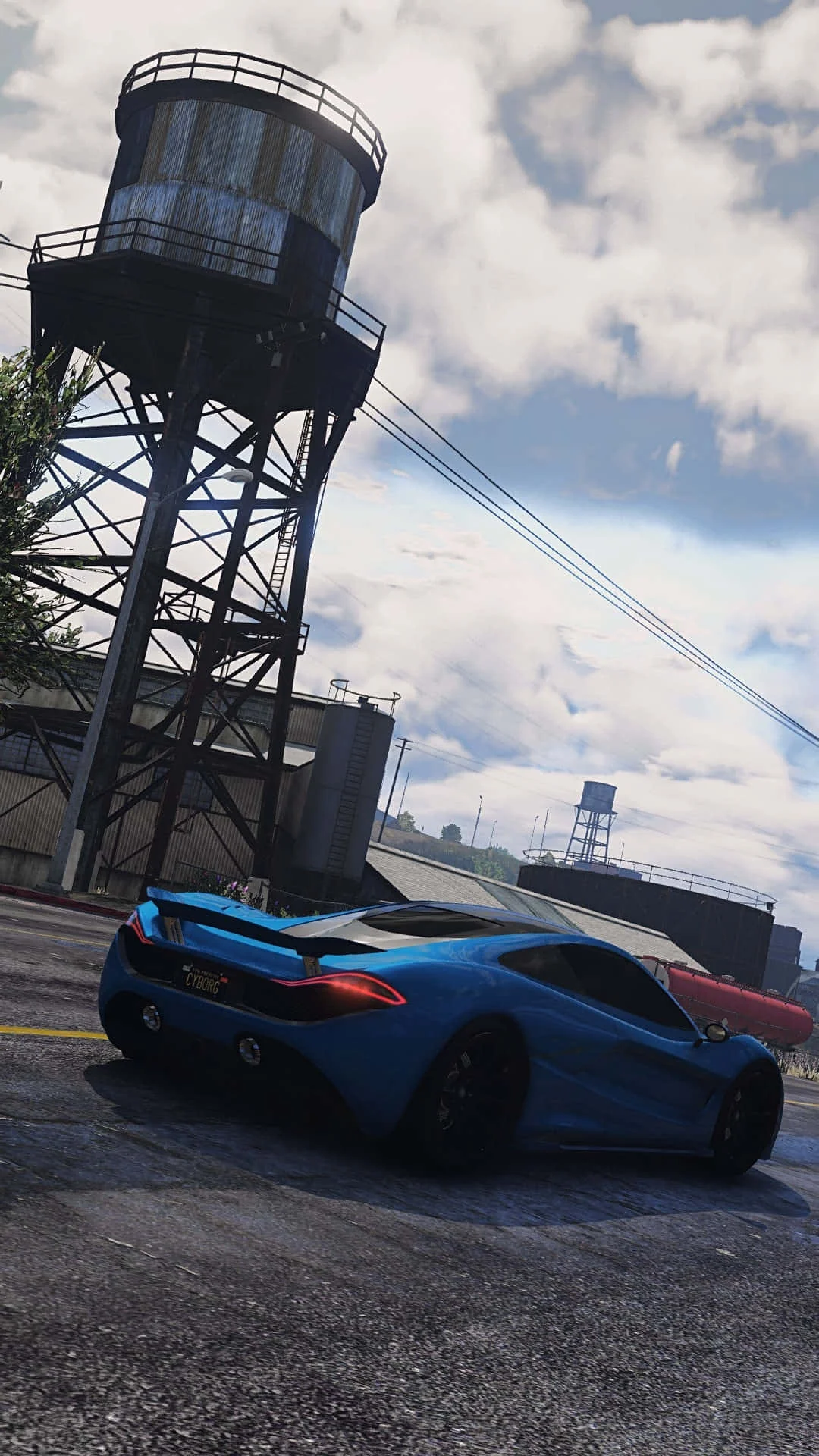
Fivem
This combination delivers exceptional performance with an average of 176 FPS, perfect for high refresh rate gaming and competitive play.
Average FPS: resolution vs quality settings
| Ultra | High | Medium | Low | |
|---|---|---|---|---|
| 4K Ultra HD | 66 | 86 | 105 | 133 |
| 1440p QHD | 119 | 155 | 193 | 241 |
| 1080p Full HD | 182 | 234 | 283 | 313 |
Cell color: green is 120+ FPS, teal is 60+, amber is 30+, red is below 30.
Fivem with AMD Ryzen 7 5800XT + NVIDIA GeForce RTX 4090, In-Depth Analysis
Fivem on the AMD Ryzen 7 5800XT and NVIDIA GeForce RTX 4090 combo delivers a wide performance envelope that scales predictably with resolution and settings. The data shows a system that is overwhelmingly GPU-bound at high resolutions but reveals the CPU's influence as the workload shifts toward lower pixel counts.
Resolution Scaling
The measured FPS values show a clear and consistent pattern: performance drops as resolution increases, but the rate of that drop is not uniform across settings presets. At 1080p High, the combo produces 233.6 FPS. Moving to 1440p High reduces that to 154.6 FPS, a 34% decrease, and then to 85.9 FPS at 4K High, which is another 44% drop from the 1440p figure. This steep decline from 1440p to 4K indicates that the RTX 4090 is the primary limiter at higher resolutions, as the pixel throughput demand outpaces the GPU's ability to feed frames.
The Low preset tells a different story. At 1080p Low, the system reaches 312.7 FPS. At 1440p Low, it still manages 241.4 FPS, a 23% reduction. But at 4K Low, the average falls to 132.9 FPS, a 45% drop from the 1440p result. The gap between 1080p and 1440p Low is relatively small (71.3 FPS), suggesting that the CPU is nearing its limit in this scenario; the graphics card has enough headroom to handle the extra pixels, but the processor cannot push frames much faster. The 4K Low result, however, shows the GPU taking over as the bottleneck again, since the frame rate drops sharply despite the low graphical load.
The Medium preset mirrors this trend. 1080p Medium yields 282.6 FPS, 1440p Medium drops to 192.5 FPS (a 32% reduction), and 4K Medium lands at 105.2 FPS (another 45% cut). Ultra settings produce the lowest overall numbers but follow the same shape: 181.5 FPS at 1080p, 119 FPS at 1440p, and 65.7 FPS at 4K. The Ultra preset's scaling from 1080p to 1440p is a 34% drop, and from 1440p to 4K it is a 45% drop, consistent with the other presets.
The key insight from the scaling data is the crossover point. At 1080p, the difference between Low and Ultra is 131.2 FPS, showing that the CPU can still deliver high frame rates even when the GPU is lightly loaded. At 4K, the difference between Low and Ultra shrinks to 67.2 FPS, because the GPU becomes the limiting factor regardless of settings. This indicates that for 1080p and 1440p gaming, the Ryzen 7 5800XT is sufficient to feed the RTX 4090, but at 4K, the GPU's raw compute is the dominant constraint.
CPU Role
The AMD Ryzen 7 5800XT is an 8-core, 16-thread processor built on the Zen 3 architecture (codenamed Vermeer) with a base clock of 3.80 GHz and a boost clock of 4.80 GHz. Its benchmark results show a strong single-thread score of 959 in 3DMark and 3359 in Cinebench R23 single-core, which explains why it can sustain high frame rates in Fivem at lower resolutions. The game, being a multiplayer title, often relies on a few heavily loaded threads for simulation and network handling, so the 5800XT's single-thread performance is directly relevant.
The processor's multi-threaded capabilities are also solid, with a Cinebench R23 multicore score of 23794 and a PassMark multithread score of 27988. However, the 3DMark scores show a plateau: 16-thread score is 7683, max-thread score is 7680, and 8-thread score is 6141. This indicates that the CPU does not scale perfectly beyond 8 threads, which is expected for a desktop part with 8 physical cores. In Fivem, this means the CPU can handle the game's background tasks without bottlenecking the GPU, but it is not the primary driver of performance at 4K.
The percentileVsAllCpus of 86 places this chip well above average, and its nearest rivals — such as the AMD Ryzen 7 PRO 5755GE (0.1% faster) and the Ryzen 7 6800HS (0.3% slower) — show that it sits in a tight performance band. The 5800XT's average benchmark score of 29774 is essentially tied with these peers, so there is no dramatic CPU advantage in this combo. The data suggests that the CPU is not the star of the show here; it provides a capable foundation, but the RTX 4090 is doing the heavy lifting in Fivem.
How This Combo Ranks
The combination of the Ryzen 7 5800XT and RTX 4090 ranks 50th out of 1792 tested combos for Fivem. This is a strong placement, putting it in the top 3% of all configurations in the database. The high rank is primarily driven by the GPU, which has a percentileVsAllGpus of 91 and an average benchmark score of 66473. The GPU's nearest rivals — the NVIDIA Tesla T4 (-0.4%), Tesla P40 (+0.5%), and AMD Radeon Pro Vega 56 (-0.9%) — are all professional or workstation cards, which underscores that the RTX 4090 is among the fastest consumer gaming GPUs available.
The combo's rank is not surprising given the measured FPS. At 1080p High, it produces 233.6 FPS, which is well above the 1440p High result of 154.6 FPS and the 4K High result of 85.9 FPS. These numbers suggest that the system is capable of driving high-refresh-rate monitors at 1080p and 1440p, and it can handle 4K at playable frame rates with most settings. However, the rank of 50 out of 1792 also implies that there are 49 other combos that outperform it, likely those pairing the RTX 4090 with newer or higher-clocked CPUs. The 5800XT's 86th percentile CPU score is good, but not exceptional enough to push this combo into the top tier.
FAQ
Q: What is the best resolution for this combo in Fivem?
A: The data shows that 1440p High produces 154.6 FPS, which is smooth for competitive play, while 4K High drops to 85.9 FPS. For a balance of visual quality and frame rate, 1440p is the sweet spot, as it stays above 100 FPS even on Medium (192.5 FPS) and only falls below 120 FPS on Ultra (119 FPS).
Q: Is the CPU or GPU the bottleneck at 1080p?
A: At 1080p Low, the system hits 312.7 FPS, while 1080p Ultra drops to 181.5 FPS. The difference between Low and Ultra at 1080p is 131.2 FPS, indicating that the GPU is still affecting performance at this resolution. However, the fact that 1080p Low reaches over 300 FPS suggests the Ryzen 7 5800XT is keeping up; the GPU is the limiting factor, not the CPU.
Q: How does the RTX 4090's performance compare to its nearest rivals?
A: The RTX 4090 has an average benchmark score of 66473, which is 0.4% lower than the Tesla T4, 0.5% higher than the Tesla P40, and 0.9% higher than the Radeon Pro Vega 56. These are all within a 1% margin, meaning the RTX 4090 is statistically tied with these professional cards in synthetic benchmarks.
Q: Can this combo handle 4K Ultra settings?
A: Yes, but just barely. The measured 4K Ultra average is 65.7 FPS, which is playable but not ideal for fast-paced multiplayer. For a smoother experience, the 4K High preset at 85.9 FPS is a better choice, offering a 30% improvement over Ultra.
Q: What is the CPU's single-thread performance relative to its multi-thread performance?
A: The 3DMark single-thread score is 959, while the 16-thread score is 7683, giving a ratio of about 8:1. This shows that the CPU scales well with threads but has strong single-core capability, which is important for Fivem's game logic.
Q: How does this combo rank compared to all tested systems?
A: It ranks 50th out of 1792 combos, placing it in the top 3% of all configurations. This is a high ranking, but not the absolute top, indicating that the CPU is not the fastest available for this GPU.
GPU Role
The NVIDIA GeForce RTX 4090 is the dominant component in this combo. With 24 GB of GDDR6X memory on a 384-bit bus, it offers 1.01 TB/s of bandwidth, which is more than sufficient for Fivem's texture streaming and draw calls. The GPU's boost clock of 2520 MHz and 16384 shading units give it a raw compute capability of 82.58 TFLOPS FP32, which is reflected in its PassMark G3D score of 38194 and a percentileVsAllGpus of 91.
The measured FPS data confirms the GPU's importance. At 4K, the frame rate drops sharply from Low (132.9 FPS) to Ultra (65.7 FPS), a 50% reduction, because the GPU is working harder to render more complex scenes. This is a classic sign of a GPU-bound scenario. At 1080p, the drop from Low to Ultra is 42%, but the absolute numbers are much higher, indicating the CPU is not the limiting factor.
The RTX 4090's nearest rivals are all non-gaming cards, which is notable. The Tesla T4, Tesla P40, and Quadro P6000 are designed for compute or visualization tasks, yet they score similarly in synthetic benchmarks. This suggests that the RTX 4090's gaming performance is unrivaled in the consumer space, and its 24 GB VRAM provides headroom for future titles or high-resolution texture packs.
Settings Recommendations
The best experience depends on the target resolution. For 1080p, the Medium preset at 282.6 FPS is the most sensible choice, as it offers a 21% improvement over High (233.6 FPS) while still looking better than Low. The Ultra preset at 181.5 FPS is playable but sacrifices too much frame rate for marginal visual gains.
At 1440p, the High preset at 154.6 FPS is the recommended setting. It provides a smooth experience for most monitors, and the Medium preset at 192.5 FPS is an option for players who prioritize frame rate over details. The Ultra preset at 119 FPS is still above 60 FPS, making it viable for those who want maximum quality.
For 4K, the High preset at 85.9 FPS is the best balance. The Ultra preset at 65.7 FPS is playable but may feel sluggish in fast-paced multiplayer scenarios, while the Medium preset at 105.2 FPS offers a noticeable frame rate boost with only a modest reduction in visual fidelity. The Low preset at 132.9 FPS is only recommended for players who need the absolute highest frame rate and are willing to accept reduced image quality. In all cases, the data indicates that the RTX 4090 has enough power to handle Fivem at high settings, and the Ryzen 7 5800XT will not hold it back.
Hardware Specifications
AMD Ryzen 7 5800XT
NVIDIA GeForce RTX 4090
FPS Benchmarks by Resolution & Settings
Performance data for AMD Ryzen 7 5800XT + NVIDIA GeForce RTX 4090 in Fivem
| Resolution | Settings | Avg FPS |
|---|---|---|
| 3840x2160 | Low | 132.9 |
| 3840x2160 | Medium | 105.2 |
| 3840x2160 | High | 85.9 |
| 3840x2160 | Ultra | 65.7 |
| 2560x1440 | Low | 241.4 |
| 2560x1440 | Medium | 192.5 |
| 2560x1440 | High | 154.6 |
| 2560x1440 | Ultra | 119.0 |
| 1920x1080 | Low | 312.7 |
| 1920x1080 | Medium | 282.6 |
| 1920x1080 | High | 233.6 |
| 1920x1080 | Ultra | 181.5 |
Fivem with Ryzen 7 5800XT + Other GPUs
See how Fivem performs with the same CPU but different graphics cards.
Fivem with RTX 4090 + Other CPUs
See how Fivem performs with the same GPU but different processors.
Other Games with Ryzen 7 5800XT + RTX 4090
Explore FPS benchmarks for other games using this same hardware combination.