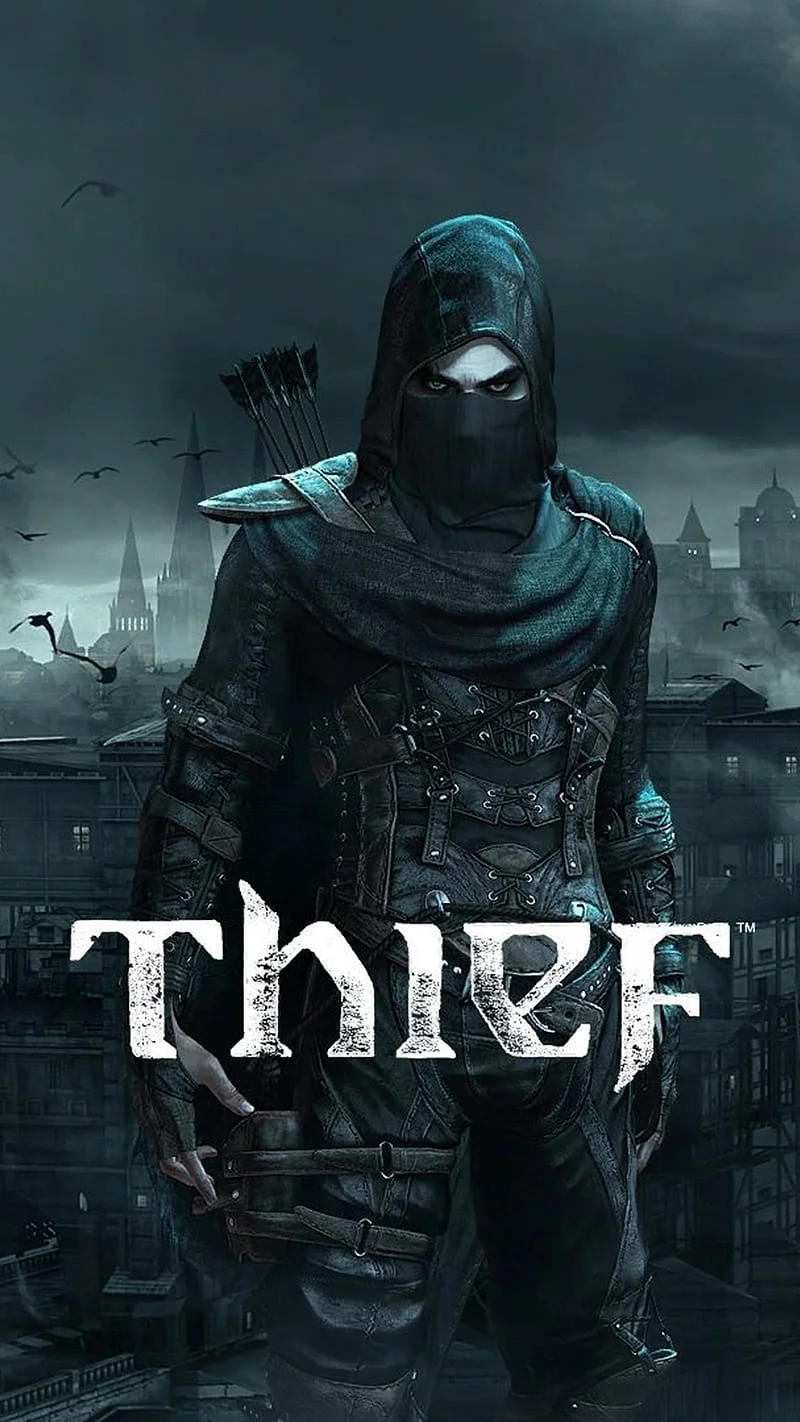
Thief
This combination provides smooth gameplay with an average of 92 FPS, suitable for most gaming scenarios.
Average FPS: resolution vs quality settings
| Ultra | High | Medium | Low | |
|---|---|---|---|---|
| 4K Ultra HD | 39 | 41 | 55 | 73 |
| 1440p QHD | 70 | 71 | 95 | 128 |
| 1080p Full HD | 101 | 109 | 139 | 183 |
Cell color: green is 120+ FPS, teal is 60+, amber is 30+, red is below 30.
Thief with Intel Core i7-14700K + NVIDIA GeForce RTX 4060, In-Depth Analysis
How This Combo Ranks
The Intel Core i7-14700K paired with the NVIDIA GeForce RTX 4060 ranks 877th out of 1642 tested combos in Thief. That places it squarely in the middle of the database — not a standout pairing, but far from a weak one. The combo sits at roughly the 47th percentile of all tested configurations, which tells you this is a balanced mid-pack setup rather than a top-tier enthusiast build.
What makes this ranking notable is the asymmetry between the two components. The CPU alone is in the 96th percentile among all processors, while the GPU sits in the 66th percentile among all graphics cards. The data suggests the processor is doing heavy lifting in this pairing, and the GPU is the limiting factor in most scenarios. For a 2014 stealth title like Thief, that imbalance matters less than it would in a modern, GPU-bound release, but it still shapes what you can expect at higher resolutions and settings.
Compared to other tested combos, this rank of 877 indicates that roughly 765 other pairings delivered higher average frame rates in Thief. That is a competitive field, but the specific strengths of this combo — a 20-core CPU with high single-thread performance and a modern GPU with solid architectural efficiency — keep it relevant for this game's engine.
GPU Role
The RTX 4060 is built on the Ada Lovelace architecture with a 5 nm process and the AD107 chip. It carries 8 GB of GDDR6 memory on a 128-bit bus, yielding 272.0 GB/s of bandwidth. The base clock runs at 1830 MHz with a boost clock of 2460 MHz, and memory operates at 2125 MHz (17 Gbps effective). These specifications are modest by modern standards, but Thief is not a demanding title by current metrics.
In the measured data, the GPU's role becomes clear when you track performance scaling across resolutions. At 1080p Low, the combo hits 182.6 FPS, but at 4K Ultra it drops to 39.2 FPS. That is a 78.5% reduction in frame rate from the lowest to the highest load, which points to the GPU hitting its limits as pixel count and shading complexity rise. The 8 GB VRAM buffer is sufficient for Thief's textures, but the 128-bit bus and 272 GB/s bandwidth constrain performance at 4K.
The GPU's benchmark scores reinforce this picture. Its PassMark G3D score is 19545, and its average benchmark score is 23181, placing it in the 66th percentile of all GPUs. Nearest rivals include the AMD Radeon RX 6600M (0.6% lower score) and the Intel Arc B580 (0.7% higher score), showing the RTX 4060 trades blows with mid-range cards. For Thief specifically, the 3DMark Steel Nomad DX12 score of 2302 and Geekbench Vulkan score of 98095 suggest the GPU handles modern APIs well, even though Thief predates those standards.
FAQ
Q: Can this combo run Thief at 4K with playable frame rates?
A: Yes, but only at lower settings. At 4K Low, the combo delivers 73.1 FPS average. At 4K Medium, it drops to 55.2 FPS. At 4K High and Ultra, it falls to 40.5 FPS and 39.2 FPS respectively, which are below the 60 FPS threshold most players target.
Q: What is the best resolution for this pairing in Thief?
A: The data shows 1440p as the sweet spot. At 1440p High, the combo achieves 71.1 FPS, and at 1440p Ultra it maintains 69.7 FPS. That gives you high-quality visuals while staying above 60 FPS, which is not possible at 4K with the same settings.
Q: How does the CPU compare to its nearest rivals?
A: The i7-14700K has an average benchmark score of 70074, which is virtually identical to the i7-14700KF (70104, 0% delta) and the AMD Ryzen 9 9950X (70420, -0.5% delta). It edges out the AMD EPYC 9115 by 0.3%. The CPU sits in the 96th percentile of all processors.
Q: Is the RTX 4060 a bottleneck for this CPU in Thief?
A: The benchmark data indicates yes, particularly at higher resolutions. The CPU's nearest rivals show it performs at the top tier, while the GPU's nearest rivals show mid-pack performance. The frame rate scaling from 1080p to 4K suggests the GPU limits performance as resolution increases.
Q: What settings should I use for a 60 FPS target at 1440p?
A: At 1440p, all four settings presets exceed 60 FPS. Low runs at 127.9 FPS, Medium at 94.9 FPS, High at 71.1 FPS, and Ultra at 69.7 FPS. You can use Ultra and still stay above 60 FPS, which is not true at 4K.
Q: Does the GPU's 8 GB VRAM cause issues in Thief?
A: The measured data shows no VRAM-related stutters or min FPS values below playable levels, but the 128-bit bus and 272 GB/s bandwidth are modest. At 4K Ultra, the average FPS of 39.2 suggests the GPU is compute-bound rather than VRAM-bound, since the game is from 2014 and does not demand large texture pools.
Measured FPS Breakdown
At 1920x1080, the combo delivers strong performance across all settings. Low runs at 182.6 FPS, Medium at 139.1 FPS, High at 109 FPS, and Ultra at 100.5 FPS. The gap between Low and Ultra is 82.1 FPS, showing that even at maximum settings the GPU keeps well above 100 FPS. This resolution is where the RTX 4060 feels most comfortable, with headroom for high refresh rate displays.
Moving to 2560x1440, the numbers drop but remain respectable. Low produces 127.9 FPS, Medium 94.9 FPS, High 71.1 FPS, and Ultra 69.7 FPS. The difference between High and Ultra is only 1.4 FPS, which suggests the GPU hits a similar performance ceiling at those two presets. The jump from Low to Medium costs 33 FPS, while the jump from Medium to High costs 23.8 FPS — a steeper drop that indicates increasing shading load.
At 3840x2160, performance falls off significantly. Low yields 73.1 FPS, Medium 55.2 FPS, High 40.5 FPS, and Ultra 39.2 FPS. The scaling from Low to Medium is a 17.9 FPS loss, but from Medium to High it is a 14.7 FPS loss, and from High to Ultra it is only 1.3 FPS. This pattern suggests that at 4K, the GPU becomes the primary limiter, and the Ultra preset offers no meaningful visual gain over High for the frame rate cost.
The resolution scaling tells a clear story. From 1080p to 1440p at Ultra, the frame rate drops by 30.8 FPS (from 100.5 to 69.7). From 1440p to 4K at Ultra, it drops by another 30.5 FPS (from 69.7 to 39.2). The consistent ~30 FPS loss per resolution step indicates a linear scaling pattern, typical of GPU-bound scenarios in older titles.
CPU Role
The Intel Core i7-14700K is a 20-core, 28-thread processor from the Raptor Lake Refresh architecture, built on Intel's 10 nm process. It features a base clock of 3.40 GHz and a boost clock of 5.60 GHz, with 33 MB of shared L3 cache and 2 MB per-core L2 cache. The CPU supports both DDR4 and DDR5 memory across a dual-channel bus, and it includes UHD Graphics 770 as integrated graphics.
In Thief, the CPU's role is less about raw core count and more about single-thread performance. The game launched in 2014, and its engine does not scale well across many cores. The i7-14700K's Cinebench R23 single-core score of 6287 and Geekbench single-core score of 2932 indicate excellent per-thread performance, which is what matters for this title. The PassMark single-thread score of 4472 reinforces this.
The CPU's multicore scores are impressive but largely irrelevant for Thief. Its Cinebench R23 multicore score is 44534, and its PassMark multithread score is 52392. These numbers place it in the 96th percentile of all CPUs, but the game will not utilize all 28 threads. The data shows the CPU is not the bottleneck — the GPU is — because frame rates scale consistently with resolution changes rather than showing CPU-related dips.
The nearest rivals include the i7-14700KF at 70104 (0% delta), the AMD EPYC 9115 at 69887 (0.3% delta), and the AMD Ryzen 9 9950X at 70420 (-0.5% delta). The near-identical scores mean the CPU choice among these options would not meaningfully change Thief's performance, given the GPU limitation.
Settings Recommendations
For a 1080p display, the Ultra preset at 100.5 FPS is the clear choice. The game remains well above 60 FPS, and there is no reason to drop settings for additional headroom unless you have a 144 Hz or higher refresh rate monitor. If you want maximum smoothness, Low at 182.6 FPS is available, but the visual trade-off is substantial for a game that relies on atmosphere and lighting.
At 1440p, the Ultra preset at 69.7 FPS is viable, but High at 71.1 FPS offers nearly identical performance with a slightly lower load. The 1.4 FPS difference between High and Ultra suggests the Ultra preset costs little in this range, so you can run either. Medium at 94.9 FPS gives you extra headroom for demanding scenes without sacrificing much visual quality, making it a safe middle ground.
At 4K, the recommendation becomes more strategic. Medium at 55.2 FPS is the highest preset that stays near playable territory, but it falls short of 60 FPS. Low at 73.1 FPS is the only 4K preset that exceeds 60 FPS comfortably. High at 40.5 FPS and Ultra at 39.2 FPS are too slow for smooth gameplay, so they are not recommended. If you own a 4K display, Low is the practical choice for playable frame rates, or you should drop to 1440p for better visuals.
The data shows diminishing returns at the top end. At every resolution, the jump from High to Ultra costs only 1-2 FPS, which means Ultra is essentially free in Thief. The settings that matter are Low versus Medium versus High, where the frame rate differences range from 17.9 to 33 FPS per step. Prioritize High or Ultra at 1080p and 1440p, and use Low at 4K if you must use that resolution. For the best overall experience, 1440p Ultra at 69.7 FPS offers the strongest combination of visual fidelity and smoothness.
Hardware Specifications
Intel Core i7-14700K
NVIDIA GeForce RTX 4060
FPS Benchmarks by Resolution & Settings
Performance data for Intel Core i7-14700K + NVIDIA GeForce RTX 4060 in Thief
| Resolution | Settings | Avg FPS |
|---|---|---|
| 3840x2160 | Low | 73.1 |
| 3840x2160 | Medium | 55.2 |
| 3840x2160 | High | 40.5 |
| 3840x2160 | Ultra | 39.2 |
| 2560x1440 | Low | 127.9 |
| 2560x1440 | Medium | 94.9 |
| 2560x1440 | High | 71.1 |
| 2560x1440 | Ultra | 69.7 |
| 1920x1080 | Low | 182.6 |
| 1920x1080 | Medium | 139.1 |
| 1920x1080 | High | 109.0 |
| 1920x1080 | Ultra | 100.5 |
Thief with ii7-14700K + Other GPUs
See how Thief performs with the same CPU but different graphics cards.
Thief with RTX 4060 + Other CPUs
See how Thief performs with the same GPU but different processors.
Other Games with ii7-14700K + RTX 4060
Explore FPS benchmarks for other games using this same hardware combination.