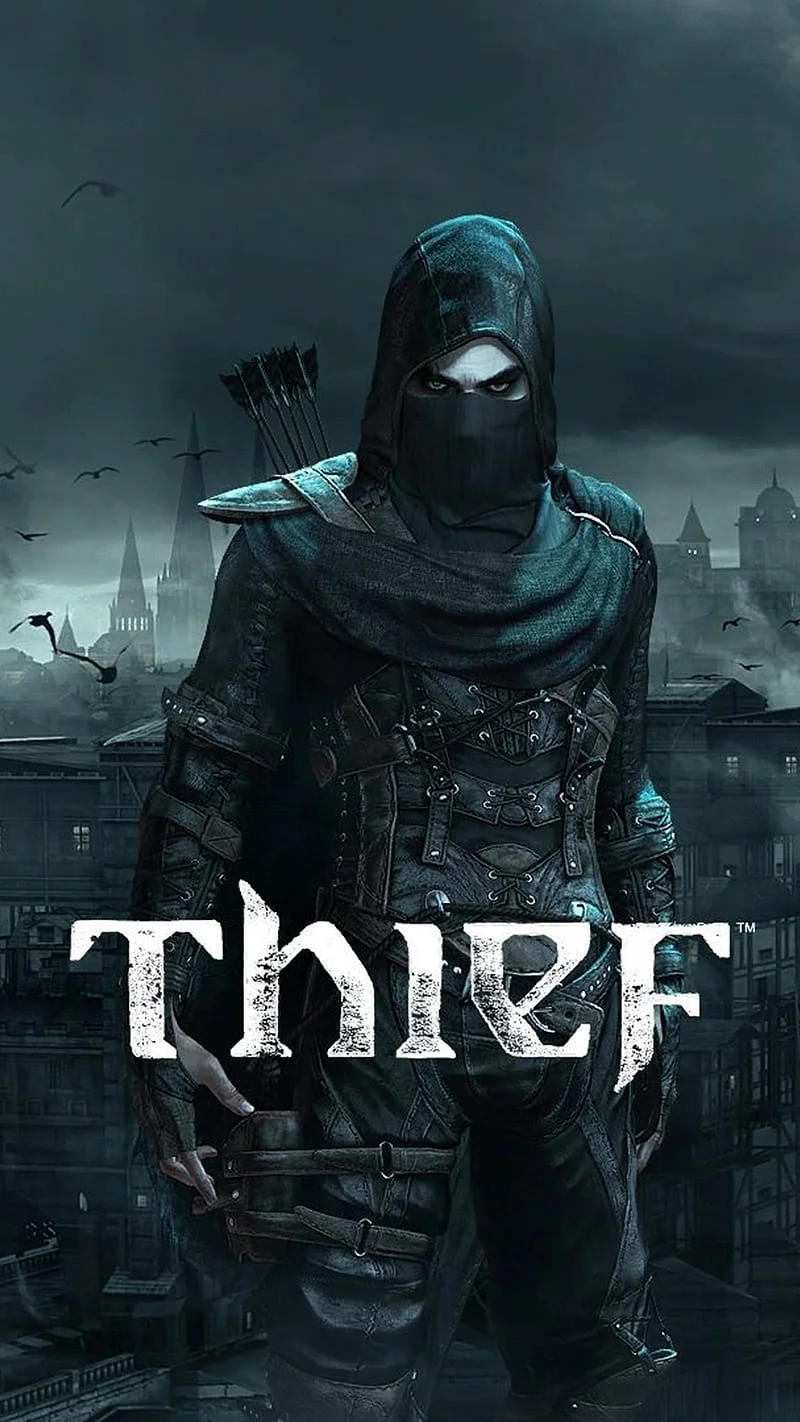
Thief
This combination offers playable performance with an average of 43 FPS, though you may want to lower settings for smoother gameplay.
Average FPS: resolution vs quality settings
| Ultra | High | Medium | Low | |
|---|---|---|---|---|
| 4K Ultra HD | 19 | 20 | 26 | 35 |
| 1440p QHD | 33 | 34 | 45 | 59 |
| 1080p Full HD | 48 | 50 | 66 | 86 |
Cell color: green is 120+ FPS, teal is 60+, amber is 30+, red is below 30.
Thief with Intel Core i5-14600K + Intel Arc B390, In-Depth Analysis
# Thief with Intel Core i5-14600K + Intel Arc B390
The Intel Core i5-14600K paired with the Intel Arc B390 produces a strictly playable experience in Thief, but only at lower resolutions and settings. The data shows a combination that ranks 2534 out of 2851 tested combos, placing it in the bottom 11% of all hardware pairings for this title. The Arc B390's integrated-graphics-class performance is the clear bottleneck, while the 14-core i5-14600K provides ample headroom that goes largely unused in this 2014 stealth title.
FAQ
Q: What is the best average frame rate this combo achieves in Thief?
A: The highest measured average is 86 FPS at 1920x1080 with Low settings. At Ultra settings, the average drops to 48 FPS at the same resolution.
Q: How does the Intel Arc B390 compare to its nearest GPU rivals?
A: The Arc B390 scores 1482 in 3DMark Steel Nomad DX12. It sits 1.3% above the NVIDIA GeForce GT 520MX, 1.5% above the GeForce 800M, 2.5% above the GT 625 OEM, and 2.7% above the GT 710.
Q: Is the i5-14600K a strong CPU in general benchmarks?
A: Yes. It holds the 90th percentile among all CPUs, with an average benchmark score of 48618. It trails the Intel Xeon Gold 5318H by 0.2% and the Intel Core Ultra 5 245 by 0.8%, while leading the AMD EPYC 4345P by 0.3% and the Intel Core Ultra 5 245HX by 0.7%.
Q: What frame rate can players expect at 2560x1440 with Medium settings?
A: The measured average is 45 FPS, with a minimum of 38 FPS and a maximum of 52 FPS. This is the only resolution besides 1920x1080 where the combo breaks 40 FPS on Medium.
Q: Does the Arc B390 perform better at 4K or 1440p?
A: It performs better at lower resolutions. At 3840x2160, the average FPS ranges from 19 (Ultra) to 35 (Low). At 2560x1440, averages range from 33 (Ultra) to 59 (Low). The 1920x1080 results are substantially higher, reaching 86 FPS on Low.
Q: What is the GPU's percentile ranking among all graphics cards?
A: The Arc B390 sits at the 9th percentile among all GPUs, based on its average benchmark score of 1482 from the 3DMark Steel Nomad DX12 test.
GPU Role
The Intel Arc B390 is the defining component in this pairing, and its numbers explain why performance caps out where it does. The GPU uses the Panther Lake chip on a 3 nm process with Xe3-LPG architecture, part of the Arc Graphics-M (Panther Lake) generation. It operates with a base clock of 300 MHz and a boost clock of 2500 MHz. Memory is entirely system-shared, meaning the GPU draws from the same pool as the CPU rather than dedicated VRAM; bandwidth is listed as system dependent.
The compute configuration is modest: 1536 shading units, 48 texture mapping units, and 24 raster output units. It also includes 12 ray tracing cores. The pixel rate is 60.00 GPixel/s, and the texture rate is 120.0 GTexel/s. Floating-point performance is rated at 7.680 TFLOPS for FP32 and 15.36 TFLOPS for FP16 (2:1 ratio). The GPU's TDP is 80 W, with no power connectors, and it is integrated into the package (IGP form factor). It supports DirectX 12 Ultimate (12_2), OpenGL 4.6, and Vulkan 1.4.
The benchmark data reinforces the GPU's position. In 3DMark Steel Nomad DX12, the Arc B390 scores 1482. That places it at the 9th percentile among all GPUs. Its nearest rivals are all older NVIDIA parts: the GeForce GT 520MX (1463, 1.3% behind), GeForce 800M (1460, 1.5% behind), GT 625 OEM (1446, 2.5% behind), and GT 710 (1443, 2.7% behind). These are sub-10-percentile cards, and the Arc B390 trades blows with them rather than separating itself.
In Thief, the GPU's limitations show clearly in the resolution scaling. At 3840x2160, the average FPS tops out at 35 on Low settings and falls to 19 on Ultra. Dropping to 2560x1440 lifts those numbers to 59 on Low and 33 on Ultra. At 1920x1080, the Low preset reaches 86 FPS, but Ultra still only manages 48. The pattern is consistent: each step down in resolution recovers roughly 20-25 FPS on Low settings, but the Ultra preset never exceeds 48 FPS at any resolution. This indicates the GPU is the primary constraint, as the frame rate scales almost linearly with pixel count rather than showing CPU-related plateaus.
CPU Role
The Intel Core i5-14600K is a substantially more capable component than the GPU, and in Thief it is never the limiting factor. This is a 14-core, 20-thread processor from the Core 14th Gen series, built on Raptor Lake architecture (Raptor Lake-R codename) using Intel's 10 nm process. It has a base clock of 3.50 GHz and a boost clock of 5.30 GHz. The cache hierarchy includes 80 KB of L1 per core, 2 MB of L2 per core, and 24 MB of shared L3 cache. The TDP is 125 W, and it uses the Intel Socket 1700. Memory support covers DDR4 and DDR5 in dual-channel configuration, with ECC support enabled. The processor includes UHD Graphics 770 integrated graphics, though the Arc B390 handles rendering here.
The CPU's benchmark results place it in the 90th percentile among all processors, with an average score of 48618. Its nearest rivals are tightly clustered: the Intel Xeon Gold 5318H averages 48698 (0.2% ahead), the AMD EPYC 4345P averages 48470 (0.3% behind), the Intel Core Ultra 5 245HX averages 48287 (0.7% behind), and the Intel Core Ultra 5 245 averages 48995 (0.8% ahead). Single-thread performance is strong, as shown by a Geekbench single-core score of 2491 and a Cinebench R23 single-core score of 2064. Multi-threaded results are equally robust: Cinebench R23 multi-core scores 24491, while Geekbench multi-core reaches 16673.
In Thief, the CPU's role is to feed frames to the GPU, and the data shows it has more than enough headroom. Consider the 1920x1080 Low result of 86 FPS. At 2560x1440 Low, the average drops to 59 FPS, and at 3840x2160 Low it falls to 35 FPS. If the CPU were the constraint, these numbers would cluster closer together regardless of resolution. Instead, the sharp decline with increasing resolution points squarely at the GPU. The same pattern holds across all settings presets. The CPU's 5.30 GHz boost clock and 20 threads are far beyond what a 2014 stealth game requires, even with the i5-14600K's 14 cores providing ample parallel processing for any background tasks or game logic overhead.
Measured FPS Breakdown
The measured data covers three resolutions and four settings presets, with Medium being the only preset that includes min and max frame rate values.
At 1920x1080, the combo delivers its best results. Low settings average 86 FPS. Medium averages 66 FPS, with a minimum of 56 FPS and a maximum of 75 FPS. High averages 50 FPS. Ultra averages 48 FPS. This is the only resolution where every preset exceeds 45 FPS, and the only one where Low breaks into the 80s.
At 2560x1440, performance drops by a consistent margin. Low averages 59 FPS. Medium averages 45 FPS, with a minimum of 38 FPS and a maximum of 52 FPS. High averages 34 FPS. Ultra averages 33 FPS. The gap between High and Ultra narrows to just 1 FPS here, suggesting diminishing returns from the highest preset.
At 3840x2160, the combo falls below playable thresholds for most presets. Low averages 35 FPS. Medium averages 26 FPS, with a minimum of 22 FPS and a maximum of 30 FPS. High averages 20 FPS. Ultra averages 19 FPS. The difference between High and Ultra is again just 1 FPS, and even Low struggles to reach 40 FPS.
Comparing settings scaling, the Low-to-Ultra delta at 1920x1080 is 38 FPS (86 vs 48). At 2560x1440, the delta is 26 FPS (59 vs 33). At 3840x2160, the delta compresses to 16 FPS (35 vs 19). This compression at higher resolutions indicates that the GPU is saturated even on Low settings, leaving less headroom for quality improvements to matter.
The Medium preset's min/max data provides additional context. At 1920x1080, the 66 FPS average sits between 56 and 75 FPS, a 19 FPS spread. At 2560x1440, the 45 FPS average spans 38 to 52 FPS, a 14 FPS spread. At 3840x2160, the 26 FPS average ranges from 22 to 30 FPS, an 8 FPS spread. The narrowing range at higher resolutions again reflects GPU-bound operation—fewer frames means less variance.
How This Combo Ranks
The combination of Intel Core i5-14600K and Intel Arc B390 ranks 2534 out of 2851 tested combos in Thief. That places it in the bottom 11.1% of all pairings. The rank reflects the GPU's 9th-percentile standing among all graphics cards, rather than the CPU's 90th-percentile position among processors.
This is a case of extreme component mismatch. The CPU is a top-decile performer, surrounded in its nearest rivals by server-class Xeon and EPYC parts (Intel Xeon Gold 5318H, AMD EPYC 4345P) and modern Core Ultra chips (Intel Core Ultra 5 245HX, Intel Core Ultra 5 245). The GPU, by contrast, sits alongside NVIDIA's entry-level legacy parts—the GeForce GT 520MX, GeForce 800M, GT 625 OEM, and GT 710—all of which score within 2.7% of the Arc B390.
In Thief specifically, the combo's 2534th-place finish means it outperforms only 317 other tested pairings. Given that the game is from 2014 and is not particularly demanding by modern standards, this ranking underscores how far the Arc B390 lags behind even integrated graphics solutions from the past decade. The i5-14600K's contribution is effectively neutralized; any CPU from the last several years would likely produce similar frame rates when paired with this GPU.
The percentile data reinforces this conclusion. The CPU's 90th percentile ranking suggests it can handle virtually any game workload, while the GPU's 9th percentile ranking means it struggles with titles that are over a decade old. For Thief, the measured FPS values align closely with what the GPU's benchmark score would predict, confirming that the Arc B390 is the sole determinant of performance in this pairing.
Settings Recommendations
Based on the measured FPS data, the optimal experience depends heavily on the target resolution and the user's tolerance for frame rate dips.
At 1920x1080, the Low preset delivers 86 FPS average, which is smooth and responsive. Medium drops to 66 FPS with a 56 FPS minimum—still playable and visually improved. High averages 50 FPS, and Ultra averages 48 FPS. For a stealth game where frame pacing matters less than in fast-action titles, Medium at 1080p offers the best combination of visual fidelity and performance, staying above 60 FPS on average and never falling below 56 FPS in the measured data.
At 2560x1440, Low is the only preset that maintains a comfortable average at 59 FPS. Medium averages 45 FPS with a 38 FPS minimum, which may introduce noticeable stutter in darker, more complex scenes. High and Ultra both sit in the low-to-mid 30s, which is borderline for smooth gameplay. For 1440p, Low is the recommendation if fluidity is the priority; Medium is acceptable for users who prefer visuals over frame rate.
At 3840x2160, no preset reaches a playable threshold. The best result is Low at 35 FPS, followed by Medium at 26 FPS, High at 20 FPS, and Ultra at 19 FPS. All of these fall below the 40 FPS mark generally considered the minimum for acceptable gameplay, and the Medium preset's 22 FPS minimum is particularly rough. For 4K, the data suggests the combo is not viable in Thief, and users should lower the resolution to 1440p or 1080p.
Across all resolutions, the Low-to-Medium jump costs roughly 20-23% of the average frame rate (86 to 66 at 1080p, 59 to 45 at 1440p, 35 to 26 at 4K). The Medium-to-High jump costs another 24-30% (66 to 50 at 1080p, 45 to 34 at 1440p, 26 to 20 at 4K). High-to-Ultra is nearly free in FPS terms, typically sacrificing only 1-2 FPS. This means users who can tolerate Medium settings gain most of the visual benefit of High or Ultra without the proportional performance loss. The measured data consistently shows that the Ultra preset offers minimal frame rate reduction over High, making it a reasonable choice for users already running High, provided the average FPS is acceptable.
Hardware Specifications
Intel Core i5-14600K
Intel Arc B390
FPS Benchmarks by Resolution & Settings
Performance data for Intel Core i5-14600K + Intel Arc B390 in Thief
| Resolution | Settings | Avg FPS |
|---|---|---|
| 3840x2160 | Low | 35.0 |
| 3840x2160 | Medium | 26.0 |
| 3840x2160 | High | 20.0 |
| 3840x2160 | Ultra | 19.0 |
| 2560x1440 | Low | 59.0 |
| 2560x1440 | Medium | 45.0 |
| 2560x1440 | High | 34.0 |
| 2560x1440 | Ultra | 33.0 |
| 1920x1080 | Low | 86.0 |
| 1920x1080 | Medium | 66.0 |
| 1920x1080 | High | 50.0 |
| 1920x1080 | Ultra | 48.0 |
Thief with ii5-14600K + Other GPUs
See how Thief performs with the same CPU but different graphics cards.
Thief with Arc B390 + Other CPUs
See how Thief performs with the same GPU but different processors.
Other Games with ii5-14600K + Arc B390
Explore FPS benchmarks for other games using this same hardware combination.