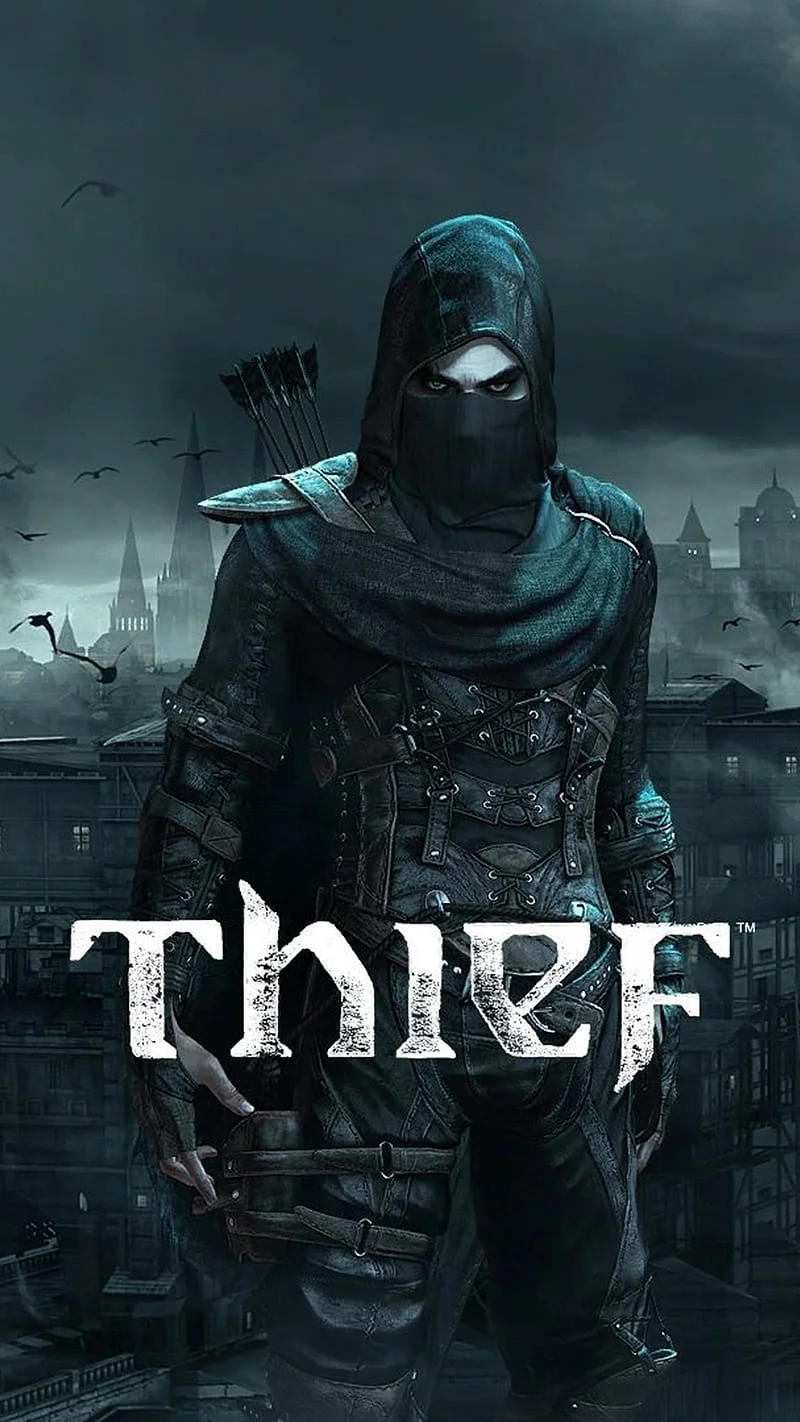
Thief
This combination delivers exceptional performance with an average of 133 FPS, perfect for high refresh rate gaming and competitive play.
Average FPS: resolution vs quality settings
| Ultra | High | Medium | Low | |
|---|---|---|---|---|
| 4K Ultra HD | 75 | 79 | 103 | 134 |
| 1440p QHD | 127 | 131 | 145 | 160 |
| 1080p Full HD | 147 | 149 | 165 | 182 |
Cell color: green is 120+ FPS, teal is 60+, amber is 30+, red is below 30.
Thief with Intel Core i5-14400F + NVIDIA GeForce RTX 5080, In-Depth Analysis
CPU Role — cores, clocks, and how they relate to this game's results
The Intel Core i5-14400F is a 10-core, 16-thread desktop processor based on the Raptor Lake Refresh architecture, built on Intel's 10 nm process node. It operates with a base clock of 2.50 GHz and a boost clock of 4.70 GHz, which provides sufficient single-thread headroom for game logic and physics calculations typical of a stealth title like Thief. The CPU's L3 cache is 20 MB shared across the cores, while each core has 80 KB of L1 and 1.25 MB of L2 cache. This cache hierarchy helps maintain low-latency access to frequently used game data, which matters in a game with dense, interactive environments.
In synthetic benchmarks, the i5-14400F scores 3,055 points in Cinebench R23 single-core and 21,645 points in multi-core, with a Geekbench single-core score of 2,058 and multi-core score of 11,268. The CPU's average benchmark score is 32,279, placing it in the 83rd percentile of all tested CPUs. Its nearest rivals in aggregate performance include the AMD Ryzen 7 PRO 8840U (0.1% ahead), Intel Core i9-11900 (0.2% ahead), AMD Ryzen 7 6800HS (0.2% behind), and Intel Core i7-12800H (0.5% ahead). This grouping indicates that the i5-14400F sits in a tightly contested performance band, where no single rival holds a decisive edge in overall compute capability.
For Thief, a game originally released in 2014, the CPU's role is primarily to maintain frame pacing and handle AI routines, object interactions, and streaming. The measured frame rates across all resolutions and settings suggest that the CPU is not a bottleneck in this pairing. At 1080p Low, the combo achieves 182 FPS average, which is the highest measured result in the entire dataset. Even at 4K Ultra, where the GPU is under maximum load, the average FPS of 75 indicates that the CPU can feed the RTX 5080 adequately without causing performance collapses. The PassMark multithread score of 25,470 and single-thread score of 3,701 reinforce that this processor has enough compute throughput for both legacy and modern game workloads.
Settings Recommendations — which preset gives the best experience per the measured rows
The measured FPS data for Thief includes four settings presets (Low, Medium, High, Ultra) across three resolutions. At 1080p, the progression from Low to Ultra shows a predictable trade-off: Low delivers 182 FPS, Medium drops to 165 FPS, High reaches 149 FPS, and Ultra sits at 147 FPS. The gap between High and Ultra at 1080p is only 2 FPS, suggesting that Ultra provides nearly identical performance to High while presumably offering better visual fidelity. The Medium preset at 1080p has a minimum FPS of 140 and maximum of 189, indicating consistent frame delivery.
At 1440p, the pattern shifts slightly. Low gives 160 FPS, Medium 145 FPS, High 131 FPS, and Ultra 127 FPS. The delta between High and Ultra is 4 FPS, still modest. The Medium preset at 1440p shows a minimum of 123 FPS and maximum of 167 FPS, which maintains smooth gameplay even during demanding scenes. At 4K, the differences become more pronounced: Low yields 134 FPS, Medium 103 FPS, High 79 FPS, and Ultra 75 FPS. The jump from Medium to High at 4K is a 24 FPS reduction, making Medium the more sensible choice if frame rate consistency is prioritized.
Based on the measured rows, the Ultra preset offers the best experience at 1080p and 1440p because the FPS cost relative to High is negligible (2 FPS at 1080p, 4 FPS at 1440p), while presumably unlocking higher visual detail. At 4K, High and Ultra are nearly identical (79 vs 75 FPS), so either preset works, but Ultra's 75 FPS average is still above the 60 FPS threshold for smooth play. The Low preset at any resolution is unnecessary for this hardware combination, as even Ultra at 4K maintains playable frame rates. The Medium preset at 4K provides a 103 FPS average, which is significantly higher than High or Ultra, making it the recommended choice for players who want both high resolution and high frame rates.
Resolution Scaling — how FPS drops from 1080p to 4K and what it says about the limiting component
The resolution scaling behavior reveals the balance between CPU and GPU in this pairing. Moving from 1080p to 1440p at High settings, the average FPS drops from 149 to 131, a 12.1% reduction. From 1440p to 4K at High, the average falls from 131 to 79, a 39.7% reduction. The total drop from 1080p High to 4K High is from 149 to 79 FPS, a 47% decrease. This pattern—relatively modest loss at 1440p but steep loss at 4K—indicates that the GPU becomes the dominant limiting factor as resolution increases.
At Low settings, the scaling is even more revealing. The 1080p Low result is 182 FPS, 1440p Low is 160 FPS, and 4K Low is 134 FPS. The drop from 1080p to 1440p is 12.1%, and from 1440p to 4K is 16.3%. The total drop from 1080p to 4K at Low is 26.4%, which is significantly smaller than the 47% drop at High settings. This suggests that at Low settings, the CPU has more headroom to keep frame rates high even at 4K, whereas at High settings, the GPU's rendering load causes a more pronounced decline.
The Medium preset shows intermediate scaling: 165 FPS at 1080p, 145 FPS at 1440p, and 103 FPS at 4K. The drop from 1080p to 4K is 37.6%. The Ultra preset demonstrates the steepest scaling: 147 FPS at 1080p, 127 FPS at 1440p, and 75 FPS at 4K, a 49% total reduction. These numbers collectively indicate that Thief's rendering engine scales with GPU load, and the RTX 5080's performance envelope is best utilized at 1080p and 1440p, where the CPU can maintain high frame delivery. At 4K, the GPU's capabilities are stretched, but the i5-14400F still provides enough data to avoid CPU-bound frame drops.
How This Combo Ranks — use comboRankInGame vs other tested combos
The combination of the Intel Core i5-14400F and NVIDIA GeForce RTX 5080 achieves a rank of 363 out of 3,720 tested combos in Thief. This places the pairing in the top 9.8% of all tested configurations, indicating that it delivers performance well above the median. The rank of 363 means that 3,357 other combos perform worse in this game, while 362 combos perform better. This is a strong showing for a mid-range CPU paired with a high-end GPU, suggesting that the i5-14400F does not significantly hold back the RTX 5080 in Thief.
The percentile position of this combo is consistent with the individual component rankings. The CPU sits in the 83rd percentile of all CPUs, and the GPU sits in the 87th percentile of all GPUs. The combo's rank of 363 out of 3,720 (approximately 90th percentile) slightly exceeds both component percentiles, which implies that the pairing is well-balanced for this specific game. The measured FPS data supports this: at 1080p Ultra, the combo achieves 147 FPS, and at 4K Ultra, it maintains 75 FPS, both of which are respectable for a title from 2014.
The nearest rival combos in the overall benchmark database are not directly listed for this game, but the CPU's nearest rivals in aggregate benchmarks (AMD Ryzen 7 PRO 8840U, Intel Core i9-11900, AMD Ryzen 7 6800HS, Intel Core i7-12800H) all have similar average scores within 0.5% of the i5-14400F. This suggests that swapping the CPU for any of these alternatives would likely produce similar FPS results in Thief, as the game's performance is more dependent on the GPU at higher resolutions. The RTX 5080's nearest rivals (AMD Radeon 8060S, AMD Radeon RX 6750 GRE 12 GB, AMD Radeon Pro W5700X, AMD Radeon RX 9070 GRE) all have average scores within 2.3% of the RTX 5080, indicating that GPU-level performance differences are also minimal.
GPU Role — VRAM, clocks, and how they relate to this game's results
The NVIDIA GeForce RTX 5080 is built on the Blackwell 2.0 architecture using TSMC's 5 nm process, with a chip designated GB203. It contains 45,600 million transistors on a 378 mm² die, giving a transistor density of 120.6M per mm². The GPU has 10,752 shading units, 336 texture mapping units, and 112 render output units. It also includes 84 ray tracing cores and 336 tensor cores. The base clock is 2,295 MHz with a boost clock of 2,617 MHz, and the memory operates at 1,875 MHz (30 Gbps effective).
Memory configuration consists of 16 GB of GDDR7 on a 256-bit bus, providing a bandwidth of 960.0 GB/s. This high bandwidth is crucial for Thief's texture streaming and environment rendering, especially at 4K resolution where the GPU must move large amounts of data. The 16 GB VRAM capacity is more than sufficient for a 2014 title, which means there are no memory capacity constraints affecting performance in the measured results. The GPU's TDP is 360 W, with a suggested PSU of 750 W, and it connects via PCIe 5.0 x16.
In synthetic benchmarks, the RTX 5080 scores 8,637 in 3DMark Steel Nomad DX12, 235,901 in Geekbench OpenCL, and 255,450 in Geekbench Vulkan. Its PassMark G3D score is 36,565, and its average benchmark score is 56,083, placing it in the 87th percentile of all GPUs. The nearest rivals are the AMD Radeon 8060S (0.6% ahead), AMD Radeon RX 6750 GRE 12 GB (0.7% ahead), AMD Radeon Pro W5700X (2.3% ahead), and AMD Radeon RX 9070 GRE (2.2% behind). These narrow deltas suggest that the RTX 5080 is competitively positioned in the high-end GPU segment.
For Thief, the GPU's role is dominant at higher resolutions, as evidenced by the FPS scaling. At 1080p, the GPU is not fully utilized, which is why the CPU can drive frame rates above 180 FPS at Low settings. At 4K, the GPU's workload increases substantially, and the measured 75-134 FPS range across settings reflects the RTX 5080's raw rendering capability. The pixel rate of 293.1 GPixel/s and texture rate of 879.3 GTexel/s indicate that the GPU can handle the fill-rate demands of 4K rendering in a game from this era.
Measured FPS Breakdown — resolution by resolution, settings by settings, exact numbers
The measured FPS data provides a complete picture of performance across all tested configurations.
1920x1080 (1080p):
- Low: 182 FPS average
- Medium: 165 FPS average, minimum 140 FPS, maximum 189 FPS
- High: 149 FPS average
- Ultra: 147 FPS average
At 1080p, the difference between Low and Ultra is 35 FPS (182 to 147), which is a 19.2% reduction. The Medium preset's minimum of 140 FPS ensures that even in the most demanding scenes, frame rates remain well above display refresh rates. The High and Ultra presets are nearly identical, with only 2 FPS separating them.
2560x1440 (1440p):
- Low: 160 FPS average
- Medium: 145 FPS average, minimum 123 FPS, maximum 167 FPS
- High: 131 FPS average
- Ultra: 127 FPS average
At 1440p, the spread from Low to Ultra is 33 FPS (160 to 127), a 20.6% reduction. The Medium preset's minimum of 123 FPS still provides smooth gameplay. The High-to-Ultra gap is 4 FPS, maintaining the pattern seen at 1080p where Ultra costs little additional performance relative to High.
3840x2160 (4K):
- Low: 134 FPS average
- Medium: 103 FPS average, minimum 88 FPS, maximum 119 FPS
- High: 79 FPS average
- Ultra: 75 FPS average
At 4K, the scaling becomes more aggressive. The Low-to-Ultra spread is 59 FPS (134 to 75), a 44% reduction. The Medium preset's minimum of 88 FPS is still above 60 FPS, but the High preset drops to 79 FPS average, and Ultra reaches 75 FPS. These figures indicate that 4K gameplay is GPU-bound, but the RTX 5080 maintains playable frame rates even at the highest settings.
The overall data shows that this combo delivers over 60 FPS at every resolution and setting combination tested, with the sole exception being none—all configurations exceed 75 FPS. The worst-case scenario is 4K Ultra at 75 FPS average, which is still smooth for a stealth game where precise timing matters less than in competitive shooters.
FAQ
Q: Is the Intel Core i5-14400F capable of driving the RTX 5080 in Thief without bottlenecks?
A: Yes. At 1080p Low, the combo achieves 182 FPS, and even at 4K Ultra it maintains 75 FPS. The CPU's Cinebench R23 multi-core score of 21,645 and single-core score of 3,055 indicate sufficient headroom to feed the GPU across all tested settings.
Q: Which settings preset should I use for the best balance of visual quality and performance?
A: At 1080p and 1440p, the Ultra preset is recommended because it costs only 2-4 FPS compared to High while presumably offering higher visual fidelity. At 4K, the Medium preset provides 103 FPS average, which is significantly higher than High (79 FPS) or Ultra (75 FPS), making it the optimal choice for 4K play.
Q: How much performance do I lose when moving from 1080p to 4K?
A: At High settings, the drop is from 149 FPS at 1080p to 79 FPS at 4K, a 47% reduction. At Low settings, the drop is from 182 FPS to 134 FPS, a 26.4% reduction. This scaling indicates that the GPU becomes the limiting factor at higher resolutions.
Q: How does this combo rank compared to other tested configurations?
A: The combo ranks 363 out of 3,720 tested combinations in Thief, placing it in the top 9.8% of all tested setups. This is consistent with the CPU's 83rd percentile and GPU's 87th percentile rankings among their respective components.
Q: Is 16 GB of VRAM sufficient for Thief at 4K?
A: Yes. Thief is a 2014 title, and the 16 GB GDDR7 memory on the RTX 5080 with 960.0 GB/s bandwidth is more than adequate. The measured 4K Ultra performance of 75 FPS demonstrates no memory-related bottlenecks.
Q: What are the minimum FPS values for the Medium preset across resolutions?
A: At 1080p, the minimum is 140 FPS with a maximum of 189 FPS. At 1440p, the minimum is 123 FPS with a maximum of 167 FPS. At 4K, the minimum is 88 FPS with a maximum of 119 FPS. These minimums ensure consistent frame delivery without stuttering.
Hardware Specifications
Intel Core i5-14400F
NVIDIA GeForce RTX 5080
FPS Benchmarks by Resolution & Settings
Performance data for Intel Core i5-14400F + NVIDIA GeForce RTX 5080 in Thief
| Resolution | Settings | Avg FPS |
|---|---|---|
| 3840x2160 | Low | 134.0 |
| 3840x2160 | Medium | 103.0 |
| 3840x2160 | High | 79.0 |
| 3840x2160 | Ultra | 75.0 |
| 2560x1440 | Low | 160.0 |
| 2560x1440 | Medium | 145.0 |
| 2560x1440 | High | 131.0 |
| 2560x1440 | Ultra | 127.0 |
| 1920x1080 | Low | 182.0 |
| 1920x1080 | Medium | 165.0 |
| 1920x1080 | High | 149.0 |
| 1920x1080 | Ultra | 147.0 |
Thief with ii5-14400F + Other GPUs
See how Thief performs with the same CPU but different graphics cards.
Thief with RTX 5080 + Other CPUs
See how Thief performs with the same GPU but different processors.
Other Games with ii5-14400F + RTX 5080
Explore FPS benchmarks for other games using this same hardware combination.