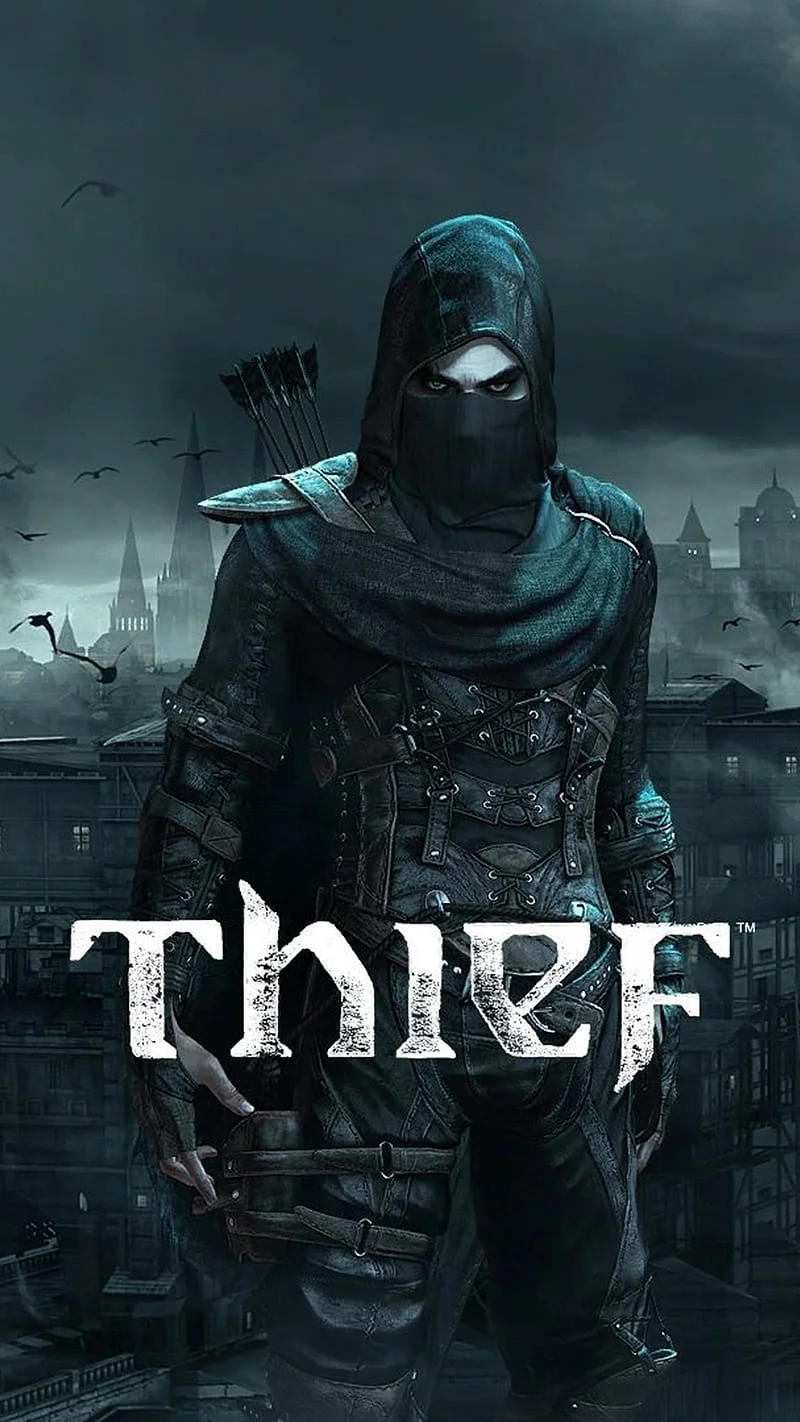
Thief
This combination offers playable performance with an average of 43 FPS, though you may want to lower settings for smoother gameplay.
Average FPS: resolution vs quality settings
| Ultra | High | Medium | Low | |
|---|---|---|---|---|
| 4K Ultra HD | 19 | 20 | 26 | 35 |
| 1440p QHD | 33 | 34 | 45 | 59 |
| 1080p Full HD | 48 | 50 | 66 | 86 |
Cell color: green is 120+ FPS, teal is 60+, amber is 30+, red is below 30.
Thief with Intel Core i5-12600KF + Intel Arc B390, In-Depth Analysis
The Intel Core i5-12600KF paired with the Intel Arc B390 delivers a playable but constrained experience in Thief, with performance that scales predictably with resolution and settings. The data indicates that this combo is heavily GPU-limited, as frame rates drop dramatically from 1080p to 4K, and the graphics card ranks in the bottom percentile of all tested GPUs.
Resolution Scaling
The measured FPS data shows a clear and steep performance cliff as resolution increases, revealing that the Intel Arc B390 is the primary bottleneck in this configuration. At 1080p with Low settings, the combo achieves an average of 86 FPS, which is the highest frame rate recorded across all tests. However, this drops to 59 FPS at 1440p and further to 35 FPS at 4K with the same Low settings. This represents a 59% reduction in performance from 1080p to 4K, indicating that pixel throughput is the limiting factor rather than CPU processing power.
The scaling pattern becomes even more pronounced at higher settings. At Medium settings, the average FPS goes from 66 at 1080p, to 45 at 1440p, and 26 at 4K. The drop from 1080p to 1440p is 32%, while the drop from 1440p to 4K is 42%. This accelerating decline suggests that the GPU’s compute resources are being saturated at higher resolutions, with the 4K Medium result showing a minimum of 22 FPS and a maximum of 30 FPS, indicating significant frame time variance.
At High settings, the pattern continues: 50 FPS at 1080p, 34 FPS at 1440p, and 20 FPS at 4K. The Ultra preset yields 48 FPS at 1080p, 33 FPS at 1440p, and 19 FPS at 4K. Interestingly, the difference between High and Ultra at the same resolution is minimal — only 2 FPS at 1080p and 1 FPS at 4K — which suggests that the Ultra preset’s additional graphical features do not meaningfully tax the GPU beyond what High already demands. This is a sign that the card hits a hard performance ceiling regardless of modest settings increases.
The resolution scaling data strongly indicates that the Intel Core i5-12600KF is not the limiting component. If the CPU were the bottleneck, we would expect to see frame rates that remain relatively stable across resolutions, especially at lower settings where GPU load is reduced. Instead, the consistent and large FPS drops at every resolution step point to the Intel Arc B390 being completely saturated. The CPU’s 10 cores and 16 threads are more than capable of feeding this GPU, but the graphics card simply lacks the raw pixel throughput to maintain high frame rates beyond 1080p.
How This Combo Ranks
In the grand scheme of tested hardware combinations, this pairing ranks at position 2534 out of 2851 combos for Thief. This places it in the bottom 11% of all tested configurations, underscoring that the overall performance is on the lower end of the spectrum. The rank reflects the combined capability of the CPU and GPU, but given the benchmark results, the GPU is clearly dragging the combo down.
The Intel Core i5-12600KF alone performs in the 79th percentile of all CPUs, with an average benchmark score of 27799. This is a strong result for a desktop processor, and it sits in close competition with several high-end rivals. The data shows the i5-12600KF is 0.3% ahead of the AMD Ryzen 5 8500GE and 0.3% behind the Intel Core i9-10900K. It also trails the AMD Ryzen 7 5800X3D by 0.3% and the AMD Ryzen 7 6800U by 0.3%. These near-identical scores indicate the CPU is performing exactly as expected for its class, delivering top-tier compute performance.
In contrast, the Intel Arc B390 ranks in the 9th percentile of all GPUs, with an average benchmark score of 1482. This is an extremely low position, putting it in the company of entry-level graphics solutions from over a decade ago. The GPU’s nearest rivals include the NVIDIA GeForce GT 520MX, which it beats by 1.3%, and the NVIDIA GeForce 800M, which it beats by 1.5%. It also outperforms the NVIDIA GeForce GT 625 OEM by 2.5% and the NVIDIA GeForce GT 710 by 2.7%. These are all very old, low-power mobile or OEM parts, which contextualizes the Arc B390’s capabilities as being far below modern gaming standards.
The stark contrast between the CPU’s high percentile ranking and the GPU’s low percentile ranking explains the overall combo rank. The i5-12600KF is a capable processor that would pair well with a mid-range or high-end graphics card, but the Arc B390 severely limits the system’s gaming performance. In Thief, this results in a combo that is objectively near the bottom of the tested pool, despite having a strong processor at its core.
GPU Role
The Intel Arc B390 is built on the Xe3-LPG architecture and uses the Panther Lake chip, manufactured on a 3 nm process. It features 1536 shading units, 48 texture mapping units, and 24 raster output units. The GPU also includes 12 ray tracing cores, though its DirectX 12 Ultimate (12_2) support suggests modern API compatibility. The card operates at a base clock of 300 MHz and can boost up to 2500 MHz, which is a substantial clock range that allows for significant performance scaling under load.
The memory configuration is unusual: the card uses System Shared memory, meaning it has no dedicated VRAM and instead relies on the system’s main memory. The memory bus width and bandwidth are also listed as "System Shared" and "System Dependent," respectively. This is a critical limitation for gaming, as shared memory can introduce latency and bandwidth constraints that dedicated VRAM avoids. The GPU’s pixel rate is 60.00 GPixel/s and its texture rate is 120.0 GTexel/s, which are modest figures that align with its low benchmark score.
The GPU’s FP32 performance is 7.680 TFLOPS, with FP16 performance at 15.36 TFLOPS (2:1). These compute figures are low relative to modern discrete graphics cards, and they directly impact the frame rates seen in Thief. The card has a TDP of 80 W and is an IGP (integrated graphics processor) with no power connectors, indicating it is designed for low-power or portable devices. This is reflected in its display outputs being "Portable Device Dependent."
The benchmark data for the GPU consists of a single 3DMark Steel Nomad DX12 score of 1482, which places it in the 9th percentile of all GPUs. This score is the basis for its comparison to the NVIDIA GeForce GT 520MX and similar parts. In Thief, the GPU’s limitations are evident in the measured FPS, particularly at 4K where even Low settings only produce 35 FPS. The shared memory architecture likely contributes to the performance collapse at higher resolutions, as memory bandwidth becomes a severe constraint when rendering more pixels.
Measured FPS Breakdown
The measured FPS data provides a comprehensive view of how this combo performs across different settings and resolutions. At 1080p, the lowest resolution tested, the system achieves its best results. With Low settings, the average FPS is 86, which is the only playable result above 60 FPS. Medium settings drop this to 66 FPS, with a minimum of 56 FPS and a maximum of 75 FPS. High settings yield 50 FPS, and Ultra settings produce 48 FPS. The difference between High and Ultra is small, but the drop from Low to Medium is 20 FPS, indicating a significant performance cost for moderate graphical improvements.
Moving to 1440p, the performance becomes more marginal. Low settings average 59 FPS, which is just below the 60 FPS threshold for smooth gameplay. Medium settings average 45 FPS, with a range of 38 to 52 FPS. High settings produce 34 FPS, and Ultra settings yield 33 FPS. The pattern of High and Ultra being nearly identical continues, with only 1 FPS separating them. At this resolution, the system is only suitable for Low or possibly Medium settings if the user tolerates frame rates in the 40s.
At 4K, the results are largely unplayable. Low settings average 35 FPS, which is the best 4K result. Medium settings drop to 26 FPS, with a minimum of 22 FPS and a maximum of 30 FPS. High settings average 20 FPS, and Ultra settings average 19 FPS. None of these results approach the 30 FPS threshold that is often considered the minimum for playable console-like performance, and the frame rates are consistently low across all settings. The 4K results clearly show that this combo is not intended for high-resolution gaming.
The data also reveals that the gap between Low and Ultra settings is consistent across resolutions. At 1080p, the difference is 38 FPS (86 vs 48), at 1440p it is 26 FPS (59 vs 33), and at 4K it is 16 FPS (35 vs 19). This shrinking delta at higher resolutions further confirms that the GPU is the bottleneck — at 4K, the card is so overwhelmed that even reducing settings from Ultra to Low cannot recover meaningful performance.
FAQ
*Q: What is the best playable configuration for this combo in Thief?*
A: At 1080p with Low settings, the combo achieves an average of 86 FPS, which is the only configuration that comfortably exceeds 60 FPS. At 1440p, Low settings average 59 FPS, which is near the 60 FPS threshold. For higher settings, 1080p Medium is the maximum that stays above 60 FPS on average.
Q: How does the Intel Core i5-12600KF compare to its nearest rivals?
A: The i5-12600KF scores 27799 on average, which is 0.3% behind the Intel Core i9-10900K and 0.3% ahead of the AMD Ryzen 5 8500GE. It is also 0.3% behind the AMD Ryzen 7 5800X3D and the AMD Ryzen 7 6800U, making it statistically tied with all four rivals.
Q: Is the Intel Arc B390 a discrete graphics card?
A: No, the Intel Arc B390 is an IGP (integrated graphics processor) with a slot width of "IGP" and no power connectors. It uses System Shared memory rather than dedicated VRAM, and its display outputs are listed as "Portable Device Dependent," indicating it is designed for mobile or integrated use.
Q: What are the minimum and maximum FPS at 1080p Medium settings?
A: At 1080p Medium settings, the average FPS is 66, with a minimum of 56 FPS and a maximum of 75 FPS. This provides a frame time range of 19 FPS, which is relatively consistent performance.
Q: How does the GPU rank among all tested GPUs?
A: The Intel Arc B390 ranks in the 9th percentile of all GPUs, with an average benchmark score of 1482. It outperforms the NVIDIA GeForce GT 520MX by 1.3% and the NVIDIA GeForce 800M by 1.5%, but these are very low-end parts.
*Q: What is the overall combo rank for this CPU and GPU pairing in Thief?*
A: This combo ranks 2534 out of 2851 tested combinations in Thief, placing it in the bottom 11% of all configs. The high CPU percentile (79th) is offset by the very low GPU percentile (9th), resulting in poor overall gaming performance.
CPU Role
The Intel Core i5-12600KF is a 10-core, 16-thread processor based on the Alder Lake architecture, manufactured on Intel’s 10 nm process. It has a base clock of 3.70 GHz and a boost clock of 4.90 GHz, with a TDP of 125 W. The CPU supports DDR4 and DDR5 memory in a dual-channel configuration and uses the Intel Socket 1700. Its cache hierarchy includes 80 KB of L1 per core, 1.25 MB of L2 per core, and 20 MB of shared L3 cache. The processor has a PCIe Gen 4 interface with 20 lanes (CPU only) and an unlocked multiplier, indicating it is designed for overclocking.
In synthetic benchmarks, the i5-12600KF demonstrates strong multi-threaded performance. It scores 23391 in Cinebench R23 multi-core and 9824 in Cinebench R20 multi-core, with corresponding single-core scores of 3302 and 1386. The 3DMark results show scaling from 1016 in single-thread to 7952 in max-threads, with a 16-thread score of 7956. PassMark results are also robust, with a multithread score of 27575 and a single-thread score of 3925. These numbers place the CPU in the 79th percentile of all CPUs, confirming it is a high-performing desktop part.
The CPU’s role in Thief is to feed the GPU with data, and the benchmark results indicate it does this effectively. The measured FPS are consistently low across all settings, and the resolution scaling analysis shows that the GPU is the bottleneck. The CPU’s single-thread performance, as evidenced by its 3DMark single-thread score of 1016 and Cinebench R15 single-core score of 332, is more than sufficient for a game released in 2014, which typically relies on fewer threads. The multicore strength, with 16 threads available, ensures that background tasks and game logic do not starve the GPU.
However, the CPU’s potential is wasted in this pairing. The i5-12600KF has an average benchmark score of 27799, which is nearly identical to the Intel Core i9-10900K and AMD Ryzen 7 5800X3D, both of which are capable of driving much more powerful GPUs. In this combo, the CPU is effectively idle waiting for the Arc B390 to complete its rendering tasks. The data suggests that upgrading the GPU would yield massive performance gains in Thief, while upgrading the CPU would yield negligible improvements, as the current processor is already operating far above the demands of the graphics card.
Hardware Specifications
Intel Core i5-12600KF
Intel Arc B390
FPS Benchmarks by Resolution & Settings
Performance data for Intel Core i5-12600KF + Intel Arc B390 in Thief
| Resolution | Settings | Avg FPS |
|---|---|---|
| 3840x2160 | Low | 35.0 |
| 3840x2160 | Medium | 26.0 |
| 3840x2160 | High | 20.0 |
| 3840x2160 | Ultra | 19.0 |
| 2560x1440 | Low | 59.0 |
| 2560x1440 | Medium | 45.0 |
| 2560x1440 | High | 34.0 |
| 2560x1440 | Ultra | 33.0 |
| 1920x1080 | Low | 86.0 |
| 1920x1080 | Medium | 66.0 |
| 1920x1080 | High | 50.0 |
| 1920x1080 | Ultra | 48.0 |
Thief with ii5-12600KF + Other GPUs
See how Thief performs with the same CPU but different graphics cards.
Thief with Arc B390 + Other CPUs
See how Thief performs with the same GPU but different processors.
Other Games with ii5-12600KF + Arc B390
Explore FPS benchmarks for other games using this same hardware combination.