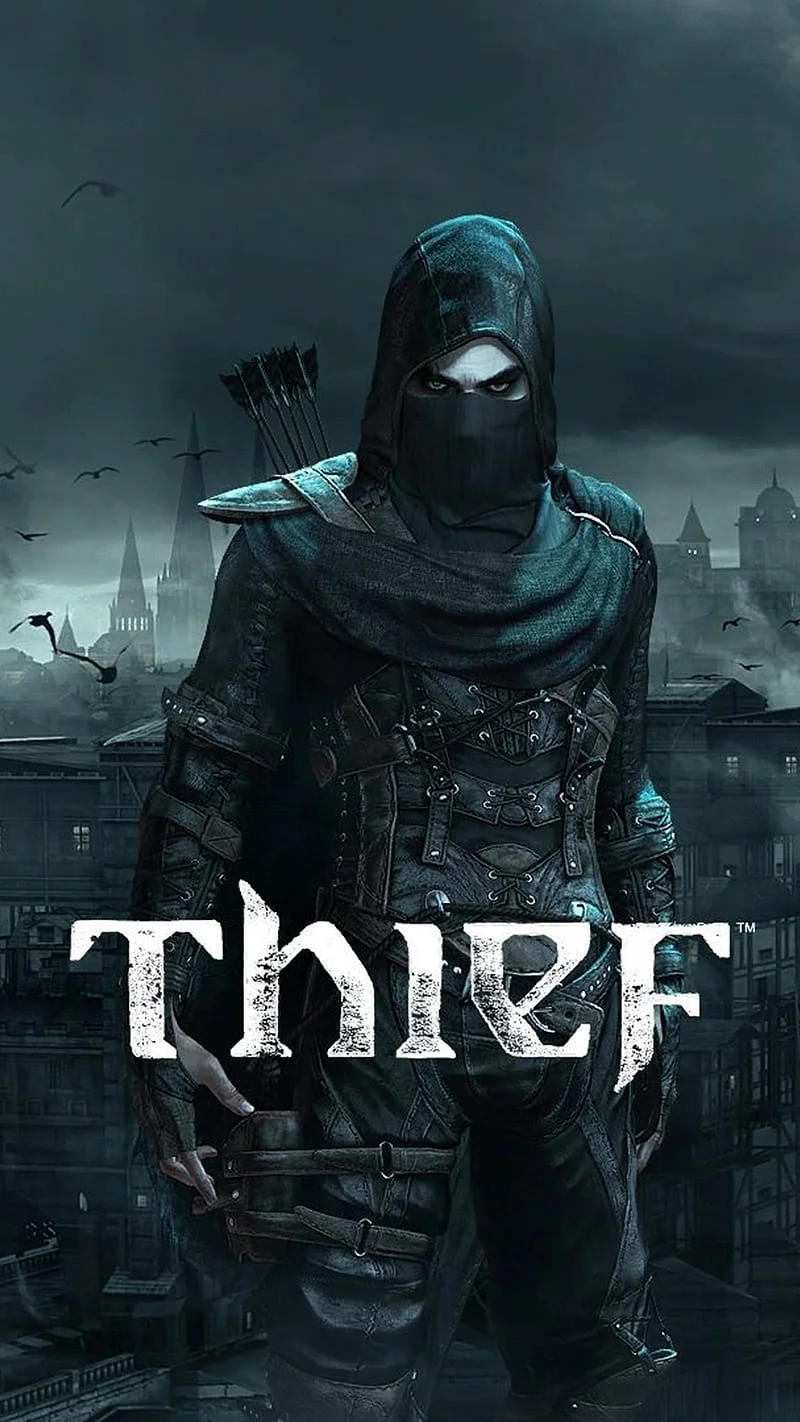
Thief
This combination provides smooth gameplay with an average of 72 FPS, suitable for most gaming scenarios.
Average FPS: resolution vs quality settings
| Ultra | High | Medium | Low | |
|---|---|---|---|---|
| 4K Ultra HD | 33 | 34 | 42 | 58 |
| 1440p QHD | 53 | 59 | 77 | 100 |
| 1080p Full HD | 79 | 82 | 104 | 143 |
Cell color: green is 120+ FPS, teal is 60+, amber is 30+, red is below 30.
Thief with Intel Core i5-12400F + NVIDIA GeForce RTX 2060, In-Depth Analysis
The Intel Core i5-12400F and NVIDIA GeForce RTX 2060 combination delivers a solid 1080p experience in Thief, but struggles to maintain playable frame rates at 4K on higher presets. The data shows this combo ranks 1335th out of 1642 tested configurations, placing it in the lower-mid tier of the database. While the CPU holds its own in synthetic benchmarks, the GPU becomes the clear bottleneck at higher resolutions, where the difference between Low and Ultra settings is stark.
FAQ
*Q: What is the best resolution for this combo in Thief?*
A: 1920x1080 is the sweet spot. At this resolution, the combo achieves 81.9 FPS on High and 78.8 FPS on Ultra, both comfortably above the 60 FPS threshold for smooth gameplay.
Q: How does the CPU compare to its nearest rivals?
A: The Core i5-12400F scores 19221 in average benchmarks, which is 0.1% ahead of the Intel Core i7-8700K (19210) and 1.3% ahead of the AMD EPYC 7773X (18979). It trails the AMD Ryzen 5 7533HS by 0.7% (19364).
Q: Is the RTX 2060 a strong performer relative to other GPUs?
A: The GPU sits at the 58th percentile among all GPUs, with an average benchmark score of 16074. It is 0.5% ahead of the AMD Radeon RX 7600S (15996) and 1.8% ahead of the AMD Radeon Pro W5500 (15786).
Q: What frame rate can I expect at 1440p with Medium settings?
A: The measured data shows 76.6 FPS at 2560x1440 on Medium settings. This is a playable frame rate, though it drops to 52.8 FPS on Ultra, which may feel less smooth.
Q: How does the combo rank overall in this game?
A: It ranks 1335th out of 1642 tested combos. This places it in the lower half of the database, indicating that while it can run the game, many other configurations deliver higher performance.
Q: Does the CPU bottleneck the GPU at 1080p?
A: At 1080p Low, the combo hits 142.9 FPS, suggesting the CPU is capable of feeding the GPU effectively. The performance drop from Low to Ultra at 1080p (from 142.9 to 78.8 FPS) indicates the GPU becomes the limiting factor as graphical load increases.
CPU Role
The Intel Core i5-12400F is a 6-core, 12-thread processor based on the Alder Lake architecture, built on a 10 nm process. It has a base clock of 2.50 GHz and a boost clock of 4.40 GHz, with 18 MB of shared L3 cache. In synthetic benchmarks, it scores 16518 in Cinebench R23 multicore and 2332 in single-core, with a Passmark multithread score of 19433. These numbers place it at the 77th percentile among all CPUs.
In Thief, the CPU's role is to maintain a consistent frame delivery, especially at lower resolutions where the GPU is less stressed. The data shows that at 1080p Low, the combo achieves 142.9 FPS, which is the highest measured frame rate across all configurations. This suggests the CPU can handle the game's logic and physics without becoming a bottleneck at this setting. However, the CPU's performance relative to its nearest rivals—0.1% ahead of the Core i7-8700K and 0.7% behind the Ryzen 5 7533HS—indicates it is a mid-pack performer, not a standout for this title.
The 65W TDP and 6-core/12-thread configuration are adequate for Thief, a 2014 stealth game that does not heavily utilize multi-threading. The 3dmark 16-thread score of 5895 and 2-thread score of 1699 show that the CPU scales reasonably with thread count, but the game's age means single-thread performance matters more. The single-core Cinebench R20 score of 979 is respectable, and the Passmark single-thread score of 3481 confirms this CPU can handle the game's primary thread effectively.
GPU Role
The NVIDIA GeForce RTX 2060 is a Turing-architecture GPU built on a 12 nm process, with 1920 shading units, 120 TMUs, and 48 ROPs. It has 6 GB of GDDR6 memory on a 192-bit bus, providing 336.0 GB/s of bandwidth. The GPU's base clock is 1365 MHz with a boost clock of 1680 MHz, and it delivers 6.451 TFLOPS of FP32 performance. It scores 14111 in Passmark G3D and 1242 in 3DMark Steel Nomad DX12, placing it at the 58th percentile among all GPUs.
In Thief, the GPU is the primary driver of frame rates at higher settings and resolutions. The measured data shows a clear pattern: at 1080p, the combo achieves 142.9 FPS on Low, 104.4 FPS on Medium, 81.9 FPS on High, and 78.8 FPS on Ultra. This scaling indicates the GPU is the limiting factor as settings increase, with the gap between Low and Ultra being 64.1 FPS at 1080p.
The GPU's 6 GB VRAM is sufficient for Thief at 1080p and 1440p, but the 4K data shows significant drops. At 3840x2160, the combo manages 57.5 FPS on Low, 41.9 FPS on Medium, 33.6 FPS on High, and 33.2 FPS on Ultra. The RTX 2060's memory bandwidth of 336.0 GB/s and 192-bit bus become strained at 4K, leading to frame rates that fall below the 60 FPS target. The GPU's nearest rival, the AMD Radeon RX 7600S, is 0.5% behind in average score, but neither card is designed for 4K gaming in this title.
How This Combo Ranks
The combo ranks 1335th out of 1642 tested combinations in Thief, placing it in the bottom 19% of the database. This rank reflects the hardware's age and mid-range positioning. The CPU, at the 77th percentile, is a stronger component than the GPU, which sits at the 58th percentile. This imbalance means the GPU holds back the overall performance, particularly at higher resolutions.
The rank is consistent with the measured FPS data. At 1080p Ultra, the combo achieves 78.8 FPS, which is playable but not exceptional. At 1440p Ultra, the frame rate drops to 52.8 FPS, and at 4K Ultra, it falls to 33.2 FPS. These numbers suggest that while the combo can handle the game at lower settings, it struggles to maintain high frame rates at demanding configurations, which is why it ranks below many other combos in the database.
The CPU's nearest rivals—the Core i7-8700K and Ryzen 5 7533HS—show similar average benchmark scores, but the GPU's position relative to its rivals (e.g., 0.5% ahead of the RX 7600S) does not compensate for the overall performance deficit. The rank of 1335 indicates that most other tested combos deliver better frame rates in Thief, making this configuration a budget-oriented choice rather than a performance leader.
Settings Recommendations
The measured FPS data provides clear guidance for optimal settings. At 1920x1080, the High preset delivers 81.9 FPS, which is well above the 60 FPS playability threshold. The Ultra preset drops to 78.8 FPS, a marginal difference of 3.1 FPS, making Ultra the better choice for visual quality without sacrificing smoothness. For players prioritizing frame rate, the Medium preset at 104.4 FPS offers a significant boost, but the visual trade-off is not necessary given the High and Ultra results.
At 2560x1440, the Medium preset delivers 76.6 FPS, which is playable. The High preset drops to 58.7 FPS, which may cause noticeable stuttering, and Ultra falls to 52.8 FPS. For 1440p gaming, Medium is the recommended preset, as it maintains a frame rate above 60 FPS while providing acceptable visual fidelity. The Low preset at 100.1 FPS is an option for competitive play, but the visual downgrade is substantial.
At 3840x2160, no preset achieves 60 FPS. The Low preset at 57.5 FPS is the only configuration near playable, while Medium (41.9 FPS), High (33.6 FPS), and Ultra (33.2 FPS) all fall below this threshold. For 4K, users should either accept Low settings or reduce the resolution to 1440p for a better experience. The data clearly shows that 1080p Ultra is the best balance of performance and visual quality for this combo.
Measured FPS Breakdown
The measured FPS data covers three resolutions and four settings presets, providing a comprehensive picture of performance. At 1920x1080, the combo achieves 142.9 FPS on Low, 104.4 FPS on Medium, 81.9 FPS on High, and 78.8 FPS on Ultra. The scaling from Low to Ultra is consistent, with a total drop of 64.1 FPS. The difference between High and Ultra is minimal at 3.1 FPS, suggesting diminishing returns at the highest preset.
At 2560x1440, the performance drops significantly. The Low preset delivers 100.1 FPS, Medium 76.6 FPS, High 58.7 FPS, and Ultra 52.8 FPS. The drop from 1080p to 1440p at the same settings ranges from 42.8 FPS (Low) to 26.0 FPS (Ultra). This indicates that the GPU is increasingly stressed as pixel count rises. The High preset at 1440p falls below 60 FPS, making it less desirable for smooth gameplay.
At 3840x2160, the frame rates are the lowest. The Low preset achieves 57.5 FPS, Medium 41.9 FPS, High 33.6 FPS, and Ultra 33.2 FPS. The drop from 1440p to 4K is severe, with the Low preset losing 42.6 FPS and the Ultra preset losing 19.6 FPS. The 4K results show that the RTX 2060's 6 GB VRAM and 336.0 GB/s bandwidth are insufficient for this game at high settings. The Ultra preset at 4K (33.2 FPS) is nearly identical to High (33.6 FPS), indicating a hard performance ceiling.
Resolution Scaling
The data shows a clear pattern of FPS degradation as resolution increases from 1080p to 4K. At Low settings, the frame rate drops from 142.9 FPS at 1080p to 100.1 FPS at 1440p (a 29.9% decrease) and to 57.5 FPS at 4K (a 59.8% decrease from 1080p). This scaling is expected, as pixel count increases by 1.78x from 1080p to 1440p and 4x from 1080p to 4K.
At Ultra settings, the frame rate drops from 78.8 FPS at 1080p to 52.8 FPS at 1440p (a 33.0% decrease) and to 33.2 FPS at 4K (a 57.9% decrease from 1080p). The percentage drops are similar across settings, indicating that the GPU is the consistent limiting factor. The RTX 2060's 6 GB VRAM and 192-bit memory bus become bottlenecks at higher resolutions, as evidenced by the 4K results.
The resolution scaling reveals that the CPU is not the primary constraint. At 1080p Low, the combo achieves 142.9 FPS, which is a high frame rate that suggests the CPU can keep up with the GPU's output. As resolution increases, the GPU workload grows, and the frame rate drops proportionally. This indicates that the RTX 2060 is the limiting component, particularly at 1440p and 4K. For users seeking higher frame rates at 4K, the data suggests that a more powerful GPU would be necessary, as the current combo cannot reach 60 FPS at any setting above Low.
Hardware Specifications
Intel Core i5-12400F
NVIDIA GeForce RTX 2060
FPS Benchmarks by Resolution & Settings
Performance data for Intel Core i5-12400F + NVIDIA GeForce RTX 2060 in Thief
| Resolution | Settings | Avg FPS |
|---|---|---|
| 3840x2160 | Low | 57.5 |
| 3840x2160 | Medium | 41.9 |
| 3840x2160 | High | 33.6 |
| 3840x2160 | Ultra | 33.2 |
| 2560x1440 | Low | 100.1 |
| 2560x1440 | Medium | 76.6 |
| 2560x1440 | High | 58.7 |
| 2560x1440 | Ultra | 52.8 |
| 1920x1080 | Low | 142.9 |
| 1920x1080 | Medium | 104.4 |
| 1920x1080 | High | 81.9 |
| 1920x1080 | Ultra | 78.8 |
Thief with ii5-12400F + Other GPUs
See how Thief performs with the same CPU but different graphics cards.
Thief with RTX 2060 + Other CPUs
See how Thief performs with the same GPU but different processors.
Other Games with ii5-12400F + RTX 2060
Explore FPS benchmarks for other games using this same hardware combination.