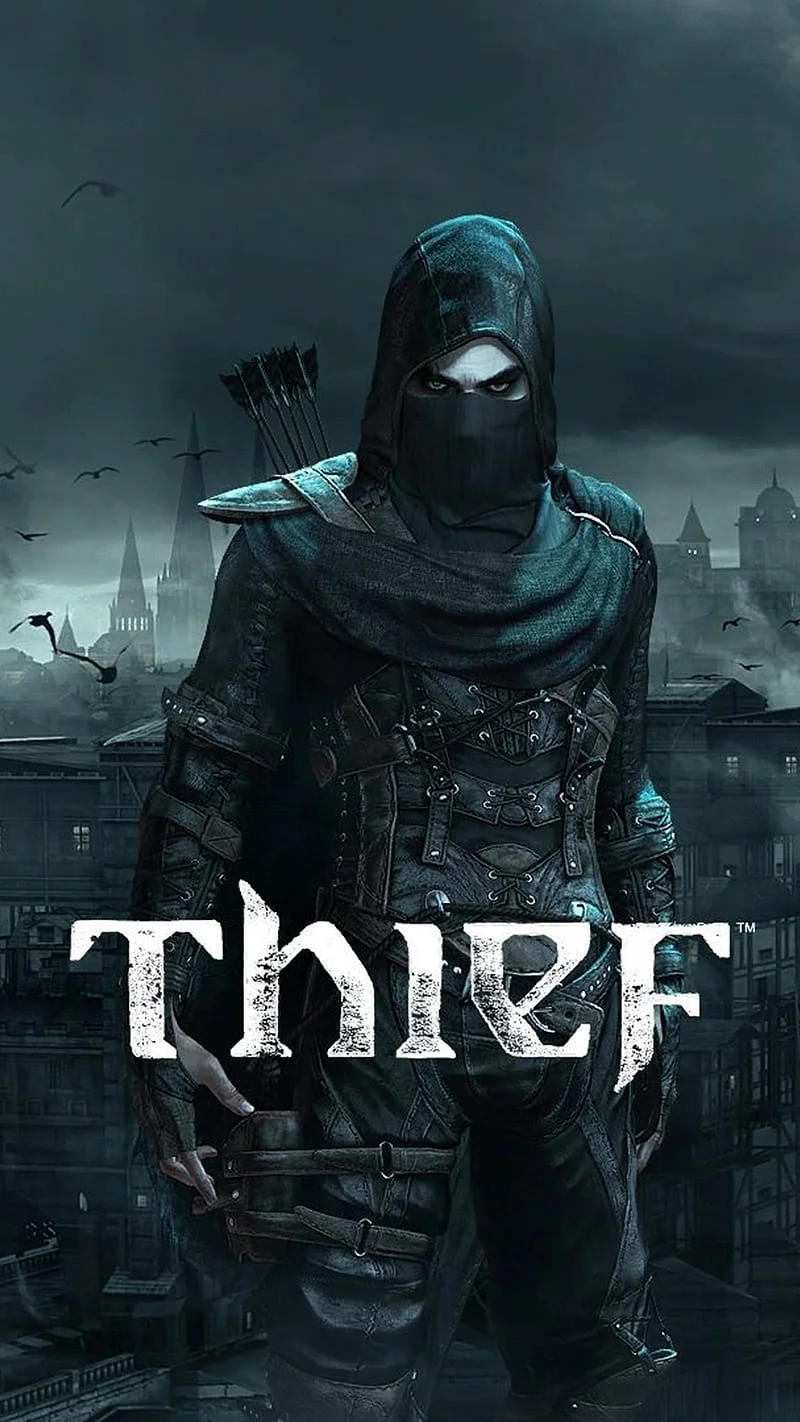
Thief
This combination offers playable performance with an average of 43 FPS, though you may want to lower settings for smoother gameplay.
Average FPS: resolution vs quality settings
| Ultra | High | Medium | Low | |
|---|---|---|---|---|
| 4K Ultra HD | 19 | 20 | 26 | 35 |
| 1440p QHD | 33 | 34 | 45 | 59 |
| 1080p Full HD | 48 | 50 | 66 | 86 |
Cell color: green is 120+ FPS, teal is 60+, amber is 30+, red is below 30.
Thief with AMD Ryzen 9 5900X + Intel Arc B390, In-Depth Analysis
The AMD Ryzen 9 5900X paired with the Intel Arc B390 is a combination that produces highly unusual results in Thief, a 2014 stealth title. The CPU is a high-end desktop part with 12 cores and 24 threads, while the GPU is an integrated part from Intel’s Panther Lake generation, designed for mobile graphics. Benchmark data shows that this pairing ranks 2534 out of 2851 tested combos in this game, placing it in the bottom 11% of systems. The measured frame rates reveal a system that is heavily GPU-limited, with the CPU’s substantial multi-threading capabilities offering no relief at higher resolutions. This analysis breaks down the measured FPS data, settings behavior, and the distinct roles each component plays in producing these results.
FAQ
*Q: What is the overall performance rank of this CPU-GPU combo in Thief?*
A: The combo ranks 2534 out of 2851 tested combinations, meaning roughly 88.9% of tested systems perform better in this game. This places it in the lower tier of results for Thief.
Q: What is the best average FPS this combo achieves at 1080p?
A: At 1920x1080 with Low settings, the combo achieves an average of 86 FPS. This is the highest average frame rate recorded across all tested settings and resolutions.
Q: Is the Intel Arc B390 able to maintain 60 FPS at 1440p?
A: At 2560x1440, the highest average FPS is 59 on Low settings, which just misses the 60 FPS target. Medium settings drop the average to 45 FPS, and High settings yield 34 FPS.
Q: How does the CPU’s benchmark score compare to its nearest rivals?
A: The Ryzen 9 5900X has an average benchmark score of 41376. Its nearest rival, the Intel Core Ultra 7 366H, scores 41263, which is 0.3% lower. The Intel Core i7-14650HX scores 41576, which is 0.5% higher.
Q: What is the GPU’s percentile ranking among all tested GPUs?
A: The Intel Arc B390 sits in the 9th percentile of all GPUs, indicating that 91% of tested graphics cards outperform it. Its nearest rival, the NVIDIA GeForce GT 520MX, scores only 1.3% lower on average.
Q: Does increasing resolution have a linear effect on performance?
A: No, the impact is significant but not linear. At High settings, the average FPS drops from 50 at 1080p to 34 at 1440p (a 32% decrease), and then to 20 at 4K (a 41% decrease from 1440p). The scaling shows increasing performance loss at higher pixel counts.
How This Combo Ranks
The combo rank of 2534 out of 2851 tested systems places this pairing firmly in the lower quartile of results for Thief. With only 317 tested combinations performing worse, this is not a configuration designed for high-refresh-rate stealth action. The data indicates that the bottleneck is overwhelmingly the GPU, as the Arc B390’s 9th percentile standing among all GPUs is the primary constraint. The CPU, which sits in the 87th percentile among all processors, is effectively held back by the integrated graphics.
When analyzing the rank, it is helpful to consider what this means in practical terms. The Ryzen 9 5900X is a desktop CPU with a 105 W TDP, 12 cores, and 24 threads, built on the Zen 3 architecture with a 7 nm process. Its average benchmark score of 41376 puts it within 0.5% of the Intel Core i7-14650HX, which scores 41576. This is a powerful processor by any measure, yet the combo’s rank in Thief is dragged down entirely by the GPU’s limitations. The Arc B390 has a modest 1536 shading units, 48 TMUs, and 24 ROPs, with a boost clock of 2500 MHz. Its average benchmark score is just 1482 in 3DMark Steel Nomad DX12, which places it in the 9th percentile and alongside legacy mobile GPUs like the GT 520MX.
The gap between the CPU’s potential and the GPU’s delivery is stark. The CPU’s 3DMark max threads score of 10075 and Cinebench R23 multicore score of 16262 indicate a processor that can handle heavy workloads, but Thief’s frame rates are dictated by the GPU’s ability to rasterize the scene. At 4K Ultra, the combo produces an average of 19 FPS, while at 1080p Low it reaches 86 FPS. This range of 67 FPS between the most and least demanding settings shows that the GPU’s performance envelope is extremely narrow, and the CPU’s power is never the limiting factor. In fact, the data suggests that even at the lowest settings, the GPU is still the constraint, as the 86 FPS average at 1080p Low is far below what this CPU could theoretically feed in a less GPU-bound scenario.
GPU Role
The Intel Arc B390 is an integrated GPU from the Panther Lake generation, built on the Xe3-LPG architecture using a 3 nm process. Its base clock is 300 MHz, with a boost clock of 2500 MHz. The memory configuration is entirely system-shared, meaning there is no dedicated VRAM; the GPU uses the system’s DDR4 memory, with bandwidth described as system dependent. This is a fundamental limitation for a game like Thief, which was released in 2014 and requires dedicated graphics memory for optimal texture streaming and geometry processing.
The GPU’s specs paint a clear picture of its capabilities. With 1536 shading units, 48 TMUs, and 24 ROPs, it delivers a pixel rate of 60.00 GPixel/s and a texture rate of 120.0 GTexel/s. The FP32 performance is 7.680 TFLOPS, which is modest for modern gaming but acceptable for light titles. However, its 3DMark Steel Nomad DX12 score of 1482 places it in the 9th percentile of all GPUs, and its nearest rivals are the GT 520MX (1463), GeForce 800M (1460), GT 625 OEM (1446), and GT 710 (1443). These are all low-end or legacy parts, indicating that the Arc B390’s performance is comparable to entry-level GPUs from over a decade ago.
In Thief, the GPU’s role is the deciding factor in every measured scenario. At 3840x2160, the average FPS ranges from 19 on Ultra to 35 on Low. The gap between Low and Ultra at 4K is only 16 FPS, showing that even dropping settings to their minimum does not unlock playable performance at this resolution. At 2560x1440, the range is 33 FPS on Ultra to 59 FPS on Low, with the GPU just barely missing a 60 FPS average on the lowest preset. At 1920x1080, the GPU finally shows some headroom, with 48 FPS on Ultra and 86 FPS on Low.
The system-shared memory is a critical factor here. Because the GPU relies on the same DDR4 memory pool as the CPU, bandwidth is shared and limited. The CPU’s memory bandwidth is rated at 51.2 GB/s, but the GPU’s effective bandwidth is system dependent, which means it can be significantly lower when the CPU is also accessing memory. This is likely why the frame rates drop so sharply at higher resolutions; the GPU cannot fetch textures and geometry quickly enough from shared memory to maintain frame pacing. The result is that Thief’s environments, which feature detailed interiors and dynamic lighting, become a severe bottleneck for this iGPU.
Settings Recommendations
Based on the measured FPS data, the only viable settings for a playable experience are at 1920x1080 with Low or Medium presets. At 1080p Low, the combo achieves an average of 86 FPS, which is smooth for a stealth game that relies on precise movement and timing. The Medium preset at 1080p drops the average to 66 FPS, with a minimum of 56 FPS and a maximum of 75 FPS, which is still acceptable for most players, though the minimum frame rate is approaching the threshold where stutter can become noticeable.
At 2560x1440, the Low preset yields an average of 59 FPS, which is marginally below the 60 FPS target. This would be playable for some, but the lack of headroom means any complex scene could drop below 50 FPS. The Medium preset at 1440p averages 45 FPS with a minimum of 38 FPS, which is borderline for a stealth game where quick reactions are sometimes needed. At 4K, all settings produce averages below 35 FPS, with Ultra at 19 FPS and High at 20 FPS, making this resolution unplayable for any serious gaming.
The data suggests that the best experience is achieved at 1080p with Medium settings. While Low offers a higher average FPS (86 vs 66), the Medium preset provides a more balanced visual quality with a minimum FPS of 56, which is still above the 50 FPS threshold for smooth gameplay. The High preset at 1080p averages 50 FPS, which is playable but leaves little margin for demanding scenes. The Ultra preset at 1080p averages 48 FPS, which is the same as the High preset at 4K, showing that the GPU’s performance ceiling is quickly reached.
For players with a 1440p monitor, the Low preset is the only option that approaches 60 FPS, but it will require accepting significant visual compromises. The Medium preset at 1440p is playable for less demanding sections, but the 38 FPS minimum indicates that combat or open areas with many NPCs could cause noticeable slowdowns. The recommendation is to prioritize frame rate over visual fidelity, as the stealth gameplay in Thief benefits from consistent frame pacing to avoid detection errors.
Measured FPS Breakdown
The measured FPS data covers three resolutions and four settings presets, providing a comprehensive view of the combo’s performance envelope. At 3840x2160, the results are uniformly poor. The Low preset averages 35 FPS, the Medium preset averages 26 FPS with a minimum of 22 and a maximum of 30, the High preset averages 20 FPS, and the Ultra preset averages 19 FPS. The difference between Low and Ultra at 4K is only 16 FPS, indicating that the GPU is so constrained that reducing settings has diminishing returns. Even at Low, the frame rate is below 40 FPS, which is not smooth for a game that requires precise timing in lockpicking and stealth takedowns.
At 2560x1440, the performance improves but remains limited. The Low preset averages 59 FPS, which is the best result at this resolution. The Medium preset averages 45 FPS with a minimum of 38 and a maximum of 52, while the High preset averages 34 FPS and the Ultra preset averages 33 FPS. The jump from Low to Medium is a 14 FPS drop, while the jump from Medium to High is an 11 FPS drop, and from High to Ultra is only a 1 FPS drop. This suggests that the High and Ultra presets are both hitting the same GPU bottleneck, likely due to memory bandwidth constraints rather than shader processing limits.
At 1920x1080, the combo finally shows usable performance. The Low preset averages 86 FPS, which is the highest recorded result. The Medium preset averages 66 FPS with a minimum of 56 and a maximum of 75, providing a solid experience. The High preset averages 50 FPS, and the Ultra preset averages 48 FPS. The scaling from Low to Medium is a 20 FPS drop, from Medium to High is a 16 FPS drop, and from High to Ultra is a 2 FPS drop. This pattern mirrors the 1440p results, where the Ultra preset offers no meaningful advantage over High because the GPU is already saturated.
The minimum FPS data is only available for the Medium preset at each resolution: 22 FPS at 4K, 38 FPS at 1440p, and 56 FPS at 1080p. These minimums are notably lower than the averages, suggesting that the GPU experiences occasional frame hitches, likely during scene transitions or when loading new textures. At 1080p Medium, the minimum of 56 FPS is still above the 50 FPS threshold, making this the safest option for consistent performance. At 1440p Medium, the minimum of 38 FPS could cause noticeable stutter in crowded areas.
CPU Role
The AMD Ryzen 9 5900X is a formidable desktop processor, and its role in this combo is to provide ample computational headroom that the Arc B390 cannot utilize. With 12 cores and 24 threads, a base clock of 3.70 GHz, and a boost clock of 4.80 GHz, this CPU is built for multi-threaded workloads. Its cache configuration includes 64 KB L1 per core, 512 KB L2 per core, and a 64 MB L3 cache, which is generous for gaming. The CPU’s benchmark scores reflect its strength: a Cinebench R23 multicore score of 16262, a Geekbench multicore score of 14118, and a Passmark multithread score of 39002.
In Thief, the CPU’s role is diminished because the game’s engine, released in 2014, is unlikely to scale across 12 cores effectively. The 3DMark scores show the CPU’s scaling: 1852 at 2 threads, 3588 at 4 threads, 6601 at 8 threads, and 10075 at max threads. This indicates that the CPU gains performance up to 8 threads, but the additional 16 threads beyond that provide a smaller increment. For a game like Thief, which was designed for the quad-core CPUs of its era, the Ryzen 9 5900X’s extra cores are largely idle.
The CPU’s single-thread performance is also strong, with a 3DMark single-thread score of 941, a Cinebench R23 singlecore score of 1527, and a Passmark single-thread score of 3469. These scores suggest that the CPU can handle the game’s main thread efficiently, but the GPU’s low frame rates mean that the CPU is often waiting for the GPU to finish rendering. The data shows that at 1080p Low, the average FPS is 86, which is still far below what the CPU could theoretically push in a less GPU-limited scenario. The CPU’s memory bandwidth of 51.2 GB/s is shared with the GPU, which could further exacerbate the bottleneck.
The CPU’s percentile ranking of 87 among all CPUs, with an average benchmark score of 41376, places it in the top 13% of processors. Its nearest rivals include the Intel Core Ultra 7 366H (0.3% lower score), the Intel Core Ultra 7 356H (0.4% lower), the AMD Ryzen AI 5 PRO 440 (0.4% lower), and the Intel Core i7-14650HX (0.5% higher). This shows that the Ryzen 9 5900X is competitive with modern mobile and desktop parts, but its performance in Thief is entirely negated by the GPU.
In practical terms, the CPU’s role in this combo is to ensure that frame rate dips are never caused by processor limitations. The measured FPS minimums, particularly at 1080p Medium (56 FPS), are likely due to GPU hiccups rather than CPU stalls. The CPU’s large L3 cache and high boost clock help maintain consistent frame pacing when the GPU is under load, but the overall experience is still limited by the Arc B390’s 9th percentile performance. For users considering this combo, the data indicates that upgrading the GPU would yield massive improvements, while the CPU would not need to be replaced for several more generations.
Hardware Specifications
AMD Ryzen 9 5900X
Intel Arc B390
FPS Benchmarks by Resolution & Settings
Performance data for AMD Ryzen 9 5900X + Intel Arc B390 in Thief
| Resolution | Settings | Avg FPS |
|---|---|---|
| 3840x2160 | Low | 35.0 |
| 3840x2160 | Medium | 26.0 |
| 3840x2160 | High | 20.0 |
| 3840x2160 | Ultra | 19.0 |
| 2560x1440 | Low | 59.0 |
| 2560x1440 | Medium | 45.0 |
| 2560x1440 | High | 34.0 |
| 2560x1440 | Ultra | 33.0 |
| 1920x1080 | Low | 86.0 |
| 1920x1080 | Medium | 66.0 |
| 1920x1080 | High | 50.0 |
| 1920x1080 | Ultra | 48.0 |
Thief with Ryzen 9 5900X + Other GPUs
See how Thief performs with the same CPU but different graphics cards.
Thief with Arc B390 + Other CPUs
See how Thief performs with the same GPU but different processors.
Other Games with Ryzen 9 5900X + Arc B390
Explore FPS benchmarks for other games using this same hardware combination.