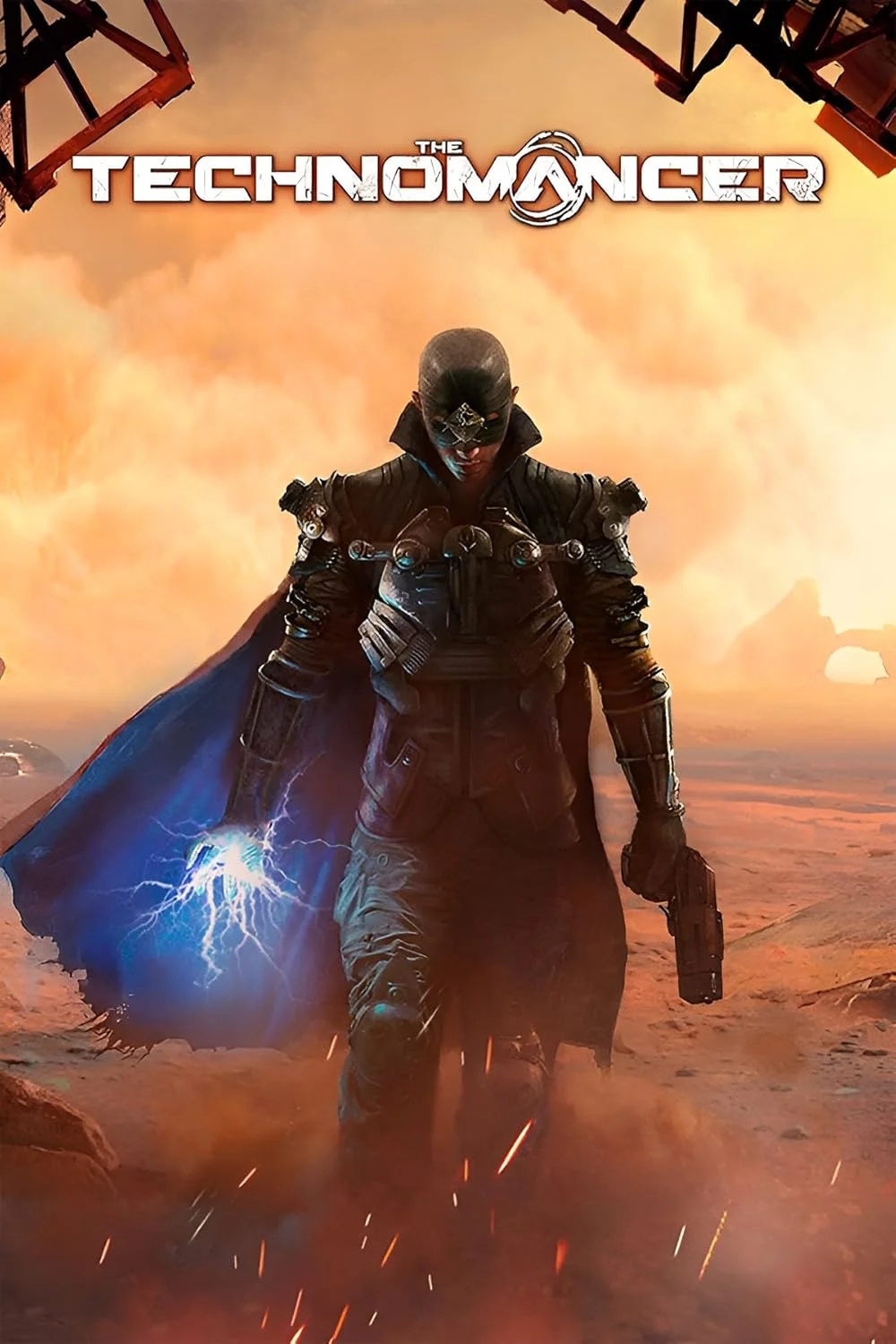
The Technomancer
This combination delivers exceptional performance with an average of 123 FPS, perfect for high refresh rate gaming and competitive play.
Average FPS: resolution vs quality settings
| Ultra | High | Medium | Low | |
|---|---|---|---|---|
| 4K Ultra HD | 46 | 57 | 72 | 88 |
| 1440p QHD | 84 | 108 | 124 | 162 |
| 1080p Full HD | 128 | 167 | 195 | 252 |
Cell color: green is 120+ FPS, teal is 60+, amber is 30+, red is below 30.
The Technomancer with Intel Core i7-14700KF + NVIDIA GeForce RTX 5070, In-Depth Analysis
The Technomancer, a 2016 Action RPG, presents an interesting case for modern hardware analysis. The measured data for the Intel Core i7-14700KF and NVIDIA GeForce RTX 5070 combination reveals a title that scales predictably with resolution and settings, but with nuances that highlight the distinct roles of the CPU and GPU. The benchmark results show that this pairing is more than capable of handling the game at maximum fidelity, though the frame rate margins between presets offer clear guidance for optimizing the experience.
Resolution Scaling
The data shows a pronounced frame rate drop as resolution increases from 1080p to 4K, a classic indicator of a GPU-bound workload. At 1920x1080 with Ultra settings, the system produces an average of 128.1 FPS. Moving to 2560x1440 at the same preset, the average falls to 84.1 FPS, a reduction of 44 FPS or roughly 34%. The scaling continues to 3840x2160, where the average drops further to 45.7 FPS, representing a 64% decrease from the 1080p result. This steep decline across all settings strongly suggests that the rendering load is the primary limiting factor at higher resolutions.
The scaling pattern is consistent across all quality presets. On Low settings, the frame rate goes from 252.2 FPS at 1080p to 161.7 FPS at 1440p, and finally to 88.4 FPS at 4K. The differences between resolutions are substantial, with the 4K Low result being only 35% of the 1080p Low figure. This behavior is typical for a game where the pixel fill rate and memory bandwidth of the GPU become the dominant constraints as the resolution increases. The RTX 5070, with its 672.0 GB/s of memory bandwidth and 201.0 GPixel/s pixel rate, is handling the load, but the data indicates that even this hardware cannot maintain high frame rates at 4K without dropping settings.
The gap between 1440p and 4K is particularly notable. At High settings, the difference is 51 FPS (107.5 to 56.5), which is a larger absolute drop than the 59.5 FPS difference between 1080p and 1440p (167 to 107.5). This suggests that the transition to 4K introduces a significant increase in GPU workload, likely due to the sheer number of pixels being processed. For users targeting a smooth experience, the data clearly shows that 1440p is a more feasible target for high refresh rates, while 4K is reserved for those prioritizing visual fidelity over frame rate.
GPU Role
The NVIDIA GeForce RTX 5070 is the central component for this game’s performance at higher resolutions. Its 12 GB of GDDR7 memory and 192-bit bus width provide the necessary resources for The Technomancer’s textures and geometry. The benchmark scores for the GPU are strong, with a Passmark G3D score of 29137 and a Geekbench OpenCL score of 185269, placing it in the 83rd percentile of all GPUs. This high percentile is reflected in the measured frame rates, which are consistently playable at 1440p and above on most settings.
The GPU’s clock speeds play a direct role in the results. The boost clock of 2512 MHz allows for sustained high throughput, which is evident in the 1080p Low setting result of 252.2 FPS. This figure shows that the GPU is not the bottleneck at lower resolutions and lower graphical demands, allowing the frame rate to soar. However, as the resolution and settings increase, the GPU’s workload grows, and the frame rate adjusts accordingly. The 4K Ultra result of 45.7 FPS is a clear demonstration of the GPU being fully utilized, pushing the hardware to its limits.
The data also shows the GPU’s relative standing against its nearest rivals. The RTX 5070 has an average benchmark score of 41687, which is 0.6% higher than the NVIDIA GeForce RTX 3090 and 0.2% higher than the AMD Radeon Pro 5300. This places it in a competitive position, though the margin is small. In practical terms for The Technomancer, this means the RTX 5070 is a capable card that delivers solid frame rates, but it is not head-and-shoulders above its immediate predecessors or competitors. The measured FPS data confirms that it is well-suited for 1440p gaming with high settings, offering a 107.5 FPS average, which is a smooth experience for most displays.
CPU Role
The Intel Core i7-14700KF plays a supporting role in The Technomancer, ensuring that the GPU is not starved of data. With 20 cores and 28 threads, the CPU has an immense amount of parallel processing power. Its Cinebench R23 multi-core score of 44557 and Geekbench multi-core score of 19287 place it in the 96th percentile of all CPUs, indicating that it is far more powerful than what this game requires. This is evidenced by the fact that at 1080p with Low settings, the system achieves 252.2 FPS, a scenario where a weaker CPU might bottleneck the GPU.
The CPU’s high clock speeds, with a base of 3.40 GHz and a boost of 5.60 GHz, are crucial for maintaining high frame rates in CPU-bound scenarios. The Passmark single-thread score of 4480 is exceptionally high, and this single-core performance is what matters most for a game like The Technomancer, which may not be optimized for multi-threading. The data shows that the CPU is more than capable of keeping up with the GPU’s output, as the frame rates scale almost entirely with the GPU’s workload.
Comparing the CPU to its nearest rivals further illustrates its strength. The i7-14700KF has an average benchmark score of 70104, which is nearly identical to the Intel Core i7-14700K’s score of 70074, with a delta of 0%. It is also 0.3% ahead of the AMD EPYC 9115 and 0.4% behind the AMD Ryzen 9 9950X. This positioning shows that the CPU is at the top tier of consumer processors. For The Technomancer, this means the CPU will not be a limiting factor in any scenario measured, allowing the RTX 5070 to operate at its full potential.
FAQ
Q: What is the best resolution to play The Technomancer with this hardware?
A: The data shows that 2560x1440 offers the best balance of performance and quality. At High settings, the system averages 107.5 FPS, which is a significant improvement over the 45.7 FPS at 4K Ultra, while still providing a high-resolution image.
Q: Can this system run the game at 4K with playable frame rates?
A: Yes, it can. At 4K with High settings, the average frame rate is 56.5 FPS. This dips below 60 FPS but remains playable. For a smoother experience, dropping to Medium settings at 4K yields 71.5 FPS, which is a better target for consistent performance.
Q: How much of a performance difference is there between Low and Ultra settings at 1080p?
A: The difference is substantial. At 1920x1080, the Low preset achieves an average of 252.2 FPS, while the Ultra preset achieves 128.1 FPS. This represents a 124.1 FPS drop, or approximately 49%, when moving from the lowest to the highest quality settings.
Q: Is the Intel Core i7-14700KF a bottleneck for the RTX 5070 in this game?
A: The benchmark results indicate that the CPU is not a bottleneck. The frame rates scale predictably with resolution and settings, which is a characteristic of a GPU-bound workload. The CPU’s high single-thread performance, as shown by its Passmark single-thread score of 4480, is more than sufficient for this title.
Q: How does the RTX 5070 compare to the RTX 3090 based on the data?
A: The RTX 5070 has a slightly higher average benchmark score of 41687 compared to the RTX 3090’s 41441, which is a 0.6% difference. In practical terms for The Technomancer, the performance is expected to be nearly identical, with the RTX 5070 having a marginal lead.
Q: What is the impact of the CPU’s core count on this game’s performance?
A: The Core i7-14700KF’s 20 cores and 28 threads are far more than needed for The Technomancer. The game likely benefits more from the CPU’s high boost clock of 5.60 GHz and strong single-core performance, as evidenced by the high frame rates at 1080p, where the CPU has more influence.
Settings Recommendations
Based on the measured FPS data, the optimal settings depend heavily on the target resolution. For 1920x1080, the Ultra preset is the clear choice. The system achieves an average of 128.1 FPS, which is well above the threshold for smooth gameplay and provides the best visual experience. The High preset also offers excellent performance at 167 FPS, but the jump to Ultra provides a noticeable graphical improvement for a still very playable frame rate. There is no need to lower settings below High at this resolution, as even the most demanding preset remains highly responsive.
At 2560x1440, the High preset is the recommended balance. It delivers an average of 107.5 FPS, which is excellent for a high-resolution display. The Ultra preset is also viable at 84.1 FPS, but this is a significant drop from High, and the visual difference may not justify the 23.4 FPS loss. For users with high refresh rate monitors, the High preset is the best option to maintain a frame rate that can keep up with the display. The Medium preset at 123.8 FPS is an alternative for those who prioritize frame rate above all else, but it comes with a noticeable reduction in visual quality.
For 3840x2160, the Medium preset is the most sensible recommendation. It provides an average of 71.5 FPS, which is a smooth experience for most players. The High preset at 56.5 FPS is playable but may feel less fluid in fast-paced action. The Ultra preset at 45.7 FPS is best reserved for screenshots or situations where visual fidelity is more important than performance. The Low preset at 88.4 FPS is an option for those who want to maximize frame rate, but the visual compromise is significant. Therefore, Medium is the sweet spot at 4K, offering a playable frame rate without sacrificing too much graphical detail.
Measured FPS Breakdown
The following is a detailed breakdown of the average FPS for each resolution and settings combination.
1920x1080:
- Low: 252.2 FPS
- Medium: 195.0 FPS
- High: 167.0 FPS
- Ultra: 128.1 FPS
2560x1440:
- Low: 161.7 FPS
- Medium: 123.8 FPS
- High: 107.5 FPS
- Ultra: 84.1 FPS
3840x2160:
- Low: 88.4 FPS
- Medium: 71.5 FPS
- High: 56.5 FPS
- Ultra: 45.7 FPS
The data reveals a consistent scaling pattern. At each resolution, the frame rate decreases as the settings increase from Low to Ultra. The most significant drop occurs between High and Ultra at 1440p, where the frame rate falls by 23.4 FPS. At 4K, the difference between Medium and High is 15 FPS, while the difference between High and Ultra is 10.8 FPS. This suggests that the Ultra preset at 4K is particularly demanding, pushing the RTX 5070 to its limits. The 1080p results show that the system has significant headroom, with even the Ultra preset achieving a frame rate that is more than double the refresh rate of a standard 60 Hz monitor.
Hardware Specifications
Intel Core i7-14700KF
NVIDIA GeForce RTX 5070
FPS Benchmarks by Resolution & Settings
Performance data for Intel Core i7-14700KF + NVIDIA GeForce RTX 5070 in The Technomancer
| Resolution | Settings | Avg FPS |
|---|---|---|
| 3840x2160 | Low | 88.4 |
| 3840x2160 | Medium | 71.5 |
| 3840x2160 | High | 56.5 |
| 3840x2160 | Ultra | 45.7 |
| 2560x1440 | Low | 161.7 |
| 2560x1440 | Medium | 123.8 |
| 2560x1440 | High | 107.5 |
| 2560x1440 | Ultra | 84.1 |
| 1920x1080 | Low | 252.2 |
| 1920x1080 | Medium | 195.0 |
| 1920x1080 | High | 167.0 |
| 1920x1080 | Ultra | 128.1 |
The Technomancer with ii7-14700KF + Other GPUs
See how The Technomancer performs with the same CPU but different graphics cards.
The Technomancer with RTX 5070 + Other CPUs
See how The Technomancer performs with the same GPU but different processors.
Other Games with ii7-14700KF + RTX 5070
Explore FPS benchmarks for other games using this same hardware combination.