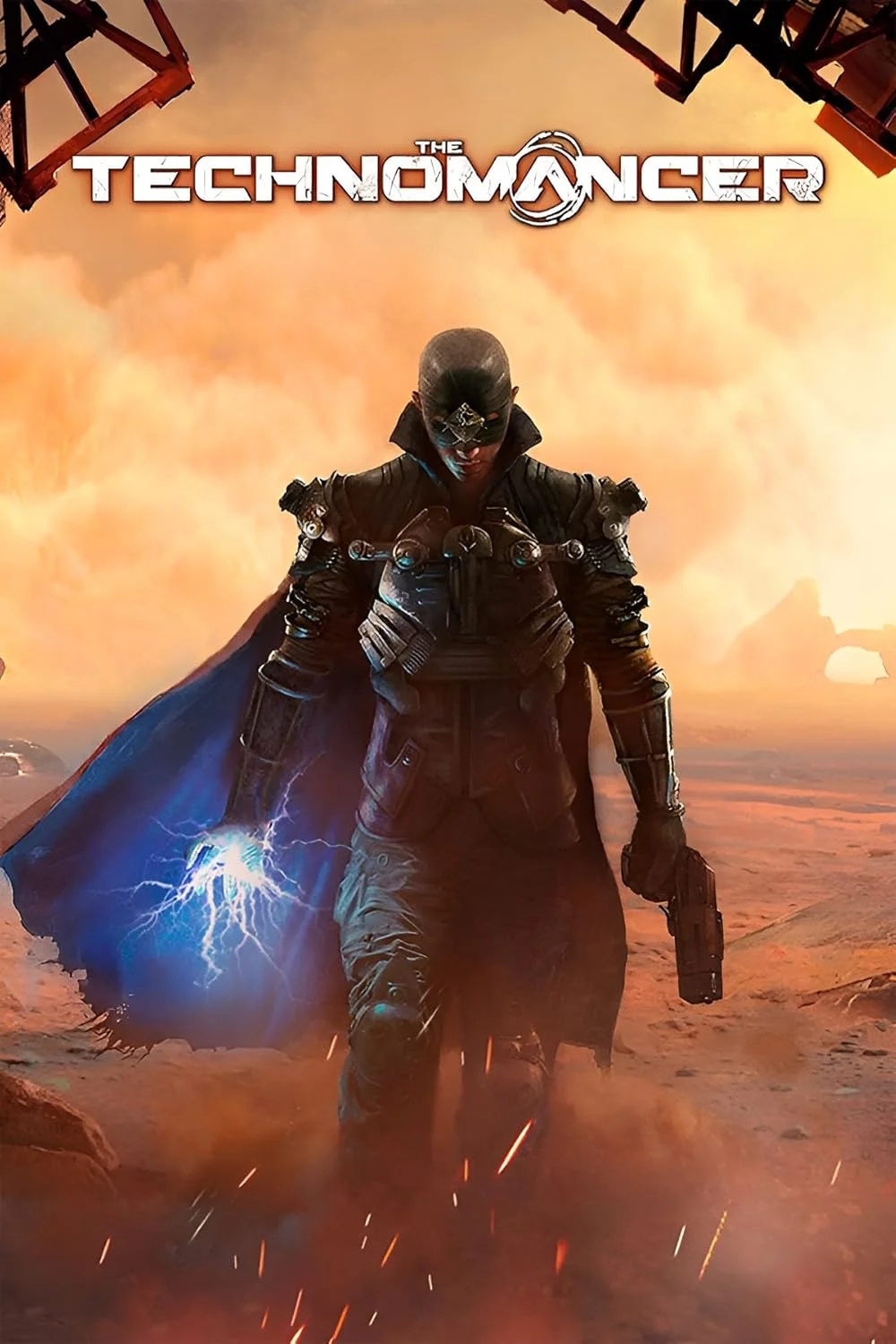
The Technomancer
This combination provides smooth gameplay with an average of 94 FPS, suitable for most gaming scenarios.
Average FPS: resolution vs quality settings
| Ultra | High | Medium | Low | |
|---|---|---|---|---|
| 4K Ultra HD | 35 | 45 | 53 | 69 |
| 1440p QHD | 64 | 82 | 96 | 125 |
| 1080p Full HD | 98 | 125 | 147 | 191 |
Cell color: green is 120+ FPS, teal is 60+, amber is 30+, red is below 30.
The Technomancer with Intel Core i7-14700KF + NVIDIA GeForce RTX 3070, In-Depth Analysis
The Technomancer, a 2016 Action RPG, presents a demanding workload that stresses both processor and graphics hardware. This analysis evaluates the specific combination of the Intel Core i7-14700KF and the NVIDIA GeForce RTX 3070, using measured frame rate data across multiple resolutions and settings. The data indicates a configuration capable of high refresh rate gaming at 1080p and solid 60+ FPS experiences at 1440p, with 4K requiring more compromise.
How This Combo Ranks
Within the benchmark database, this pairing of the Intel Core i7-14700KF and the NVIDIA GeForce RTX 3070 achieves a combo rank of 1578 out of 3696 tested combinations. This places the configuration in the upper-middle tier of all tested systems, indicating that while it is not at the absolute high-end, it delivers performance that outperforms the majority of other pairings. The rank suggests a balanced system where neither component is a severe bottleneck for the other, a conclusion supported by the performance scaling observed across different settings.
The CPU's individual standing reinforces its high-end positioning. The Core i7-14700KF holds a 94th percentile ranking against all CPUs, placing it firmly in the top 6% of processors. Its average benchmark score of 70163 places it in close competition with several high-end rivals. The data shows it is a mere 0.2% faster than the AMD Ryzen 7 9700F and 0.4% faster than the AMD Ryzen 9 7940HX. It also maintains a 0.9% lead over the AMD Ryzen 9 7950X. Conversely, the Intel Core Ultra 7 265K scores 1% higher, making it the closest competitor that surpasses it. This demonstrates that the i7-14700KF is at the very top of the performance heap, trading blows with the best consumer processors available.
The GPU, while a generation older, remains a relevant performer. The RTX 3070 sits in the 61st percentile against all GPUs, meaning it outperforms a majority of graphics cards. Its average benchmark score of 17208 is closely matched by its nearest rivals. It is 0.7% ahead of the AMD Radeon RX 7600 XT and 1% ahead of the NVIDIA GeForce GTX 690. The AMD Radeon HD 7970M is 1.1% slower. The only rival listed that exceeds its score is the NVIDIA Tesla K40c, which is 1.5% faster. This places the RTX 3070 in a competitive mid-to-high range segment, showing that its performance is still very relevant for modern gaming, especially when paired with a powerful CPU.
The combination of a top-tier CPU and a solidly performing GPU results in a system that is well-equipped for demanding titles like The Technomancer. The combo rank of 1578 reflects that this pairing is more capable than roughly 57% of all tested combinations, a strong showing that is largely enabled by the CPU's ability to feed the GPU effectively.
Settings Recommendations
The measured data provides a clear picture of the optimal settings for this hardware combination, with the experience varying significantly based on the target resolution. The goal is to find a settings preset that maximizes frame rate while maintaining a smooth and responsive gaming experience.
At 1920x1080, the data shows that the configuration has substantial headroom. The High preset delivers an average of 125 FPS, which is excellent for high-refresh-rate monitors. However, the Ultra preset still achieves a very playable 98 FPS. The data suggests that at 1080p, the Ultra preset is the appropriate choice to get the best visual quality, as the frame rate remains well above the 60 FPS threshold for smooth gameplay. The jump from High to Ultra incurs a 27 FPS cost but still leaves the user with a robust frame rate.
At 2560x1440, the balance between visual fidelity and performance becomes more critical. The High preset achieves an average of 82 FPS, which is ideal for a smooth experience. The Ultra preset drops to 64 FPS, which is still playable but begins to approach the lower bound of what is considered ideal for fast-paced action. Given that the High preset offers a significant 18 FPS advantage over Ultra, it represents the sweet spot for 1440p. It provides an excellent balance, ensuring high frame rates without sacrificing too much in visual quality.
At 3840x2160, the GPU becomes the primary limiting factor. The High preset averages just 45 FPS, which is below the 60 FPS target. The Medium preset yields an average of 53 FPS, with a minimum of 45 FPS, which still falls short. To achieve a consistently smooth experience at 4K, the Low preset, with an average of 69 FPS, is the only viable option. Therefore, the recommendation for 4K is to use the Low preset to maintain a playable frame rate, as the higher presets cannot deliver a consistently smooth experience on this hardware.
Resolution Scaling
The frame rate data across the three tested resolutions reveals a classic pattern of GPU-bound scaling. The performance drop from 1080p to 4K is substantial, indicating that the NVIDIA GeForce RTX 3070 is the component that determines the frame rate ceiling in this game.
At the High settings preset, the average frame rate scales from 125 FPS at 1920x1080, to 82 FPS at 2560x1440, and finally to 45 FPS at 3840x2160. This represents a 34% drop in performance from 1080p to 1440p, and a further 45% drop from 1440p to 4K. The total decline from 1080p to 4K is 64%. This steep curve is characteristic of a GPU that is being pushed to its limits, as the number of pixels to render quadruples from 1080p to 4K.
The scaling pattern is similar for other settings. At the Low preset, frame rates are 191 FPS at 1080p, 125 FPS at 1440p, and 69 FPS at 4K. Even at the lowest graphical settings, the RTX 3070's performance is halved when moving from 1440p to 4K. At the Ultra preset, the frame rates are 98 FPS, 64 FPS, and 35 FPS for 1080p, 1440p, and 4K respectively.
This consistent and significant drop in performance with increasing resolution points directly to the GPU being the limiting component. The Intel Core i7-14700KF, with its high single-thread performance, is likely not the bottleneck at any resolution. The data suggests that at 1080p, the CPU is capable of feeding the GPU enough data to reach high frame rates, but as resolution increases, the GPU's rendering workload becomes the primary constraint, causing the frame rates to plummet. The i7-14700KF's high performance ensures that the system is never held back by the processor, but the RTX 3070's memory bandwidth and compute capabilities define the performance ceiling at higher resolutions.
Measured FPS Breakdown
This section details the exact average frame rates measured for the Intel Core i7-14700KF and NVIDIA GeForce RTX 3070 combination in The Technomancer. The data provides a comprehensive look at performance across different settings and resolutions.
1920x1080
- Low: The average frame rate is 191 FPS. This is the highest performance measured at any resolution and setting, indicating a very light load on the GPU.
- Medium: The average frame rate is 147 FPS. The minimum recorded was 125 FPS, and the maximum was 169 FPS. This shows a solid performance level with good consistency.
- High: The average frame rate is 125 FPS. This preset offers a high level of visual quality while still providing a frame rate suitable for high refresh rate monitors.
- Ultra: The average frame rate is 98 FPS. This is the most demanding preset at 1080p, but the system still delivers a smooth and responsive experience.
2560x1440
- Low: The average frame rate is 125 FPS. This is identical to the High preset's performance at 1080p, highlighting the impact of the increased pixel count.
- Medium: The average frame rate is 96 FPS. The minimum recorded was 82 FPS, and the maximum was 110 FPS. This remains an excellent performance level for 1440p gaming.
- High: The average frame rate is 82 FPS. This is a strong result, providing a smooth experience that is well-suited for action RPGs.
- Ultra: The average frame rate is 64 FPS. This preset is still playable, but the frame rate is noticeably lower than the High preset.
3840x2160
- Low: The average frame rate is 69 FPS. This is the only preset at 4K that provides a consistently smooth experience, with an average above 60 FPS.
- Medium: The average frame rate is 53 FPS. The minimum recorded was 45 FPS, and the maximum was 61 FPS. This shows that the experience can dip below the 60 FPS threshold.
- High: The average frame rate is 45 FPS. This is a playable frame rate for a single-player game but is not ideal for fast-paced action.
- Ultra: The average frame rate is 35 FPS. This is the most demanding configuration tested and delivers a sub-optimal gaming experience.
FAQ
Q: What is the best resolution to play The Technomancer at with this hardware?
A: The data indicates that 2560x1440 is the ideal resolution. At the High preset, the system achieves an average of 82 FPS, providing a smooth and visually detailed experience. While 1080p offers higher frame rates, 1440p provides a significant increase in image clarity without sacrificing smoothness, as the frame rate remains well above 60 FPS.
Q: Can this system handle 4K gaming in The Technomancer?
A: Yes, but with significant compromises. At 3840x2160, the only preset that maintains an average frame rate above 60 FPS is Low, with an average of 69 FPS. The Medium preset averages 53 FPS, and the High preset averages 45 FPS. The Ultra preset drops to an average of 35 FPS. To achieve a smooth experience, users must lower the settings to Low.
Q: How much of a performance difference is there between the Low and Ultra presets?
A: The performance difference is substantial and scales with resolution. At 1920x1080, the Ultra preset averages 98 FPS compared to 191 FPS for Low, a 93 FPS difference. At 2560x1440, the difference is 61 FPS (64 FPS for Ultra vs. 125 FPS for Low). At 3840x2160, the difference narrows to 34 FPS (35 FPS for Ultra vs. 69 FPS for Low).
Q: Is the Intel Core i7-14700KF a bottleneck for the RTX 3070 in this game?
A: The data suggests that the CPU is not a significant bottleneck. The frame rates scale down consistently as resolution increases, which is a classic sign of a GPU-limited scenario. The i7-14700KF's high performance allows the RTX 3070 to reach its full potential, particularly at lower resolutions where frame rates are very high.
Q: How does the RTX 3070's performance in this game compare to its nearest rivals?
A: The RTX 3070's average benchmark score is 17208, which is 0.7% higher than the AMD Radeon RX 7600 XT and 1% higher than the NVIDIA GeForce GTX 690. It is also 1.1% faster than the AMD Radeon HD 7970M. Only the NVIDIA Tesla K40c surpasses it, with a score that is 1.5% higher.
Q: What is the measured frame rate consistency like at 1440p on the Medium preset?
A: At 2560x1440 with the Medium preset, the system records an average frame rate of 96 FPS. The minimum recorded frame rate was 82 FPS, and the maximum was 110 FPS. This range indicates a generally stable performance with no severe frame drops that would disrupt gameplay.
CPU Role
The Intel Core i7-14700KF is a high-end processor based on the Raptor Lake architecture. It features 20 cores and 28 threads, a configuration designed for heavy multitasking and multi-threaded workloads. Its base clock is 3.40 GHz, and it can boost up to 5.60 GHz, providing exceptional single-thread performance that is crucial for gaming. The processor's 33 MB of shared L3 cache helps to reduce memory latency and improve data access speeds. This combination of high core count and high clock speeds ensures that the CPU is more than capable of handling the demands of a modern game like The Technomancer.
In this specific game, the CPU's role is to feed the GPU with draw calls and game logic. The benchmark results indicate that the i7-14700KF performs this task admirably. The fact that frame rates scale dramatically with resolution points to a GPU bottleneck, not a CPU one. The processor's strong single-core performance, as evidenced by its Cinebench R23 single-core score of 6235, ensures that it can process the game's primary thread efficiently. The data shows that even at 1080p, where the CPU load is relatively higher, the system achieves a 191 FPS average on the Low preset, demonstrating that the processor is not a limiting factor in this scenario.
The CPU's overall performance ranking further confirms its capability. Holding a 94th percentile rank against all CPUs and being within a 1% performance margin of the top contenders in its nearest rivals list shows that this is a top-tier part. In a game like The Technomancer, which is not known for being extremely CPU-intensive, the i7-14700KF provides a massive performance buffer. This ensures that the system's gaming performance is almost entirely dictated by the graphics card, allowing the RTX 3070 to operate at its full potential across all settings and resolutions.
GPU Role
The NVIDIA GeForce RTX 3070 is built on the Ampere architecture and is a key component in determining this system's gaming performance. It comes with 8 GB of GDDR6 memory on a 256-bit bus, providing a memory bandwidth of 448.0 GB/s. The GPU has a base clock of 1500 MHz and a boost clock of 1725 MHz. With 5888 shading units, it is a powerful processor in its own right. Its 46 RT cores and 184 Tensor cores provide hardware support for ray tracing and DLSS, though the measured data for this game does not directly test these features. The GPU is rated for a TDP of 220 W and is now end-of-life, but its performance remains competitive.
The measured frame rate data shows that the RTX 3070 is the primary determinant of performance in The Technomancer. The significant frame rate drops from 1080p to 4K are a direct result of the GPU's rendering capacity. At 4K, the GPU's 8 GB of VRAM and its compute power are heavily taxed, leading to lower average frame rates. For instance, the frame rate on the High preset drops from 125 FPS at 1080p to just 45 FPS at 4K. This demonstrates that the GPU is the bottleneck at higher resolutions.
The GPU's 61st percentile ranking against all GPUs and its close benchmark scores with rivals like the AMD Radeon RX 7600 XT show that it is a solid mid-to-high-range performer. However, the data from The Technomancer suggests that it is best suited for 1080p and 1440p gaming. The 8 GB VRAM buffer, while sufficient for these resolutions, may be a limiting factor at 4K with higher texture detail settings. The performance at 4K Ultra, which averages 35 FPS, illustrates this limitation. The GPU's strong performance at 1080p and 1440p, with frame rates often exceeding 100 FPS and 80 FPS respectively on High settings, confirms that it is an excellent match for a high-refresh-rate 1440p monitor when paired with a capable CPU like the i7-14700KF.
Hardware Specifications
Intel Core i7-14700KF
NVIDIA GeForce RTX 3070
FPS Benchmarks by Resolution & Settings
Performance data for Intel Core i7-14700KF + NVIDIA GeForce RTX 3070 in The Technomancer
| Resolution | Settings | Avg FPS |
|---|---|---|
| 3840x2160 | Low | 69.0 |
| 3840x2160 | Medium | 53.0 |
| 3840x2160 | High | 45.0 |
| 3840x2160 | Ultra | 35.0 |
| 2560x1440 | Low | 125.0 |
| 2560x1440 | Medium | 96.0 |
| 2560x1440 | High | 82.0 |
| 2560x1440 | Ultra | 64.0 |
| 1920x1080 | Low | 191.0 |
| 1920x1080 | Medium | 147.0 |
| 1920x1080 | High | 125.0 |
| 1920x1080 | Ultra | 98.0 |
The Technomancer with ii7-14700KF + Other GPUs
See how The Technomancer performs with the same CPU but different graphics cards.
The Technomancer with RTX 3070 + Other CPUs
See how The Technomancer performs with the same GPU but different processors.
Other Games with ii7-14700KF + RTX 3070
Explore FPS benchmarks for other games using this same hardware combination.