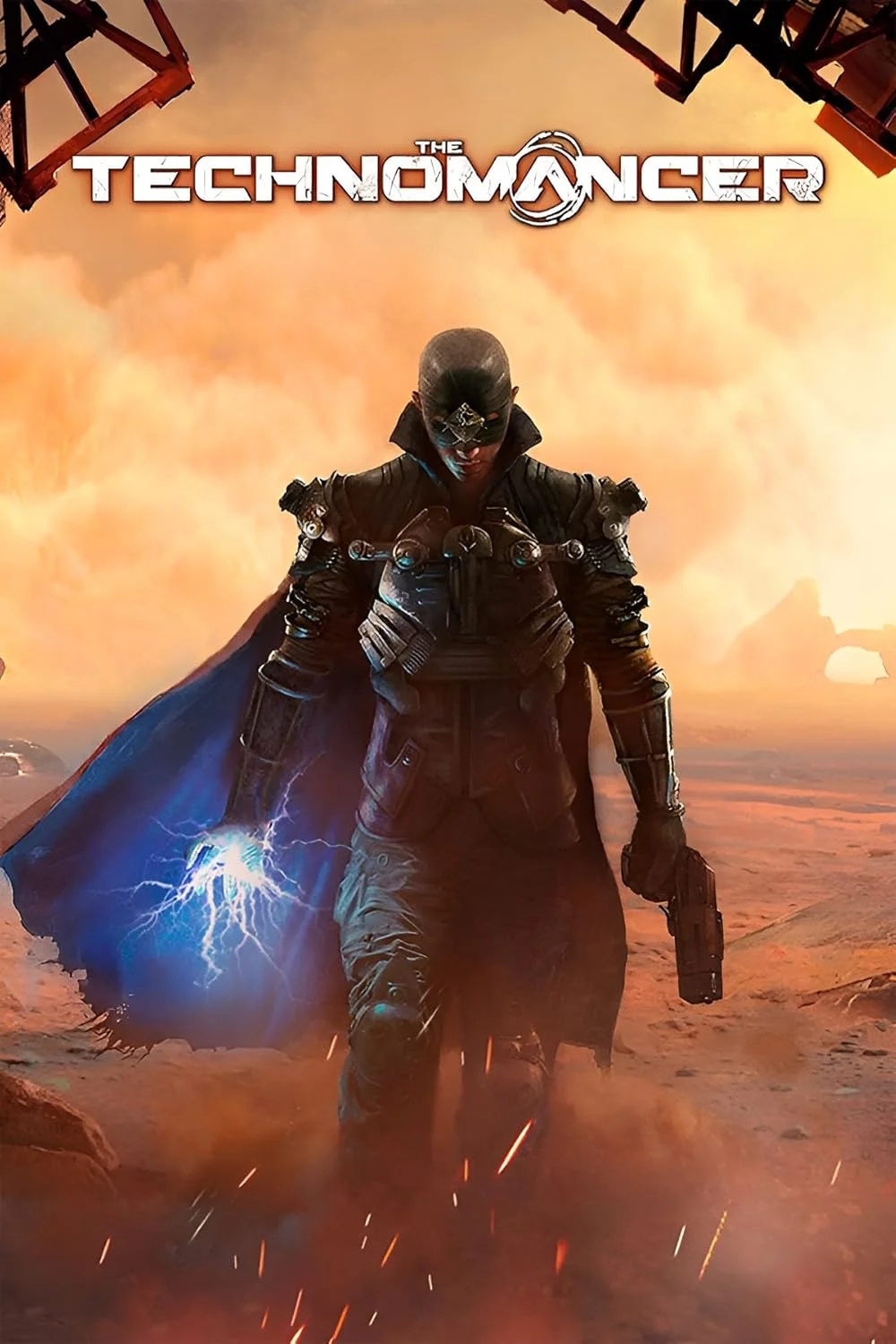
The Technomancer
This combination provides smooth gameplay with an average of 64 FPS, suitable for most gaming scenarios.
Average FPS: resolution vs quality settings
| Ultra | High | Medium | Low | |
|---|---|---|---|---|
| 4K Ultra HD | 25 | 27 | 37 | 49 |
| 1440p QHD | 41 | 56 | 66 | 83 |
| 1080p Full HD | 67 | 86 | 98 | 130 |
Cell color: green is 120+ FPS, teal is 60+, amber is 30+, red is below 30.
The Technomancer with Intel Core i7-14700KF + NVIDIA GeForce RTX 2060, In-Depth Analysis
Resolution Scaling
The measured frame rates for The Technomancer with the Intel Core i7-14700KF and NVIDIA GeForce RTX 2060 show a clear pattern of GPU-bound scaling as resolution increases. At 1080p with Ultra settings, the combo produces an average of 66.7 FPS. Moving to 1440p at the same preset drops the average to 41.3 FPS, a reduction of roughly 38%. Pushing further to 4K at Ultra yields just 25 FPS on average, which is 62.5% below the 1080p result. This steep decline indicates that the RTX 2060's rendering throughput, rather than the CPU, becomes the limiting factor at higher resolutions.
The scaling behavior across settings reinforces this interpretation. At 1080p Low, the combo reaches 129.5 FPS average, while at 4K Low it falls to 48.8 FPS. The gap between Low and Ultra at each resolution is substantial: at 1080p, the difference is 62.8 FPS (from 129.5 down to 66.7), while at 4K the difference narrows to 23.8 FPS (from 48.8 down to 25). This compression of the settings spread at higher resolutions is typical of a GPU that is saturated by pixel count, leaving less headroom for quality-level adjustments to matter.
The data suggests that the i7-14700KF, with its 20 cores and 28 threads running at a boost clock of 5.60 GHz, is not the bottleneck in any of these scenarios. Even at 1080p Low, where the CPU has the most opportunity to limit performance, the system still delivers 129.5 FPS average, which is well above typical display refresh rates. The RTX 2060's 6 GB of GDDR6 memory on a 192-bit bus with 336.0 GB/s bandwidth appears sufficient for the game's demands at 1080p and 1440p, but the 4K results show the architecture's limits. The TU106 chip, built on a 12 nm process, produces 6.451 TFLOPS of FP32 compute, which is modest for 4K rendering in a 2016-era Action RPG.
FAQ
Q: What is the best resolution for this combo in The Technomancer?
A: Based on the measured data, 2560x1440 offers the best balance. At High settings, the combo averages 56 FPS, which is playable, while 4K at any setting fails to reach 50 FPS average, with Ultra dipping to 25 FPS.
Q: How much performance does the Ultra preset cost compared to High?
A: The drop from High to Ultra is consistent across resolutions. At 1080p, the average falls from 86 FPS to 66.7 FPS. At 1440p, it falls from 56 FPS to 41.3 FPS. At 4K, it falls from 27.4 FPS to 25 FPS.
Q: Is the Intel Core i7-14700KF holding back the RTX 2060 in this game?
A: No. The data shows that even at 1080p Low, the system achieves 129.5 FPS average, which is far above the GPU's capability at higher settings. The CPU's 20 cores and 28 threads are not the constraint; the frame rate scaling with resolution confirms a GPU-limited scenario.
Q: Can this combo handle 4K gaming in The Technomancer?
A: Only at Low settings, where it averages 48.8 FPS. Medium settings drop to 36.6 FPS, and High falls to 27.4 FPS. For a consistent 60 FPS experience, 4K is not viable with this hardware.
Q: How does the RTX 2060's performance compare to its nearest rivals?
A: The RTX 2060 has an average benchmark score of 16074. The AMD Radeon RX 7600S scores 15996, putting the RTX 2060 0.5% ahead. The AMD Radeon Pro 5600M and Pro 5700 both score 16351, which is 1.7% higher. The AMD Radeon Pro W5500 scores 15786, placing it 1.8% behind.
Q: What is the difference between Low and Medium settings at 1440p?
A: At 2560x1440, Low averages 82.7 FPS, while Medium averages 65.9 FPS. This is a 16.8 FPS gap, indicating that the Medium preset adds significant visual fidelity for a moderate performance cost.
How This Combo Ranks
The combination of the Intel Core i7-14700KF and NVIDIA GeForce RTX 2060 ranks 1370 out of 1656 tested combos in The Technomancer. This places it in the lower third of all configurations tested, which is consistent with the GPU's age and position in the market. The RTX 2060 sits at the 58th percentile among all GPUs, while the CPU is at the 96th percentile among all CPUs. This stark contrast highlights the imbalance in this pairing: the processor is a top-tier part, but the graphics card is mid-range.
Among the GPU's nearest rivals, the RTX 2060's average benchmark score of 16074 is nearly identical to the AMD Radeon RX 7600S at 15996, a difference of only 0.5%. The AMD Radeon Pro 5600M and Pro 5700 both score 16351, which is 1.7% higher, while the AMD Radeon Pro W5500 trails at 15786, a 1.8% deficit. These small deltas indicate that swapping to any of these comparable GPUs would yield minimal changes in frame rates, likely within a few FPS at any given resolution and settings combination.
The CPU's nearest rivals show a similar clustering. The i7-14700KF has an average score of 70104, while the Intel Core i7-14700K scores 70074 (0% delta), the AMD EPYC 9115 scores 69887 (0.3% higher), and the AMD Ryzen 9 9950X scores 70420 (0.4% lower). The Intel Xeon Platinum 8270 scores 71056, which is 1.3% higher. None of these differences would meaningfully alter gaming performance in a GPU-bound title like The Technomancer.
The rank of 1370 out of 1656 suggests that most tested combos outperform this one in this specific game. This is expected given the RTX 2060's position near the 58th percentile, but it also indicates that the CPU's strength cannot compensate for the GPU's limitations at higher resolutions.
Settings Recommendations
The measured FPS data provides clear guidance for optimal settings. At 1920x1080, the Medium preset delivers 98.1 FPS average, which is smooth and leaves headroom for demanding scenes. High settings at 1080p yield 86 FPS average, still comfortable for most displays. Ultra at 1080p drops to 66.7 FPS, which is playable but represents a 31.4 FPS loss compared to Medium. For a balanced experience, Medium at 1080p is recommended, as it provides a 32 FPS improvement over Ultra while retaining most visual quality.
At 2560x1440, the choice is more constrained. High settings average 56 FPS, which is acceptable for 60 Hz displays, while Medium averages 65.9 FPS and Low reaches 82.7 FPS. Ultra at 1440p falls to 41.3 FPS, which may feel stuttery in action sequences. The recommendation is to use Medium at 1440p for a comfortable margin above 60 FPS, or High if visual fidelity is prioritized and the display supports adaptive sync.
At 3840x2160, no preset achieves 60 FPS. The best option is Low at 48.8 FPS average, followed by Medium at 36.6 FPS, High at 27.4 FPS, and Ultra at 25 FPS. Given the 2016 release date of The Technomancer and its Action RPG genre, the game is playable at 4K Low, but the experience will be far from smooth. For most users, 1440p Medium or 1080p Ultra will provide a better overall experience than 4K Low.
The data shows that the scaling from Medium to High is less punishing than from High to Ultra. At 1080p, the difference between Medium and High is 12.1 FPS, while the difference between High and Ultra is 19.3 FPS. This pattern holds at all resolutions, suggesting that the Ultra preset introduces disproportionately expensive effects.
Measured FPS Breakdown
At 1920x1080, the measured averages are as follows: Low settings produce 129.5 FPS, Medium produces 98.1 FPS, High produces 86 FPS, and Ultra produces 66.7 FPS. The spread from Low to Ultra is 62.8 FPS, with each step costing roughly 15-20 FPS on average. This resolution is clearly the sweet spot for this combo, as even the most demanding preset stays above 60 FPS.
At 2560x1440, the averages drop significantly: Low yields 82.7 FPS, Medium yields 65.9 FPS, High yields 56 FPS, and Ultra yields 41.3 FPS. The gap between Low and Ultra expands to 41.4 FPS, but the relative ordering remains consistent. The step from High to Ultra is the most costly, at 14.7 FPS, while the step from Low to Medium costs 16.8 FPS.
At 3840x2160, the results show severe degradation: Low averages 48.8 FPS, Medium averages 36.6 FPS, High averages 27.4 FPS, and Ultra averages 25 FPS. The difference between High and Ultra is only 2.4 FPS, indicating that the GPU is completely saturated at this resolution. The gap between Low and Ultra is 23.8 FPS, but even the best case at 4K falls short of 50 FPS.
Comparing across resolutions at the same settings, the scaling is steep. At High settings, 1080p yields 86 FPS, 1440p yields 56 FPS (35% lower), and 4K yields 27.4 FPS (68% lower than 1080p). At Low settings, 1080p yields 129.5 FPS, 1440p yields 82.7 FPS (36% lower), and 4K yields 48.8 FPS (62% lower). These percentages confirm that the RTX 2060's fill rate and memory bandwidth are the primary constraints as pixel count rises.
CPU Role
The Intel Core i7-14700KF is a 20-core, 28-thread processor based on the Raptor Lake architecture, manufactured on a 10 nm process. Its base clock is 3.40 GHz, boosting to 5.60 GHz, and it carries 33 MB of shared L3 cache along with 2 MB of L2 cache per core. In synthetic benchmarks, it scores 44557 in Cinebench R23 multi-core and 6290 in single-core, with a PassMark multi-thread score of 52425 and a single-thread score of 4480. These figures place it at the 96th percentile among all CPUs, and its average benchmark score of 70104 is nearly identical to the Core i7-14700K at 70074.
In The Technomancer, the CPU's role is minimal given the GPU's limitations. At 1080p Low, the system achieves 129.5 FPS average, which suggests the CPU can feed the GPU well beyond what the RTX 2060 can render at higher settings. The fact that frame rates scale so dramatically with resolution — from 129.5 FPS at 1080p Low to 48.8 FPS at 4K Low — is direct evidence that the GPU is the bottleneck. If the CPU were limiting performance, the frame rates would remain relatively flat across resolutions.
The CPU's 28 threads are far more than this 2016 Action RPG requires. Even at the lowest settings, the game cannot push the processor to its limits, as evidenced by the high frame rates at 1080p. The i7-14700KF's nearest rivals — the i7-14700K, EPYC 9115, Ryzen 9 9950X, and Xeon Platinum 8270 — all have average scores within 1.3% of each other, indicating that CPU choice among these parts would not change the gaming experience in a measurable way. The data shows that this pairing is heavily skewed toward CPU capability, with the RTX 2060's 58th percentile GPU performance being the decisive factor in The Technomancer.
Hardware Specifications
Intel Core i7-14700KF
NVIDIA GeForce RTX 2060
FPS Benchmarks by Resolution & Settings
Performance data for Intel Core i7-14700KF + NVIDIA GeForce RTX 2060 in The Technomancer
| Resolution | Settings | Avg FPS |
|---|---|---|
| 3840x2160 | Low | 48.8 |
| 3840x2160 | Medium | 36.6 |
| 3840x2160 | High | 27.4 |
| 3840x2160 | Ultra | 25.0 |
| 2560x1440 | Low | 82.7 |
| 2560x1440 | Medium | 65.9 |
| 2560x1440 | High | 56.0 |
| 2560x1440 | Ultra | 41.3 |
| 1920x1080 | Low | 129.5 |
| 1920x1080 | Medium | 98.1 |
| 1920x1080 | High | 86.0 |
| 1920x1080 | Ultra | 66.7 |
The Technomancer with ii7-14700KF + Other GPUs
See how The Technomancer performs with the same CPU but different graphics cards.
The Technomancer with RTX 2060 + Other CPUs
See how The Technomancer performs with the same GPU but different processors.
Other Games with ii7-14700KF + RTX 2060
Explore FPS benchmarks for other games using this same hardware combination.