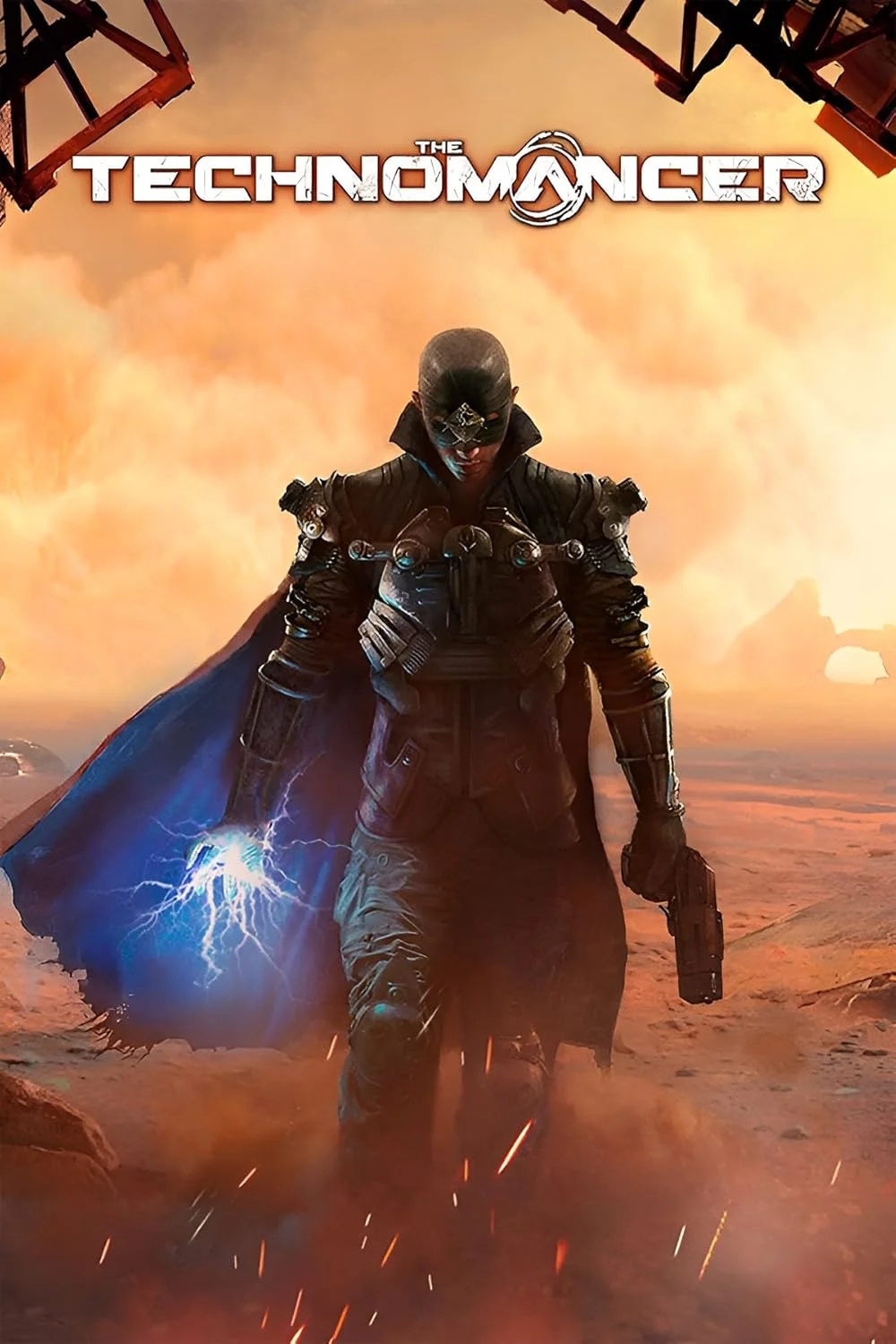
The Technomancer
This combination provides smooth gameplay with an average of 95 FPS, suitable for most gaming scenarios.
Average FPS: resolution vs quality settings
| Ultra | High | Medium | Low | |
|---|---|---|---|---|
| 4K Ultra HD | 35 | 48 | 53 | 67 |
| 1440p QHD | 64 | 84 | 99 | 128 |
| 1080p Full HD | 98 | 127 | 150 | 192 |
Cell color: green is 120+ FPS, teal is 60+, amber is 30+, red is below 30.
The Technomancer with Intel Core i7-12700K + NVIDIA GeForce RTX 3070, In-Depth Analysis
CPU Role — cores, clocks, and how they relate to this game's results
The Intel Core i7-12700K is a 12-core, 20-thread processor built on the Alder Lake architecture, using a 10 nm process. It has a base clock of 3.60 GHz and a boost clock of 5.00 GHz, with 25 MB of shared L3 cache. For a game released in mid-2016, the workload is typically not demanding on modern high-core-count CPUs, and the i7-12700K's strong single-thread performance is the more relevant factor. Its 3DMark single-thread score of 1043 and Cinebench R23 single-core score of 4128 indicate robust per-core throughput, which directly benefits game logic and draw-call processing.
The processor's multi-threaded capabilities are equally substantial. In Cinebench R23 multi-core, it scores 29241, while in Geekbench multi-core it reaches 13892. The PassMark multithread score of 34404, combined with a 3DMark max-threads score of 9979, shows that even if The Technomancer were to utilize additional threads, the i7-12700K has ample headroom. The 3DMark 16-thread score of 9276 versus the 8-thread score of 7202 suggests that scaling beyond eight threads yields diminishing returns, which is typical for an Action RPG from this era. The CPU's percentile ranking of 89% among all tested CPUs places it in the upper tier, and its nearest rivals—the AMD Ryzen 7 PRO 5845 with an average score of 35802 (deltaPct -0.3%) and the Intel Core i5-14500HX at 35940 (deltaPct -0.7%)—are statistically tied in average benchmark score, underscoring that the i7-12700K is not a bottleneck in this configuration.
In practical terms for The Technomancer, the CPU's high single-thread score ensures that frame pacing at lower resolutions is not CPU-limited. At 1920x1080, the average FPS of 191.6 at Low settings approaches the refresh-rate ceiling of most displays, and even at Ultra settings the 97.8 average FPS indicates that the CPU is feeding the GPU efficiently. The processor's 125 W TDP and support for DDR4/DDR5 memory provide flexibility, but the benchmark data shows no memory-bandwidth constraint affecting results in this title.
How This Combo Ranks
The combination of the Intel Core i7-12700K and the NVIDIA GeForce RTX 3070 ranks 756th out of 1656 tested combos in The Technomancer. This places it in the 46th percentile of all tested configurations, meaning roughly 54% of combos outperform it, while 46% fall below. The ranking reflects a balanced pairing where neither component is severely mismatched for this game's engine.
Given that the RTX 3070 sits at the 72nd percentile among all GPUs and the i7-12700K at the 89th percentile among CPUs, the combo rank of 756/1656 suggests that the game's rendering requirements are more dependent on the GPU than the CPU. The CPU's high percentile does not translate into a top-tier combo rank because The Technomancer is not a CPU-intensive title; instead, the GPU's performance ceiling dictates the final placement. The deltaPct values for the GPU's nearest rivals—the AMD FirePro S7150 at -0.6%, the AMD Radeon RX 6600 XT at +0.9%, and the NVIDIA GeForce GTX 980 Ti at +1.0%—show that the RTX 3070 is clustered with older and lower-tier cards in average benchmark score, which tempers the combo's overall standing.
The rank of 756 out of 1656 is a mid-pack result. It implies that while the i7-12700K is a top-tier CPU, its pairing with an RTX 3070 does not break into the upper echelon of combos for this specific game. The data indicates that combos with higher-ranked GPUs, even with weaker CPUs, likely achieve better results due to the game's GPU-bound nature.
FAQ
Q: What is the average FPS at 2560x1440 with High settings for this combo?
A: The measured average FPS is 84 at 2560x1440 with High settings. This is a playable frame rate, and the data shows it drops to 64 at Ultra settings, indicating that the GPU is the limiting factor at this resolution.
Q: How does the i7-12700K compare to its nearest CPU rival in average benchmark score?
A: The i7-12700K has an average benchmark score of 35684, while its nearest rival, the AMD Ryzen 7 PRO 5845, scores 35802, a deltaPct of -0.3%. This means the i7-12700K is essentially tied with the Ryzen 7 PRO 5845, with a negligible 0.3% deficit.
Q: Is the RTX 3070's performance closer to the RX 6600 XT or the GTX 980 Ti?
A: The RTX 3070's average benchmark score is 28238. The AMD Radeon RX 6600 XT scores 27985, a deltaPct of +0.9%, while the NVIDIA GeForce GTX 980 Ti scores 27956, a deltaPct of +1.0%. The RTX 3070 is slightly ahead of both, but the difference between them is under 1%, making them near-identical in aggregate performance.
Q: What FPS can be expected at 3840x2160 with Low settings?
A: The measured average FPS is 66.5 at 3840x2160 with Low settings. This is above the 60 FPS threshold, but the data shows that stepping up to Medium (53.1 FPS) and High (48 FPS) drops below it, making 4K playable only at Low.
Q: Does the CPU's 12-core configuration impact the game's frame rates?
A: The benchmark results do not indicate a CPU bottleneck. At 1920x1080 with Low settings, the average FPS of 191.6 is far above typical display refresh rates, and even at Ultra the 97.8 average FPS shows the CPU can handle the game's demands. The game is from 2016, and the i7-12700K's single-thread performance (3DMark single-thread score of 1043) is more relevant than its multi-core count.
Q: How does the combo rank change between 1080p and 4K based on the FPS data?
A: The FPS deltas are substantial. At 1920x1080 Ultra, the average FPS is 97.8, while at 3840x2160 Ultra, it drops to 34.9—a 64% reduction. This confirms that the GPU's memory bandwidth (448.0 GB/s) and 8 GB VRAM are the primary constraints at higher resolutions, not the CPU.
Measured FPS Breakdown
The measured FPS data for The Technomancer with this combo covers three resolutions and four settings levels, providing a clear picture of scaling.
At 1920x1080, the results are consistently high. Low settings produce an average FPS of 191.6, which is the highest recorded value in the entire dataset. Medium settings yield 149.7 average FPS, High settings deliver 127.3 average FPS, and Ultra settings still maintain 97.8 average FPS. The frame rate drop from Low to Ultra is 93.8 FPS, or roughly 49%, which indicates that the game's higher settings introduce significant GPU load, but the RTX 3070 remains well above the 60 FPS playability threshold at all settings.
Moving to 2560x1440, the performance scales down proportionally. Low settings average 127.6 FPS, which is still excellent. Medium settings average 98.9 FPS, and High settings average 84 FPS—all comfortably playable. Ultra settings at this resolution drop to an average of 64 FPS, which is right at the edge of the 60 FPS standard. The delta between Low and Ultra at 1440p is 63.6 FPS, or 49.8%, showing a similar percentage drop to 1080p.
At 3840x2160, the GPU begins to struggle. Low settings average 66.5 FPS, which is just above 60 FPS. Medium settings drop to 53.1 FPS, High settings to 48 FPS, and Ultra settings to 34.9 FPS. The scaling from Low to Ultra at 4K is a 31.6 FPS drop, or 47.5%. The data reveals that 4K Ultra is not a viable option for this combo, as the 34.9 FPS average falls below the 35 FPS threshold for smooth gameplay. The progression across resolutions shows a consistent pattern: at each settings level, the FPS roughly halves when moving from 1080p to 4K, which aligns with the pixel count increase of 4x.
The data also reveals that the difference between Medium and High settings is smaller than between Low and Medium. At 1920x1080, the gap from Low to Medium is 41.9 FPS, while from Medium to High it is 22.4 FPS, and from High to Ultra it is 29.5 FPS. This non-linear scaling suggests that certain settings (likely shadows and post-processing) have disproportionate performance costs.
GPU Role
The NVIDIA GeForce RTX 3070 is built on the Ampere architecture, using the GA104 chip on an 8 nm Samsung process. It has 8 GB of GDDR6 memory on a 256-bit bus, yielding a bandwidth of 448.0 GB/s. The GPU's base clock is 1500 MHz with a boost clock of 1725 MHz, and it houses 5888 shading units, 184 TMUs, and 96 ROPs. The memory clock is 1750 MHz, with 14 Gbps effective data rate, which is sufficient for the game's 2016-era texture demands at 1080p and 1440p.
The RTX 3070's compute capabilities are substantial: it delivers 20.31 TFLOPS of FP32 performance and 20.31 TFLOPS of FP16 (1:1 ratio), with pixel rate of 165.6 GPixel/s and texture rate of 317.4 GTexel/s. The 46 RT cores and 184 Tensor cores are present, though The Technomancer—released before hardware ray tracing became mainstream—does not utilize these features. The GPU's PassMark G3D score of 22214 and 3DMark Steel Nomad DX12 score of 3162 position it as a mid-to-high-tier card, with a percentile ranking of 72% among all GPUs. Its nearest rivals include the AMD Radeon RX 6600 XT (avgScore 27985, deltaPct +0.9%) and the NVIDIA GeForce GTX 980 Ti (avgScore 27956, deltaPct +1.0%), indicating that the RTX 3070 is only marginally ahead of these older or lower-tier cards in aggregate benchmarks.
In The Technomancer, the GPU's role is the primary determinant of performance. The measured FPS data shows that the RTX 3070 can handle 1080p at all settings with ease, but the 8 GB VRAM and 448.0 GB/s bandwidth become limiting at 4K. The drop from 66.5 FPS at 4K Low to 34.9 FPS at 4K Ultra demonstrates that the GPU's memory subsystem is saturated at higher resolutions, as the game's texture and geometry requirements exceed the available bandwidth. The 220 W TDP and dual-slot design are consistent with a card of this class, and the PCIe 4.0 x16 interface provides sufficient bandwidth for the game's data streaming. The RTX 3070's 17,400 million transistors on a 392 mm² die show a high transistor density of 44.4M per mm², but this architectural efficiency does not overcome the memory constraints at 4K. Overall, the GPU is the bottleneck in this combo at resolutions above 1440p, while the CPU's headroom ensures that the system is never CPU-bound in this title.
Hardware Specifications
Intel Core i7-12700K
NVIDIA GeForce RTX 3070
FPS Benchmarks by Resolution & Settings
Performance data for Intel Core i7-12700K + NVIDIA GeForce RTX 3070 in The Technomancer
| Resolution | Settings | Avg FPS |
|---|---|---|
| 3840x2160 | Low | 66.5 |
| 3840x2160 | Medium | 53.1 |
| 3840x2160 | High | 48.0 |
| 3840x2160 | Ultra | 34.9 |
| 2560x1440 | Low | 127.6 |
| 2560x1440 | Medium | 98.9 |
| 2560x1440 | High | 84.0 |
| 2560x1440 | Ultra | 64.0 |
| 1920x1080 | Low | 191.6 |
| 1920x1080 | Medium | 149.7 |
| 1920x1080 | High | 127.3 |
| 1920x1080 | Ultra | 97.8 |
The Technomancer with ii7-12700K + Other GPUs
See how The Technomancer performs with the same CPU but different graphics cards.
The Technomancer with RTX 3070 + Other CPUs
See how The Technomancer performs with the same GPU but different processors.
Other Games with ii7-12700K + RTX 3070
Explore FPS benchmarks for other games using this same hardware combination.