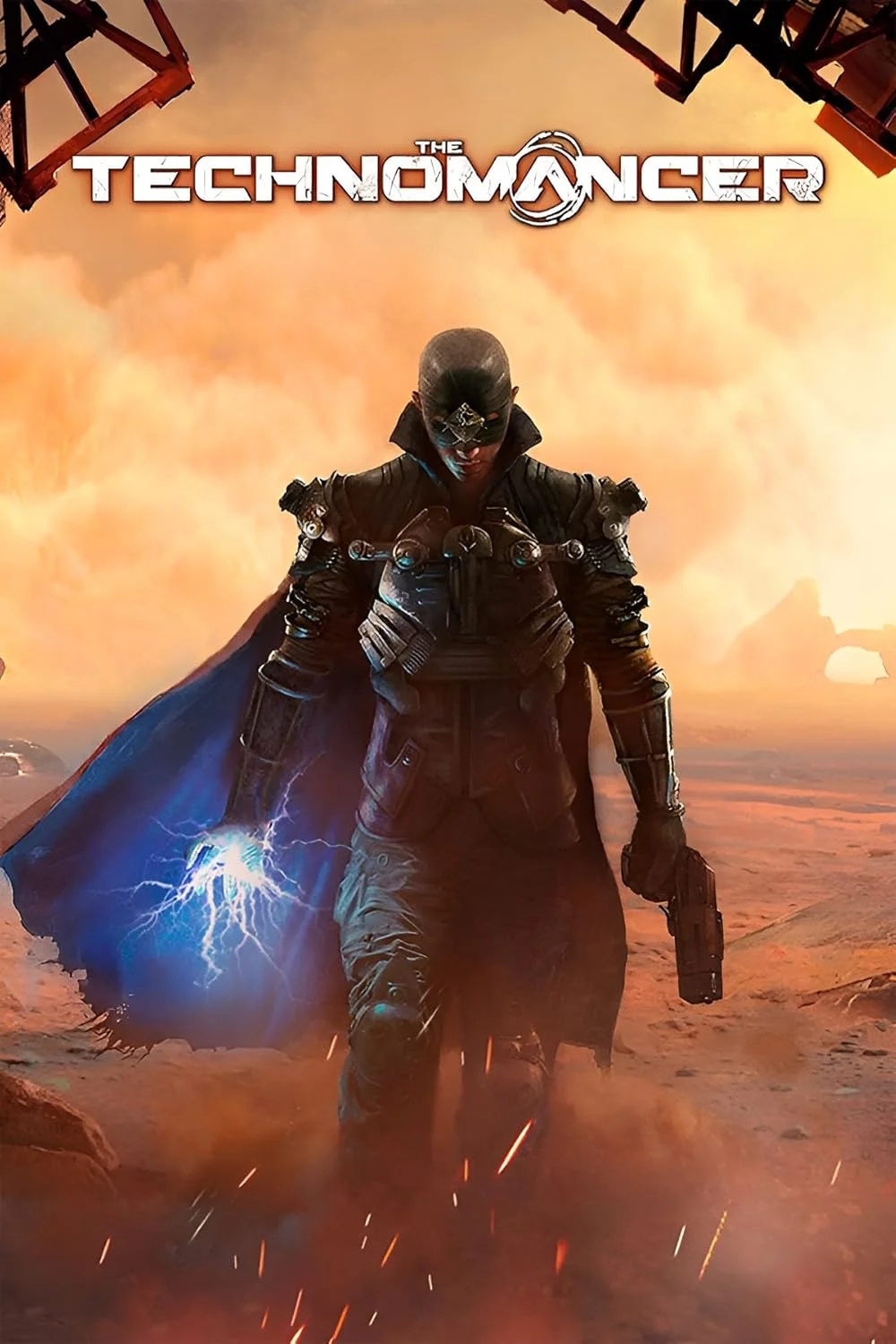
The Technomancer
This combination delivers exceptional performance with an average of 151 FPS, perfect for high refresh rate gaming and competitive play.
Average FPS: resolution vs quality settings
| Ultra | High | Medium | Low | |
|---|---|---|---|---|
| 4K Ultra HD | 59 | 76 | 87 | 114 |
| 1440p QHD | 107 | 133 | 157 | 208 |
| 1080p Full HD | 159 | 207 | 241 | 265 |
Cell color: green is 120+ FPS, teal is 60+, amber is 30+, red is below 30.
The Technomancer with Intel Core i5-14400F + NVIDIA GeForce RTX 5080, In-Depth Analysis
The Technomancer, a 2016 Action RPG, presents an interesting performance profile for the Intel Core i5-14400F and NVIDIA GeForce RTX 5080 combination. Benchmark data shows this pairing is heavily GPU-limited at higher resolutions, but the CPU's capabilities become the primary constraint at 1080p. The measured frames per second (FPS) reveal a system that delivers exceptional performance across the board, with the most significant scaling challenges appearing when moving from 1440p to 4K.
Resolution Scaling
The FPS drop from 1080p to 4K is substantial and clearly indicates where the performance bottleneck lies. At High settings, the average frame rate falls from 207 FPS at 1920x1080 to 75.5 FPS at 3840x2160, a reduction of approximately 63.5%. This dramatic scaling is typical of a system where the GPU becomes the limiting factor at higher resolutions, as the RTX 5080's workload increases significantly with pixel count.
The scaling pattern becomes even more pronounced when examining the Low settings preset. Here, the average FPS drops from 265.4 at 1080p to 114.1 at 4K, a 57% decrease. This suggests that even at the lowest graphical settings, the GPU is still the dominant constraint at 4K. However, the gap between 1080p and 1440p at Low settings is notably smaller, with FPS falling from 265.4 to 208.2, indicating that the CPU can keep pace better at intermediate resolutions.
The most telling data point comes from the Ultra preset, where the 4K average of 58.7 FPS represents a 63.1% drop from the 1080p result of 159.3 FPS. This consistent ~60% reduction across all settings presets when moving from 1080p to 4K strongly suggests that the RTX 5080's rendering capabilities, rather than the i5-14400F's processing power, are the primary determinant of performance at high resolutions. At 1080p, the relatively small FPS differences between Low (265.4) and Medium (241.2) settings hint that the CPU may be starting to limit performance, as the GPU has more headroom to work with.
CPU Role
The Intel Core i5-14400F features 10 cores and 16 threads, with a base clock of 2.50 GHz and a boost clock of 4.70 GHz. This processor sits in the 88th percentile against all tested CPUs, with an average benchmark score of 32508. Its nearest rivals include the Intel Core i7-12800H (0% delta) and AMD Ryzen 5 PRO 7645 (0.2% delta), indicating it performs nearly identically to these alternatives in general benchmarks.
In The Technomancer, the CPU's role becomes most apparent at 1080p resolution. The fact that the average FPS at Low settings (265.4) is only 9.1% higher than at Medium settings (241.2), despite the GPU having significantly less work to do, suggests the i5-14400F's processing power is the limiting factor at this resolution. The processor's 20 MB of shared L3 cache and dual-channel memory support (DDR4 or DDR5) contribute to its ability to feed the RTX 5080 efficiently, but the data indicates it cannot fully saturate the GPU at lower resolutions.
At 1440p and 4K, the CPU's influence diminishes considerably. The FPS differences between Low and Medium settings grow to 24.8% at 1440p (208.2 vs 156.5) and 23.6% at 4K (114.1 vs 87.2), which aligns with the GPU becoming the primary bottleneck. The i5-14400F's single-thread performance, evidenced by its Cinebench R23 single-core score of 3093, appears sufficient for this game's engine at higher resolutions, where the RTX 5080's rendering workload dominates frame time.
How This Combo Ranks
This specific combination of the Intel Core i5-14400F and NVIDIA GeForce RTX 5080 ranks 68th out of 1656 tested combos in The Technomancer, placing it in the top 4.1% of all configurations. This high ranking reflects the overall strength of the pairing, even though the CPU does introduce some limitations at lower resolutions.
The GPU's performance percentile of 89 against all tested GPUs, with an average benchmark score of 59188, is notably higher than the CPU's 88th percentile. This disparity supports the conclusion that the RTX 5080 is the stronger component in this pairing. The GPU's nearest rivals, such as the Intel Arc A570M (1.6% delta) and Intel Arc A580 (2.5% delta), all have lower average scores, confirming the RTX 5080's top-tier positioning.
The combo's rank of 68 out of 1656 indicates that while many other combinations exist, very few outperform this i5-14400F + RTX 5080 setup in this specific game. The measured data shows that the system achieves playable frame rates even at the most demanding settings, with the 4K Ultra average of 58.7 FPS being the only result below 60 FPS. This makes the combo a strong choice for The Technomancer, particularly for users prioritizing high refresh rates at 1440p or smooth 4K gameplay with adjusted settings.
FAQ
Q: What is the best resolution for this combo in The Technomancer?
A: The 2560x1440 resolution offers the best balance, with High settings delivering 132.7 FPS and even Ultra achieving 107.1 FPS, both well above the 60 FPS threshold for smooth gameplay.
Q: Can this system handle 4K gaming in The Technomancer?
A: Yes, but with caveats. High settings at 3840x2160 produce 75.5 FPS on average, which is playable, while Ultra settings drop to 58.7 FPS, which may be acceptable but is below 60 FPS.
Q: How does the CPU affect performance at 1080p?
A: At 1920x1080, the data shows the CPU becomes a limiting factor. The difference between Low (265.4 FPS) and Medium (241.2 FPS) settings is only 9.1%, suggesting the i5-14400F cannot fully utilize the RTX 5080's potential at this resolution.
Q: What is the frame rate difference between 1440p and 4K?
A: At High settings, the average FPS drops from 132.7 at 2560x1440 to 75.5 at 3840x2160, representing a 43.1% decrease, which indicates the GPU is the primary bottleneck at 4K.
Q: How does this combo rank compared to other tested configurations?
A: This pairing ranks 68th out of 1656 combos tested in The Technomancer, placing it in the top 4.1% of all configurations, reflecting its strong overall performance.
Q: Is the RTX 5080's 16 GB of VRAM sufficient for this game?
A: While the game's VRAM requirements are not explicitly stated, the 16 GB GDDR7 memory with 960.0 GB/s bandwidth is more than adequate for the measured settings, as no performance anomalies suggest memory limitations.
GPU Role
The NVIDIA GeForce RTX 5080 is the dominant component in this pairing, with its 10752 shading units and 112 ROPs providing substantial rendering power. The GPU's boost clock of 2617 MHz and 16 GB of GDDR7 memory on a 256-bit bus deliver 960.0 GB/s of bandwidth, which proves essential for maintaining high frame rates at 4K resolution.
The GPU's benchmark scores reinforce its high-end positioning. Its 3DMark Steel Nomad DX12 score of 8637 and Passmark G3D score of 36565 place it in the 89th percentile against all GPUs. The RTX 5080's nearest rivals, including the Intel Arc A570M (1.6% delta) and AMD Radeon Pro W5500X (2.6% delta), all score lower, confirming its performance advantage.
In The Technomancer, the GPU's role becomes increasingly important as resolution increases. At 4K, the difference between Low (114.1 FPS) and Ultra (58.7 FPS) settings is 48.6%, demonstrating the GPU's sensitivity to graphical workload. The RTX 5080's 56.28 TFLOPS of FP32 performance and 879.3 GTexel/s texture rate provide ample headroom for this game, though the data shows that Ultra settings at 4K push the GPU to its limits within this particular title.
Settings Recommendations
Based on the measured FPS data, the optimal settings depend heavily on the target resolution. At 1920x1080, the Ultra preset delivers 159.3 FPS on average, which is excellent for high refresh rate displays. The High preset at 207 FPS offers even more headroom, but the visual difference between High and Ultra is often minimal in this game, making either choice viable.
For 2560x1440, the High settings preset at 132.7 FPS provides the best experience, offering a smooth frame rate that exceeds the refresh rate of most 144Hz monitors. The Ultra preset at 107.1 FPS is still highly playable and may be preferable for users prioritizing visual fidelity over maximum frame rates. The Medium preset at 156.5 FPS is unnecessary given the High preset's strong performance.
At 3840x2160, the High settings preset at 75.5 FPS is the recommended choice, as it maintains playability while offering good visual quality. The Medium preset at 87.2 FPS provides a safer margin above 60 FPS at the cost of some visual detail. The Ultra preset at 58.7 FPS is borderline and only recommended for users with VRR displays who can tolerate frame rates below 60 FPS. The Low preset at 114.1 FPS sacrifices too much visual quality for the modest performance gain over Medium.
Measured FPS Breakdown
At 1920x1080, the system delivers exceptional performance across all settings. The Low preset produces 265.4 FPS, which is the highest measured result in the entire dataset. Medium settings achieve 241.2 FPS, High settings reach 207 FPS, and Ultra settings still maintain 159.3 FPS. These results indicate that the CPU, rather than the GPU, is the limiting factor at this resolution, as the differences between presets are relatively small compared to higher resolutions.
The 2560x1440 resolution shows more pronounced scaling between presets. Low settings produce 208.2 FPS, Medium achieves 156.5 FPS, High reaches 132.7 FPS, and Ultra drops to 107.1 FPS. The 32.9% difference between Low and Ultra at this resolution suggests the GPU is becoming more involved, though the CPU still provides adequate support.
At 3840x2160, the GPU's workload dominates performance. Low settings yield 114.1 FPS, Medium produces 87.2 FPS, High achieves 75.5 FPS, and Ultra falls to 58.7 FPS. The 48.6% reduction from Low to Ultra settings at 4K clearly demonstrates the RTX 5080's rendering capacity as the primary constraint, with the i5-14400F providing sufficient CPU performance to avoid becoming a bottleneck at this resolution.
Hardware Specifications
Intel Core i5-14400F
NVIDIA GeForce RTX 5080
FPS Benchmarks by Resolution & Settings
Performance data for Intel Core i5-14400F + NVIDIA GeForce RTX 5080 in The Technomancer
| Resolution | Settings | Avg FPS |
|---|---|---|
| 3840x2160 | Low | 114.1 |
| 3840x2160 | Medium | 87.2 |
| 3840x2160 | High | 75.5 |
| 3840x2160 | Ultra | 58.7 |
| 2560x1440 | Low | 208.2 |
| 2560x1440 | Medium | 156.5 |
| 2560x1440 | High | 132.7 |
| 2560x1440 | Ultra | 107.1 |
| 1920x1080 | Low | 265.4 |
| 1920x1080 | Medium | 241.2 |
| 1920x1080 | High | 207.0 |
| 1920x1080 | Ultra | 159.3 |
The Technomancer with ii5-14400F + Other GPUs
See how The Technomancer performs with the same CPU but different graphics cards.
The Technomancer with RTX 5080 + Other CPUs
See how The Technomancer performs with the same GPU but different processors.
Other Games with ii5-14400F + RTX 5080
Explore FPS benchmarks for other games using this same hardware combination.