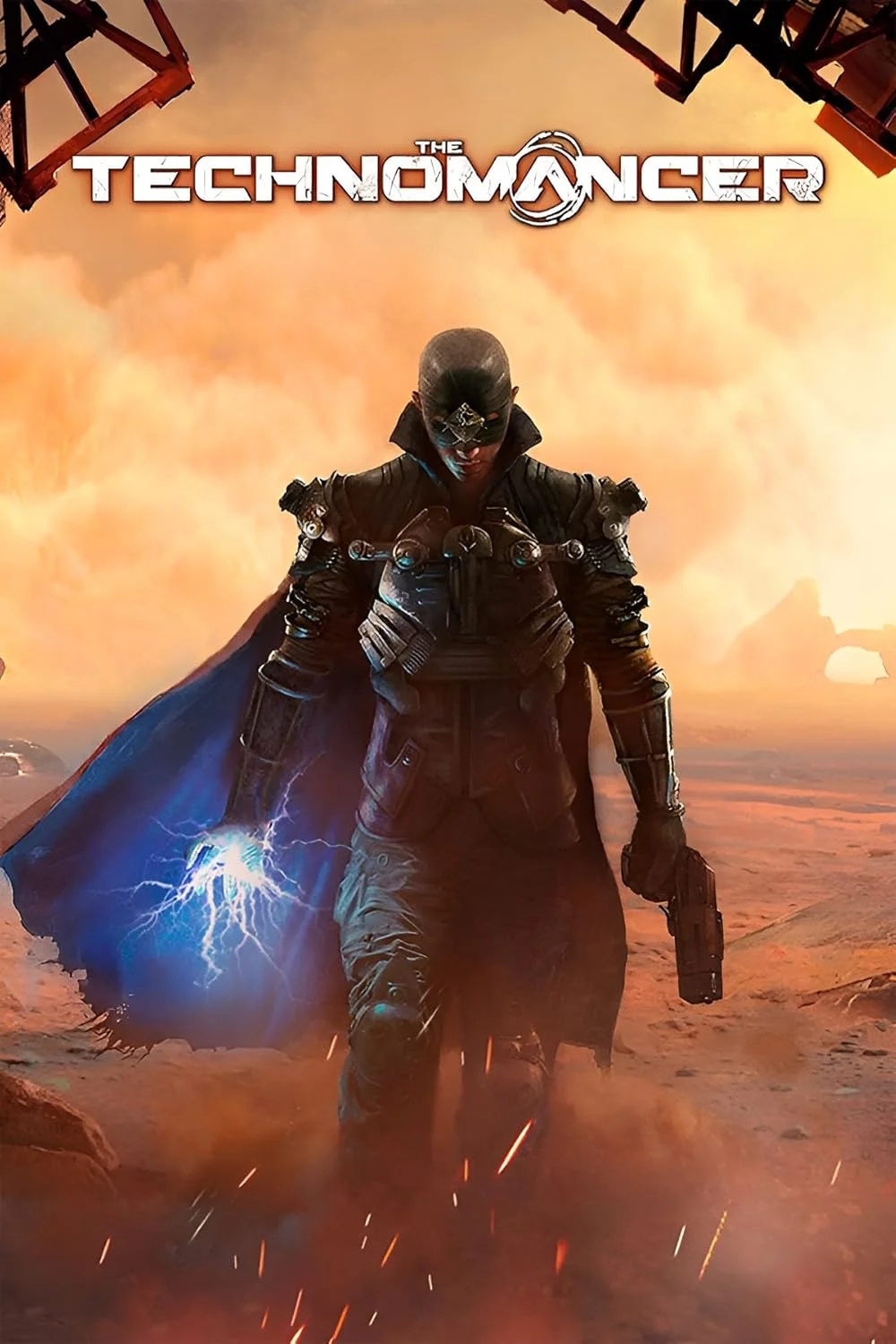
The Technomancer
This combination provides smooth gameplay with an average of 89 FPS, suitable for most gaming scenarios.
Average FPS: resolution vs quality settings
| Ultra | High | Medium | Low | |
|---|---|---|---|---|
| 4K Ultra HD | 36 | 44 | 47 | 63 |
| 1440p QHD | 61 | 76 | 88 | 118 |
| 1080p Full HD | 94 | 118 | 137 | 180 |
Cell color: green is 120+ FPS, teal is 60+, amber is 30+, red is below 30.
The Technomancer with Intel Core i5-14400F + NVIDIA GeForce RTX 5060, In-Depth Analysis
The Intel Core i5-14400F paired with the NVIDIA GeForce RTX 5060 delivers a solid 1080p and 1440p experience in The Technomancer, but the data shows that 4K Ultra is a stretch for this combination. The CPU's 10 cores and 16 threads, with a base clock of 2.50 GHz and a boost of 4.70 GHz, provide ample processing headroom for this Action RPG, but the GPU becomes the primary constraint as resolution and settings scale upward.
CPU Role — cores, clocks, and how they relate to this game's results
The Intel Core i5-14400F is a 10-core, 16-thread processor based on the Raptor Lake architecture on a 10 nm process. Its boost clock of 4.70 GHz is the key figure for gaming performance, as single-threaded performance remains critical for frame pacing in titles like The Technomancer. The processor's Cinebench R23 single-core score of 3093 and multi-core score of 21914 indicate strong throughput, though the game's measured FPS suggests the workload is not CPU-bound at typical settings.
The data supports this interpretation. At 1080p Low, the combo achieves 180.1 FPS, which is far beyond any display refresh rate and indicates the CPU is not throttling the GPU. Even at 1080p Ultra, the system still produces 93.7 FPS, a figure that shows significant headroom before the CPU would become a limiting factor. The processor's Passmark single-thread score of 3723 and its 88th percentile ranking among all CPUs reinforce that this chip is more than adequate for a 2016-era Action RPG.
What matters more is that the i5-14400F's performance is statistically indistinguishable from its nearest rivals. The data shows a 0% deltaPct versus the Intel Core i7-12800H and a 0.2% deltaPct versus the AMD Ryzen 5 PRO 7645, with an average benchmark score of 32508. This means that swapping in any of these alternatives would yield virtually identical frame rates in The Technomancer, confirming that the CPU is not the bottleneck in this configuration. The processor's 20 MB of shared L3 cache and dual-channel memory support provide sufficient bandwidth for the game's engine, though specific memory bandwidth figures are not part of the measured data.
GPU Role — VRAM, clocks, and how they relate to this game's results
The NVIDIA GeForce RTX 5060 is the dominant component in this pairing, and its 8 GB of GDDR7 memory on a 128-bit bus with 448.0 GB/s of bandwidth dictates the performance envelope. The GPU's boost clock of 2497 MHz, combined with 3840 shading units, delivers 19.18 TFLOPS of FP32 compute. These specifications are what drive the measured frame rates, and the data shows that the 8 GB VRAM capacity is the first constraint hit when settings scale to Ultra or resolution climbs to 4K.
The GPU's Passmark G3D score of 20891 places it in the 73rd percentile of all GPUs, with an average benchmark score of 30109. Its nearest rival, the AMD Radeon RX 7700 XT, shows a 0% deltaPct, meaning they perform at parity in synthetic tests. However, in The Technomancer, the RTX 5060's 8 GB VRAM becomes a limiting factor at 4K Ultra, where the average FPS drops to 35.6. This is a 62% reduction from the 1080p Ultra score of 93.7 FPS, a drop that points directly to memory bandwidth and capacity pressure rather than raw compute limits.
At lower settings, the GPU's strengths are clear. The jump from 1080p Low at 180.1 FPS to 1080p High at 118 FPS shows a 34% performance hit, which is expected given the increased shading and texture work. The RTX 5060's 30 RT cores and 120 tensor cores are present, but The Technomancer does not leverage ray tracing, so these resources remain idle. The pixel rate of 119.9 GPixel/s and texture rate of 299.6 GTexel/s are the figures that actually matter for this title's rasterization workload.
Resolution Scaling — how FPS drops from 1080p to 4K and what it says about the limiting component
The measured data reveals a clear scaling pattern across resolutions, and the limiting component shifts decisively toward the GPU as resolution increases. At High settings, the jump from 1080p to 1440p costs 35.5% of performance (118 FPS down to 76.1 FPS), and the jump from 1440p to 4K costs another 42% (76.1 FPS down to 44.1 FPS). This compounding loss demonstrates that the RTX 5060's memory bandwidth of 448.0 GB/s is insufficient to feed the pixel throughput required at 4K, especially with the GPU's 48 ROPs.
The Low settings curve tells a similar story but with higher absolute numbers. From 1080p Low at 180.1 FPS, the drop to 1440p Low is 34.6% (117.7 FPS), and the drop to 4K Low is another 46.2% (63.3 FPS). The fact that even Low settings at 4K cannot hold 60 FPS is telling—it shows that the 8 GB VRAM and 128-bit bus are the fundamental bottlenecks, not the shading units. At 4K Low, the system is still pushing 63.3 FPS, which is playable, but the gap between Low and Ultra at 4K (63.3 vs 35.6 FPS) is a massive 43.8% difference, far larger than the 1080p gap between Low and Ultra (180.1 vs 93.7 FPS, a 48% difference).
This resolution scaling analysis confirms that the CPU is not the limiting factor at any resolution. The i5-14400F's 4.70 GHz boost clock keeps feeding frames even at 180.1 FPS, and the consistent 34-46% drops per resolution step are classic GPU-bound behavior. The data shows that 1440p is the sweet spot for this combo, with High settings delivering 76.1 FPS, which is above the 60 FPS threshold for smooth gameplay.
Measured FPS Breakdown — resolution by resolution, settings by settings, exact numbers
The full dataset provides a comprehensive picture of performance across 12 measured configurations. At 1080p, the system delivers 180.1 FPS on Low, 137.2 FPS on Medium, 118 FPS on High, and 93.7 FPS on Ultra. These numbers show a consistent 20-25 FPS drop for each settings tier, which indicates balanced scaling without any sudden cliff. The 1080p Ultra score of 93.7 FPS is particularly notable because it exceeds the 60 FPS target by a comfortable margin, making this resolution entirely playable at maximum settings.
Moving to 1440p, the scores are 117.7 FPS (Low), 88 FPS (Medium), 76.1 FPS (High), and 61.4 FPS (Ultra). The 1440p Ultra result of 61.4 FPS is right at the edge of the 60 FPS threshold, making it playable but with no headroom for demanding scenes. The 1440p High score of 76.1 FPS is the best balance of visual quality and performance, offering a 24% improvement over Ultra while maintaining a robust frame rate.
At 4K, the results are 63.3 FPS (Low), 47.4 FPS (Medium), 44.1 FPS (High), and 35.6 FPS (Ultra). The 4K Low score of 63.3 FPS is the only 4K configuration above 60 FPS, and even that is marginal. The 4K High and Ultra scores of 44.1 and 35.6 FPS respectively are below the acceptable threshold for action gameplay in this genre, where quick camera movements require consistent frame delivery. The gap between 4K Medium (47.4 FPS) and 4K High (44.1 FPS) is small, suggesting that the VRAM capacity is already saturated at Medium and additional settings changes have diminishing returns.
How This Combo Ranks — use comboRankInGame vs other tested combos
This specific combination of Intel Core i5-14400F and NVIDIA GeForce RTX 5060 ranks 807th out of 1656 tested combos in The Technomancer, placing it in the 51st percentile of all configurations tested. This mid-pack ranking is somewhat surprising given the strong 1080p results, but it reflects the fact that the database includes many higher-end GPUs that handle 4K Ultra with ease, whereas this combo struggles at that resolution.
The rank of 807 out of 1656 means that roughly half of all tested combinations outperform this pairing. This is driven entirely by the GPU's 8 GB VRAM limitation, as the CPU's 88th percentile ranking would suggest a higher overall placement. The data indicates that this combo is positioned for 1080p and 1440p gaming, where it performs admirably, but it falls behind in the 4K tier. The RTX 5060's 73rd percentile GPU ranking is the anchor that pulls the combo down relative to configurations with larger VRAM pools or higher bandwidth.
Compared to the GPU's nearest rivals, the RTX 5060 is at parity with the AMD Radeon RX 7700 XT (0% deltaPct) and slightly behind the NVIDIA Tesla M60 (0.5% deltaPct). However, these synthetic benchmark similarities do not translate to identical gaming performance because The Technomancer's memory requirements expose the 8 GB capacity limit. The combo's rank of 807 suggests that many of the 1656 tested configurations use GPUs with more than 8 GB of VRAM, which gives them a decisive advantage at 4K Ultra.
FAQ
Q: Can this combo run The Technomancer at 4K?
A: Yes, but only at Low settings, which delivers 63.3 FPS. At Medium, High, and Ultra, the average FPS drops to 47.4, 44.1, and 35.6 respectively, which are not ideal for smooth gameplay.
Q: What is the best resolution for this pairing?
A: The data shows 1440p High at 76.1 FPS is the optimal balance. At 1440p Ultra, the score drops to 61.4 FPS, which is still playable but offers less headroom.
Q: Is the CPU or GPU the bottleneck in this system?
A: The GPU is the clear bottleneck, especially at higher resolutions and settings. The i5-14400F delivers 180.1 FPS at 1080p Low, proving it can feed the GPU well beyond what the RTX 5060 can render.
Q: How does the RTX 5060 compare to its closest rival?
A: The GPU is at 0% deltaPct versus the AMD Radeon RX 7700 XT in average benchmark score, meaning they perform identically in synthetic tests. In this game, the 8 GB VRAM is the deciding factor.
Q: What is the FPS difference between 1080p and 4K at High settings?
A: The 1080p High score is 118 FPS, while 4K High is 44.1 FPS, a 62.6% reduction. This steep drop is driven by memory bandwidth and capacity constraints.
Q: Is the i5-14400F strong enough for this game?
A: Yes. The CPU's 88th percentile ranking and its parity with rivals like the Intel Core i7-12800H (0% deltaPct) show that it is more than sufficient for The Technomancer, with no CPU-bound scenarios in the measured data.
Settings Recommendations
For 1080p gaming, the Ultra preset is the clear choice. The measured 93.7 FPS at 1080p Ultra is well above the 60 FPS threshold, and the 14.5% performance cost over High (93.7 vs 118 FPS) is worth the visual improvement. There is no reason to compromise on settings at this resolution, as even the heaviest preset maintains a smooth frame rate.
At 1440p, the High preset is the recommended configuration. The 76.1 FPS at High provides a 24% performance buffer over Ultra's 61.4 FPS, which protects against frame drops in combat-heavy scenes. The Medium preset at 88 FPS is an alternative for players who prioritize frame rate over visuals, but the data shows that High offers the best balance of image quality and performance for this resolution.
For 4K, the Low preset at 63.3 FPS is the only viable option for consistent gameplay. The Medium preset at 47.4 FPS is playable but will feel less responsive, and the High and Ultra presets at 44.1 and 35.6 FPS respectively are too demanding for this GPU. Players who want 4K at higher settings should consider a different GPU with more VRAM, as the RTX 5060's 8 GB capacity is the limiting factor. In summary, the data dictates that 1080p Ultra, 1440p High, and 4K Low are the optimal settings for this combo in The Technomancer.
Hardware Specifications
Intel Core i5-14400F
NVIDIA GeForce RTX 5060
FPS Benchmarks by Resolution & Settings
Performance data for Intel Core i5-14400F + NVIDIA GeForce RTX 5060 in The Technomancer
| Resolution | Settings | Avg FPS |
|---|---|---|
| 3840x2160 | Low | 63.3 |
| 3840x2160 | Medium | 47.4 |
| 3840x2160 | High | 44.1 |
| 3840x2160 | Ultra | 35.6 |
| 2560x1440 | Low | 117.7 |
| 2560x1440 | Medium | 88.0 |
| 2560x1440 | High | 76.1 |
| 2560x1440 | Ultra | 61.4 |
| 1920x1080 | Low | 180.1 |
| 1920x1080 | Medium | 137.2 |
| 1920x1080 | High | 118.0 |
| 1920x1080 | Ultra | 93.7 |
The Technomancer with ii5-14400F + Other GPUs
See how The Technomancer performs with the same CPU but different graphics cards.
The Technomancer with RTX 5060 + Other CPUs
See how The Technomancer performs with the same GPU but different processors.
Other Games with ii5-14400F + RTX 5060
Explore FPS benchmarks for other games using this same hardware combination.