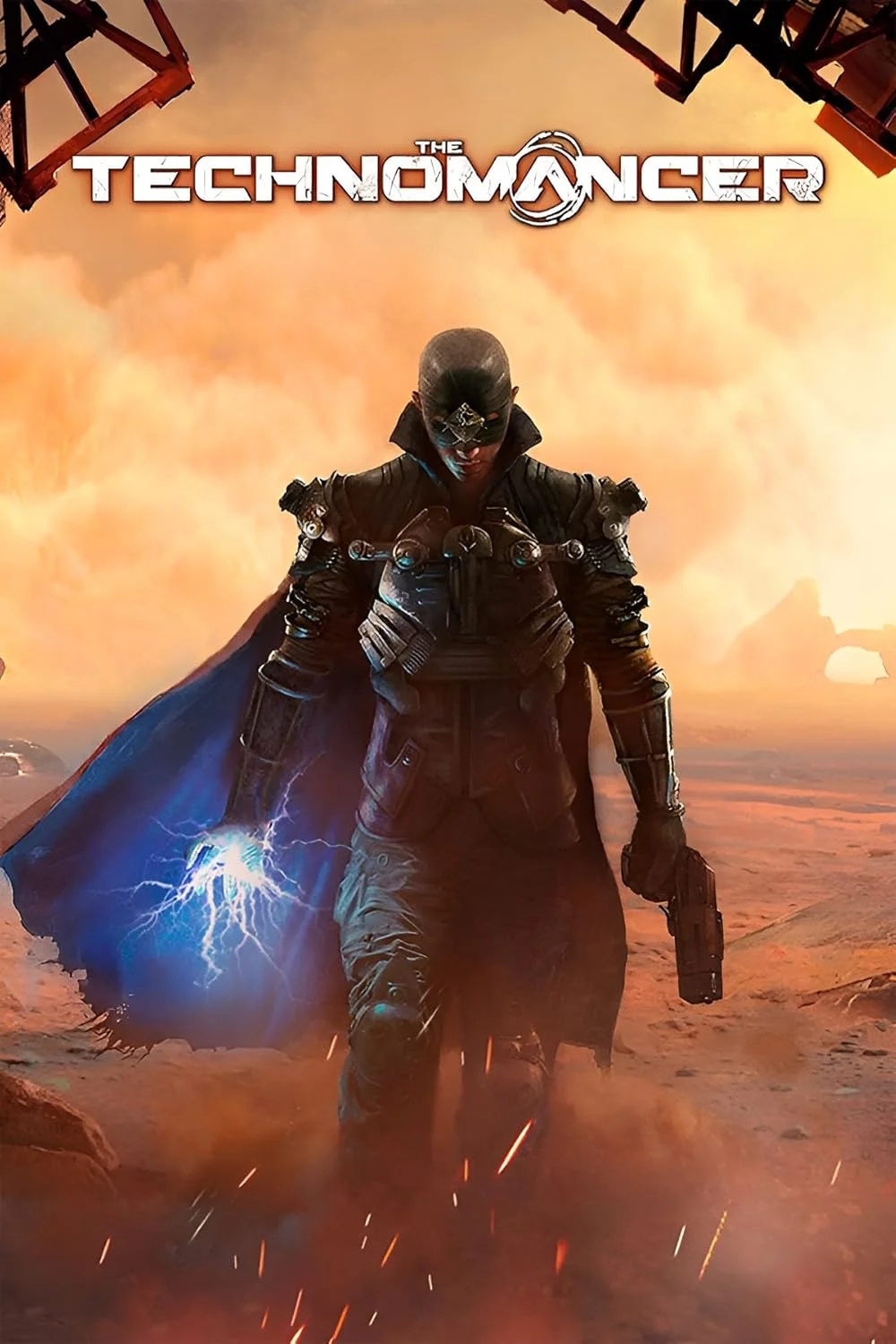
The Technomancer
This combination provides smooth gameplay with an average of 96 FPS, suitable for most gaming scenarios.
Average FPS: resolution vs quality settings
| Ultra | High | Medium | Low | |
|---|---|---|---|---|
| 4K Ultra HD | 37 | 48 | 54 | 66 |
| 1440p QHD | 66 | 81 | 97 | 127 |
| 1080p Full HD | 99 | 129 | 150 | 194 |
Cell color: green is 120+ FPS, teal is 60+, amber is 30+, red is below 30.
The Technomancer with Intel Core i5-12400 + NVIDIA GeForce RTX 3070, In-Depth Analysis
The Technomancer, an action RPG from 2016, presents a varied performance profile for the Intel Core i5-12400 and NVIDIA GeForce RTX 3070 combination. The measured data reveals a system that is clearly capable of high frame rates at lower resolutions but begins to show its limits as pixel counts rise. The benchmark results indicate a shift in the primary performance bottleneck depending on the resolution and settings, moving from a CPU-heavy load at 1080p to a GPU-bound scenario at 4K. This analysis will break down the data to understand how this specific hardware pairing manages the game’s demands.
Resolution Scaling
The frame rate drop from 1080p to 4K is substantial, illustrating the increasing load on the graphics card. At High settings, the average FPS falls from 129 at 1920x1080 to 81.1 at 2560x1440, and finally to 47.8 at 3840x2160. This represents a significant 62.9% reduction in performance from the lowest to the highest resolution tested. The pattern is consistent across all quality presets, confirming that the RTX 3070 is the limiting factor at higher resolutions.
The scaling behavior reveals a classic GPU-bound scenario at 4K. With the GPU’s 8 GB of GDDR6 memory and 448.0 GB/s of bandwidth, the demands of rendering The Technomancer at 3840x2160 on High settings push the card to its limits, resulting in an average of 47.8 FPS. This is below the smooth 60 FPS threshold many might prefer, indicating that for a consistently fluid 4K experience, users would likely need to lower the in-game quality settings. The data confirms this, showing that moving to Medium settings at 4K yields an average of 54.2 FPS, and Low settings boosts it further to 66.3 FPS.
At 2560x1440, the picture changes. The average FPS at High settings jumps to 81.1, a substantial improvement over the 4K result. This resolution appears to be a sweet spot for this combo, allowing the game to run at high frame rates without being overly constrained by the GPU. The difference between High and Ultra settings at 1440p is notable, with the average dropping from 81.1 to 66.2 FPS, showing that the Ultra preset still carries a heavy rendering cost. The scaling from 1440p to 1080p is less dramatic, with High settings improving from 81.1 to 129 FPS, an increase of 59.2%. This suggests that at 1080p, the CPU begins to play a more significant role in determining the final frame rate, as the GPU has more headroom to work with.
The transition from Low to Ultra settings at each resolution shows a consistent performance penalty. At 1080p, the difference between Low (193.6 FPS) and Ultra (99.4 FPS) is a 48.7% reduction. This penalty is similar at 1440p, where the drop from Low (126.9 FPS) to Ultra (66.2 FPS) is a 47.8% reduction. At 4K, the relative penalty is smaller, with the drop from Low (66.3 FPS) to Ultra (37.2 FPS) being a 43.9% reduction, as the GPU becomes the primary bottleneck even at Low settings.
CPU Role
The Intel Core i5-12400 is a 6-core, 12-thread processor based on the Alder Lake architecture. Its base clock of 2.50 GHz and boost clock of 4.40 GHz are key to its performance. In the context of The Technomancer, the CPU’s role is most evident at lower resolutions where the GPU is not fully saturated. The benchmark data shows that at 1080p with Low settings, the system achieves an average of 193.6 FPS. This high frame rate suggests the CPU is able to feed the GPU with enough data to reach well over 190 FPS, but the GPU is still the limiting factor, as the frame rate is not unlimited.
The CPU’s multi-threaded capabilities are reflected in its benchmark scores, such as a Cinebench R23 multicore score of 15935 and a Passmark multithread score of 18747. However, for a game like The Technomancer, single-thread performance is often more critical. The processor’s 3DMark single-thread score of 910 and Cinebench R23 single-core score of 2249 indicate a strong performance level. This is corroborated by the Passmark single-thread score of 3456, which shows the i5-12400 is capable of handling the game’s core logic without becoming a major bottleneck.
The data suggests that the CPU’s influence is most pronounced when the GPU has spare capacity. At 1080p, the frame rates are high across all settings, indicating that the i5-12400 is keeping up with the demand. The difference between Low (193.6 FPS) and Medium (149.8 FPS) settings at 1080p is a 22.6% reduction, which is a direct result of increased GPU workload rather than CPU limitations. The relative performance of the i5-12400 is close to its nearest rivals, with a 0.1% average score difference compared to the Intel Core i7-9700 and a 0.4% difference from the Intel Core i5-11600K, suggesting its processing power is well within the expected range for this class of CPU.
FAQ
Q: What is the average frame rate at 1440p on High settings?
A: The measured average FPS at 2560x1440 with High settings is 81.1.
Q: How does the RTX 3070 perform at 4K with the game’s Ultra preset?
A: At 3840x2160 with Ultra settings, the average FPS is 37.2, which is the lowest score recorded in the data set.
Q: Is the CPU or GPU the main bottleneck at 1080p?
A: The data shows high frame rates at 1080p, with an average of 129 FPS on High settings. This indicates that the GPU is still significantly loaded, but the CPU is capable of supporting these high frame rates.
Q: What is the frame rate difference between Low and Ultra settings at 1080p?
A: The average FPS drops from 193.6 on Low settings to 99.4 on Ultra settings, a reduction of 94.2 FPS.
Q: What is the memory configuration of the RTX 3070 in this test?
A: The GPU is equipped with 8 GB of GDDR6 memory on a 256-bit bus, providing a bandwidth of 448.0 GB/s.
Q: Does the i5-12400’s performance fall behind any of its direct rivals?
A: The data shows the i5-12400 has a +0.1% average score advantage over the Intel Core i7-9700 and is 0.4% ahead of the Intel Core i5-11600K, but it is 0.2% behind the Intel Core i7-8700.
How This Combo Ranks
In the database of tested hardware combinations for The Technomancer, this specific pairing of the Intel Core i5-12400 and NVIDIA GeForce RTX 3070 holds a rank of 745 out of 1656 total combos. This places it in the upper-middle tier of all tested configurations for this game. The rank is determined by the measured FPS across all tested resolutions and settings. The data indicates that while this is not a top-tier combination for this specific title, it delivers a solid performance that outperforms a majority of the other tested hardware pairings.
The combo’s rank is a product of its balanced performance. The i5-12400’s strong single-thread performance prevents it from dragging down the system in CPU-light scenarios, while the RTX 3070 provides a robust baseline for gaming. However, the mid-pack ranking suggests that other combinations, likely with more powerful GPUs or CPUs, can achieve higher average FPS in The Technomancer. The GPU’s percentile ranking of 72 against all GPUs, compared to the CPU’s 77 percentile, suggests the graphics card is the slightly weaker component relative to its peers, which likely influences the overall combo rank. This data underscores that for a game from 2016, this modern hardware is more than sufficient, but not the absolute pinnacle of performance.
GPU Role
The NVIDIA GeForce RTX 3070, based on the Ampere architecture, is the primary driver of graphical performance in this configuration. Its core specifications, including a boost clock of 1725 MHz and 5888 shading units, are directly reflected in the measured FPS. The GPU’s 8 GB of GDDR6 memory is a critical factor, especially at higher resolutions. The benchmark results show that at 4K, the GPU’s memory bandwidth of 448.0 GB/s is a limiting factor, as the average FPS on High settings is 47.8, which is significantly lower than at 1440p.
The GPU’s performance scales predictably with resolution and settings. At 1440p, the RTX 3070 demonstrates its strength, delivering an average of 81.1 FPS on High settings and 126.9 FPS on Low settings. This shows the card is well-suited for high-refresh-rate 1440p gaming in this title. The data also highlights the cost of the Ultra preset, which reduces the average FPS from 96.9 at Medium to 66.2 at 1440p, a 24.1% performance hit. This indicates that the Ultra settings impose a significant load on the GPU’s compute and memory subsystems.
The GPU’s overall capability is quantified by its average benchmark score of 28238, which places it in the 72nd percentile of all GPUs. Its performance is closely matched by the AMD Radeon RX 6600 XT, which is 0.9% slower, and the NVIDIA GeForce GTX 980 Ti, which is 1% slower. In The Technomancer, the RTX 3070’s role is clear: it provides a strong foundation for 1080p and 1440p gaming, with the ability to push high frame rates at those resolutions. However, its 8 GB VRAM and bandwidth become a bottleneck at 4K, where the game’s demands exceed what the card can handle smoothly on higher quality presets.
Hardware Specifications
Intel Core i5-12400
NVIDIA GeForce RTX 3070
FPS Benchmarks by Resolution & Settings
Performance data for Intel Core i5-12400 + NVIDIA GeForce RTX 3070 in The Technomancer
| Resolution | Settings | Avg FPS |
|---|---|---|
| 3840x2160 | Low | 66.3 |
| 3840x2160 | Medium | 54.2 |
| 3840x2160 | High | 47.8 |
| 3840x2160 | Ultra | 37.2 |
| 2560x1440 | Low | 126.9 |
| 2560x1440 | Medium | 96.9 |
| 2560x1440 | High | 81.1 |
| 2560x1440 | Ultra | 66.2 |
| 1920x1080 | Low | 193.6 |
| 1920x1080 | Medium | 149.8 |
| 1920x1080 | High | 129.0 |
| 1920x1080 | Ultra | 99.4 |
The Technomancer with ii5-12400 + Other GPUs
See how The Technomancer performs with the same CPU but different graphics cards.
The Technomancer with RTX 3070 + Other CPUs
See how The Technomancer performs with the same GPU but different processors.
Other Games with ii5-12400 + RTX 3070
Explore FPS benchmarks for other games using this same hardware combination.