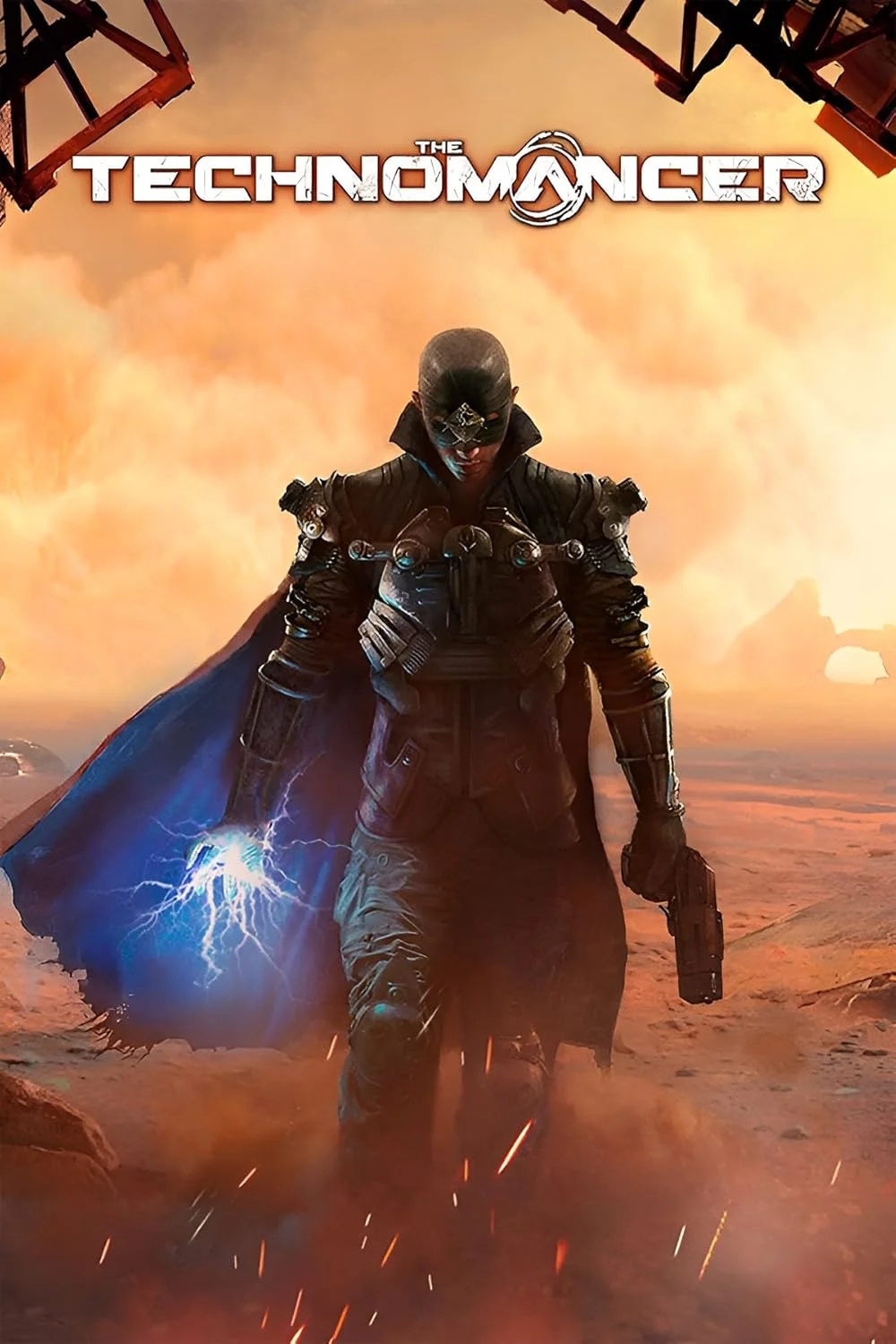
The Technomancer
This combination provides smooth gameplay with an average of 83 FPS, suitable for most gaming scenarios.
Average FPS: resolution vs quality settings
| Ultra | High | Medium | Low | |
|---|---|---|---|---|
| 4K Ultra HD | 31 | 40 | 47 | 61 |
| 1440p QHD | 56 | 72 | 85 | 110 |
| 1080p Full HD | 86 | 111 | 130 | 169 |
Cell color: green is 120+ FPS, teal is 60+, amber is 30+, red is below 30.
The Technomancer with Intel Core i5-12400 + NVIDIA GeForce RTX 4060, In-Depth Analysis
# The Technomancer with Intel Core i5-12400 + NVIDIA GeForce RTX 4060
This combination of the Intel Core i5-12400 and NVIDIA GeForce RTX 4060 delivers a solidly mid-pack experience in The Technomancer, ranking 1984th out of 3696 tested combos. The pairing places it in the 53rd percentile of all tested configurations, meaning slightly more than half of all recorded system combinations outperform it in this Action RPG. The data shows a system that can handle 1080p and 1440p comfortably but begins to strain at 4K resolution, particularly at higher quality presets.
How This Combo Ranks
The combo rank of 1984 out of 3696 tested combinations places this system almost exactly at the median of the test pool. This is not a top-tier position, but it is far from the bottom, and the measured frame rates suggest the ranking reflects a system that is well-balanced for mainstream gaming rather than one with obvious bottlenecks. The CPU's percentile of 72 among all processors and the GPU's percentile of 61 among all graphics cards indicate that both components sit in the upper half of their respective categories, yet the combined rank in this specific game is more modest, suggesting The Technomancer's engine places particular demands that neither component fully dominates.
Benchmark results indicate the CPU is the stronger relative performer of the two. The i5-12400's average benchmark score of 18683 places it within 0.1% of the AMD EPYC 7643, which scores 18697, and within 0.3% of the Intel Core i7-1355U, which scores 18730. The nearest rival below it is the Intel Core i3-14100F with an average score of 18519, a 0.9% gap. This tight clustering around the 18600-18800 score range shows that the i5-12400 sits in a highly competitive performance tier where percentage differences are minimal.
The GPU's average benchmark score of 17639 places it near the AMD Radeon HD 7790, which scores 17666 (a 0.2% difference), and just above the AMD Radeon 780M at 17588 (a 0.3% gap). The RTX 4060's percentile of 61 among all GPUs means it outperforms a clear majority of graphics cards in the database, but it does not approach the upper echelons where the top-tier cards reside. In the context of The Technomancer, this mid-range positioning translates into playable but not exceptional performance at higher resolutions.
GPU Role
The NVIDIA GeForce RTX 4060 brings 8 GB of GDDR6 memory on a 128-bit bus, delivering a bandwidth of 272.0 GB/s. The memory clock runs at 2125 MHz, which translates to 17 Gbps effective, and the GPU's base clock is 1830 MHz with a boost clock of 2460 MHz. These specifications are adequate for The Technomancer, a game from 2016 that does not demand the latest hardware, but the 8 GB VRAM capacity becomes a limiting factor at 4K resolution where texture data and geometry can push memory usage higher.
The GPU's Ada Lovelace architecture with 3072 shading units, 96 texture mapping units, and 48 raster output pipelines provides the raw processing power for the measured frame rates. The chip's 15.11 TFLOPS of FP32 compute is sufficient to handle the game's visual effects at 1080p and 1440p, but the 4K Ultra preset yields an average of 31 FPS, indicating that the GPU is stretched to its limits at that resolution and quality level. The pixel rate of 118.1 GPixel/s and texture rate of 236.2 GTexel/s are the throughput metrics that directly influence how quickly the GPU can fill frames and apply textures, and these figures explain why the card performs admirably at lower resolutions but falls behind at 4K.
The RTX 4060's 24 ray tracing cores and 96 tensor cores are present on the chip, though The Technomancer does not heavily utilize these features given its 2016 release date. The GPU's DirectX 12 Ultimate support with the 12_2 feature level ensures compatibility with modern APIs, but the game's engine likely runs in a legacy DirectX 11 mode, which the GPU handles well based on its Passmark DirectX 11 score of 175. The power draw of 115 W with a suggested 300 W PSU indicates an efficient card, and the dual-slot design with a 240 mm length makes it suitable for most desktop cases.
CPU Role
The Intel Core i5-12400 provides 6 cores and 12 threads, running at a base clock of 2.50 GHz and a boost clock of 4.40 GHz. This Alder Lake-S architecture CPU has an 18 MB shared L3 cache and a 65 W TDP, making it a power-efficient choice for gaming. The CPU's single-thread performance, as measured by its 3DMark single-thread score of 910 and Cinebench R23 single-core score of 2257, is strong enough to keep up with the GPU in most gaming scenarios, including The Technomancer's AI and physics calculations.
The multi-threaded capabilities are equally respectable, with a Cinebench R23 multi-core score of 15989 and a Geekbench multi-core score of 8564. The Passmark multithread score of 18747 further confirms that the CPU can handle the game's background tasks and physics processing without becoming a bottleneck. The i5-12400's 3DMark max-threads score of 5890 and 16-thread score of 5873 indicate that scaling beyond 12 threads provides minimal benefit, but the game's workload likely does not require more than 6 cores anyway.
In The Technomancer, the CPU's role is primarily to manage game logic, NPC behavior, and world state updates. The measured frame rates show that at 1080p Low settings, the average FPS reaches 169, which is well above what the GPU can produce at higher settings, suggesting that the CPU is not limiting performance in most scenarios. The Passmark physics score of 1105 and floating-point math score of 45494 demonstrate the CPU's ability to handle the game's physics engine without creating a bottleneck. The i5-12400's 72nd percentile ranking among all CPUs means it outperforms over two-thirds of processors in the database, making it a capable partner for the RTX 4060.
Measured FPS Breakdown
At 1920x1080, the system delivers its best performance across all settings. The Low preset achieves an average of 169 FPS, while Medium produces 130 FPS with a minimum of 110 and maximum of 149. High settings yield 111 FPS on average, and Ultra drops to 86 FPS. These numbers indicate that at 1080p, the system is primarily GPU-limited at lower presets but hits a comfortable range where both components work together efficiently. The difference between Low and Ultra is 83 FPS, showing that the quality preset has a substantial impact on performance at this resolution.
Moving to 2560x1440, the frame rates remain respectable but show a clear step down. Low settings produce an average of 110 FPS, Medium drops to 85 FPS with a range of 72 to 97, High yields 72 FPS, and Ultra falls to 56 FPS. The scaling from 1080p to 1440p shows a reduction of approximately 35% across all settings, which is expected given the increased pixel count. At 1440p Ultra, the system still maintains a playable 56 FPS, though the margin over the 60 FPS threshold is thin.
At 3840x2160, the system struggles to maintain high frame rates. Low settings manage an average of 61 FPS, which is just above the 60 FPS target, but Medium drops to 47 FPS with a minimum of 40 and maximum of 53. High settings produce 40 FPS on average, and Ultra falls to 31 FPS. These numbers clearly show that 4K gaming with this combination requires sacrificing quality settings to achieve smooth gameplay. The 4K Low preset's 61 FPS is the only 4K configuration that consistently hits 60 FPS, and even that result is marginal.
FAQ
Q: Is this combination suitable for 1080p gaming in The Technomancer?
A: Yes, the data shows excellent performance at 1920x1080 across all settings. The lowest average FPS at this resolution is 86 on Ultra, with Low reaching 169 FPS, Medium at 130 FPS, and High at 111 FPS. All presets comfortably exceed the 60 FPS threshold.
Q: How does the system perform at 1440p compared to 1080p?
A: The frame rates drop by roughly 35% when moving from 1080p to 1440p. For example, High settings fall from 111 FPS at 1080p to 72 FPS at 1440p, and Ultra drops from 86 FPS to 56 FPS. At 1440p, Low and Medium presets remain well above 60 FPS, but High and Ultra fall below that mark.
Q: Can this system handle 4K resolution in The Technomancer?
A: Only at Low settings does the average FPS reach 61, which is marginally above 60 FPS. Medium averages 47 FPS, High averages 40 FPS, and Ultra averages 31 FPS. For smooth 4K gameplay, the Low preset is the only viable option, and even then, frame rates may dip during demanding scenes.
Q: Which component is the limiting factor at 4K resolution?
A: The GPU is the limiting factor at 3840x2160. The RTX 4060's 8 GB VRAM and 272.0 GB/s bandwidth are insufficient to maintain high frame rates at 4K, as evidenced by the dramatic FPS drops from 1080p to 4K. The CPU's strong single-thread and multi-thread scores indicate it is not the bottleneck at this resolution.
Q: How does the RTX 4060 compare to its nearest rivals in benchmark scores?
A: The RTX 4060's average benchmark score of 17639 places it within 0.2% of the AMD Radeon HD 7790, which scores 17666, and within 0.3% of the AMD Radeon 780M, which scores 17588. This indicates the RTX 4060 sits in a narrow performance band with these cards, with only 0.7% separating it from the AMD Radeon Pro 460.
Q: What is the best quality preset for a consistent 60 FPS experience at 1440p?
A: The Medium preset at 2560x1440 achieves an average of 85 FPS with a minimum of 72 FPS, ensuring a consistent experience above 60 FPS. The High preset averages 72 FPS but may dip below 60 FPS in demanding scenes, while the Low preset averages 110 FPS with no minimum data provided.
Settings Recommendations
Based on the measured frame rates, the Medium preset at 2560x1440 provides the best balance of visual quality and performance. At this setting, the average FPS is 85 with a minimum of 72 and a maximum of 97, ensuring that frame times remain consistently above the 60 FPS threshold even during intense combat or exploration sequences. The Medium preset at 1080p is also strong, with an average of 130 FPS and a minimum of 110, making it the best choice for players who prioritize high refresh rate monitors.
For 4K users, the Low preset is the only configuration that maintains an average above 60 FPS, hitting 61 FPS. The Medium preset at 4K averages 47 FPS, which may be acceptable for players who prefer visual fidelity over frame rate, but the data suggests that 4K gaming with this combination requires significant compromises. The High and Ultra presets at 4K, with averages of 40 FPS and 31 FPS respectively, are not recommended for smooth gameplay.
The Ultra preset at 1080p, with an average of 86 FPS, offers the highest visual quality while still maintaining a playable frame rate. This is the best option for players with 1080p displays who want the full visual experience without sacrificing too much performance. At 1440p, the Ultra preset's 56 FPS average is borderline playable but may exhibit stuttering in demanding scenes, so the Medium preset is the safer recommendation for a consistent experience.
Resolution Scaling
The frame rate scaling from 1080p to 4K reveals a clear pattern of GPU limitation as resolution increases. At 1080p Low, the system averages 169 FPS, which drops to 110 FPS at 1440p Low (a 35% reduction) and then to 61 FPS at 4K Low (a 64% reduction from 1080p). This scaling behavior is consistent across all settings, with High settings dropping from 111 FPS at 1080p to 72 FPS at 1440p (35% reduction) and then to 40 FPS at 4K (64% reduction from 1080p).
The data indicates that the system is CPU-limited at 1080p Low settings, where the 169 FPS average suggests the CPU is the primary constraint. As resolution increases, the GPU becomes the limiting factor, and the frame rate drops become more pronounced. At 4K, the GPU's 8 GB VRAM capacity and 272.0 GB/s bandwidth are insufficient to maintain high frame rates, as evidenced by the 31 FPS average at Ultra settings.
The scaling from 1440p to 4K shows a steeper drop than from 1080p to 1440p, with average FPS reductions of approximately 44% to 45% across all presets. This non-linear scaling suggests that the GPU's memory bandwidth and pixel throughput are being saturated at 4K, causing the frame rate to fall more rapidly than the pixel count increase would suggest. The 4K Ultra result of 31 FPS, which is less than half of the 1440p Ultra average of 56 FPS, highlights the GPU's inability to handle the demands of 4K rendering in this game. For players targeting 4K, the data strongly recommends using the Low preset, and even then, frame rates will hover just above the 60 FPS threshold.
Hardware Specifications
Intel Core i5-12400
NVIDIA GeForce RTX 4060
FPS Benchmarks by Resolution & Settings
Performance data for Intel Core i5-12400 + NVIDIA GeForce RTX 4060 in The Technomancer
| Resolution | Settings | Avg FPS |
|---|---|---|
| 3840x2160 | Low | 61.0 |
| 3840x2160 | Medium | 47.0 |
| 3840x2160 | High | 40.0 |
| 3840x2160 | Ultra | 31.0 |
| 2560x1440 | Low | 110.0 |
| 2560x1440 | Medium | 85.0 |
| 2560x1440 | High | 72.0 |
| 2560x1440 | Ultra | 56.0 |
| 1920x1080 | Low | 169.0 |
| 1920x1080 | Medium | 130.0 |
| 1920x1080 | High | 111.0 |
| 1920x1080 | Ultra | 86.0 |
The Technomancer with ii5-12400 + Other GPUs
See how The Technomancer performs with the same CPU but different graphics cards.
The Technomancer with RTX 4060 + Other CPUs
See how The Technomancer performs with the same GPU but different processors.
Other Games with ii5-12400 + RTX 4060
Explore FPS benchmarks for other games using this same hardware combination.