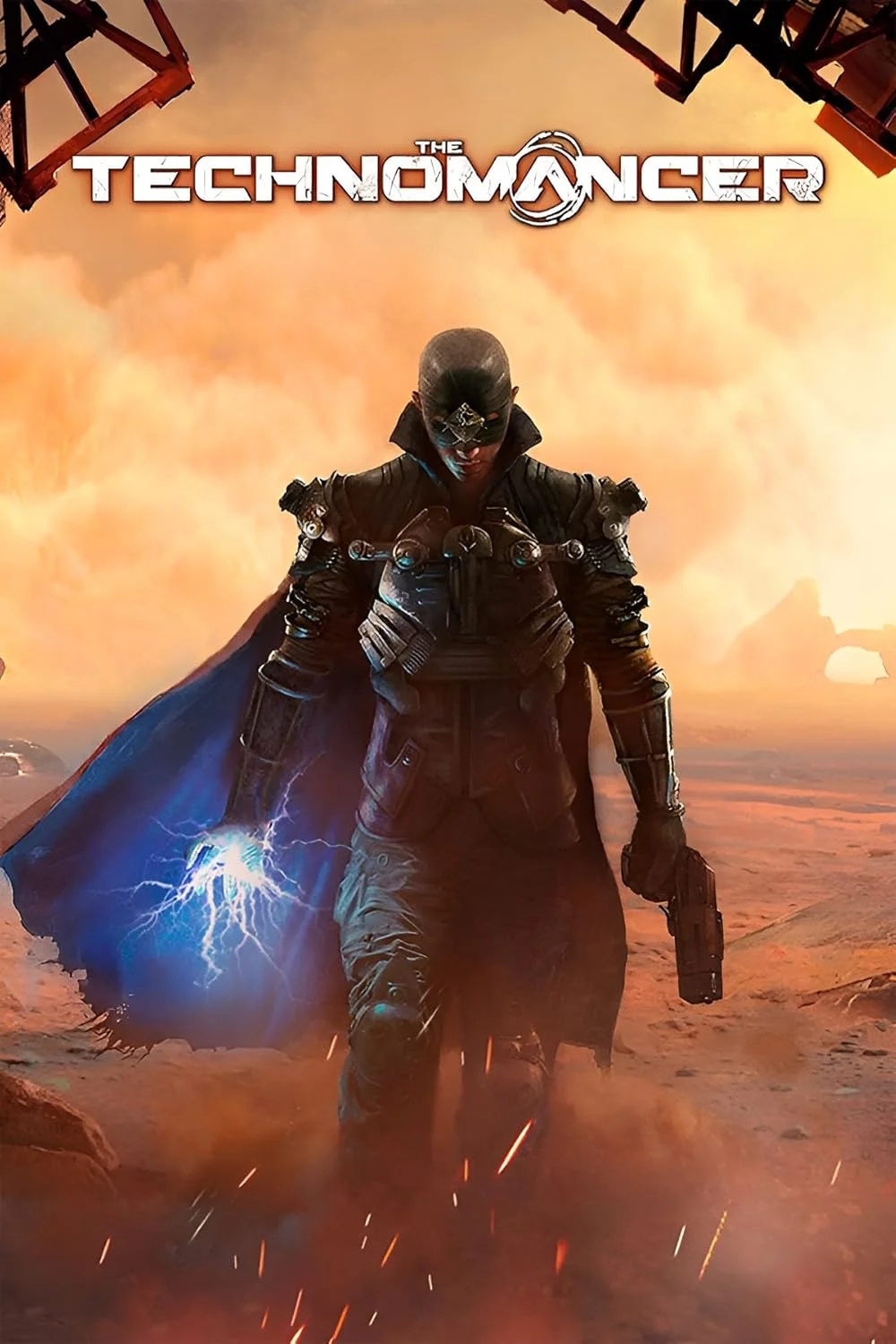
The Technomancer
This combination offers playable performance with an average of 35 FPS, though you may want to lower settings for smoother gameplay.
Average FPS: resolution vs quality settings
| Ultra | High | Medium | Low | |
|---|---|---|---|---|
| 4K Ultra HD | 13 | 17 | 20 | 26 |
| 1440p QHD | 24 | 31 | 36 | 47 |
| 1080p Full HD | 37 | 47 | 55 | 71 |
Cell color: green is 120+ FPS, teal is 60+, amber is 30+, red is below 30.
The Technomancer with Intel Core i5-11400F + Intel Arc B370, In-Depth Analysis
The Technomancer, a 2016 Action RPG, places significant demands on hardware, particularly at higher resolutions. This analysis examines the performance of the Intel Core i5-11400F paired with the Intel Arc B370, using measured FPS data to detail the experience across common settings and resolutions. The data indicates a configuration that is heavily constrained by its graphics processor, resulting in a playable experience only at the lowest settings and resolution.
Settings Recommendations
Based on the measured FPS data, the optimal experience for this configuration is found at 1080p with Low settings. This is the only combination that achieves an average frame rate above 60 FPS, hitting 71 FPS. This provides the smooth, responsive gameplay necessary for an action RPG, where timing and reaction are key.
While Medium settings at 1080p offer a more visually detailed experience with an average of 55 FPS, this falls below the 60 FPS threshold often considered ideal. The drop from Low to Medium yields a 16 FPS decrease, which is a substantial 22.5% performance penalty for a modest visual upgrade. For players who prioritize a consistent frame rate over visual fidelity, Low is the clear choice.
At 1440p, the highest playable setting is Low, which produces an average of 47 FPS. This is playable but not ideal for fast-paced combat. High settings at 1440p drop to 31 FPS, which is generally considered too low for a smooth action game. The 4K resolution is not viable for this combo, as even the lowest settings only produce 26 FPS, a stuttery experience.
The Ultra preset, while available, is the least efficient choice. At 1080p, it delivers 37 FPS, which is 34 FPS lower than Low settings. The performance cost of Ultra is not justified by the marginal visual improvements in The Technomancer, especially given the significant frame rate penalty. In summary, the data strongly supports using the Low preset at 1920x1080 for a playable experience, with Medium as a compromise for those who prefer visual quality over a higher frame rate.
FAQ
Q: What is the best resolution and settings combination for this hardware?
A: The measured data shows that the only combination achieving an average frame rate above 60 FPS is 1920x1080 with Low settings, delivering 71 FPS. This is the recommended configuration for optimal smoothness.
Q: Can this system handle 4K gaming in The Technomancer?
A: No. At 4K, the average frame rates are 26 FPS on Low, 20 FPS on Medium, 17 FPS on High, and 13 FPS on Ultra. These are all far below the threshold for a playable experience.
Q: How much of a performance drop is there between Low and Ultra settings at 1080p?
A: The drop from Low to Ultra at 1080p is significant. The average frame rate falls from 71 FPS to 37 FPS, a reduction of 34 FPS, which represents a 47.9% decrease in performance.
Q: Is the Intel Arc B370 a bottleneck for the Intel Core i5-11400F in this game?
A: Yes. The evidence strongly suggests a GPU bottleneck. For example, at 1080p, dropping from High to Low settings increases performance by 24 FPS (from 47 to 71 FPS), a 51% improvement. This scaling with settings is characteristic of a graphics-limited scenario.
Q: What is the performance difference between 1080p and 1440p at High settings?
A: At High settings, the average frame rate drops from 47 FPS at 1080p to 31 FPS at 1440p. This is a 16 FPS decrease, or a 34% performance loss, when moving to the higher resolution.
Q: What kind of minimum frame rates can be expected at Medium settings?
A: The data provides minimum frame rates for Medium settings. At 1080p, the minimum is 47 FPS, and at 1440p, it is 30 FPS. At 4K, the minimum is 17 FPS, indicating significant stuttering.
CPU Role
The Intel Core i5-11400F is a 6-core, 12-thread processor based on the Rocket Lake architecture. It has a base clock of 2.60 GHz and a boost clock of 4.40 GHz. In synthetic benchmarks, it demonstrates strong multi-threaded capability, with a Cinebench R23 multi-core score of 14340 and a Geekbench multi-core score of 7737. Its single-thread performance is also respectable, as shown by a Geekbench single-core score of 1777.
However, in the context of The Technomancer, the CPU's role is secondary to that of the GPU. The measured FPS data shows that performance is heavily dependent on graphical settings and resolution. When resolution is lowered, the frame rate increases substantially, which is a classic sign of a GPU bottleneck. For instance, the large jump from 47 FPS at 1080p High to 71 FPS at 1080p Low indicates that the CPU is capable of feeding frames much faster than the GPU can render them at higher settings.
The CPU's performance is more than sufficient for this game. Its 6-core, 12-thread configuration is well-suited for modern game engines, and its high boost clock of 4.40 GHz ensures responsive gameplay. The bottleneck lies elsewhere. The Core i5-11400F's average benchmark score of 17177 places it in the 71st percentile of all CPUs, indicating it is a capable processor. It performs nearly identically to rivals like the AMD EPYC 7H12, with a deltaPct of 0.3%, and the Intel Core i5-12450H, with a deltaPct of -0.4%. This level of performance is not the limiting factor in this configuration.
How This Combo Ranks
The combination of the Intel Core i5-11400F and Intel Arc B370 ranks 2603 out of 2825 tested combos for this game. This places it in the bottom 8% of all configurations, indicating that it is a very low-performing setup for The Technomancer. This low ranking is almost entirely attributable to the graphics processor.
The Intel Arc B370's performance is the primary constraint. Its average benchmark score of 1184 places it in the 5th percentile of all GPUs, highlighting its limited capability. It performs on par with much older cards like the ATI Radeon HD 5770, which has a deltaPct of -0.5%, and the AMD Radeon HD 7650M, with a deltaPct of -0.7%. This level of GPU performance is simply not competitive for a demanding game like The Technomancer at higher resolutions or settings.
The CPU, in contrast, is not the cause of the low ranking. The Core i5-11400F is a solid mid-range processor from its generation. The pairing is unbalanced, with a relatively strong CPU being held back by a very weak GPU. The system's overall rank reflects this imbalance, showing that the GPU is the clear performance ceiling for this combo.
Resolution Scaling
The measured data reveals a steep and consistent drop in frame rate as resolution increases, which is a hallmark of a GPU-limited system. Moving from 1920x1080 to 2560x1440 at High settings reduces the average FPS from 47 to 31, a 34% decrease. Scaling further to 3840x2160 at High settings results in a disastrous drop to 17 FPS, a further 45% reduction from the 1440p figure.
The trend is identical across all settings presets. At Low settings, the average FPS falls from 71 at 1080p to 47 at 1440p, and then to 26 at 4K. At Medium settings, the progression is 55 to 36 to 20 FPS. This linear, resolution-dependent scaling is definitive proof that the Intel Arc B370 is the limiting component. The GPU's fill rate and memory bandwidth are insufficient to handle the increased pixel count at higher resolutions.
At 1080p, the GPU is still the primary bottleneck, but the CPU is able to help maintain more playable frame rates. The performance gap between Low and High settings at 1080p is 24 FPS, showing that the GPU is still struggling with the increased shader complexity. However, the fact that the game is only playable at 1080p Low suggests that even at the lowest resolution, the GPU is working near its maximum capacity.
Measured FPS Breakdown
The following is a detailed breakdown of the measured average frame rates for this configuration.
1920x1080 (1080p)
- Low: The average FPS is 71, making it the only playable preset. This is the target for a smooth experience.
- Medium: The average FPS is 55, with a minimum of 47 and a maximum of 63. This is a playable, albeit less smooth, alternative to Low.
- High: The average FPS is 47. This is borderline playable but may feel inconsistent during action sequences.
- Ultra: The average FPS is 37. This preset is not recommended due to the significant performance cost.
2560x1440 (1440p)
- Low: The average FPS is 47. This is the only preset at this resolution that approaches a playable frame rate.
- Medium: The average FPS is 36, with a minimum of 30 and a maximum of 41. This is playable only for less demanding scenes.
- High: The average FPS is 31. This is too low for a consistently smooth experience.
- Ultra: The average FPS is 24. This is not recommended for gameplay.
3840x2160 (4K)
- Low: The average FPS is 26. This is not a playable experience.
- Medium: The average FPS is 20, with a minimum of 17 and a maximum of 23. The minimum frame rate indicates significant stuttering.
- High: The average FPS is 17. This is essentially a slideshow.
- Ultra: The average FPS is 13. This is the lowest recorded performance.
The data clearly shows that this system is only suitable for 1080p gaming, and even then, only at the lowest settings. At higher resolutions, the frame rates fall to unplayable levels.
GPU Role
The Intel Arc B370 is an integrated graphics processor based on the Xe3-LPG architecture, built on a 3 nm process. It has a very modest specification with 1280 shading units, 40 texture mapping units, and 20 raster operations pipelines. It features 10 ray tracing cores. Its boost clock is 2400 MHz, and it relies on system shared memory, meaning its performance is dependent on the system's RAM.
The GPU's synthetic benchmark score is 1184, placing it in the 5th percentile of all GPUs. This is an extremely low performance tier. Its closest rivals are all legacy parts from over a decade ago, such as the ATI Radeon HD 5770 and the ATI Mobility Radeon HD 5570, with deltas of -0.5% and -0.2%, respectively. This data paints a clear picture of a GPU that is not designed for demanding modern games.
In The Technomancer, the GPU is the definitive bottleneck. The measured FPS data shows that performance scales almost linearly with resolution, which is the primary indicator of a GPU-bound scenario. The GPU's limited pixel fill rate of 48.00 GPixel/s and texture rate of 96.00 GTexel/s are simply too low to handle the rendering workload at higher resolutions or with more complex graphical settings. The system is only able to provide a playable frame rate at 1080p with the Low preset, which minimizes the load on the GPU. This configuration is fundamentally limited by its graphics solution.
Hardware Specifications
Intel Core i5-11400F
Intel Arc B370
FPS Benchmarks by Resolution & Settings
Performance data for Intel Core i5-11400F + Intel Arc B370 in The Technomancer
| Resolution | Settings | Avg FPS |
|---|---|---|
| 3840x2160 | Low | 26.0 |
| 3840x2160 | Medium | 20.0 |
| 3840x2160 | High | 17.0 |
| 3840x2160 | Ultra | 13.0 |
| 2560x1440 | Low | 47.0 |
| 2560x1440 | Medium | 36.0 |
| 2560x1440 | High | 31.0 |
| 2560x1440 | Ultra | 24.0 |
| 1920x1080 | Low | 71.0 |
| 1920x1080 | Medium | 55.0 |
| 1920x1080 | High | 47.0 |
| 1920x1080 | Ultra | 37.0 |
The Technomancer with ii5-11400F + Other GPUs
See how The Technomancer performs with the same CPU but different graphics cards.
The Technomancer with Arc B370 + Other CPUs
See how The Technomancer performs with the same GPU but different processors.
Other Games with ii5-11400F + Arc B370
Explore FPS benchmarks for other games using this same hardware combination.